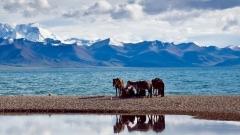

Traveling to Tibet by train is one of the most popular ways to experience the breathtaking landscapes of the Tibetan Plateau. Since the journey can last more than twenty hours, the condition of onboard toilets and overall hygiene can significantly affect the travel experience. Trains operating on the Qinghai–Tibet Railway are equipped with modern sanitation systems, including vacuum toilets and regular cleaning services, to maintain acceptable hygiene standards during the long trip. With proper preparation, passengers can enjoy the scenic journey to Tibet with greater comfort and peace of mind.
What Are the Restrooms Like on Trains to Tibet?
As an important transportation link connecting inland China and the plateau, Tibet trains have not only optimized the comfort of carriages but also fully considered passengers’ travel needs in terms of toilet and hygiene facilities. The toilet configurations of different carriage types are slightly different, but the overall hygiene standards remain consistent. Understanding this basic information in advance can make your journey more convenient.
Toilet Configuration and Hygiene Standards
Each Tibet train carriage has toilets at both ends, meeting basic needs for hard seat, hard sleeper and soft sleeper passengers. Optimized from traditional rough toilets, they have high hygiene standards, with regular cleaning and disinfection to keep them odor-free, dry and tidy.
All toilets have basic facilities: toilets, hand basins, trash cans, flushing and emergency buttons. Some carriages have spacious accessible toilets with handrails. Plateau-specific hygiene management ensures cleanliness and environmental protection via a vacuum collection system.
Toilet Differences in Different Carriages
Tibet train toilets vary slightly by carriage type. Understanding their features in advance enhances your toilet experience, as detailed below:
- Soft Sleeper: One toilet at each end (squat and sitting styles), spacious with frequent cleaning. Some have disposable seat covers for long-haul comfort.
- Hard Sleeper: Squat toilets at both ends, simple and practical. Cleaned every 2-3 hours, with hand basins and trash cans for daily needs.
- Hard Seat: Similar squat toilets to hard sleepers. Queues may form during peaks; staff maintain basic hygiene despite high passenger mobility.
- Accessible: Mid-carriage, wheelchair-friendly with handrails and emergency buttons. Matches soft sleeper hygiene standards for convenience.
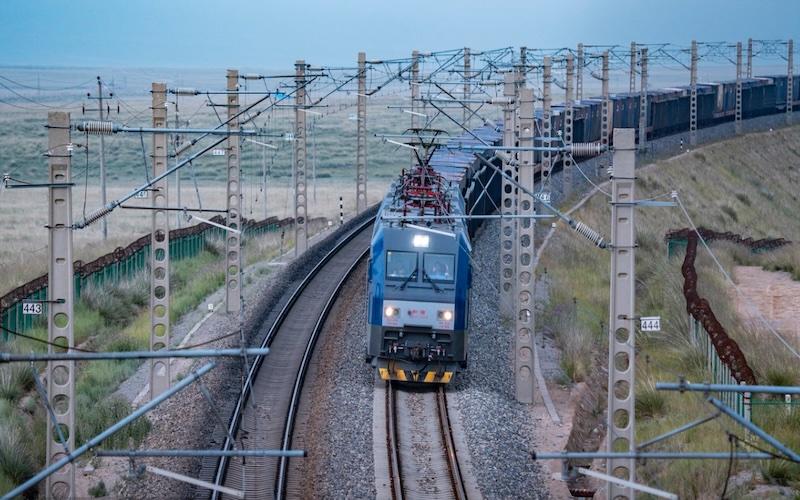
Tibet Train
Do the Toilets on Trains to Tibet Get Crowded?
There are certain skills for using toilets on Tibet trains. Especially in the plateau environment, using toilets reasonably can not only improve your own experience but also maintain the overall hygiene of the carriage. Master the following usage skills to make using the toilet on the plateau train more convenient and comfortable.
Basic Toilet Skills
The usage process of Tibet train toilets is similar to that of ordinary train toilets, but combined with the plateau environment and train operation characteristics, there are several details to pay attention to to avoid inconvenience in use:
- Identify Toilet Status: Red/green indicator lights (or LED screens) outside the toilet show occupancy. Check in advance to avoid blind waiting.
- Correctly Use the Flushing Button: Green for normal flushing; red is for emergencies only (e.g., discomfort, equipment failure). Do not press it by mistake.
- Pay Attention to Station Stops: Toilets lock during stops, reopening 5 minutes after departure. Plan your toilet time accordingly.
- Avoid Foreign Objects: Do not flush paper towels, plastic or fruit peels to prevent clogs. Dispose of waste in trash cans.
Toilet Skills During Peak Hours
During the long-distance operation of Tibet trains, the demand for toilets is high during morning and evening peak hours (7-9 am, 6-9 pm), and queuing is likely to occur. Master the following skills to effectively save toilet time:
- Plan Off-Peak Time: Try to avoid using the toilet during the morning and evening peak hours of washing and eating. You can choose the time when the train is running smoothly and there are few passenger activities, such as 11-13 noon and 3-5 pm. At this time, there are fewer people using the toilet, so there is no need to wait for a long time.
- Choose a Nearby Toilet: If there is a long queue for the toilet in your carriage, you can go to the toilet in the adjacent carriage. Usually, the number of people using the toilet in the adjacent carriage will be relatively small, especially at the junction of soft sleeper and hard sleeper carriages, where the toilet utilization rate is relatively low.
- Prepare Necessities in Advance: Prepare necessary items such as paper towels and hand sanitizer in advance before using the toilet to avoid going back and forth to get them after using the toilet, saving time and reducing the impact on other passengers.
Toilet Skills for Special Groups
For the elderly, children, pregnant women and passengers with reduced mobility, there are corresponding skills for using toilets on Tibet trains to ensure safe and convenient toilet use:
- Elderly and Children: They need to be accompanied when using the toilet to avoid accidents when using the toilet alone. Children can use a portable children’s toilet when going to the toilet, and clean it in time after use to keep the toilet hygienic; the elderly can use the handrails in the toilet to stand up slowly to avoid dizziness and falling due to altitude sickness.
- Pregnant Women: Pregnant women should try to choose sitting toilets (soft sleeper carriages) when using the toilet, avoid squatting for a long time, and stand up slowly. They can inform the train attendants in advance and seek help if necessary. If they feel unwell, they can press the emergency call button in the toilet to contact the train staff in time.
- Passengers with Reduced Mobility: They can give priority to using accessible toilets. They can contact the train attendants to open the door before use. The handrails and spacious space in the toilet can effectively ensure the safety of using the toilet. If they encounter difficulties, they can call the train attendants for help at any time.
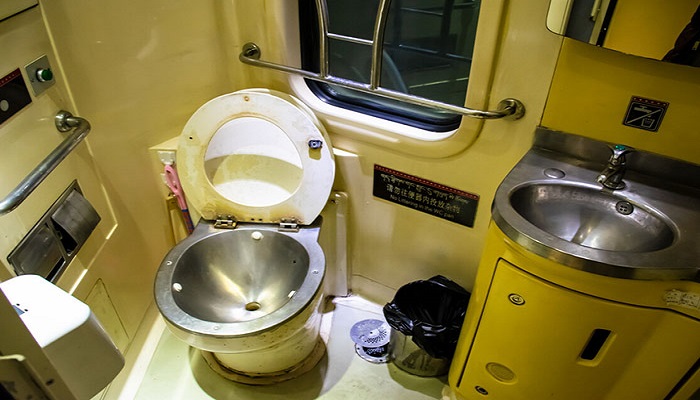
Western-Style Toilets on Trains to Tibet
Tibet Train Hygiene Protection: A Safe Journey
The plateau environment is special, and passengers’ physical resistance is relatively weak. As a closed space, the train carriage requires particularly important hygiene protection. Combined with the characteristics of Tibet train toilets and hygiene, taking the following hygiene protection measures can effectively avoid bacterial infection and ensure travel health.
Toilet Hygiene Protection Skills
Toilets are places where bacteria are easy to breed, especially on long-distance trains. Doing a good job in hygiene protection when using the toilet can effectively reduce the risk of infection. The specific measures are as follows:
- Wash Hands Thoroughly: After using the toilet, you must wash your hands with hand sanitizer or soap, thoroughly clean all parts of your hands, rinse them clean and dry them with a clean towel or paper towel, and avoid touching your mouth, nose, eyes and other parts with dirty hands. If there is no hand sanitizer in the toilet, you can carry hand sanitizer and disinfect your hands in time after using the toilet.
- Avoid Direct Contact with Public Surfaces: When using a sitting toilet, you can lay a disposable toilet seat cover to avoid direct skin contact with the seat and reduce bacterial transmission; when opening the toilet door, you can use a paper towel to pad the doorknob to avoid direct contact.
- Keep the Toilet Ventilated: When using the toilet, you can properly open the toilet door (ensuring no one passes by) to keep the room ventilated, reduce odor and bacterial breeding, and close the door in time after using the toilet to avoid affecting the environment in the carriage.
- Carry Personal Hygiene Products: It is recommended that passengers bring their own personal hygiene products such as paper towels, hand sanitizer and wet wipes to avoid using public hygiene products provided in the carriage (such as insufficient paper towels) and ensure their own hygiene.
Carriage Public Hygiene Protection
The Tibet train carriage is a public space. Every passenger has the responsibility to maintain public hygiene and at the same time do a good job in their own protection to avoid cross-infection. The specific precautions are as follows:
- Do Not Litter: Each seat in the carriage is equipped with a trash can. Waste such as paper towels, fruit peels and plastic bags should be put into the trash can in time. Do not throw them randomly on the floor, table or toilet to avoid breeding bacteria and odor.
- Keep the Area Around the Seat Clean: Try to avoid spilling food residues when eating, and clean them up in time if there are any; do not pile up debris on the seat at will, keep the area around the seat ventilated and clean, and reduce the environment for bacterial breeding.
- Do Not Spit Randomly: The plateau climate is dry, and some passengers may have coughs and phlegm. Do not spit randomly. You can wrap it with paper towels and put it into the trash can to avoid bacterial transmission.
- Wear Masks Reasonably: In crowded and poorly ventilated carriages, you can wear masks to reduce the transmission of bacteria and viruses. Especially when you have a cold or cough, wearing a mask can protect both yourself and others.
Plateau Hygiene Precautions
Tibet is located on the plateau with a dry climate and thin oxygen, so passengers are prone to physical discomfort. Combined with the characteristics of the plateau environment, taking the following hygiene precautions can help you better adapt to the plateau journey:
- Keep the Skin Moisturized: The plateau is dry. Apply hand cream after washing hands post-toilet to prevent chapping and bacterial adhesion; use facial moisturizer to relieve dryness discomfort.
- Pay Attention to Food Hygiene: Choose fresh, clean food; avoid cold/greasy items and unboiled water. Drink boiled/bottled water to prevent gastrointestinal discomfort and reduce toilet visits.
- Replenish Water Appropriately: The plateau is prone to water shortage. Drink regularly to avoid constipation, ease toilet difficulty and relieve altitude sickness.
- Change Clothes in Time: Change dirty clothes promptly to stay clean and prevent bacterial breeding, especially during long trips.
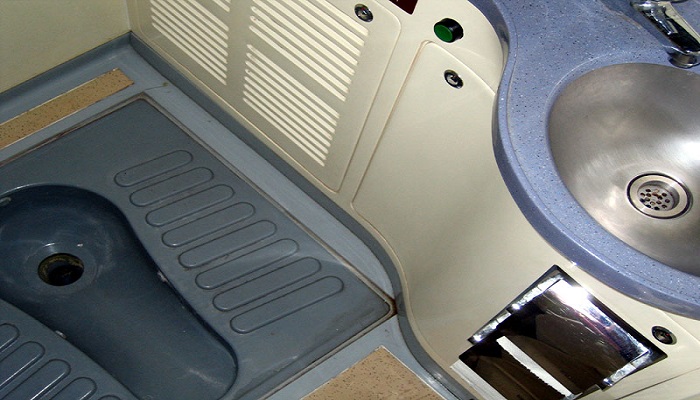
Chinese-Style Squat Toilets on Trains to Tibet
FAQs: Toilets on Trains to Tibet
Many passengers have questions about toilets and hygiene when taking Tibet trains. The following sorts out the most common questions and gives detailed answers based on the actual situation of Tibet trains to help passengers solve travel troubles and travel at ease.
Toilet Hot Water and Washing
Each Tibet train toilet has a public hand basin with room-temperature tap water for basic washing (hands, face). Some have mirrors for grooming. Note: tap water is not drinkable—use boiled water from the carriage water heater.
The water heater, usually next to the hand basin, provides boiled water for tea or instant noodles. Red/green lights indicate heating/boiled status; take care to avoid scalds.
Toilet Odor and Cleaning Frequency
Tibet train toilets adopt a vacuum collection system, which can effectively reduce odor diffusion. At the same time, train attendants regularly clean and disinfect. Soft sleeper carriages are cleaned every 1-2 hours, and hard sleeper and hard seat carriages are cleaned every 2-3 hours. Trash cans are cleaned and the floor is mopped in time to ensure there is no obvious odor and debris in the toilets.
If the toilet has a strong odor or poor hygiene, you can inform the train attendants in time, and they will clean and disinfect it in time to ensure the passenger experience. In addition, passengers can also bring their own small, non-irritating air freshener and spray it appropriately to improve the surrounding environment.
How to Deal with a Dirty Toilet
If you accidentally dirty the toilet during the journey (such as spilling water, leaving debris, etc.), you can use the cleaning tools in the toilet (such as mops, paper towels) to clean it in time to keep the toilet clean and avoid affecting other passengers. If you cannot clean it yourself, you can contact the train attendants, inform them of the specific situation, and they will come to help clean it.
It should be noted that you must not shirk responsibility for accidentally dirtying the toilet. Maintaining public hygiene is the obligation of every passenger. Only by jointly keeping the toilet clean can all passengers have a comfortable travel experience.
How to Solve Toilet Equipment Failures
If you encounter equipment failures when using the toilet (such as flushing failure, door failure to lock, etc.), do not use it forcibly to avoid further damage to the equipment. You can press the emergency call button in the toilet in time to contact the train attendants and inform them of the failure, and they will come to repair it in time.
If the failure cannot be repaired temporarily, the train attendants will guide passengers to the toilets in other carriages to ensure their basic toilet needs. In addition, when using the toilet, passengers should open and close the door gently and use the flushing button correctly to avoid man-made equipment failures.
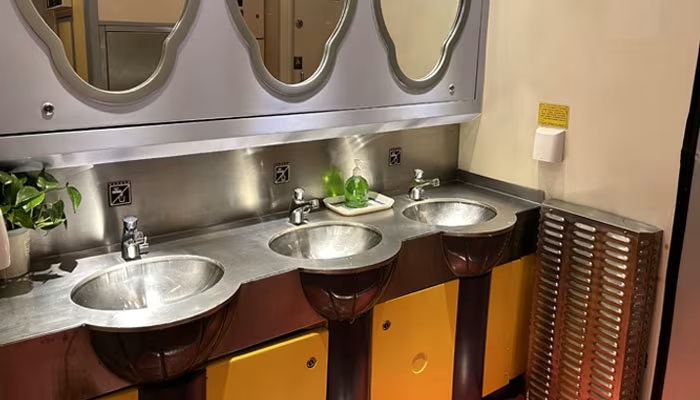
Public Washbasins on Trains to Tibet
Hygiene Preparations Before Traveling by Train to Tibet
To keep hygienic and have a comfortable trip on the Tibet train, it is very important to make preparations in advance. Combined with the characteristics of Tibet train toilets and hygiene, this article compiles a detailed travel hygiene preparation list to help passengers plan in advance and avoid affecting the travel experience due to insufficient preparation.
Personal Hygiene Products Preparation
When taking the Tibet train, it is recommended that passengers bring the following personal hygiene products to ensure their own hygiene and avoid the inconvenience caused by using public products:
- Paper Towels and Wet Wipes: Bring enough toilet paper and wet wipes. Toilet paper is used for the toilet, and wet wipes can be used for cleaning after the toilet, wiping hands or seats. Especially when there is no hand sanitizer, wet wipes can play a good cleaning role.
- Hand Sanitizer or Disinfectant Hand Gel: Carry a small bottle of hand sanitizer (easy to carry) or disinfectant hand gel. Clean your hands in time after using the toilet and before eating to do a good job in hygiene protection and avoid bacterial infection.
- Disposable Toilet Seat Covers: If you are used to using sitting toilets, it is recommended to bring disposable toilet seat covers and lay them on the seat to avoid direct contact, improving comfort and hygiene.
- Skin Care Products: The plateau climate is dry. Bring skin care products such as hand cream, moisturizer and lip balm. Apply hand cream in time after washing hands, and keep the face and lips moisturized to relieve the discomfort caused by dryness.
- Other Products: According to your own needs, you can bring small air fresheners, garbage bags, towels and other products. Air fresheners can be used to improve the odor around the toilet, garbage bags for personal garbage, and towels for drying after washing.
Hygiene Protection Medicine Preparation
During the plateau journey, the body may have various discomforts. Bringing some hygiene protection-related medicines in advance can effectively deal with emergencies and ensure physical health:
- Gastrointestinal Medicines: Bring gastrointestinal medicines such as Huoxiang Zhengqi Water and Norfloxacin to avoid diarrhea caused by unsanitary diet and gastrointestinal discomfort, which affects the travel experience.
- Disinfection Products: Bring small bottles of alcohol spray, povidone-iodine cotton pads and other disinfection products, which can be used for disinfection of hands, clothes or public contact parts to reduce bacterial transmission.
- Cold and Cough Medicines: The temperature on the plateau changes greatly, making it easy to catch a cold. Bring cold and cough medicines and take them in time when cold symptoms appear to avoid worsening of the condition.
- Adhesive Bandages: Bring adhesive bandages. If you accidentally scratch your hands or other parts, bandage them in time to avoid bacterial infection, especially after using the toilet, when the risk of the wound coming into contact with bacteria is high.
Other Hygiene Precautions
- Understand the train schedule in advance, reasonably plan the toilet and washing time, and avoid being unable to use the toilet during station stops or waiting in long queues during peak hours.
- During the journey, try to wear comfortable and easy-to-clean clothes, avoid wearing white or light-colored clothes to prevent difficulty in cleaning after getting dirty.
- Respect the work of the train staff, cooperate with their hygiene management, do not randomly damage toilet facilities, and jointly maintain the public hygiene of the carriage.
- If you have special hygiene needs (such as pregnant women, the elderly, passengers with reduced mobility), you can inform the train attendants in advance, and they will provide corresponding help and care.
Preparing for a Comfortable Tibet Train Journey
A train trip to Tibet is not only a means of transportation but also an unforgettable travel experience across the Tibetan Plateau. By understanding the onboard facilities and preparing personal hygiene supplies in advance, travelers can make the long journey much more comfortable and stress-free. Small details such as planning restroom use, maintaining personal cleanliness, and carrying basic hygiene products can greatly improve the overall experience during the trip.
For travelers planning a train journey to Tibet, China Dragon Travel offers professional travel planning services, including Tibet travel permits, train ticket arrangements, and customized itineraries. With expert guidance and local knowledge, visitors can focus on enjoying the spectacular scenery of the plateau while traveling in a well-organized and comfortable way.