
When traveling to Tibet, in addition to preparing warm clothes and medicines for altitude sickness, understanding and respecting local cultural rules is equally indispensable. Tibet has a profound Tibetan Buddhism tradition, and many living habits and taboos are quite different from those in other regions. Familiarizing yourself with these Tibet customs and taboos in advance can not only avoid embarrassment or offense caused by unintentional mistakes but also make the journey smoother. This respect not only shows courtesy but also helps you gain a deeper travel experience and achieve more sincere communication with locals.
Core Etiquette and Taboos for Tibetan Temple Visits
Temples are the core venues of Tibet’s religious and cultural life, and the rules here are the strictest. Abiding by these Tibet customs and taboos is the most basic respect for local beliefs.
Dress Code and Behavior
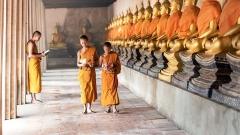
Before entering the main halls of any temple, you must take off your hat. Dress neatly and appropriately, avoiding overly revealing clothing such as miniskirts, shorts, vests, or sleeveless tops. After entering the main hall, please take off your sunglasses. Maintain silence inside the temple; do not talk loudly, make noise, or point directly at Buddha statues or murals with your fingers. When circumambulating religious structures such as Buddha halls, stupas, or prayer flag piles, you must strictly follow the clockwise direction, which is consistent with the direction of turning prayer wheels, known as “circumambulation”. This is a very important Tibetan custom, so remember not to walk in the opposite direction.
Regarding Photography and Touching
Random photography and video recording are strictly prohibited. Most of the main halls of temples, especially the areas housing the main Buddha statues, are completely off-limits to photography and video recording. Even in individual outdoor areas or designated zones where photography is allowed, you should first verbally obtain the explicit consent of the on-site monks or authorized personnel and ensure that the flash is turned off. Never touch Buddha statues, enshrined scriptures, ritual instruments, or thangka paintings and murals on the walls with your hands, as these are regarded as sacred and inviolable items.
Almsgiving and Worship
Almsgiving is voluntary, and sincerity is paramount. If you wish to add butter to butter lamps or donate incense money, please offer it respectfully with both hands. There is no fixed amount; it is entirely up to your personal will. To show respect, you can imitate the simple hands-folded greeting of locals. It is not recommended for tourists to perform complex rituals such as full prostrations unless you fully understand their religious significance.
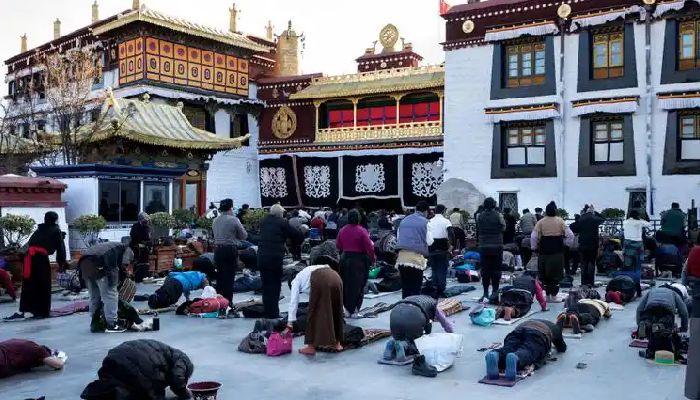
Pilgrims Circumambulating Jokhang Temple in Lhasa
Customs and Social Taboos in Tibetan Daily Life
In ordinary life scenarios outside temples, such as streets, restaurants, guesthouses, or local homes, there are also cultural details that need attention. Paying attention to these Tibetan customs can make your daily journey smoother and more harmonious.
Etiquette in Interpersonal Communication
When accepting items from others, especially tea, food, etc., please try to receive them with both hands, which is a common practice to show respect. Address monks as “Lama” (teacher) or “Ache” for elder monks. Never casually touch the heads of Tibetan compatriots, including children, because the head is considered a very sacred part in local culture. When communicating with locals, avoid taking the initiative to discuss sensitive political or specific religious doctrine topics; maintaining a friendly, listening, and open learning attitude is more appropriate.
Diet-Related Habits
Drinking tea is an important part of daily life. Hosts usually fill the teacups to the brim, and guests should drink in small sips. When the host refills your cup, they will top up the portion you have drunk. If you do not want any more tea, you can keep the teacup full before the next refill or politely decline with a gesture. When dining together, do not use your own chopsticks or spoon to take food directly from the public plate; instead, first transfer it to your personal bowl or plate. Never discard bones, residues, or other waste into the stove or hearth used for cooking or heating, as this is considered disrespectful to the kitchen god.
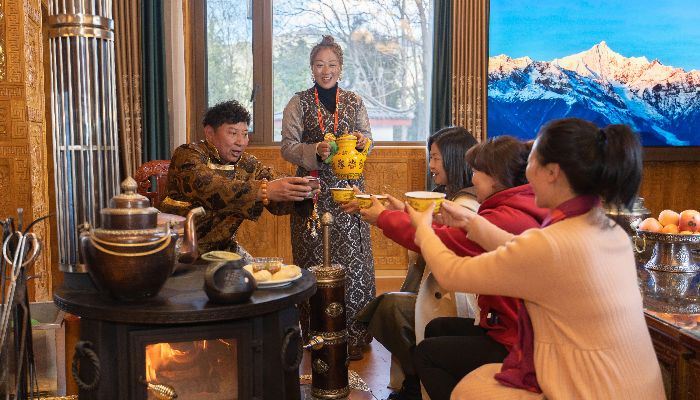
Tibetan Family Dining Scene
Tibetan Taboos Regarding Nature and Religious Activities
Tibetans hold a deep reverence for the natural environment. Many mountains and lakes are endowed with sacred meanings, leading to Tibetan taboos that must be strictly observed.
Treating Sacred Mountains and Lakes
Never pollute sacred lakes. Throwing stones, discarding any garbage into the lake water, as well as washing oneself or personal items in the lake are extremely serious offensive acts. Similarly, when facing sacred mountains (such as Kailash, Namcha Barwa Peak), you should be reverent and not speak disrespectfully or behave frivolously. Circumambulating sacred mountains and lakes must also be done in a clockwise direction. When encountering “mani piles” built with stones in the wild, do not take stones from them or knock them down. You can choose to pick up a stone and add it, and also circumambulate clockwise when adding.
Absolute Taboos Regarding Sky Burial
This is one of the most solemn Tibetan taboos. Tourists are strictly prohibited from visiting, approaching, or snooping around sky burial platforms in any form. It is absolutely forbidden to peek at, photograph, or video record sky burial ceremonies, and never search for sky burial sites out of curiosity. This is the most basic respect for the deceased and their families, and it is also related to laws and ethnic policies, so please keep it firmly in mind.
When Encountering Religious Activities
Keep a distance and observe quietly. If you encounter believers who are reciting scriptures or performing full-body prostrations on the way, please walk around behind them. Do not pass directly in front of them, and do not block their path for photography. You can watch quietly from a distance, but do not take close-up shots of their faces.
Other Important Practical Notes
There are also some scattered but equally important customs that are part of Tibet’s customs and taboos. Understanding them can make your travel preparations more thorough.
Shopping and Bargaining
When purchasing souvenirs, especially religious items such as thangkas, Buddha statues, and prayer wheels, be careful not to touch the goods with your feet or step over them from above. You can bargain friendly, but once the price is agreed upon, you should keep your promise. If you have no intention of buying, please do not engage in prolonged and insincere haggling.
Considerations for Thresholds
When entering a Tibetan compatriot’s tent or house, be careful not to step on the threshold; you should step over it directly. Traditionally, the threshold is regarded as the “guardian” of the family, and stepping on it is considered inauspicious.
Taboos for Cooking Stoves
Do not burn garbage or debris in the cooking stoves of tents or traditional residences, and do not stretch your feet towards the stove mouth to warm yourself. There is a hierarchy of seats around the stove or central area. Usually, the seat closest to the Buddha statue or shrine is the honored seat. If invited to sit, you should follow the host’s arrangement.
Respect as the Foundation of a Meaningful Tibet Journey
Customs and taboos in Tibet are not arbitrary rules, but reflections of a culture shaped by faith, history, and a deep respect for nature. For travelers, understanding proper behavior in monasteries, showing reverence toward sacred lakes and mountains, and being mindful during everyday interactions helps avoid unintentional offense and creates opportunities for more genuine connections. When respect guides your actions, Tibet reveals itself beyond scenery, offering cultural depth and human warmth.
In practice, many cultural boundaries are subtle and difficult to judge without local insight. This is where experienced guidance becomes valuable. China Dragon Travel focuses on culturally responsible travel, providing practical pre-trip advice and on-the-ground support rooted in local knowledge. By helping travelers navigate customs with confidence and sensitivity, the journey becomes smoother, more respectful, and ultimately far more rewarding.