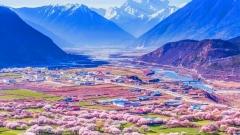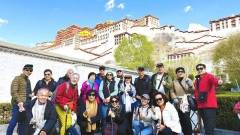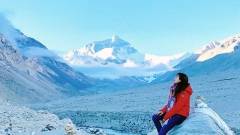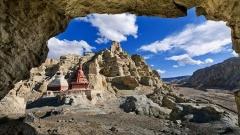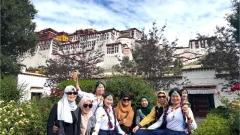

In August, Tibet boasts clear skies and fresh air. The renowned Shoton Festival, one of Tibet’s most grand traditional festivals, kicks off as scheduled, filling this sacred land with a festive atmosphere. It is not only a vivid display of Tibetan culture but also a plateau feast combining faith and joy. For tourists longing for Tibet, attending the Shoton Festival is undoubtedly the best way to deeply experience local customs and the unique charm of the Tibetan region, from the solemn Buddha sunbathing ceremony to the rich yogurt feast and wonderful Tibetan opera performances.
Origin of Tibet Shoton Festival
The Shoton Festival has a profound origin. In Tibetan, “Sho” means yogurt, and “Ton” means feast, so the festival was originally called the “Yogurt Feast Festival”. It originated in the mid-11th century as a purely religious event. At that time, the Gelugpa sect of Tibetan Buddhism stipulated that monks must recite scriptures and practice in temples from the 4th to the 6th lunar month to avoid going out and trampling on life, and they could only resume activities at the end of the 6th lunar month. On the day of resumption, secular people would prepare fresh yogurt to reward the monks and hold outdoor feasts, gradually forming the embryonic form of the Shoton Festival. In the late 17th century and early 18th century, with the integration of Tibetan opera, the Shoton Festival gradually developed into a combination of religious and cultural activities. Known for its grand Tibetan opera performances and large-scale Buddha sunbathing ceremony, it is also called the “Tibetan Opera Festival” and “Buddha Display Festival”. After hundreds of years of inheritance and development, the Shoton Festival has now become a celebration integrating tradition and modernity. In 2006, it was listed as a national intangible cultural heritage, serving as an important carrier for the inheritance of Tibetan culture.
The Shoton Festival
Buddha Sunbathing Ceremony: Tibet Shoton Festival Time and Activities
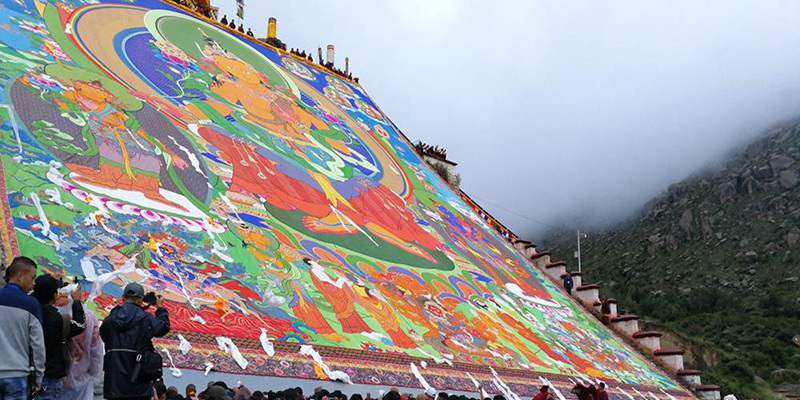
The Shoton Festival begins with a solemn Buddha sunbathing ceremony, one of its most representative core activities, attracting countless believers and tourists every year. The ceremony is mainly held at Drepung Monastery and Sera Monastery in Lhasa, with Drepung Monastery’s event being the grandest. On the 30th day of the 6th Tibetan lunar month (corresponding to mid-late August in the Gregorian calendar), before dawn, the roads leading to Drepung Monastery are already crowded with pious believers and eager tourists. People drive or walk, braving the early morning chill, arriving at the foot of the mountain early and climbing up to the Buddha display platform in an orderly manner along the built passages.
As the first ray of dawn is about to shine on the plateau, monks from Drepung Monastery jointly carry huge thangkas and slowly transport them from the main hall to the display platform. These thangkas are mostly woven with colorful silk, the largest reaching 500 square meters, embroidered with solemn images of Sakyamuni Buddha, Maitreya Buddha and other deities, featuring exquisite craftsmanship and peaceful expressions. Accompanied by deep and solemn religious chants, the giant thangkas are slowly unfolded with the cooperation of the monks, shimmering in the morning light. At this moment, believers on site fold their hands in prayer, bow down to worship, and both monks and laity chant the Sakyamuni Praise Sutra in unison. Believers also present hadas to the thangkas one by one, with sandalwood smoke curling up, creating a solemn and shocking scene. For tourists, witnessing this scene not only brings a strong visual impact but also allows them to deeply feel the Tibetan people’s firm faith and piety. It should be noted that the venue is extremely crowded. Tourists are advised to set off around 5 a.m. to occupy a good spot, carry portable oxygen cylinders to cope with altitude sickness, and take sun protection and warmth measures as the plateau temperature is low in the morning and there may be light rain.
Tibetan Opera Performances: Living Fossils of Mobile Tibetan Culture
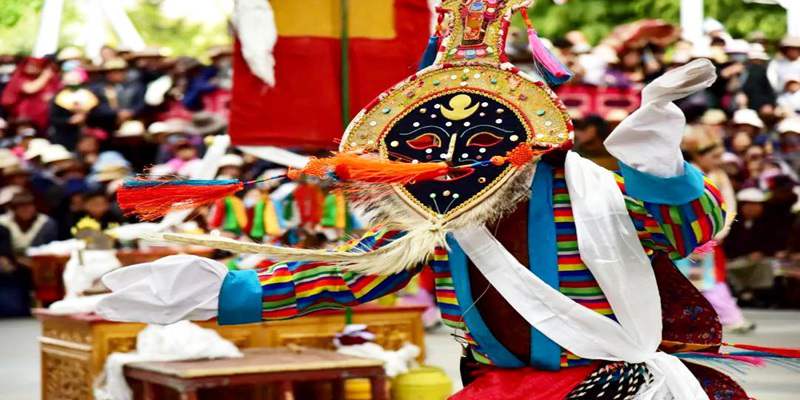
The integration of Tibetan opera adds more cultural charm to the Shoton Festival. Known as the “living fossil of Tibetan culture”, Tibetan opera plays a leading role during the festival. In Tibetan, it is called “Aji Lhamo”, meaning “fairy sisters”, divided into two major categories: white-mask opera and blue-mask opera, with many schools. Its stories are mostly based on folk legends, historical allusions and Buddhist classics, and the performance consists of three parts: the opening ceremony “Arowa”, the main play “Xiong” and the auspicious closing ceremony “Zhaxi”, featuring unique stage charm. Every year during the Shoton Festival, excellent Tibetan opera troupes from all over Tibet gather to perform in rotation at venues such as Norbulinka and Lhasa Zongjiao Lukang Park, bringing wonderful cultural feasts to the public.
On the 1st day of the 7th Tibetan lunar month, Tibetan opera troupes from various regions successively go to the Potala Palace and Norbulinka for worship and rehearsal; starting from the 2nd day, four major blue-mask opera troupes begin formal rotating performances, mainly featuring full-length traditional plays such as “Langsa Wenbang”, “Zhuowa Sangmu”, “Suoji Nima” and “Pema Wenba”. Performers wear simple and solemn costumes, wear magical and gorgeous masks, and interpret classic stories vividly with high-pitched and resonant singing, skilled and vivid dances and unique recitation. Tourists can sit on the ground, watch the performances with local people and feel the unique charm of Tibetan opera. During the 2025 Shoton Festival, excellent Tibetan opera performances will be held at Lhasa Zongjiao Lukang Park from August 23 to 27, and wonderful Tibetan opera shows will also take place at Norbulinka from August 23 to 25. Specific performing troupes and plays are clearly arranged, and tourists can plan their time in advance to watch. It is reminded that Tibetan opera performances are relatively long, so tourists are advised to carry folding stools and enter the venue 1 hour in advance to occupy seats for a better viewing experience.
The Shoton Festival
Lingka Leisure: A Unique Festival Relaxation on the Plateau
In addition to solemn religious ceremonies and wonderful cultural performances, “going to Lingka” is also an indispensable activity during the Shoton Festival, reflecting the unique leisure way of plateau people. “Lingka” means “garden” in Tibetan, and “going to Lingka” refers to traveling to gardens for outdoor activities. During the Shoton Festival, Norbulinka, as one of the activity centers of the festival, becomes the preferred destination for people to go to Lingka. Located in the center of Lhasa, Norbulinka was built in the 1740s, a typical Tibetan-style garden. Listed as a national key cultural relic protection unit in 1988, it is lush with vegetation, exquisite in architecture and picturesque in scenery.
During the Shoton Festival, Tibetan people dressed in gorgeous costumes bring their relatives and friends to Norbulinka, set up tents by streams, under trees or on grasslands, spread out mats and carpets, and place various wines, beverages, dishes and festival foods. Everyone chats, laughs, sings and drinks freely in the tents, enjoying the joy of the festival. Tourists can join them, experience the local leisure way, taste authentic Tibetan cuisine and feel the strong festive atmosphere. Norbulinka’s opening hours during the Shoton Festival are 9:30-19:00, with ticket sales and admission closing at 18:00. The entrance is the Southeast Gate M1 and the exit is the Northeast Gate M2. Tourists should pay attention to the park’s opening hours and access routes. In addition, there are intangible cultural heritage experience and product sales activities in the park, such as Tibetan incense, thangka, Tibetan paper and weaving. Tourists can get close to Tibetan intangible cultural heritage and purchase special souvenirs.
Special Experiences: Double Enjoyment of Taste and Sports
As a festival named after yogurt, tasting authentic Tibetan yogurt is an unmissable experience of the Shoton Festival. Tibetan yogurt is rich, sweet and sour with a delicate taste, a must-have delicacy on the local people’s festival table. Tourists can taste fresh yogurt at festival venues, local teahouses or restaurants, and also experience unique eating methods with ingredients such as sugar, honey and highland barley grains, savoring the Shoton Festival on the tip of the tongue. In addition to yogurt, traditional Tibetan foods such as tsampa, butter tea and yak meat are also worth trying. Laoguangming Gangqiong Teahouse is a good choice. Here, you can mix with local people, order a set meal of Tibetan noodles and sweet tea, and feel the authentic street life. The happiness that costs only 1 yuan should not be missed.
In addition to food experiences, the horse racing conference and equestrian performance during the Shoton Festival are also quite spectacular, adding a strong festive atmosphere. During the 2025 Shoton Festival, an equestrian performance was held at Lhasa North Suburb Racecourse from 10:00 to 16:20 on August 24. Wonderful programs such as horse lying down, sword chopping, speed horse racing, horseback archery, horseback toast picking, horseback hada picking and horseback acrobatics were staged in turn, creating a passionate and exciting scene, allowing tourists to fully feel the boldness and enthusiasm of the plateau people. In addition, tourists can experience Tibetan costume photography on Barkhor Street. Choose a local Tibetan costume store, put on gorgeous Tibetan costumes, and take photos at classic locations such as the Jokhang Temple circumambulation path and the yellow house wall to leave a unique Shoton Festival memory.
Practical Travel Guides for Tibet Shoton Festival
- Time and Venue: The Shoton Festival in Lhasa starts on the 30th day of the 6th Tibetan lunar month (mid-late August in the Gregorian calendar), lasting about 7 days. The local government implements a 7-day holiday to facilitate people and tourists to celebrate together. Main venues are concentrated in Drepung Monastery, Sera Monastery, Norbulinka, Lhasa Zongjiao Lukang Park, Lhasa North Suburb Racecourse, etc. The holding time varies slightly in different regions; Shigatse holds it a little later with a relatively smaller scale.
- Transportation Suggestions: Transportation in Lhasa is convenient. Tourists can take buses, taxis or online car-hailing services to various event venues. Due to heavy pedestrian and vehicle traffic on the roads leading to Drepung Monastery during the festival, it is advisable to set off early to avoid traffic jams. For urban attractions such as Norbulinka and Lhasa Zongjiao Lukang Park, buses and taxis are convenient. If planning to visit surrounding attractions like Nam Co, it is recommended to choose vehicles from regular travel agencies or rent a car for self-driving to ensure travel safety.
- Accommodation Preparation: The Shoton Festival is a peak tourist season in Tibet with a large number of visitors. It is recommended to book hotels 1-2 months in advance. You can choose suitable accommodation areas according to your budget and itinerary. There are plenty of hotels and guesthouses in downtown Lhasa, ranging from affordable youth hostels to high-end and comfortable star hotels. Areas near Barkhor Street and the Potala Palace have convenient transportation, facilitating participation in festival activities.
- Notes: The plateau has strong ultraviolet radiation. Tourists should prepare sun protection products such as sunscreen, sunglasses and sun hats in advance. The temperature difference between morning and evening is large; it is recommended to adopt the onion layer dressing method for easy adjustment. Some areas have high altitudes, which may cause altitude sickness. Tourists can prepare anti-altitude sickness medicine in advance, carry portable oxygen cylinders, avoid strenuous exercise and adapt to the altitude gradually. When visiting religious venues, dress appropriately; do not wear miniskirts or shorts. Respect local religious customs and ask for permission before taking photos of people and religious activities. In addition, some stalls may only accept cash, so it is recommended to prepare enough change in advance.
The Tibet Shoton Festival is a feast integrating faith, culture and joy. Every part is full of unique charm, allowing every visitor to deeply feel the unique customs of the Tibetan region. Whether it is the solemn Buddha sunbathing ceremony at dawn, the wonderful Tibetan opera performances in the garden, or the rich and mellow yogurt taste on the tongue, all will become unforgettable travel memories. If you want to experience the charm of the Tibet Shoton Festival more comfortably and in-depth, you can choose China Dragon Travel. Its professional team will plan a reasonable itinerary and provide thoughtful services for you, allowing you to enjoy the festive atmosphere without worrying about transportation, accommodation and other trivial matters, and appreciate the infinite scenery and profound cultural heritage of the snow-capped plateau.