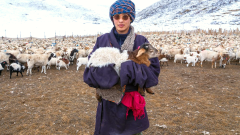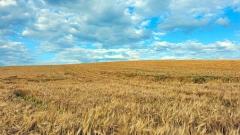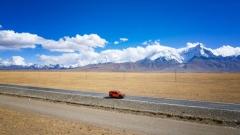

Tibet has become the ultimate dream destination for countless travelers with its unparalleled natural landscapes and profound cultural heritage. The beauty here is not merely a visual feast but a deep dialogue that touches the soul. When you set foot on this land, you will discover that Tibet’s beauty far exceeds imagination—it exists both in the grand narrative of snow-capped mountains and sacred lakes and hides in the details of monastery prayer flags; it unfolds in the boundless vistas of vast grasslands and manifests in the warm smiles of herders. This article will conduct an in-depth review of Tibet’s scenic beauty from multiple dimensions, exploring its unique visual charm and profound spiritual value.
Tibet’s Scenery: An Expression of Plateau Landscapes
Exquisite Transformations of Light and Shadow
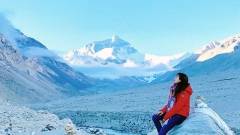
The light in Tibet has a unique texture and expressive power. Due to the high altitude and thin air, sunlight becomes exceptionally “pure” here—ultraviolet intensity is high, color saturation is elevated, and shadow boundaries are sharply defined. The golden roof of the Potala Palace at dusk is not merely an optical phenomenon but a cultural symbol where tradition and modernity achieve harmony through light and shadow. At sunset, Mount Kailash turns golden-red as the sun’s angle changes, with colors shifting subtly every minute. This dynamic beauty requires patience and focus to fully appreciate. After the rainy season in autumn, air transparency reaches its peak, allowing the textures of distant snow-capped mountains to be seen clearly—even revealing unique patterns formed by glacial movement. Such visual clarity is extremely rare in other regions.
The Colorful Poetry of Seasonal Cycles
Each season in Tibet presents distinctly different color personalities. In spring, Nyingchi’s peach blossoms bloom against a backdrop of snow-capped mountains, creating a gentle contrast between pink and pure white. In summer, the northern Tibetan grasslands come alive with wildflowers and lush green grass, bursting with vitality. In autumn, the entire region resembles an overturned palette—poplars turn golden, birches orange-red, and pines deep green—reaching peak saturation against the blue sky and white snow. In winter, monasteries and villages, snow-covered with curling smoke from chimneys, present a tranquil ink-wash aesthetic. This seasonal color variation not only enriches the visual experience but also embodies the deep rhythms of nature’s cycles, offering returning travelers fresh experiences with each visit.
Visual Experience of Ecological Diversity
From the canyon rainforests of southeastern Tibet to the cold desert grasslands of the Changtang, Tibet’s ecological diversity is vividly presented through landscape contrasts. In the Yarlung Tsangpo Grand Canyon, you can witness vertical distribution from tropical plants to ice and snow zones—a condensed geographical classroom rare worldwide. On the Changtang grasslands, wildlife such as Tibetan antelopes and wild yaks harmonize with the vast landscape, showcasing ecological integrity. Lake Pangong’s uniqueness lies in its east-to-west transition from fresh to saline water—a geological marvel visible through lake color differences. Each ecological landscape is not merely “scenery” but a visual narrative of natural evolutionary stories.

The Potala Palace at Dusk
Interpretation of Tibet’s Cultural Landscapes
The Spatial Poetry of Architectural Art
Tibet’s cultural landscapes are an extension and sublimation of its natural beauty. Architecture, art, daily life, and religious rituals together form a rich vocabulary of cultural visuals. Tibetan architecture is frozen philosophy and living history. The Potala Palace is not just a palace but a three-dimensional representation of the Buddhist worldview—the layered structure of its White and Red Palaces metaphorically represents the relationship between secular and sacred; the arrangement of countless windows aligns with astronomical calendars; the integration of the entire structure with Marpo Ri Mountain embodies the Tibetan architectural concept of “mountain as palace, palace as mountain.” Samye Monastery’s mandala-style layout transforms abstract Buddhist cosmic diagrams into inhabitable architectural spaces—this ability to materialize philosophical concepts is astonishing. The defensive structure of Gyantse Dzong tells tales of historical conflicts, while the cave architecture of the Guge Kingdom ruins demonstrates survival wisdom adapted to the environment. Each building is a three-dimensional history book awaiting interpretation.
Visual Narratives of Religious Art
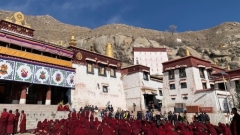
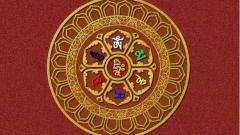
Tibetan religious art translates Buddhist teachings into visual language through thangkas, murals, sculptures, and other forms. In ancient monasteries like the Jokhang Temple and Tashilhunpo Monastery, murals narrate the Buddha’s life and Buddhist scriptures through continuous scenes—this narrative visual art achieved remarkable maturity centuries ago. The intricacy of thangka art surpasses imagination—some works depict hundreds of figures within small spaces, with every detail conforming to strict iconometric rules, using traditional mineral pigments that remain vibrant for centuries. Butter sculpture demonstrates another visual marvel: elevating everyday food materials into exquisite artistic media, showcasing the perfect union of religious devotion and artistic talent.
Visual Feasts of Festival Activities
Tibetan festivals are comprehensive artistic presentations of color, movement, and sound. The “Cham” ritual during Losar (Tibetan New Year) features dancers wearing exaggerated masks and elaborate costumes performing complex steps to drum and cymbal accompaniment—a performance with strict religious significance and high appreciating value. During the Shoton Festival, giant thangkas are unfurled on hillsides, creating awe-inspiring scenes of devotion. Horse racing festivals showcase riders’ prowess, traditional costumes’ splendor, and audience enthusiasm, forming dynamic tableaus. These festival activities are not only culturalinheritance but also concentrated displays of visual art, with each frame worthy of careful appreciation.

Traditional Tibetan Festival
An Interpretation of Tibet ‘s Scenery
Contemporary Revival of Natural Sublimity
The ultimate value of Tibet’s scenic beauty lies not in being viewed but in being experienced—an experience that often touches the viewer’s inner depths, sparking spiritual resonance beyond the visual.
Tibet’s landscapes are among the few places in the contemporary world that can evoke genuine sublimity. Facing the continuous peaks of the Himalayas, individuals feel their own smallness—not as belittlement but as liberation from daily trivialities and self-centeredness. This experience of natural sublimity is increasingly rare in modern society, making it all the more precious. Many travelers describe how daily worries seem insignificant before Tibet’s landscapes—a perspective shift with potential psychological healing effects.
Inner Dialogue in Silent Spaces
Many Tibetan landscapes possess inherent “silent” qualities—expansive wilderness, calm lakes, empty valleys—creating external silence that fosters internal stillness. In such spaces, the mind can temporarily disengage from information-overloaded modern life for profound self-dialogue. This silent experience is not emptiness or boredom but a tranquility rich with perspective: the sound of wind, movement of light, subtle color changes become exceptionally clear against the silent background. Many travelers discover they can hear their inner voices more clearly in Tibet’s quiet landscapes.
Recalibration of Time Perception
Tibet’s landscapes often carry profound temporal dimensions—snow-capped mountains witnessing geological eras, monasteries holding historical memories, ancient ruins telling tales of civilizational rise and fall. Immersed in such environments, people’s time perception shifts: the hurried pace of daily life is replaced by vaster time scales. Viewing the ruins of the Guge Kingdom makes one aware of individual life’s brevity versus civilization’s longevity; standing at a glacier’s terminus fosters understanding of climate change’s slow processes and far-reaching impacts. This expanded time perception helps develop more historically profound perspectives and relax life attitudes.
Natural Triggering of Spiritual Dimensions
Regardless of religious beliefs, many experience a transcendent spiritual dimension in Tibet’s landscapes. This may stem from the scenery’s inherent sacredness (like Mount Kailash, revered by multiple religions) or from transcendent thinking evoked by the landscapes. Pure natural beauty can sometimes inspire awe, wonder, and connection similar to religious experiences. This spiritual experience isn’t necessarily tied to specific doctrines but represents humanity’s natural response to fundamental questions about the universe, life, and existence. Tibet’s uniqueness lies in how its natural landscapes and cultural traditions jointly enhance the accessibility of this spiritual dimension.
Transcending Aesthetic Fatigue
In an age of image overload, genuine aesthetic experiences are increasingly rare. Tibet’s scenic beauty possesses an “anti-fatigue” quality—its intensity, purity, and depth can penetrate sensory inertia to directly touch the perceptual core. This experience isn’t passive consumption but active participation: requiring bodily movement, visual adaptation, and mental openness. Many photographers find that shooting in Tibet renews their sensitivity to light, color, and composition—this regeneration of artistic perception is a precious gift of the Tibetan journey.
The true depth of Tibet’s scenic beauty lies in its multi-layered value beyond mere visual enjoyment. It is both a display of geographical wonders and a carrier of cultural codes; both an inspiration for photographic creation and a trigger for spiritual reflection. When travelers come to this land with open eyes and hearts, they take away not just camera images but new ways of perceiving the world, broader perspectives for understanding culture, and deeper dimensions for experiencing life. Tibet’s beauty is ultimately an invitation—to transcend ordinary vision and rediscover the world’s vastness and life’s profundity. On this land closest to the sky, many see not only breathtaking landscapes but also glimpse equally magnificent inner landscapes within themselves.