
For foreign travelers planning to visit Tibet, a successful trip starts with a clear understanding of the local special regulations. Tibet is not a regular destination for “spontaneous travel”; its unique Tibet Travel Permit, group travel requirements and high-altitude environment mean thorough preparations are needed before departure. This article will systematically explain the top 10 restrictions and recommendations that foreign visitors must know for traveling to Tibet. Based on current laws, regulations and practical operations, this practical guide aims to help you avoid common problems and ensure a legal, smooth and safe journey.
1. Travel Recommendation: Tibet Travel Opening Hours and Tour Group Selection
Currently, Tibet is open to all eligible foreign tourists with no additional quarantine requirements. However, “openness” does not mean you can move freely as in other regions. The first step you need to take is to select a travel agency registered with the Tibet Tourism Bureau and qualified to legally receive foreign guests. These travel agencies offer a variety of group products, from classic 4-day Lhasa cultural tours to in-depth 17-day tours covering Mount Everest Base Camp and Ngari Region. We strongly recommend you start consulting and booking at least 1-2 months in advance. This not only ensures availability for your desired departure date but also allows the travel agency sufficient time to process your core Tibet Travel Permit, and you may even enjoy early bird discounts.
2. Travel Restriction: Tibet Independent Travel Policy and Customized Tour Options
This is one of the most important restrictions: foreign passport holders are not allowed to engage in any form of independent travel or self-guided travel in Tibet. You cannot book hotels in Lhasa on your own, nor rent vehicles for self-driving locally. Your entire trip, including accommodation, transportation and tour guide services, must be uniformly arranged and organized by the travel agency. However, this does not equate to an impersonal “large group tour”. You can choose a “private group tour” or “customized private tour”. This means even if it’s just you and a few travel companions, you can form an independent group. You can communicate in depth with the travel agency consultant to jointly agree on the itinerary route, sightseeing focus, accommodation standards and travel pace within the framework permitted by regulations, thereby obtaining a highly personalized travel experience that meets special interests such as photography, hiking or cultural exploration.
3. Travel Restriction: Tibet Travel Permit Application Process and Required Documents
The Tibet Travel Permit is a legal document for foreign tourists to enter Tibet, and its importance is equivalent to your passport and Chinese visa. You cannot apply for it personally; it must be submitted by the Tibet travel agency you entrust to the Tibet Autonomous Region Tourism Bureau. The standard processing time is 10-14 working days, but during the peak tourist season (May to October) or if the itinerary involves border areas (such as Mount Everest, Ngari), the time may be extended, so it is crucial to apply as early as possible.
The documents you need to provide to the travel agency usually include: 1) A clear scanned copy of the passport information page (valid for at least 6 months); 2) A scanned copy of a valid Chinese visa (usually an L-type tourist visa); 3) A detailed itinerary (including dates of entry and exit to/from Tibet, cities and sightseeing locations); 4) Occupation information (ordinary tourists can fill it out as is; journalists, diplomats, etc. need to declare specially). After approval, the travel agency will send the physical Tibet Travel Permit to your transit city in China (such as Chengdu), and you must present the original document to board a flight or train to Tibet. Please keep it properly throughout your trip.
4. Travel Restriction: Legal Transportation Methods to Enter Tibet
The “ticket” for you to enter Tibet is the Tibet Travel Permit, and there are mainly the following two “channels” to enter, and your departure point must be consistent with the city declared when applying for the Tibet Travel Permit.
Entering Tibet from Mainland China Cities
Flying to Tibet is the fastest way. There are direct flights to Lhasa from cities such as Chengdu, Chongqing, Xi’an, Kunming, Shanghai and Beijing, with a flight time of approximately 2-5 hours. Due to its dense flights and relatively gentle altitude transition, Chengdu has become the most popular aviation hub for traveling to Tibet.
Taking the train to Tibet is a classic experiential journey. The Qinghai-Tibet Railway departs from Xining, passes through Qinghai Lake, Hoh Xil No-Man’s Land and Tanggula Pass, and finally arrives in Lhasa, with a total journey of about 21-24 hours. The train is equipped with diffused oxygen supply to help you gradually acclimatize to the altitude. However, it should be noted that train tickets to Tibet are extremely tight, with a short public ticket sales window, and the success rate of personal ticket snatching is low. Entrusting the travel agency to book on your behalf is the most reliable way to ensure you can travel as planned. Many tourists choose to “fly in and take the train out” or “take the train in and fly out” to balance time and experience.
Entering Tibet from Kathmandu, Nepal
This is an adventurous route. You can take a direct flight to Lhasa (about 1.5 hours) or choose a longer but breathtaking overland crossing. The overland route follows the China-Nepal Friendship Highway and enters China through Zhangmu Port (or Gyirong Port). For the overland route, you must apply for a Nepalese visa, a Chinese visa (it is recommended to apply in advance in a third country) and a Tibet Travel Permit that includes the land port, and arrange transfer vehicles on both sides of the port. This route requires higher flexibility in time and itinerary planning.
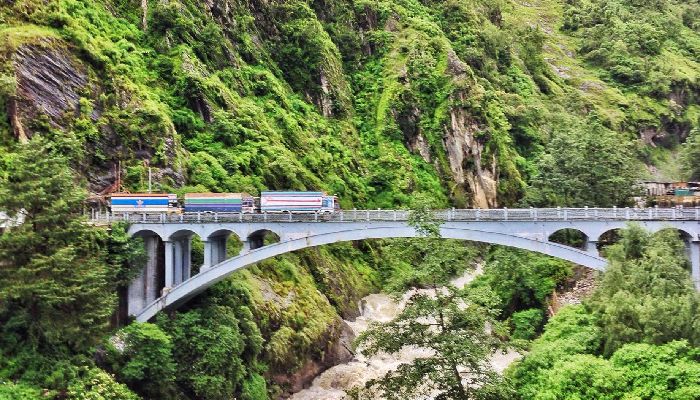
China-Nepal Friendship Bridge
5. Travel Recommendation: Health Requirements and Altitude Sickness Prevention for Traveling to Tibet
The Tibet Tourism Bureau does not set mandatory medical examinations or age limits, but this does not mean there are no risks in the high-altitude environment. Assessing your own health condition is your primary responsibility. It is recommended to undergo a medical examination before the trip and consult a doctor for advice on traveling to high-altitude areas. People with a history of severe cardiopulmonary diseases, hypertension, anemia, etc. need to be extra cautious.
The prevention and management of altitude sickness is a mandatory course for traveling to Tibet: 1) Mental and physical preparation: Avoid excessive anxiety and excitement, and maintain good sleep. 2) Itinerary design: Follow the principle of “gradual progression” – first acclimatize in Lhasa (3,650 meters) for 2-3 days before traveling to higher areas. 3) Code of conduct: Within the initial period of arrival, avoid taking a bath, drinking alcohol, overeating and strenuous exercise, slow down your movements and drink plenty of warm water. 4) Essential items: Prepare sunscreen, sunglasses, lip balm, warm clothing and some common medicines (such as painkillers, gastrointestinal medicines). Most importantly, if you have a cold, fever or severe respiratory infection before departure, be sure to postpone your trip, as these symptoms may worsen sharply at high altitudes.
6. Travel Recommendation: Regulations for Foreigners Traveling with Chinese Relatives or Friends
You can completely travel in Tibet with your Chinese relatives, friends or colleagues. There are two common operation modes: one is that your foreign group directly joins an existing travel group with Chinese tourists to form a mixed group; the other is that you and your Chinese relatives/friends form an independent private small group. In the second case, all foreign members of the group still need to abide by the regulations for foreign guests (requiring a Tibet Travel Permit, accompanied by a tour guide, and staying in foreign-friendly hotels), while Chinese members only need to carry their ID cards and follow the same itinerary. The itinerary registration and operation of the entire group are still based on the requirements for foreign tourists.
7. Travel Restriction: Special Regulations for Journalists and Diplomats Entering Tibet
This regulation is very clear: Personnel holding press cards or diplomatic/official passports cannot apply for a Tibet Travel Permit through commercial travel agencies and travel as ordinary tourists. Tibet has a completely independent approval system and reception process for visits by such personnel. If you fall into either of these two categories, do not attempt to apply through regular tourist channels, as this will inevitably lead to rejection and may cause unnecessary troubles. The correct approach is to contact the relevant foreign affairs authorities in China through the official foreign affairs channels of your affiliated organization or your country’s embassy or consulate in China, and submit an application in accordance with the procedures for official visits or official interviews.
8. Travel Restriction: Regulations on Taking Regular Tourist Vehicles in Tibet
Safety is the bottom line for traveling in Tibet. Local regulations mandate that all ground transportation for foreign tourists during their stay in Tibet must use regular tourist operation vehicles with license plates starting with “Zang AL”. These vehicles are affiliated with legal tourist bus companies, undergo regular strict safety inspections, are insured with high-value passenger liability insurance, and the drivers have received professional training and are familiar with complex mountain road conditions and weather changes. When booking your itinerary, be sure to confirm the legality of the vehicles used with the travel agency. Do not accept unlicensed vehicle services to save money, as this is not only illegal but also your rights and interests will not be protected at all in case of accidents or disputes.
9. Travel Restriction: Travel Restrictions During Tibetan New Year
Tibetan New Year is the most grand festival for Tibetan people, usually falling between February and March in the Gregorian calendar and lasting about 15 days. During this period, Tibet’s tourism ecosystem is almost completely suspended: most government agencies, shops and restaurants are closed; temples may only be open to local believers or hold internal religious ceremonies, refusing visitors; local tour guides and drivers mostly go home for the New Year, and tourism reception capacity is almost zero. Therefore, travel agencies basically do not organize groups during this period, nor can they apply for Tibet Travel Permits for foreign tourists. When planning your trip, be sure to check the date of Tibetan New Year for the specific year (which varies each year) and avoid this period completely.
10. Travel Recommendation: Travel Safety and Cultural Respect Guidelines for Tibet
The overall public security in Tibet is good, and the people are friendly. Travel safety is more reflected in respecting the environment and culture:
- Etiquette in religious venues: When entering any temple hall, please take off your hat and dress modestly. Never point at Buddha statues with your fingers, and do not touch Buddha statues, scriptures or ritual objects for photography. Do not take close-up photos of monks and devout believers without explicit permission.
- Political and cultural sensitivities: Avoid publicly discussing sensitive political, religious and historical topics. Keep quiet when in temples or encountering religious activities, and follow the guide’s instructions.
- Respect for the natural environment: Do not litter randomly, especially on hiking trails and beside sacred lakes. Do not purchase any products made from protected wildlife.
- Financial and personal safety: Like in tourist areas around the world, take good care of your personal belongings in crowded places. Follow the guide’s safety tips on weather and road conditions, and do not leave the group without permission to go to undeveloped areas.
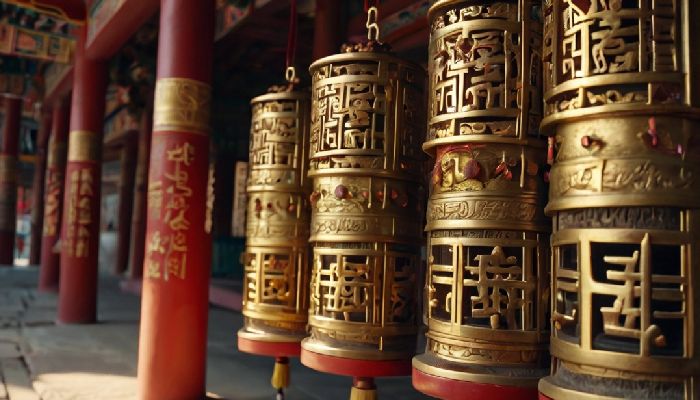
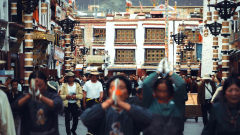
Prayer Wheels at a Tibet Temple
Tibet Travel Summary & Guidelines for Foreign Visitors
In summary, foreigners traveling to Tibet need thorough preparation, including choosing a legal tour agency, applying for the Tibet Travel Permit, arranging transportation and accommodation, and planning time for high-altitude adaptation. Respecting local culture, observing religious etiquette, and following safety and environmental guidelines are essential for a successful journey. For professional assistance with permits or customized itineraries, it is recommended to contact a qualified agency such as China Dragon Travel, which can provide comprehensive support to ensure a safe and enjoyable experience.