
Gansu is a narrow land stretching across northwest China and a thoroughfare of the Silk Road. Converging diverse civilizations, it attracts countless travelers with its magnificent natural landscapes and historical heritage, from the Yellow River Iron Bridge in Lanzhou to the Mogao Grottoes in Dunhuang, from the colorful Danxia landform in Zhangye to Labrang Monastery in Gannan. However, due to its complex territory, geography and climate, and diverse ethnic groups, there are precautions that should be noticed. This article sorts out the travel tips for Gansu, from documents to transportation, helping you explore this land with ease.
Documents for Gansu Travel
Before embarking on your trip to Gansu, international visitors must strictly abide by China’s visa application regulations. Additionally, Gansu is home to numerous border areas, and a Border Entry Permit is required for special itineraries to these regions, ensuring a smooth and hassle-free journey.
- Visa Application: Foreign visitors traveling to Gansu need to apply for a Chinese tourist visa in advance. When submitting an application to the Chinese embassy or consulate in their home country, the following documents are required: a valid passport with a validity of more than 6 months and blank visa pages, a copy of the passport’s photo page, a fully completed visa application form, and one recent 2-inch color passport photo with a light background, taken in a frontal and bare-headed pose. Supplementary supporting documents such as travel itineraries and hotel reservation confirmations should be provided as required by the embassy or consulate, ensuring all materials are authentic and complete.
- Visa-Free Entry: If you plan to visit some border areas such as Jiuquan City, Zhangye City, Maqu County or Luqu County, you need to apply for a border pass additionally. Police branches in Lanzhou and other places have set up online service centers that offer one-stop border pass application services, saving people from running between multiple departments.
- Visa Usage: The issued tourist visa will specify the number of entries, duration of stay and entry validity period. You must complete entry procedures within the validity period and stay in China in accordance with the specified duration. If the visa expires or the permitted number of entries is used up, the visa will become invalid automatically, and holders of an invalid visa will be refused entry or subject to penalties. If the original visa’s duration of stay or number of entries cannot meet the needs of your Gansu travel itinerary, you need to re-submit the application materials in advance—no changes can be made to the visa content after it is approved.
Foreign visitors traveling to Gansu must strictly comply with the relevant rules and verify the latest policies and required documents in advance to avoid travel disruptions caused by visa or document issues.
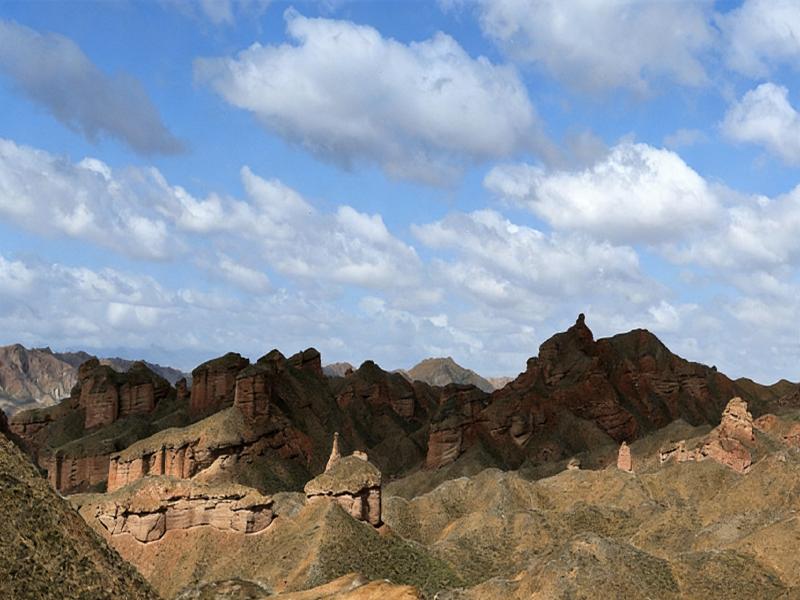
Gansu Travel: Exploring the Serene of Gobi
Long-Distance Transportation for Gansu Travel
Gansu is home to multiple civil airports and railway hubs, forming a long-distance transportation network with Lanzhou Zhongchuan Airport as the provincial core hub and surrounding airports and railways radiating outwards. It is recommended to flexibly combine air travel, high-speed rail and regular trains according to your itinerary needs, balancing efficiency and travel experience.
- Air Travel: Lanzhou Zhongchuan International Airport is Gansu’s aviation hub, with flights to 13 international and regional destinations including Osaka, Singapore and Kuala Lumpur, as well as direct flights to most provincial capitals with frequent daily departures. For international visitors, flying to Lanzhou is the most convenient way to enter China, followed by connecting to various destinations in the Hexi Corridor via high-speed rail or regional flights. Regional airports such as Dunhuang Mogao International Airport, Zhangye Ganzhou Airport and Jiayuguan Airport are well-equipped, with special discount tickets often available in the off-season.
- High-Speed Rail: The Lanzhou-Xinjiang High-Speed Rail is the golden travel route in Gansu, running through key cities of the Hexi Corridor such as Lanzhou, Zhangye and Jiayuguan. The journey from Lanzhou to Zhangye takes about 3 hours, and Lanzhou to Jiayuguan about 4.5 hours, with a high on-time rate, making it ideal for short intercity trips. The Baoji-Lanzhou High-Speed Rail connects Tianshui, with the journey from Lanzhou to Tianshui taking only 1.5 hours for easy access to the Maijishan Grottoes. Most high-speed rail stations are close to urban areas with convenient connecting transportation, making high-speed rail the best choice for traveling the Hexi Corridor and southeastern Gansu routes.
- Regular Trains: Regular trains cover the entire territory of Gansu, and are particularly suitable for budget-conscious travelers looking for an in-depth experience. An overnight sleeper train runs from Lanzhou to Dunhuang, arriving the next morning and saving the cost of one night’s accommodation. There are stable and affordable regular train services to surrounding cities such as Wuwei, Jiuquan, Pingliang and Longnan. It is recommended to combine overnight regular trains for long-distance trips and high-speed rail for short trips to balance cost and experience.
International visitors can enter China via direct flights to Lanzhou or regional airports, connect between core scenic spots by high-speed rail for intercity travel, and choose regular trains for long-distance inter-provincial trips to save expenses. Flexible switching between these three transportation methods allows you to fully enjoy Gansu’s beautiful scenery.
Transfer Cities for Gansu Travel
Gansu’s transfer cities all rely on their transportation hub attributes to radiate surrounding tourist areas. The core principle for choosing a transfer city is to transfer nearby according to your travel route, avoiding backtracking and unnecessary travel. Meanwhile, you can take advantage of transfer time to explore the characteristic scenic spots of the city briefly.
- Lanzhou: As the capital of Gansu Province, Lanzhou is a comprehensive transportation hub in the northwest, with air and railway routes covering the whole country and all parts of Gansu. Whether traveling to the Hexi Corridor, Gannan Tibetan Autonomous Prefecture, eastern or northern Gansu, you can find suitable transportation options by transferring in Lanzhou, making it the first choice for transfer city to enter Gansu.
- Jiayuguan: Jiayuguan is a vital transportation link connecting Zhangye and Dunhuang, accessible by air and railway, and is at a moderate distance from both cities. If you travel specifically to the Hexi Corridor, transferring in Jiayuguan allows you to split the long Hexi Corridor itinerary and reduce the daily driving distance.
- Xining: Xining is an important transfer city for combined Gansu-Qinghai travel and Gannan Tibetan area travel. Traveling from Xining to Labrang Monastery and Langmusi Monastery in Gannan is more convenient than from Lanzhou, and you can enjoy the grassland scenery on the eastern edge of the Qinghai-Tibet Plateau along the way. It is suitable for travelers from southwest China and those planning a Gansu-Qinghai loop tour.
- Tianshui: Tianshui is a key hub of the Longhai Railway, with air and railway routes radiating eastern Gansu and western Shaanxi, making it the first choice for travelers visiting eastern Gansu. You can visit the Maijishan Grottoes first when transferring in Tianshui, then proceed to Pingliang and other destinations.
International visitors should choose long-distance transportation reasonably according to their travel routes to achieve an efficient combination of transportation and travel, making long-distance trips more comfortable.
Essential Gears for Gansu Travel
Gansu has a vast territory and complex landforms, ranging from the Hexi Corridor to the Gannan Plateau, and from the desert Gobi to the Longnan mountainous areas, with huge differences in climate and environment. Travel gear must be both targeted and practical to ensure a safe and comfortable journey.
- Essential Clothing: Gansu has an extreme temperature difference between day and night, with nighttime temperatures dropping below 10℃. In winter, prepare down jackets, sweaters, thermal underwear and windproof pants. In summer, it is recommended to bring short-sleeved shirts, long-sleeved quick-drying shirts, light outerwear and windproof jackets.
- Travel Essentials: For exploring the desert Gobi, bring sand-proof and breathable desert boots or hiking shoes; for mountain scenic areas, prepare non-slip and wear-resistant mountaineering shoes. It is recommended to bring a spare pair of shoes to avoid travel disruptions caused by wet or sand-filled shoes.
- Essential Accessories: Ultraviolet radiation is intense across Gansu, so sun hats and sunglasses are a must—they also prevent sand from getting into your eyes. Scarves or face veils can effectively protect against sand when exploring the desert.
- Sun Protection Products: Choose sunscreen with SPF50+ and PA++++, and match it with a sun protection lip balm. Reapply sunscreen every 2-3 hours in desert and plateau areas to ensure sun protection effectiveness; if your skin becomes red and sore from sun exposure, apply aloe vera gel with cold compresses in a timely manner.
- Common Medicines: Bring essential gastrointestinal medicines, cold medicine, band-aids, iodophor and other external disinfectants and wound care products; it is recommended to prepare anti-altitude sickness medicines such as Rhodiola rosea and Gaoyuan’an, and take them 3-5 days in advance.
Gear for traveling in Gansu should prioritize practicality and adaptability. It is recommended to layer your clothing, select shoes according to the travel scene and bring a spare pair. Sun protection products and protective gear are a must, and you should also carry common medicines to ensure a safe and smooth journey.
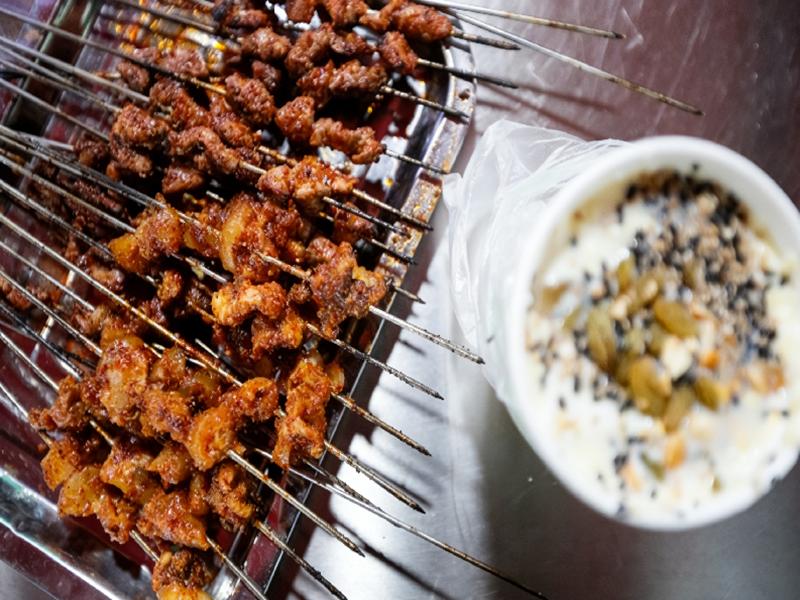
Gansu Lamb Skewers: A Spicy Delicacy
Travel Tips for Gansu: Meet the Silk Road in Your Heart
The beauty of Gansu lies in the millennium charm of the Silk Road, the grandeur of the desert Gobi, the tranquility and vastness of the plateau grasslands, and the rich customs of ethnic minorities. Every inch of scenery on this land needs to be felt with your heart and guarded with respect. With thorough preparation, abiding by local rules and customs, and a heart of exploration and awe, you will gain unique surprises and touches during your Gansu trip. From the banks of the Yellow River in Lanzhou to the foot of Mingsha Mountain in Dunhuang, from the colorful Danxia landform in Zhangye to the depths of the grasslands in Gannan, the splendor of the Longyuan land is waiting for you to discover.