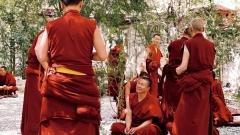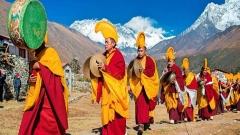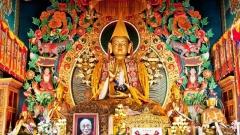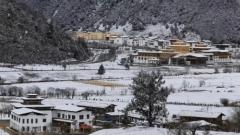

Traveling from the United States to Tibet is a long but rewarding journey. Because Tibet does not have direct international flights, travelers usually enter mainland China first and then continue to Lhasa by domestic flight or by train along the famous Qinghai–Tibet Railway. Although the trip may take more than a full day including connections, the dramatic Himalayan landscapes, sacred lakes, and unique Tibetan Buddhist culture make it one of Asia’s most extraordinary travel experiences.
Entry Permits to Tibet: Must Be Secured Before Departing from the US
To travel to Tibet from the US, the first thing to solve is the document issue. In accordance with the regulations for foreign tourists visiting Tibet, holders of US passports cannot enter Tibet on their own and must apply for a Tibet Travel Permit through a travel agency.
The materials to be prepared include:
- Passport with a validity of more than six months
- Chinese Tourist Visa (Type L)
- Tibet Travel Permit (applied for on behalf of the traveler by a qualified travel agency)
The Chinese Visa should be applied for at the nearest Chinese embassy or consulate, with a regular processing time of about 4 working days and a fee of about 140 US dollars. After the visa is approved, scan the passport’s biographical page and the visa page and submit them to the travel agency, which will apply for the Tibet Travel Permit on your behalf.
The approval cycle for the Tibet Travel Permit is usually 30 to 45 working days. If you plan to travel during the peak tourist season from June to October, it is recommended to submit the materials to the travel agency at least two months in advance. After the Tibet Travel Permit is issued, the travel agency will send it to the designated hotel in your last mainland China city before entering Tibet (such as Chengdu or Beijing), and you can only board the plane or take the train to Tibet with this document.
Notes: The Tibet Travel Permit will indicate the mode and city of entry to Tibet (e.g., “fly to Lhasa from Chengdu” or “take the train from Xining”), and your itinerary must be consistent with this, otherwise you will not be able to travel. If you plan to visit border areas such as Mount Qomolangma Base Camp, Ngari or Kailash, you also need to apply for a Border Pass, which the travel agency can usually handle for you together with the entry permit.
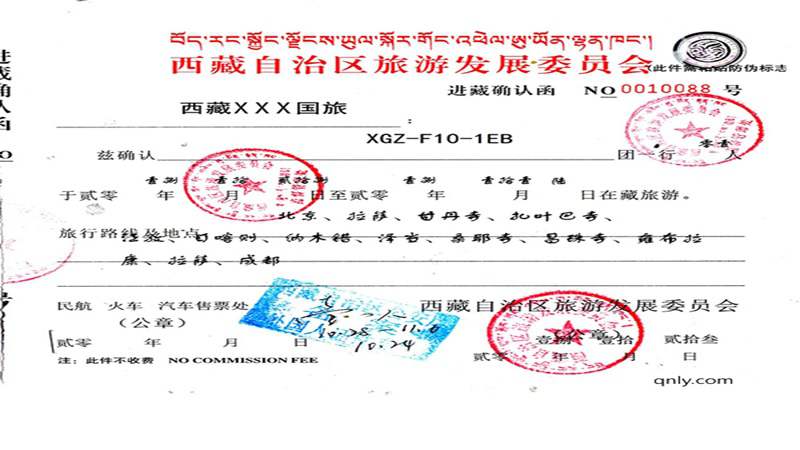
Tibet Travel Permit
Transportation to Tibet: Flights from the US to Tibet
There are no direct flights between the US and Tibet, so transfers via cities in mainland China are required. Common transfer hubs include Chengdu, Beijing, Shanghai, Guangzhou and other cities.
Composition of flight tickets by segments:
- US to China: Flights from West Coast cities (Los Angeles, San Francisco) to Chengdu or Beijing cost about 800–1200 US dollars for a round trip in the off-season and about 1500–2000 US dollars in the peak season; fares from East Coast cities (New York) are usually slightly higher.
- China to Tibet: A one-way flight from Chengdu to Lhasa costs about 400–600 US dollars in the off-season and about 700–900 US dollars in the peak season.
Main departure city options:
- Los Angeles (LAX): There are frequent direct flights to Beijing, Shanghai, Guangzhou and Shenzhen with flexible connections.
- San Francisco (SFO): There are direct flights to Chengdu in some travel seasons, which can reduce the number of transfers.
- New York (JFK/EWR): Direct flights to Beijing, Shanghai and Hong Kong are available, suitable for travelers departing from the East Coast.
- Seattle (SEA): Direct flights to Shanghai are stable, suitable for travelers taking Shanghai as the transfer hub to Tibet.
Ticket booking suggestions:
- Start paying attention to ticket prices 3 to 4 months in advance.
- Flights departing on Tuesday and Wednesday are usually priced lower.
- There are more flight options from West Coast cities with sufficient price competition, which can be considered first.
Besides flights, the Qinghai-Tibet Railway is another classic way to enter Tibet. Travelers can first fly to Xining and then transfer to a train to Lhasa. The price of a sleeper ticket on the train is about 600 CNY (around 90 US dollars), and you can enjoy the scenery of Hoh Xil and Tanggula Pass along the way. However, train tickets are in short supply during the peak season, so it is recommended to book them in advance through a travel agency.
Common gateway cities for entering Tibet:
- Chengdu: It has the densest flights and is the most commonly used hub for foreign tourists to enter Tibet.
- Beijing/Shanghai/Guangzhou: Suitable as the first entry point to China, then transfer to a flight to Tibet.
- Xining: The starting point of the Qinghai-Tibet Railway, suitable for travelers who want to experience the railway scenery.
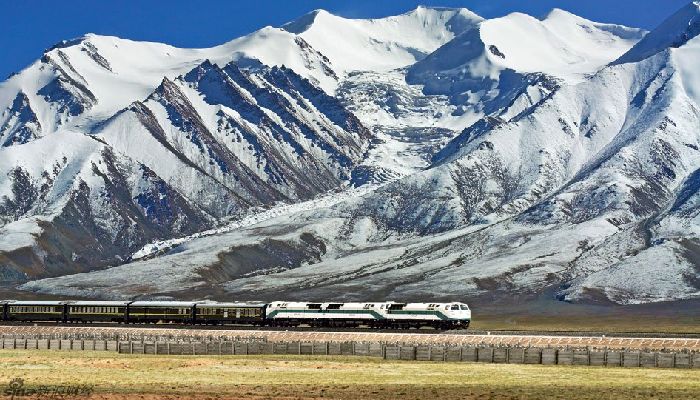
Qinghai-Tibet Railway Train
Accommodation Options: A Guide to Accommodation in Tibet
The accommodation conditions in major towns of Tibet have improved in recent years. There are many high-star hotels in Lhasa, Nyingchi and other places, while inns and guest houses are the main options in remote areas.
Three key points for choosing accommodation:
- You must choose a hotel with foreign reception qualification. Ordinary homestays or unqualified hotels cannot handle check-in for foreign tourists, so you should confirm the qualification through the hotel’s official website or formal platforms before booking.
- Prioritize hotels in low-altitude areas or equipped with oxygen supply facilities. The urban area of Nyingchi is about 2,900 meters above sea level, more than 1,000 meters lower than Lhasa, with a lower risk of altitude sickness, making it a suitable acclimatization place for first-time visitors to Tibet. In Lhasa, it is recommended to choose a hotel in the core area of Chengguan District and confirm that it has an independent oxygen supply system and 24-hour hot water.
- Stay close to core scenic spots to save transportation time. For visiting the Potala Palace and Jokhang Temple, it is advisable to stay in Chengguan District of Lhasa; before going to Mount Qomolangma, stay in the urban area of Shigatse or Dingri County first for acclimatization.
Accommodation references by location (prices are all reference ranges and may rise in the peak season):
- Lhasa urban area: Shangri-La Hotel Lhasa is equipped with an independent oxygen supply and humidification system, costing about 1200–1800 CNY per night in the peak season and 600–900 CNY in the off-season; Pingcuo Kangsang View Hotel is adjacent to Barkhor Street, with some rooms offering a distant view of the Potala Palace, costing about 500–800 CNY per night in the peak season and 200–400 CNY in the off-season.
- Shigatse: Qomolangma Hotel provides 24-hour independent oxygen supply, costing about 800–1200 CNY per night in the peak season and 400–600 CNY in the off-season.
- Mount Qomolangma area: Dingri Roof of the World Hotel is a commonly used transfer station before entering Mount Qomolangma, with oxygen supply in all rooms, costing about 500–700 CNY per night in the peak season; Mount Qomolangma Base Camp Tent Hotel has simple conditions, costing about 800–1200 CNY per night in the peak season, and you need to bring your own warm equipment.
- Nyingchi: Hilton Linzhi Resort is 2,900 meters above sea level with a low probability of altitude sickness, costing about 1000–1500 CNY per night in the peak season and 500–800 CNY in the off-season, suitable as the first stop for entering Tibet.
Accommodation prices rise significantly in the peak season (June to October), and it is recommended to book popular hotels two to three months in advance. If you join a group tour, accommodation is usually included in the tour fee and no need to arrange it by yourself.
Local Transportation: Chartered Cars and Group Tours in Tibet
Foreign tourists cannot rent a car to drive by themselves in Tibet, and ground transportation mainly relies on joining group tours or hiring chartered cars.
Comparison of the two methods:
- Group tours: Suitable for first-time visitors to Tibet who want a hassle-free trip. The tour fee usually includes transportation, accommodation, tickets and tour guide services. For an itinerary of about a week, the cost is about 100–180 US dollars per person per day. The disadvantage is that the itinerary is fixed with low flexibility.
- Chartered cars: Suitable for travelers who want to explore in depth and adjust the route flexibly. You can customize the itinerary according to your own needs and stop at any time. The daily rental fee for an off-road vehicle is about 200–300 US dollars, and if shared by 3–4 people, it is about 60–100 US dollars per person per day, which may be lower than the cost of group tours.
Suggestions for selection:
- Traveling alone or as a couple: Joining a shared group tour can reduce costs and meet travel companions.
- Traveling with family or a small group of friends: Chartering a car is more private and flexible, suitable for customizing routes.
- Traveling with the elderly or children: Group tours are more reliable with comprehensive logistics support.
The starting fare for taxis in the urban area of Lhasa is about 2–3 US dollars, which is convenient for traveling to scenic spots in the city. Note: You need to walk to visit the inside of temples, so it is recommended to wear comfortable sports shoes; the toilet conditions along the way in remote areas are limited, and you can be mentally prepared in advance.
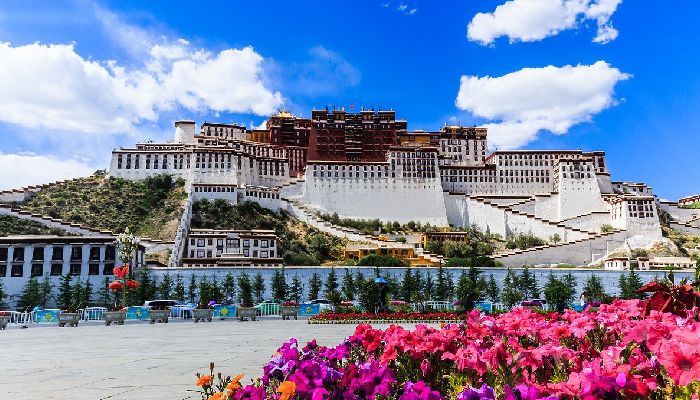
Potala Palace
Catering Budget: Catering Expenses in Tibet
Due to the transport of most ingredients from other places, catering prices in Tibet are slightly higher than those in cities in mainland China.
Estimated daily catering expenses:
- Breakfast: Hotel buffet or street food stalls, about 3–5 US dollars.
- Lunch/Dinner: About 8–15 US dollars per person in ordinary restaurants; 20–30 US dollars per person in high-end restaurants or characteristic Tibetan restaurants.
- Remote areas (e.g., Mount Qomolangma Base Camp): Simple meals (such as noodles) cost about 5–8 US dollars each, and it is recommended to carry chocolate, energy bars and other supplementary food with you.
You can experience Tibetan catering moderately. Tsampa, butter tea and yak meat are traditional specialties. Sweet tea and butter tea help relieve altitude sickness because tea polyphenols can promote blood circulation. If you have special needs such as a vegetarian diet or food allergies, please inform the travel agency or tour guide in advance for arrangement.
Tibet Ticket Information for US Tourists
Ticket prices of major scenic spots (based on official information):
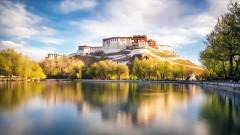
- Potala Palace: 100 CNY per person (Route 1) or 50 CNY per person (Route 2) in the off-season, and you need to book 7 days in advance through the official WeChat Official Account.
- Jokhang Temple: About 85 CNY (around 13 US dollars).
- Sera Monastery and Drepung Monastery: About 50 CNY (around 7.5 US dollars) each.
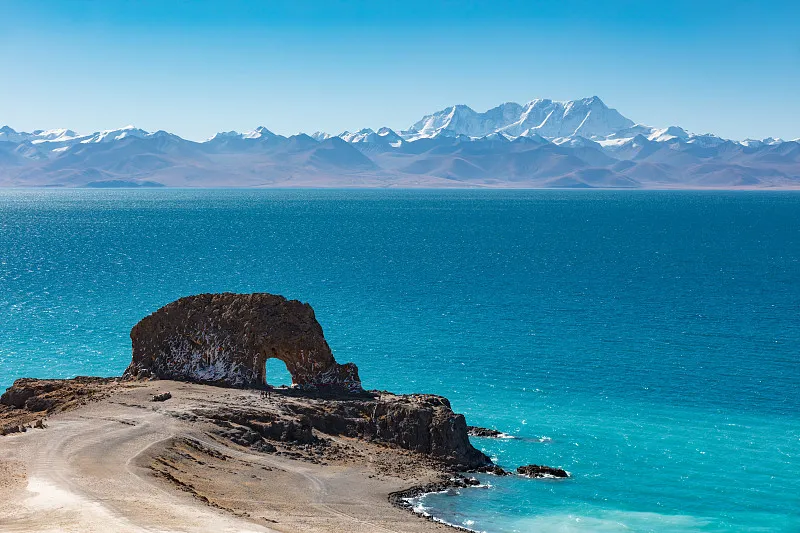
- Namtso Lake: About 120 CNY (around 18 US dollars).
- Mount Qomolangma Base Camp: About 180 CNY (around 27 US dollars) including the vehicle mountain entry fee.
The Potala Palace implements a visitor quota policy, and tickets are extremely scarce in the peak season, so it is recommended to book them through a travel agency on your behalf.
Budget reference for travelers departing from the US (total of various expenses):
- Budget type: Flights 1500 + group tours 800 + catering 200 + tickets 150 + miscellaneous expenses 100 = about 2750 US dollars
- Comfortable type: Flights 2000 + shared chartered car 1200 + accommodation 500 + catering 350 + tickets 200 + miscellaneous expenses 200 = about 4450 US dollars
- Premium type: Flights 2500 + private chartered car 1800 + accommodation 900 + catering 500 + tickets 250 + miscellaneous expenses 300 = about 6250 US dollars
Best Time to Visit: Travel Seasons for Tibet from the US
Tibet has distinct tourist seasons with significant differences in scenery and prices in different periods.
Seasonal characteristics:
- May to October (peak season): The climate is mild and the scenery is the best. July and August have the most tourists and the highest prices. Most areas (including Ngari and Mount Qomolangma) are accessible.
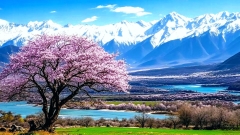
- April and May: The peach blossoms in Nyingchi are in full bloom with beautiful scenery and a large number of tourists.
- September and October (autumn): The weather is stable with rich colors, suitable for photography.
- November to April of the next year (off-season): The temperature is low, there are few tourists, and the prices of accommodation and transportation drop sharply. The ticket price of the Potala Palace is reduced to 100 CNY or even 50 CNY. However, high-altitude areas such as Ngari and Mount Qomolangma may be closed due to heavy snow.
For travelers whose main purpose is sightseeing, May, September and October are the most suitable; for travelers with a limited budget or who prefer a quiet trip, the off-season is also a reasonable choice.
Strategies for Dealing with Altitude Sickness
Altitude sickness is a normal physiological response to entering high-altitude areas, and most travelers can acclimatize smoothly with scientific preparation.
Pre-departure preparation:
- Stop strenuous exercise 1–2 weeks in advance and keep adequate rest.
- Avoid entering Tibet when having a cold.
- Travelers with cardio-cerebrovascular or respiratory diseases are advised to consult a doctor in advance.
Notes for the initial arrival:
- Avoid taking a bath or washing your hair within 24 hours of arrival.
- Do not drink alcohol, and avoid walking fast or running and jumping.
- Drink plenty of water and ensure sufficient sleep.
- If you have a headache, you can take ibuprofen or glucose for relief.
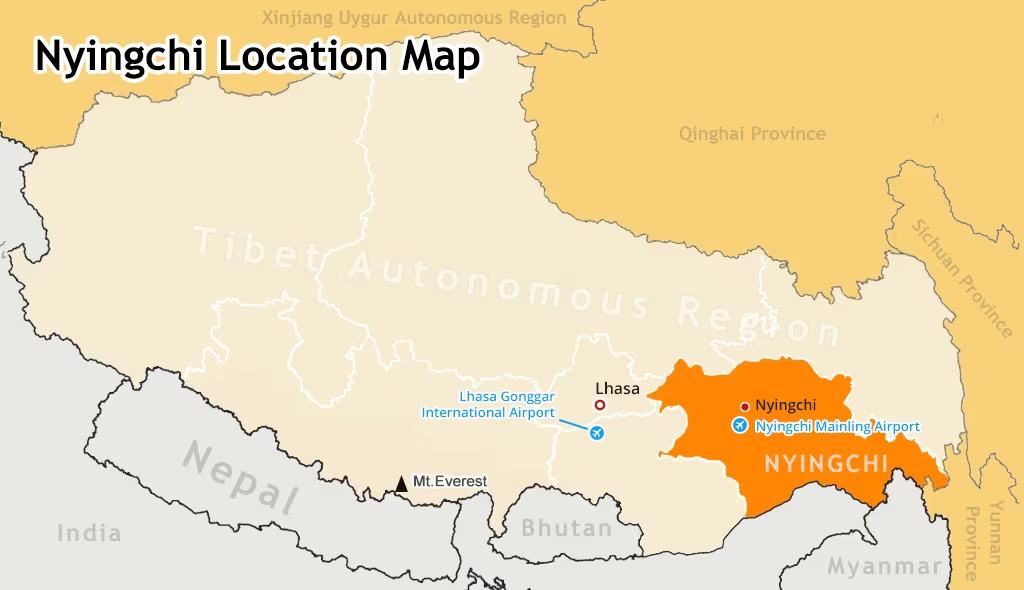
Acclimatization suggestions: A gradual elevation of altitude helps the body adapt to the low-oxygen environment. It is recommended to first fly to Nyingchi (with an average altitude of 3,100 meters) and stay for 1–2 days before going to Lhasa; or choose to enter Tibet by train to allow the altitude to rise slowly.
If severe symptoms such as persistent vomiting and dyspnea occur, seek medical attention immediately and descend to a low-altitude area. Travel insurance should include coverage for altitude sickness rescue and emergency medical transportation to deal with unexpected situations.
Pre-Trip Check: Tibet Preparation Checklist for Travelers from the US
Please check the following items one by one before departure:
- Passport with a validity of more than six months
- Approved Chinese Tourist Visa
- Obtained Tibet Travel Permit (or confirm that the travel agency will deliver it to the designated city before entering Tibet)
- Booked a hotel with foreign reception qualification and confirmed the oxygen supply facilities
- Completed flight and accommodation bookings (book in advance for the peak season)
- Purchased travel insurance including altitude rescue
- Luggage preparation: layered warm clothing, sunscreen, sunglasses, sun hat, lip balm, common medicines (such as cold medicine, painkillers, antidiarrheal drugs)
Planning a Smooth Trip to Tibet from the United States
A trip from the United States to Tibet requires careful preparation, but the process becomes much easier once travelers understand the key steps involved. From arranging visas and permits to choosing the most convenient gateway city in China, proper planning helps ensure that the journey to the Tibetan Plateau is comfortable and well organized. With the logistics arranged in advance, visitors can focus on experiencing Tibet’s extraordinary landscapes, monasteries, and cultural heritage.
Many international travelers prefer to work with experienced local operators when planning their Tibet journey. China Dragon Travel assists overseas visitors with Tibet Travel Permit applications, itinerary planning, transportation arrangements, and accommodation bookings. With professional support and local expertise, travelers can explore Tibet with confidence and enjoy a memorable adventure on the Roof of the World.