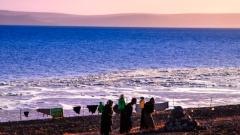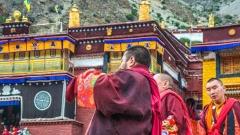

Nyenchen Tanglha Mountains lie in central Tibet, China, with its main peak at 7,111 meters and year-round snow. Namtso Lake, at 4,718 meters above sea level, is the world’s highest large lake. Trekking from the foot of Nyenchen Tanglha Mountains to Namtso Lake is a classic high-altitude route. Starting near Galuo Temple in Damxung County, the route passes through glacial valleys, alpine meadows and scree slopes, crosses passes over 5,000 meters, and ends at the lake shore. This article provides practical information on route overview, best seasons, gear list, transportation and safety precautions to help trekkers make full pre-trip plans.
Overview and Difficulty of the Trekking Route from Nyenchen Tanglha Mountains to Namtso Lake
- The trekking start is near Galuo Temple in Damxung County, about 160 kilometers from Lhasa, accessible by vehicle.
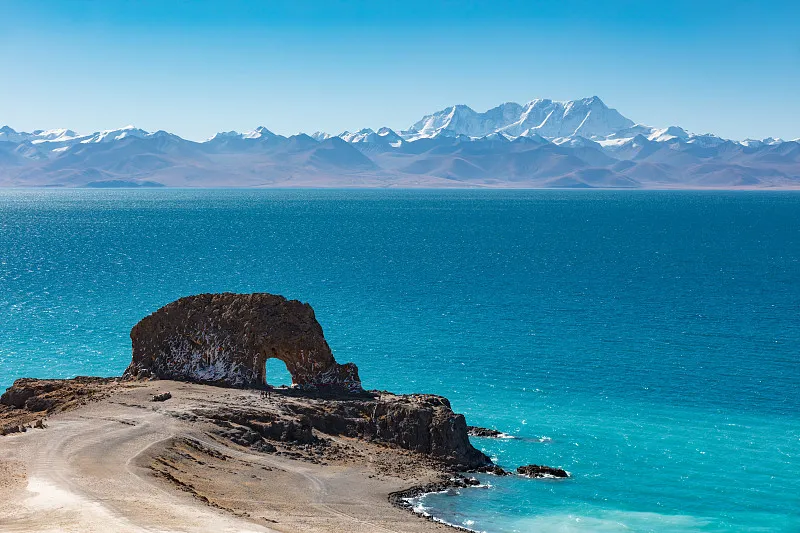
- The destination is Zhaxi Peninsula of Namtso Lake, which is made up of reefs and karst caves, surrounded by the lake on three sides.
- The total distance is about 45 to 55 kilometers, depending on camping sites and detour routes.
- The route goes through glacial valleys, alpine meadows and scree slopes with varied terrains.
- The highest point on the route is about 5,330 meters above sea level, and Namtso Lake at the end is 4,718 meters above sea level.
Nyenchen Tanglha Mountains stretch about 1,500 kilometers long, with an average altitude of 5,000 to 6,000 meters. Covering an area of about 1,961 square kilometers, Namtso Lake is the second largest saltwater lake in China. In Tibetan legends, Nyenchen Tanglha Mountains are regarded as a mountain god, and Namtso Lake is his wife. The trekking starting point is near Damxung County, about 160 kilometers from Lhasa, with streams and tents of northern Tibetan herdsmen along the way. Zhaxi Peninsula, the end point, is the largest peninsula extending into the lake and a common site for visiting Namtso Lake.
The altitude rises gradually from 4,300 meters to the 5,330-meter pass, then drops to 4,718 meters. The whole route is at high altitude, which requires high cardiorespiratory function. First-time visitors to the plateau are advised to acclimatize in Lhasa or Damxung for two to three days before departure. Trekkers need to carry their own gear and food, which requires greater physical strength without porters.
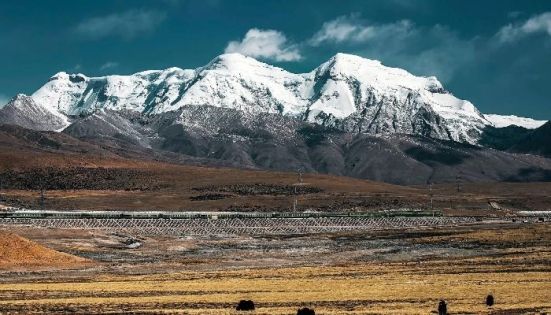
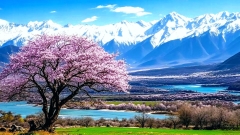
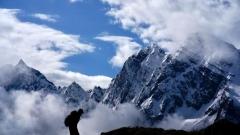
Distant View of Nyenchen Tanglha Mountains
Best Seasons for Trekking from Nyenchen Tanglha Mountains to Namtso Lake
- The best trekking window is from May to October, with relatively mild temperatures and little snow on the passes.
- The weather is most stable from June to September, with short afternoon showers and clear mornings and evenings.
- Namtso Lake thaws completely from July to August, showing bright blue water with the clearest snow-capped mountain reflections.
- May and October have fewer tourists, suitable for people who prefer quietness, but snow and low temperatures should be noted.
- The passes are blocked by heavy snow from November to April next year, so trekking is not recommended.
During May to October, daytime temperatures range from 10 to 18 degrees Celsius, dropping to around zero at night. The snow line is relatively high, with little snow on the passes and moderate water levels in streams. Wildflowers on alpine meadows bloom one after another. June to September is the best period for this route. Namtso Lake area enters the rainy season, but rainfall concentrates in the afternoon, with clear mornings and evenings. The main peak of Nyenchen Tanglha Mountains is highly likely to reflect in the lake, with average daily temperatures between 5 and 18 degrees Celsius.
In May, snow does not melt completely, and some sections may be muddy, but there are very few tourists. Temperatures drop rapidly in October, falling to minus 10 degrees Celsius at night, but air transparency reaches the highest level of the year, with bright blue sky and darkened lake water, ideal for landscape photography. From November to April, the passes are covered by heavy snow and Namtso Lake freezes over, offering poor scenery, so trekking is not recommended.
Gear List for Trekking from Nyenchen Tanglha Mountains to Namtso Lake
- Hardshell jacket and pants must be windproof and waterproof, as wind and rain are common in the plateau in the afternoon.
- The comfort temperature rating of a down sleeping bag is recommended to be between minus 5 and minus 10 degrees Celsius.
- High-top waterproof hiking boots are essential for scree and stream sections.
- Four-season tents resist strong night winds at high altitudes better than regular three-season tents.
- Headlamp and spare batteries for night activities or emergencies.
- Sunscreen with SPF 50+ is recommended, paired with sunglasses to prevent snow blindness and strong light.
Clothing
Fleece jacket or lightweight down jacket for warmth in the morning, evening and at night, especially on windy passes. Quick-drying underwear dries fast after sweating to avoid body heat loss. Prepare two to three pairs of wool socks to keep feet dry. Gloves are also necessary, as temperatures may drop to below zero even in summer mornings and evenings at high altitudes.
Camping and Cooking Gear
Foam moisture-proof pad is recommended, more reliable and leak-proof than inflatable pads. Stove, gas canister and cook set for boiling water and cooking on the plateau; gas canisters are available in Lhasa or Damxung. Kettle or water bladder with a capacity of at least 1.5 liters. A thermos cup is also recommended, as drinking hot water helps maintain body temperature in cold environments.
Safety and Navigation
Handheld GPS or mobile offline maps are necessary, as there is no mobile signal in some sections, so trekking tracks must be downloaded in advance. Compass and paper maps as backups for emergency use if electronic devices run out of power or break down. First-aid kit should include common plateau medicines (painkillers, antidiarrheal drugs, glucose, cold medicine), as well as band-aids, gauze and iodine cotton swabs. A portable oxygen cylinder is also recommended to relieve severe altitude sickness.
Other Items
Double trekking poles are advised to effectively reduce knee pressure and enhance body stability on scree slopes. Bring enough garbage bags to take away all trash, as there are no garbage disposal facilities near Namtso Lake. A small repair kit is also needed, including tent repair patches, lighters, multi-tools, etc.
Transportation to Nyenchen Tanglha Mountains and Namtso Lake
- Fly to Chengdu, Chongqing, Xi’an, Beijing or Shanghai from other countries, then transfer to Lhasa Gonggar Airport.
- Enter Tibet, China via Gyirong Port from Kathmandu, Nepal, suitable for those who want to acclimatize to altitude gradually.
- Take the Qinghai-Tibet Railway from Xining to Tibet, passing by Qinghai Lake, Hoh Xil and Tanggula Pass along the way.
- There are shuttle buses from Lhasa East Passenger Station to Damxung, with a fare of about 44 CNY and a journey of 3 to 4 hours.
- A local driver with an off-road vehicle is needed from Damxung County to the trekking start; it is recommended to negotiate the price in advance.
- For return trip, take the scenic shuttle bus from Zhaxi Peninsula back to Damxung, or book a chartered vehicle in advance.
International Flights to Tibet
Lhasa Gonggar Airport is about 70 kilometers from the urban area, with a drive of about one and a half hours. Transferring to a domestic flight to Tibet after arriving at any of the above cities from other countries is the fastest way. It is recommended to book flights two to three months in advance, as prices rise sharply in peak seasons.
Land Route to Tibet
It takes one day to travel from Kathmandu to Gyirong Port by car, and one to two days from Gyirong to Lhasa. Road conditions are complex with some mountainous sections; it is recommended to arrange vehicles and drivers through a travel agency. This method is suitable for those who are not in a hurry and want to acclimatize to rising altitude gradually.
Qinghai-Tibet Railway
The train from Xining takes about 20 hours, with sleeper tickets cheaper than flight tickets, and allows gradual acclimatization to altitude. Train tickets are in short supply in peak seasons and need to be booked in advance through official channels or travel agencies. The altitude exceeds 5,000 meters when passing Tanggula Pass, and some passengers may suffer from altitude sickness; medicine preparation in advance is advised.
Lhasa to Damxung
Shuttle buses to Damxung depart from Lhasa East Passenger Station. After arriving in Damxung, you need to continue to the trekking start. Damxung County is about 60 kilometers from Namtso Lake area. The advantage of chartered vehicles is that you can stop and take photos at the Nyenchen Tanglha Mountains viewing platform; it is recommended to confirm with the driver in advance whether the price includes fuel costs and waiting time.
Document Requirements for Trekking from Nyenchen Tanglha Mountains to Namtso Lake
- Tibet Travel Permit is a necessary document for entering Tibet, China; foreign passport holders must apply through a travel agency and cannot apply directly as individuals.
- The processing time is 10 to 20 working days; it is recommended to submit materials more than one month in advance.
- The Tibet Travel Permit states the travel route and duration; you must carry it with you after entering Tibet for inspection at checkpoints along the way.
- China Dragon Travel can assist with Tibet Travel Permit application, as well as guide arrangement and logistics support.
Individuals cannot apply directly to the Tibet Tourism Administration; applications must be handled by qualified travel agencies. Travel agencies usually include the permit processing fee in the group tour fee or process it for free, but complete personal materials and sufficient time are required. Processing time may be longer in peak seasons or for complex routes. The Tibet Travel Permit is usually a paper document with a serial number and official seal; you must carry the original after entering Tibet, not just a copy. Checkpoints in Lhasa, Xigaze and on the road to Namtso Lake will inspect the permit. China Dragon Travel has extensive experience in receiving tourists in Tibet, assisting with Tibet Travel Permit application, and providing trekking guide arrangement and logistics support for a smoother trip.
Supplies and Water Sources for Trekking from Nyenchen Tanglha Mountains to Namtso Lake
- There are no shops or supply points along the entire route; all food and fuel must be carried by yourself.
- Streams are available for water replenishment along the way, but water must be treated before drinking.
- There is no stable water source near the pass; fill up water at the valley camp before crossing the pass.
- Recommended staple foods include instant noodles, ready-to-eat rice, compressed biscuits, plus high-energy snacks.
- Daily calorie intake is recommended to be more than 3,000 kcal, otherwise physical strength will drop significantly.
Streams look clear, but it is recommended to treat water with water purification tablets or portable water purifiers before drinking. Water purification tablets usually take 30 minutes to take effect. Drinking untreated water may cause diarrhea, which leads to dehydration and increases the risk of altitude sickness at high altitudes. Staple foods can include instant noodles, ready-to-eat rice, compressed biscuits, oatmeal, etc. High-energy snacks include nuts, chocolate, energy bars, dried meat. Physical strength will decline noticeably after a few days of walking with daily calorie intake below 3,000 kcal. Those with special dietary needs must prepare enough food before departure, as there are no alternatives on this remote trekking route. Check stoves and gas canisters in advance to ensure normal operation, as some stoves have lower combustion efficiency in plateau environments.
Safety Precautions for Trekking from Nyenchen Tanglha Mountains to Namtso Lake
- For mild altitude sickness, slow down walking, drink plenty of warm water and take painkillers; in case of severe headache, persistent vomiting or confusion, descend to lower altitudes immediately.
- Plateau weather changes rapidly; camp in a sheltered spot if weather worsens, and do not risk crossing the pass.
- Some sections lack obvious markers; visibility is very low in fog or heavy snow, so it is better to wait for better weather on site or return along the original route with GPS.
- It is recommended to travel with at least two people; do not act alone.
- Be sure to purchase travel insurance covering plateau rescue, and confirm whether the insurance clause explicitly covers high-altitude trekking.
Headache, nausea, insomnia and loss of appetite are common symptoms of altitude sickness. In case of severe headache, persistent vomiting, unsteady walking or confusion, descend to lower altitudes immediately. Do not push through or continue climbing with severe altitude sickness. Seek medical attention promptly if symptoms do not relieve after descending. Plateau weather changes fast, with sunny mornings and sudden hail or snow in the afternoon. Once weather deteriorates, judge in advance whether to camp in a sheltered spot.
Although this route is relatively mature, some scree and lake basin sections lack clear markers. Visibility may drop below 10 meters in fog or heavy snow; it is best to wait on site or return along the original route with GPS. High-altitude trekking carries high risks, and medical facilities in Tibet, China are limited, especially in remote areas. Emergency rescue and evacuation are costly in case of severe altitude sickness. When purchasing travel insurance, confirm whether it explicitly covers trekking above 5,000 meters and includes helicopter rescue costs. China Dragon Travel advises guests to purchase suitable insurance when arranging itineraries to ensure safety during the trip.
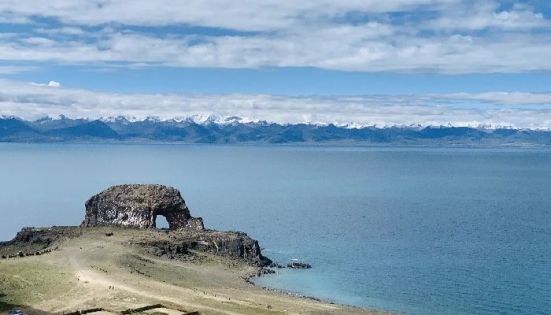
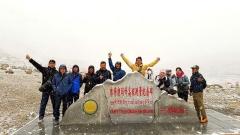
Namtso Lake
Frequently Asked Questions about Trekking from Nyenchen Tanglha Mountains to Namtso Lake
Q: Do I need a guide for this route for the first time?
A: A guide is recommended. Local Tibetan guides are familiar with road conditions and weather changes, and can provide help in emergencies. Without a guide, you must have reliable GPS tracks and travel with at least one companion. Guide fees are generally 300 to 600 CNY per day, depending on peak/off-peak seasons and route length.
Q: What physical preparation is needed before trekking?
A: Start training two to three months in advance, doing aerobic exercise two to three times a week, such as running, stair climbing and swimming. Practice leg strength; squats and lunges are effective. It is best to train with a trekking bag in low-altitude mountainous areas several times to adapt to weight-bearing walking. Start with a 5-kilogram load and gradually increase to about 15 kilograms.
Q: Where can I stay near Namtso Lake?
A: There are simple prefabricated houses and tent hotels on Zhaxi Peninsula with basic conditions but beds and quilts. Beds are in short supply and prices rise in peak seasons. If camping by yourself, do not camp too close to the lake due to strong night winds; choose a sheltered spot. There are several relatively flat camps near Zhaxi Peninsula, but confirm camping permission in advance.
Q: How much cash should I bring?
A: Mobile payment is supported in Lhasa and Damxung County, but there are no payment facilities after reaching the trekking start. Prepare a small amount of cash, especially as remote herdsmen’s tents or temporary stalls only accept cash. It is recommended to bring 500 to 1,000 CNY in small denominations for convenience.
Q: Can I trek alone?
A: It is not recommended. High-altitude trekking is risky, and it is difficult to handle altitude sickness or injury alone. It is recommended to travel with at least two people, preferably with a guide. If you must trek alone, inform your family or travel agency of your itinerary in advance and carry a satellite phone or satellite positioning device.
Itinerary Suggestions for Trekking from Nyenchen Tanglha Mountains to Namtso Lake
Trekking from Nyenchen Tanglha Mountains to Namtso Lake starts at the foot of snow-capped mountains, crosses alpine meadows and scree slopes, climbs over the 5,300-meter pass, and finally reaches the shore of the sacred lake. The entire route connects snow-capped mountains, grasslands, streams and the sacred lake in sequence. Trekkers are advised to start physical training at least two months in advance and carefully check all gear for integrity. When applying for the Tibet Travel Permit in Lhasa, make sure the travel information on the document matches the trekking plan. When choosing a guide, prioritize local Tibetan guides with high-altitude trekking experience, who are not only familiar with road conditions but also make correct judgments when weather changes suddenly. Check the weather and physical condition every morning before departure during trekking; do not ignore early signs of altitude sickness to keep up with the schedule. If there is continuous strong wind or snowfall, decisively abandon crossing the pass, return along the original route or wait on site. Night temperatures near Namtso Lake are very low; prepare sleeping bags and down jackets with sufficient warmth even in summer. If you have questions about specific arrangements of this route, such as car rental channels, actual locations of camping spots and guide contact information, you can contact China Dragon Travel. With extensive experience in receiving Tibet trekking tours, the travel agency can assist with Tibet Travel Permit application, guide and logistics vehicle arrangement, making the trekking from Nyenchen Tanglha Mountains to Namtso Lake smoother and safer.