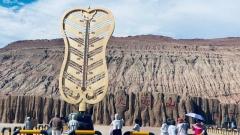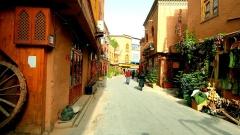

Nestled at the foot of the Tianshan Mountains, Urumqi is the political, economic and cultural center of Xinjiang, and a hub on the ancient Silk Road. It integrates the cultures of multiple ethnic groups, forming a unique charm of the Western Regions. For travelers, besides capturing the magnificent scenery with photos, it is equally important to take home this exotic charm of souvenirs. Selected souvenirs are not only tangible gifts for relatives and friends, but also extensions of the memories of this journey. This article chooses the most representative souvenirs in Urumqi, from foods to handcrafts, and provides a shopping guide, bringing you an unforgettable trip.
Categories of Urumqi Souvenirs in Xinjiang
When selecting souvenirs, you can make a combined choice based on portability and recipient preferences:
- Featured Foods: Benefiting from its unique light and heat resources, the fruits, dried fruits and preserved fruits produced in Xinjiang are high in sweetness and rich in flavor. This category of gifts is most popular among the public for its strong practicality.
- Handicrafts: Handicrafts embodying the centuries-old wisdom and aesthetics of ethnic minorities, such as Adras silk, hand-knotted carpets and musical instruments, boast high cultural value and are ideal gifts for friends who appreciate art and culture.
- Special Drinks: Aromatic milk tea, mellow Duhuo brick tea, Apocynum venetum tea, and indispensable spices and condiments allow relatives and friends to experience authentic Xinjiang flavors at home.
When shopping, it is recommended to prioritize goods that are easy to carry and preserve. Also, pay attention to the air transportation restrictions on certain foods, such as fresh fruits and meat products. When purchasing high-value handicrafts, choose reputable merchants and feel free to negotiate prices appropriately.
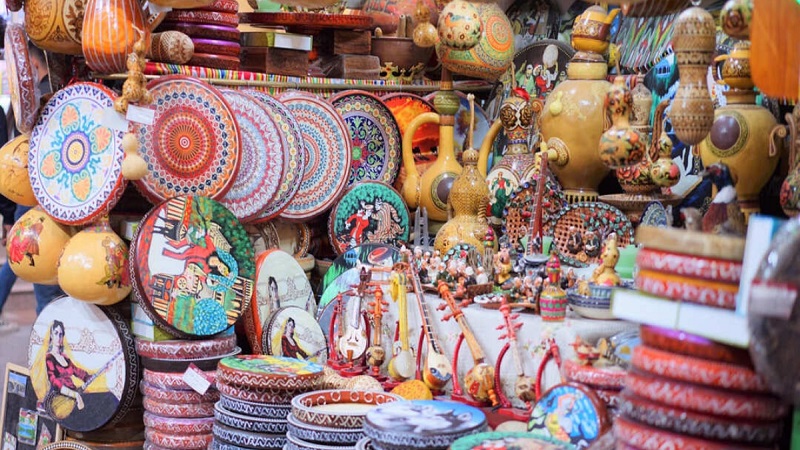
Urumqi Souvenirs
Featured Foods in Urumqi, Xinjiang
Xinjiang-style Nuts and Dried Fruits
Traveling to Chongqing in the off-season is the golden time to save on long-distance transportation costs. Whether you choose to travel by plane, high-speed rail or regular train, the fares are significantly lower than those in the peak season, with abundant ticket availability and more flexible itinerary planning.
- Red Dates: Ruoqiang gray dates and Hotan big dates are well-known far and wide. Though small in size, Ruoqiang gray dates have thin skins, thick flesh and a soft, sweet taste; Hotan big dates are plump with rich pulp, and are excellent for replenishing qi and nourishing blood.
- Raisins: Available in a wide variety of types, classified by color into green Xiangfei, red Xiangfei and blackcurrant raisins; classified by variety into seedless white and “horse milk” raisins. Green Xiangfei raisins are large and seedless, with a balanced sweet and sour flavor; blackcurrant raisins are rich in anthocyanins with a slightly sour taste. It is recommended to buy a mixed selection.
- Walnuts: Xinjiang paper-shell walnuts are famous for their paper-thin shells that can be cracked by hand, plump and fragrant kernels, and high nutritional value.
- Almonds: Crisp and tasty, available in flavors like salt and pepper, original and five-spice. They are a healthy snack option.
- Dried Figs: Soft and glutinous in texture, extremely sweet with a unique delicate fragrance.
- Wolfberries: Jinghe wolfberries are a famous specialty of Xinjiang, featuring large particles, bright red color and plump flesh, suitable for making tea or stewing soup.
The International Grand Bazaar and Hualing Dried Fruit Market are major wholesale and retail hubs, offering a complete range of products at relatively affordable prices. When purchasing, check if the dried fruits are dry, free from strange odors and have natural colors, and you can also taste them first.
Xinjiang-style Delicacies
- Marantang (Nut Cake): A traditional Uyghur dessert, pressed from a mixture of ingredients including walnut kernels, raisins, sesame seeds, rose petals, almonds and syrup. It is high in energy with a rich and hearty taste. Now available in small packages for easy carrying and sharing.
- Handmade Cheese Buns: Some local brands or workshops launch handmade chocolate or cheese buns integrated with Xinjiang elements like dried fruits and nang crumbs, which are highly creative.
- Ethnic Special Pastries: Such as “Baklava” (walnut cake) and “Napaliyoun” (a cheese cake similar to mille-feuille), which can be bought at Uyghur pastry shops with unique flavors.
- Air-dried Meat: A traditional delicacy of the Kazakh and Mongolian ethnic groups, usually made from beef or horse meat. It has a rich flavor and long shelf life. Please note the airline regulations on carrying such products.
- Smoked Horse Sausage: A specialty of Ili, it is a must-have food for Kazakhs during the winter. The meat has a perfect blend of meaty and smoky flavors, suitable for slicing and eating after being cooked.
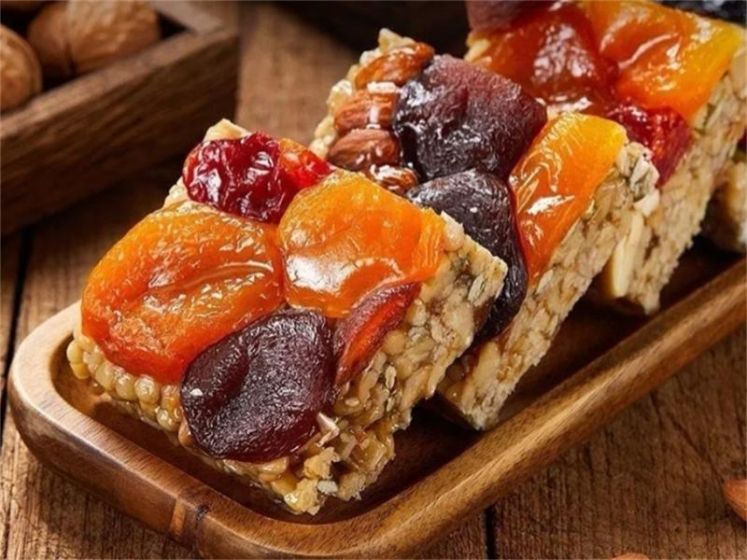
Marantang: A Perfect Souvenir for All Ages
Featured Handicrafts in Urumqi, Xinjiang
Adras Silk
This is a renowned traditional silk fabric in Xinjiang, famous for its vibrant colors and abstract, varied patterns. Common patterns include geometric shapes like water waves, combs, almonds and sawtooth edges. Recommended purchases:
- Finished Apparel: Ladies’ silk scarves, shawls, long skirts and shirts, all full of ethnic charm.
- Fabric: Can be bought by the meter, and you can make cushion covers, table runners, decorative paintings and other items at home.
- Shopping Locations: Erdaoqiao Market or specialized Adras silk stores. Note the difference between machine-printed and hand-woven fabrics—the latter is more expensive, with more vivid textures and colors.
Hand-knotted Carpets
Xinjiang carpets (especially Hotan carpets) have a long history, and are world-famous for their excellent quality, exquisite patterns and unique weaving techniques. The patterns are mostly geometric patterns, plant patterns and religious motifs, full of the charm of the Western Regions. Available in materials such as wool and silk-wool blend, with sizes ranging from coasters to large room carpets. Authentic hand-knotted carpets are quite expensive, so you need to carefully distinguish their quality when purchasing. You can also choose machine-woven imitation hand-knotted tapestries, which are affordable and equally eye-catching as wall decorations.
Ethnic Musical Instruments
In Xinjiang, ethnic musical instruments are not only tools for playing music, but also exquisite handicrafts. With their unique shapes and gorgeous decorations, they are ideal choices either as exotic home decorations or special gifts for music lovers.
- Dutar: A long-necked two-stringed plucked instrument with a soft and melodious tone.
- Rawap: A plucked instrument with a clear and bright tone and elegant appearance.
- Daf (Frame Drum): A percussion instrument that is easy to carry and highly interactive.
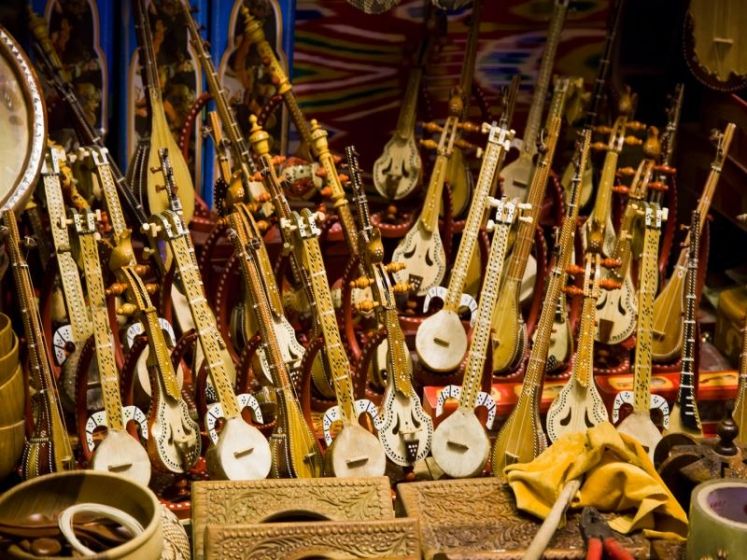
Dutar: A Souvenir Full of Ethnic Charm
Featured Drinks in Urumqi, Xinjiang
Xinjiang-Style Teas
Xinjiang boasts a wide variety of special flavored teas, all embodying the profound cultural heritage of the region. These teas and condiments are perfect choices to bring home to your kitchen, extending the flavor memories of your journey.
- Duhuo Brick Tea: A type of dark tea, it is the basic tea leaves for making traditional Uyghur milk tea, with a mellow taste.
- Apocynum Venetum Tea: A unique health-preserving tea in Xinjiang, with a slightly salty taste, believed to help regulate blood pressure.
- Jams and Honey: Such as rose jam, fig jam, blackcurrant jam, as well as local wildflower honey and camel thorn honey in Xinjiang, all with pure and authentic flavors.
Xinjiang-style Spices
- Cumin: The soul of Xinjiang barbecue, with a rich and aromatic flavor.
- Piyazi (Onion): The unique purple-skinned onion in Xinjiang, sweet and fragrant, available in dried form.
- Chili Powder: Fragrant but not overly spicy, it is an excellent condiment to pair with roasted meat and nang.
Q&A for Shopping in Urumqi
Q1: How to judge the quality and freshness when buying dried fruits and foods?
First, check if the color is natural; second, smell for any rancid or strange odors; third, touch to see if they are dry and non-sticky; fourth, taste to check if the flavor is normal. Prioritize reputable merchants, and it is more reliable to buy packaged products with clear production dates.
Q2:What are the precautions for purchasing high-value handicrafts (such as carpets and musical instruments)?
It is recommended to learn basic knowledge about materials and craftsmanship, and distinguish between handcrafted and machine-made products. Choose merchants with fixed stores and good reputations. Ask for detailed receipts or certificates, preferably indicating information such as material, size and place of origin. Moderate price negotiation is a market convention, but be alert to products significantly priced below the market average.
Q3: Which souvenirs are not suitable for air transportation or require special handling?
First, liquids such as alcohol, honey and jams must strictly comply with the airline’s regulations on checked liquids. Second, knives must be checked in, and you need to confirm whether the destination’s laws allow their entry. Third, fresh fruits and meat products are usually prohibited from being brought into most areas of mainland China and other countries, so be sure to check the customs regulations in advance. If purchasing fragile items, ask the merchant to package them properly and consider buying transportation insurance.
Urumqi Souvenirs That Keep Your Journey Alive
Souvenirs from Urumqi are more than simple keepsakes – they are tangible expressions of Xinjiang’s culture, flavors, and craftsmanship. From naturally sweet dried fruits to intricate handmade textiles and aromatic spices, each item carries a story shaped by the land and its people. With thoughtful selection and attention to quality, these souvenirs allow your journey through Xinjiang to continue long after you return home, preserving the memories in everyday moments.