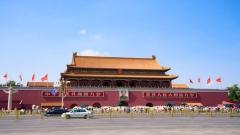

Travelers planning a trip to Beijing often face a common problem: too many attractions to choose from and how to enter smoothly. The Forbidden City requires advance reservations, the Great Wall has multiple sections, hutongs and art districts have unique features, and tickets and opening hours vary. This guide details each key attraction, covering reservation methods, ticket prices, best visiting hours and transportation routes. After reading, you will understand the core information of each attraction and plan your trip easily. For local assistance, China Dragon Travel has years of experience in Beijing inbound travel services and offers consultations.
Overview of Must-Visit Attractions in Beijing: Core Categories and Representatives
Based on travelers’ actual needs and the representativeness of attractions, this article divides top attractions in Beijing into five categories. The representative attractions of each category are as follows:
- Royal Palaces and Architectural Complexes: The Palace Museum, Tiananmen Rostrum and Square, Jingshan Park. These attractions concentrate on presenting the grand scale of ancient Chinese imperial architecture and the central axis landscape.
- Royal Gardens and Water Scenic Areas: The Summer Palace. Centered on Kunming Lake, this garden integrates natural landscapes and the design concept of royal gardens.
- Sacrificial Architectural Complexes: The Temple of Heaven. The Hall of Prayer for Good Harvests, Circular Mound Altar and Echo Wall constitute the core space of ancient Chinese heaven-worshipping rituals, and its acoustic phenomena have unique value in architectural history.
- Military Defense Facilities: Badaling Great Wall, Mutianyu Great Wall, Simatai Great Wall. The above sections represent the styles of the Great Wall in different periods and terrains, and are all representative in touring convenience, landscape quality and architectural preservation.
- Mansions, Residences, Temples and Monasteries: Prince Kung’s Mansion, Yonghe Temple. The former presents the architectural regulations of Qing Dynasty princely mansions, and the latter is a Tibetan Buddhist temple; both retain a complete historical pattern and religious functions.
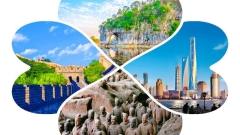
Reservation and Visiting Essentials for the Forbidden City
The Forbidden City is the largest and best-preserved wooden palace complex in China, and was also the residence and administrative place of emperors in the Ming and Qing dynasties. The whole palace is symmetrically distributed along the north-south central axis, with the Three Great Halls and Three Rear Palaces progressing layer by layer. The strict relationship between architectural hierarchy and spatial order fully reflects traditional Chinese ritual culture. The following is practical information before visiting:
Core Highlights
Pass through the Meridian Gate and walk along the central axis to the Hall of Supreme Harmony, Palace of Heavenly Purity and Imperial Garden in turn, which is the essential route for visiting the Forbidden City. The Treasure Gallery on the east side collects a large number of royal treasures, and the Clock Exhibition Hall displays sophisticated ancient mechanical timepieces; it is recommended to make reservations for both. The Compassion Palace area on the west side is relatively less crowded, and the red wall corridors are suitable for taking photos.
Visiting Mode
Enter through the Meridian Gate and exit through the Shenwu Gate or East China Gate; one-way tour.
Admission
Real-name reservation via the official online system of the Forbidden City; tickets can be purchased 7 days in advance, released at 8:00 p.m. every night. Non-mainland Chinese visitors must use passports to make reservations. Tickets are only valid on the reserved day and cannot be changed after sale.
Opening Hours
Peak season 8:30-17:00, last admission 16:00; off-season 8:30-16:30, last admission 15:30. Closed on Mondays (except legal holidays).
The whole tour takes about three to four hours. It is recommended to enter as early as possible after opening, and visit the west road first to avoid crowds of group tours. Comfortable shoes are very important.
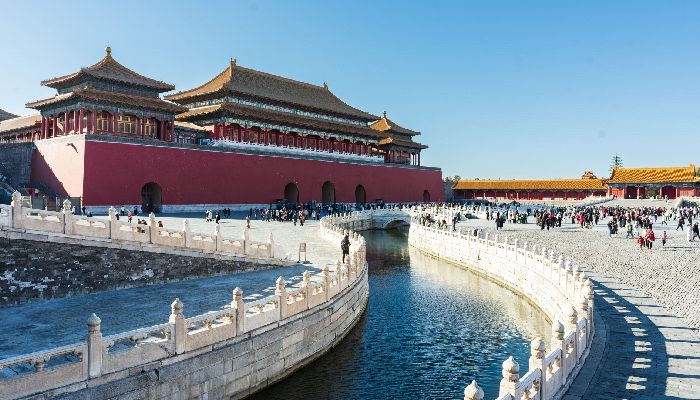
Golden Water Bridges
Section Selection of Badaling, Mutianyu and Simatai Great Walls
There are many open sections of the Great Wall in Beijing, with obvious differences in transportation convenience, number of visitors and landscape style. The three most representative sections are explained side by side below.
Badaling Great Wall
The most convenient transportation, complete facilities and equipped with cable cars. It takes about 20 minutes to reach by high-speed train from Beijing North Railway Station or Qinghe Railway Station. It has a large number of visitors, suitable for first-time visitors and families with the elderly and children.
Mutianyu Great Wall
Fewer visitors, lush vegetation and wide view. The road is well-maintained with gentle slopes, suitable for tourists who prefer quietness and hiking. It is full of blooming flowers in spring and colorful forests in autumn. The cable car goes directly to the 14th viewing platform, and you can continue west to the 20th watchtower for a panoramic view.
Simatai Great Wall
Retains the original style of the Ming Dynasty without large-scale modern restoration; it is the only section of the Great Wall in Beijing that can be visited at night, adjacent to Gubei Water Town. The road surface is uneven, some sections are steep, climbing is difficult, and certain hiking experience is required.
The Great Wall is most suitable for visiting in spring and autumn. It is recommended to arrive at each section before 8:00 a.m. to avoid the peak visiting hours. Wear non-slip sports shoes and bring enough drinking water and food.
Sacrificial Complex and Acoustic Wonders of the Temple of Heaven
The Temple of Heaven was the place where emperors of the Ming and Qing dynasties worshipped heaven. The Hall of Prayer for Good Harvests, Echo Wall and Circular Mound Altar form the three core buildings. The whole temple adopts the spatial design concept of “round heaven and square earth”. The following is essential information for visiting:
Core Highlights
The Hall of Prayer for Good Harvests is an iconic building; its triple round eaves and white marble platform reflect the complete regulations of royal heaven-worshipping rituals in the Ming Dynasty. The curved wall of the Echo Wall can realize long-distance sound transmission; two people standing on the east and west sides can hear each other clearly when speaking softly. The number of steps and railings on the Circular Mound Altar are all multiples of nine.
Ticket Options
The entrance ticket is only valid for the park area; a combined ticket is required to enter the core buildings including the Hall of Prayer for Good Harvests, Echo Wall and Circular Mound Altar.
The Temple of Heaven Park has good lighting and relatively few visitors in the early morning. The core attractions stop admitting visitors early, so please reserve enough time.
Tour Route of the Summer Palace Royal Garden
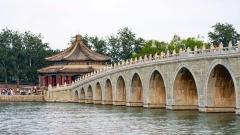
The Summer Palace is the best-preserved royal garden in China, where emperors of the Qing Dynasty often handled state affairs and lived in summer. The whole garden takes Kunming Lake as the main body, and buildings such as the Tower of Buddhist Incense on Longevity Hill, the Long Corridor and the Marble Boat stretch along the lake shore. The following is essential information for visiting:
Core Highlights
The Tower of Buddhist Incense is located at the commanding height of the central axis of Longevity Hill, and you can overlook the panoramic view of Kunming Lake when climbing up. The Grand Opera House in Dehe Garden is one of the three major opera houses in the Qing Dynasty. Suzhou Street is built to imitate a Jiangnan water town commercial street, about 300 meters long, with architectural details integrating northern official style and Jiangnan water town elements.
Entrance and Route
Enter through the North Palace Gate, which has less pedestrian flow and is directly accessible by Subway Line 4. Recommended route: Enter through the North Palace Gate, visit Suzhou Street first, then climb to the Tower of Buddhist Incense along the ridge of Longevity Hill, then walk west along the north bank of Kunming Lake via the Long Corridor, visit the Marble Boat, and finally exit through the West Gate or New Palace Gate.
The garden is large; if you want to visit the interior areas of major buildings such as the Tower of Buddhist Incense and Suzhou Street, it is recommended to buy a combined ticket covering all main scenic spots.
Visiting Guidelines for Tiananmen Rostrum and Square
Tiananmen Square is located in the center of Beijing, the core node of the city’s central axis. Tiananmen Rostrum is open to the public. The following are guidelines for climbing the rostrum:
Reservation
Real-name reservation must be made at least one day in advance through the official platform; reservations can be made 7 days in advance.
Highlights from the Rostrum
Overlooking south from the rostrum, Tiananmen Square, the Monument to the People’s Heroes and the Mausoleum of Mao Zedong are arranged in sequence along the central axis. Looking inward from the rostrum, the Duanmen Gate, Meridian Gate and the central axis of the Forbidden City form a continuous line.
Flag-raising and Lowering Ceremonies
Flag-raising and lowering ceremonies are held in Tiananmen Square every day, and the time changes with sunrise and sunset. Visiting the square is free but subject to security checks; valid documents must be carried.
The Great Hall of the People is on the west side of the square, and the National Museum of China is on the east side. The National Museum of China collects a large number of precious ancient Chinese cultural relics.
Jingshan Park: Overlook the Panoramic View of the Forbidden City
Exit the Forbidden City through the Shenwu Gate, cross the road to reach Jingshan Park. It takes about ten minutes to climb to Wanchun Pavilion.
Tickets and Hours
The ticket price is low. Wanchun Pavilion is a 360-degree panoramic viewing platform, where you can overlook the Forbidden City, Bell and Drum Towers, Beihai White Pagoda and China World Trade Center Complex at the same time. There is a round bronze landmark marked “Center of Beijing City”in front of Wanchun Pavilion.
Photography Tips
The best shooting hours are one hour after sunrise and one hour before sunset. You can also take night views of the city after the lights are on in the evening.
To avoid crowds on the top of the mountain, it is recommended to climb the mountain immediately after the park opens in the morning.
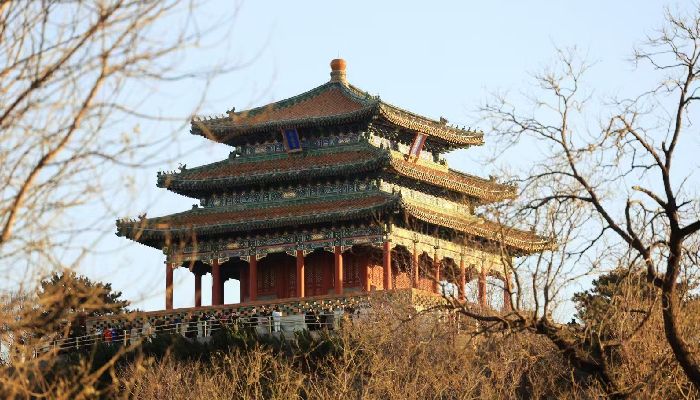
Wanchun Pavilion, Jingshan Park
Yonghe Temple: Tibetan Buddhist Temple
Yonghe Temple is one of the important Tibetan Buddhist temples in China. The whole temple is a combination of Han and Tibetan styles, with five courtyards progressing layer by layer from south to north. The following is visiting information:
Tickets and Hours
Enter with ID card after making a reservation through the official online system. Summer 9:00-17:00, winter until 16:30.
Core Highlights
Han Buddhist elements are reflected in the Heavenly King Hall and Yonghe Palace, and Tibetan Buddhist elements are reflected in the bronze statue of Master Tsongkhapa enshrined in the Falun Hall. Behind the Falun Hall, the Wanfu Pavilion houses an 18-meter-high Maitreya Buddha carved from a whole sandalwood tree trunk.
The Confucius Temple and Imperial College Museum are located south of Yonghe Temple, accessible on foot and can be visited together.
Prince Kung’s Mansion: Essence of Qing Dynasty Princely Mansion Architecture
Prince Kung’s Mansion is the largest princely mansion complex in the Qing Dynasty, and was successively the residence of Heshen and Prince Kung Yixin. The following is practical information:
Core Highlights
The Back Covered Building in the mansion is the largest two-story ridge pavilion. The three unique treasures of Prince Kung’s Mansion are: the western-style stone arch in the garden, the “Fu”character stele written by Emperor Kangxi, and the indoor grand opera house. The “Fu”character stele written by Emperor Kangxi is hidden in the Miyun Cave in the garden rockery. Xijin Hall is a nanmu hall built by Heshen imitating the Hall of Tranquil Longevity in the Forbidden City.
Opening Hours
Peak season 8:00-17:00, off-season 9:00-16:00, closed on Mondays.
Transportation
Take Subway Line 6 to Beihai North Station and walk for about 8 minutes.
Alternative Attractions When Tickets for the Forbidden City, National Museum of China or Temple of Heaven Are Unavailable
During peak season, tickets for the Forbidden City, National Museum of China and Temple of Heaven are in short supply. If you fail to make a reservation, you can consider the following alternative spots:
- Confucius Temple and Imperial College Museum: The site of the highest institution of learning in ancient China, with a historical red wall and stone forest landscape.
- Wudaoying Hutong: Adjacent to Yonghe Temple, quieter than Nanluoguxiang, with many small cafes and independent cultural and creative shops.
- Zhengyang Bookstore: Located in a century-old courtyard at the entrance of Zhuanta Hutong in Xicheng District, collecting a large number of old Beijing local documents and maps.
- Lugou Bridge: Wanping Fortress and the site of the Marco Polo Bridge Incident.
Accommodation Location Choices for Beijing Travel
Accommodation location affects daily departure time and physical exertion. Beijing has a well-developed subway network; the following principles can be used for reference:
- Prioritize Subway Proximity: Accommodation within a 5-minute walk to a subway station, with a one-way trip of about 30 minutes to major attractions. There are many chain hotels along the East Third Ring Road and North Third Ring Road.
- Avoid Old Hostels Near Scenic Spots: Old hostels near Nanluoguxiang and Qianmen are overpriced with poor hardware conditions.
- Better Value for Money Away from the Core Area: Choose transportation hub areas such as Chaoyangmen and Dongzhimen, with subway lines to the Great Wall and the airport, and a wide range of catering options nearby.
- Book Early: Peak tourist seasons have large passenger flows, and cost-effective rooms are usually fully booked one month in advance.
Reservation Items to Confirm Before Departure
All popular scenic spots in Beijing implement a real-name reservation system, with no on-site ticket windows. Tickets for the Forbidden City, National Museum of China and Tiananmen Rostrum are the most scarce; it is recommended to book exactly when tickets are released 7 days in advance. Please check the reservation entrance and release time of each scenic spot in advance. If you are not familiar with the reservation process, you can consult local travel agencies or recent visitors. This guide aims to help you understand the main highlights, reservation requirements and opening hours of each core scenic spot. The golden roofs of the Forbidden City, the ridges of the Great Wall, and the lake shore of Shichahai—you can choose flexibly according to your own interests and schedule. For further travel assistance, you can contact the staff of China Dragon Travel for local support.