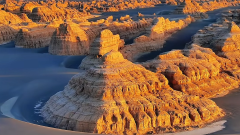

If you’re planning a trip to Xinjiang, you’ve probably asked: what are the top attractions in Southern Xinjiang? But once you start looking deeper, it becomes clear that this region can’t be summed up with a simple list. Southern Xinjiang stretches from historic cities like Kashgar to the high-altitude landscapes of the Pamir Plateau, and further into vast deserts and remote valleys. Distances are long, and each area offers a completely different experience, so understanding how these places fit together is key to planning a meaningful trip.
Historical and Cultural Attractions in Southern Xinjiang
Southern Xinjiang was a vital artery of the ancient Silk Road, leaving behind countless priceless historical relics that bear witness to the exchange and integration of Eastern and Western civilizations. These sites offer a window into the region’s rich past and unique ethnic culture, making them essential stops for anyone looking to truly understand Southern Xinjiang beyond its postcard-perfect scenery.
Kashgar Old City
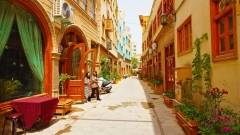
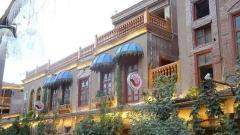
As the best-preserved labyrinthine urban neighborhood in China with a history spanning over 2,000 years, Kashgar Old City is the undisputed crown jewel of Southern Xinjiang’s cultural attractions. Wander through its narrow, winding alleyways lined with earthy-yellow houses arranged in a picturesque, organic layout, and you’ll be immediately immersed in the authentic daily life of local Uyghur residents. Admire the intricate wood carvings and geometric brick decorations on traditional courtyard homes, watch skilled artisans hammer copperware and weave carpets in tiny sunlit workshops, and stop for a cup of fragrant salted milk tea at a neighborhood teahouse where elders gather to chat. The soft golden light of early morning and late evening bathes the adobe walls in a warm glow, creating the perfect atmosphere for photography and leisurely strolls that transport you back to the bustling days of the Silk Road caravans.
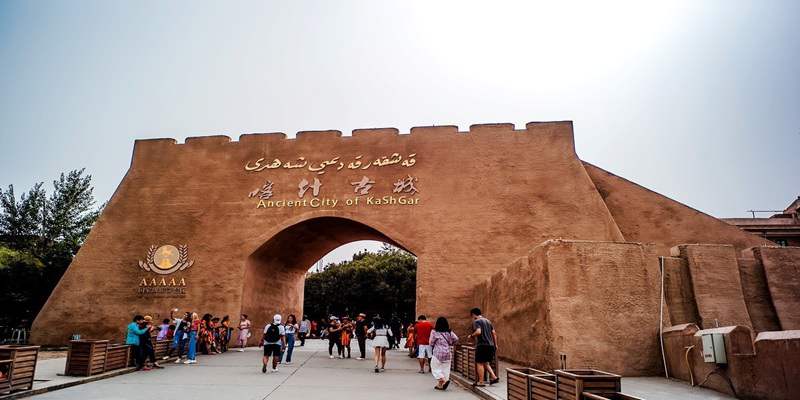
Kashgar Old City
Id Kah Mosque
Nestled in the very heart of Kashgar Old City, Id Kah Mosque is one of the largest and most influential mosques in China, serving as the spiritual and cultural center of Islamic life in Southern Xinjiang. Originally constructed in 1442 and expanded over the centuries, this magnificent architectural masterpiece features grand yellow brick gates inlaid with stunning turquoise glazed tiles, spacious tree-lined courtyards, and towering prayer halls supported by carved wooden pillars that exude a profound sense of solemnity and serenity. Every Friday, thousands of Muslim worshippers from across the region gather here for the Jumu’ah prayer, filling the courtyard and surrounding streets in a deeply moving display of faith. When visiting, please respect local religious customs: women should cover their heads with a scarf, remove your shoes before entering the main prayer hall, and avoid wearing revealing clothing such as shorts or sleeveless tops.
Xiangfei Garden (Apak Khoja Mausoleum)
Better known internationally as the Tomb of Apak Khoja, Xiangfei Garden gained global fame due to the legendary “Fragrant Concubine” from the Qing Dynasty, who is believed to be buried here alongside five generations of her influential family. The mausoleum’s striking architecture seamlessly blends Islamic and traditional Chinese design elements, with its exterior walls covered in vibrant emerald green glazed tiles adorned with delicate Islamic calligraphy and floral patterns, giving it a luxurious and ethereal appearance. The sprawling garden also features a faithful replica of the Fragrant Concubine’s former residence, a folk culture museum showcasing traditional Uyghur clothing and handicrafts, and a peaceful pond surrounded by willow trees. In summer, the garden bursts into bloom with roses and peonies that frame the mausoleum, making it one of the most photogenic spots in Kashgar.
Stone City
Perched dramatically on a high rocky hill in Taxkorgan Tajik Autonomous County, Stone City was once a crucial post station on the ancient Silk Road and the capital of the ancient Puli Kingdom, with a history stretching back over 1,000 years. Built entirely from rough-hewn stone, the castle now lies in atmospheric ruins, but its crumbling walls, weathered towers, and winding passageways still hint at its former grandeur and strategic importance as a crossroads of trade. Standing atop the city walls, you’ll be rewarded with breathtaking panoramic views of the Taxkorgan River Valley below, with snow-capped Pamir peaks stretching across the horizon and lush alpine grasslands dotted with grazing yaks and sheep. You’ll also have the chance to interact with the friendly Tajik people, who have lived in this remote mountain region for centuries and are known for their warm hospitality.
Kizil Thousand Buddha Caves
Located in the cliffs along the Muzart River in Baicheng County, the Kizil Thousand Buddha Caves are the earliest and westernmost large-scale grotto complex in China, predating the famous Mogao Grottoes in Dunhuang by nearly 300 years. Often called “China’s earliest treasure house of grotto art,” the caves were first carved in the 3rd century AD and flourished for over 800 years, now containing 236 surviving grottoes and approximately 10,000 square meters of remarkably well-preserved murals. The murals depict Buddhist stories, celestial beings, and scenes of daily life in ancient Central Asia, renowned for their vivid colors, fluid lines, and unique artistic style that blends Indian, Persian, and Chinese influences. A visit to these caves is a fascinating journey back in time that offers invaluable insights into the spread of Buddhism along the Silk Road.
Natural Scenic Attractions in Southern Xinjiang
Southern Xinjiang is home to some of the most spectacular and diverse natural scenery on Earth, featuring everything from towering snow-capped mountains and crystal-clear alpine lakes to vast shifting deserts and dramatic red rock canyons. Nature’s raw power and beauty are on full display here, with every turn revealing a new breathtaking view that will leave you speechless.
Pamir Mountains
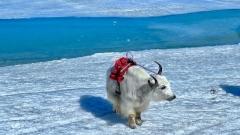
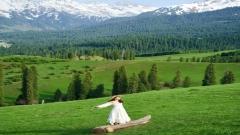
Known as the “Roof of the World,” the Pamir Mountains is where several major Asian mountain ranges—the Himalayas, Karakoram, Kunlun, and Tian Shan—converge, creating a landscape of unparalleled grandeur with an average elevation of over 4,000 meters and more than a dozen peaks exceeding 7,000 meters. It is the very essence of Southern Xinjiang’s natural beauty, offering endless vistas of snow-capped peaks glistening in the sun, turquoise alpine lakes reflecting the sky, and rolling grasslands where nomadic herders tend their flocks. The plateau is also home to the Tajik people, who welcome visitors into their cozy traditional yurts to taste homemade yogurt, naan bread, and butter tea, and share stories of their life on the high plateau. Important note: You must apply for a border pass in Kashgar before traveling to the Pamir Mountains to avoid any delays to your itinerary.
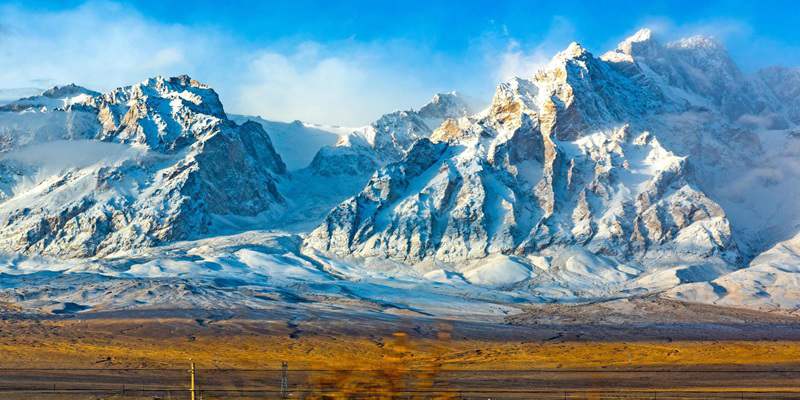
Pamir Mountains
Karakul Lake
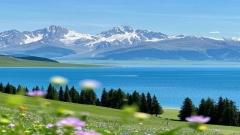
Nestled at the foot of Muztagh Ata Peak in the Pamir Mountains, Karakul Lake is a stunning high-altitude glacial lake whose name means “Black Lake” in the Kyrgyz language, derived from its deep, inky blue waters that appear almost black in certain light. The lake’s crystal-clear waters perfectly mirror the snow-capped peaks of Muztagh Ata and Kongur Tagh, creating a breathtaking mirror effect that looks like a living oil painting. On sunny days, the lake’s color changes dramatically throughout the day, shifting from deep indigo at dawn to bright turquoise at midday and golden orange at sunset. You can stay overnight in a Kyrgyz yurt camp by the lake, waking up to the sound of sheep bells and the first light of the sun hitting the mountains—an experience you’ll never forget.
Muztagh Ata Peak
Rising majestically to an elevation of 7,546 meters, Muztagh Ata Peak is the iconic symbol of the Pamir Mountains, known as the “Father of Ice Mountains” and a bucket-list destination for mountaineers from around the world. The peak is covered in permanent snow and ice, with a massive, rounded summit that resembles a giant ice dome rising above the surrounding plateau. Even if you don’t plan to climb the mountain, you can still enjoy its awe-inspiring beauty from the base, where you can walk along the glacial moraines and take in the panoramic views of the surrounding peaks. The drive from Karakul Lake to the foot of Muztagh Ata is one of the most scenic in China, passing through rolling alpine meadows dotted with wildflowers and meandering glacial rivers.
Baisha Lake
Located on the edge of the Pamir Mountains along the Karakoram Highway, Baisha Lake is one of Southern Xinjiang’s most underrated and beautiful hidden gems. Its crystal-clear waters are a stunning pale turquoise blue, resembling a precious sapphire set against the vast, barren Gobi Desert. The lake is surrounded by rolling white sand dunes that create a striking contrast with the blue water, making it look like a scene from a tropical beach—except with snow-capped mountains visible in the distance. Unlike more popular tourist spots, Baisha Lake is remarkably quiet and uncrowded, with only the sound of lapping water and wind blowing through the sand dunes breaking the silence. It’s the perfect place to relax, meditate, and take stunning photos without the crowds.
Taklamakan Desert
The Taklamakan Desert is China’s largest desert and the world’s second-largest shifting desert, earning the fearsome nickname “Sea of Death” for its harsh and unforgiving environment. Yet beneath its intimidating reputation lies a landscape of incredible, otherworldly beauty, with endless golden sand dunes stretching as far as the eye can see, their shapes constantly shifting with the wind. You can experience the thrill of dune bashing in a 4×4 off-road vehicle, ride a camel across the soft sand to feel the desert’s ancient mystery, or camp overnight under a sky filled with millions of twinkling stars—one of the darkest skies in China. The golden light of sunrise and sunset paints the dunes in shades of orange, pink, and red, creating the most spectacular conditions for photography.
Tarim Poplar Forest
Located along the Tarim River in Luntai County, the Tarim Poplar Forest is the world’s largest and most densely distributed natural poplar forest, covering an area of over 100 square kilometers. Poplar trees are revered throughout Xinjiang for their incredible resilience, with the famous saying “live for 1,000 years, stand for 1,000 years after death, and remain immortal for 1,000 years after falling” perfectly capturing their indomitable spirit. They are a powerful symbol of life in the harsh desert environment. The best time to visit is from mid-October to early November, when the poplar leaves turn a brilliant golden yellow, creating a vast sea of gold that stretches as far as the eye can see. You can take a narrow-gauge train deep into the forest or hike along the wooden boardwalks to get up close to these magnificent ancient trees.
Unique Experiences in Southern Xinjiang
Beyond its historical sites and natural wonders, Southern Xinjiang offers a range of unforgettable unique experiences that will allow you to immerse yourself deeper in the local culture and create memories that will last a lifetime.
Panlong Ancient Road
Located in the mountains of Taxkorgan Tajik Autonomous County, Panlong Ancient Road is a viral internet-famous highway that has become one of the most popular attractions in Southern Xinjiang. Stretching for approximately 30 kilometers, the road features over 600 tight S-shaped curves that wind their way up the mountainside, looking like a giant dragon coiled around the peaks from above. Driving along this winding road is an exhilarating adrenaline rush, with steep cliffs dropping off on one side and breathtaking panoramic views of the Pamir Mountains unfolding on the other. At the end of the road, there’s a famous sign that reads “Today I’ve walked all the twists and turns in life, and from now on, my life will be smooth sailing,” making it a popular spot for visitors to take photos and make wishes for good fortune.
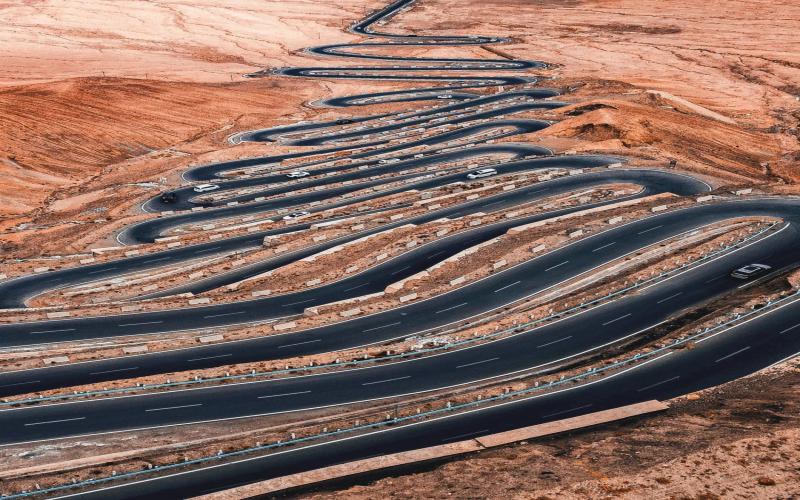
Panlong Ancient Road
Wensu Grand Canyon
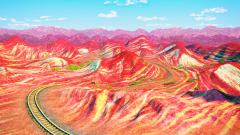
Located in Wensu County near Aksu, Wensu Grand Canyon is the most spectacular Danxia landform wonder in western China, often called the “Red Grand Canyon” for its stunning red rock formations. The canyon’s rocks display a vibrant palette of colors including red, orange, yellow, and brown, which glow brilliantly in the sunlight, creating a natural masterpiece that looks like a giant abstract oil painting. The unique geological formations, including towering stone pillars, jagged peaks, and massive stone walls, have been shaped by millions of years of wind and water erosion, making the canyon a living geological museum. You can explore the canyon by taking a scenic shuttle bus or hiking along the marked trails, getting up close to marvel at nature’s incredible handiwork.
Southern Section of Duku Highway
The Duku Highway (Dushanzi-Kuqa Highway) is widely regarded as one of the most beautiful highways in the world, and its southern section connecting Kuqa with Nalati is the most scenic stretch. This legendary road cuts through the heart of the Tian Shan Mountains, passing through a dizzying array of landscapes including red rock canyons, lush alpine grasslands, dense forests, and snow-capped peaks, allowing you to experience all four seasons in a single day. The highway is only open from June to October each year, closing for the rest of the year due to heavy snowfall and dangerous road conditions, making it a once-in-a-lifetime experience for many travelers. Driving along the Duku Highway with the windows down and the wind in your hair is pure magic.
Hotan Night Market
Hotan Night Market is the most famous and vibrant night market in Southern Xinjiang, and the absolute best place to experience the region’s delicious cuisine and lively local atmosphere. The market is filled with hundreds of stalls selling a mouthwatering variety of Xinjiang specialties, including succulent grilled lamb skewers, crispy baked buns stuffed with spiced meat, fragrant hand-grabbed rice with lamb and carrots, sweet naan bread, and refreshing pomegranate juice. In addition to food, there are also many handicraft shops where you can buy authentic souvenirs such as Hotan jade, handwoven silk carpets, and traditional Uyghur musical instruments. The night market is always bustling with activity, with bright lights, the aroma of grilled meat, and the sound of laughter and bargaining filling the air.
Practical Information for Traveling to Southern Xinjiang
To help you plan a smooth and enjoyable trip to Southern Xinjiang, here is some essential practical information to keep in mind.
Best Time to Visit
- Peak Season (September to November): The best time to visit, with cool comfortable weather (10°C-25°C). Tarim Poplar Forest turns golden in mid-October, and clear skies make it perfect for outdoor activities and photography.
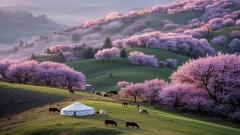
- Shoulder Season (March to May): Mild spring weather with blooming flowers around Kashgar. Fewer tourists offer a relaxed experience, ideal for exploring ancient cities and cultural sites.
Transportation Options
- Chartered Car: The most popular and flexible option, allowing you to customize your itinerary freely and visit remote spots. It costs 600-1200 RMB per day, affordable when shared by 3-4 people.
- Group Tour: Ideal for a hassle-free trip, with various itineraries, professional guides, and recommended small-group tours (max 10 people) for a personalized experience.
- Public Transportation: Flights and trains connect major cities (fast and affordable respectively), but inter-attraction links are limited, so combine with a chartered car for day trips.
Important Tips
- Sun Protection: The ultraviolet radiation in Southern Xinjiang is extremely strong all year round, even on cloudy days. Always wear high-SPF (50+) sunscreen, a wide-brimmed hat, sunglasses, and a long-sleeved sun-protective shirt to avoid sunburn.
- Clothing: Pack layers! The temperature difference between day and night can be as much as 20°C, even in summer. Bring a warm jacket such as a windbreaker or light down jacket, especially if you’re visiting the Pamir Mountains.
- Altitude Sickness: If you’re traveling to the Pamir Mountains, take it easy for the first 24 hours, drink plenty of water, and avoid alcohol and strenuous exercise. You can also take over-the-counter anti-altitude sickness medication as a precaution.
- Cultural Respect: Always ask for permission before taking photos of local people, especially women and religious leaders. Respect local customs and dress modestly when visiting religious sites.
Planning Southern Xinjiang: It’s More About Routes Than Lists
By the time you’ve gone through the highlights, the real question is no longer what to see, but what to focus on. Some travelers come for the cultural depth of Kashgar, others for the dramatic scenery of the Pamir Plateau, while many are drawn to the desert landscapes and autumn poplar forests. Most itineraries naturally narrow down to a few key areas rather than trying to cover everything.
The bigger challenge is usually logistics. Travel distances are significant, and connections between sites aren’t always straightforward. For first-time visitors especially, having a well-structured route makes a noticeable difference. This is where working with an experienced operator like China Dragon Travel can help streamline the journey, so you spend less time figuring things out and more time actually experiencing Southern Xinjiang.