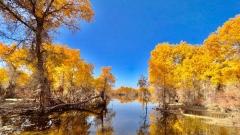

If you’re planning a trip to Xinjiang, one of the first questions that likely comes to mind is: what are the must-see attractions in Northern Xinjiang? The answer isn’t as simple as a list. Northern Xinjiang is vast, and its beauty lies in its diversity—from alpine lakes and forests in Kanas to sweeping grasslands in Yili, and from dramatic canyon landscapes to remote ethnic villages. Without a clear structure, it’s easy to feel overwhelmed or miss the highlights. This guide breaks down the key regions and signature landscapes, helping you understand not just what to see, but how to prioritize your journey.
Kanas Scenic Area: the Crown Jewel of Northern Xinjiang
Undoubtedly one of the most famous destinations in Northern Xinjiang, Kanas Scenic Area is often called “God’s Private Backyard” and is a must-visit for anyone traveling to the region. Located in northern Burqin County, Altay Prefecture, it sits at the border of China, Kazakhstan, Russia, and Mongolia, combining alpine mountains, lakes, forests, and grasslands into a single breathtaking landscape.
Kanas Lake: A Color-Changing Gem of the Plateau
The heart of the Kanas Scenic Area is Kanas Lake, whose waters shift between emerald green and deep blue depending on the season and sunlight, earning it the nickname “the color-changing gem of the plateau.” Adding to its allure is the legendary Kanas Lake Monster, a mysterious creature that has fascinated visitors and locals alike for decades. Strolling along the wooden boardwalks that line the lake, you’ll be treated to crystal-clear waters and dense taiga forests that turn golden in autumn, creating postcard-perfect views at every turn.
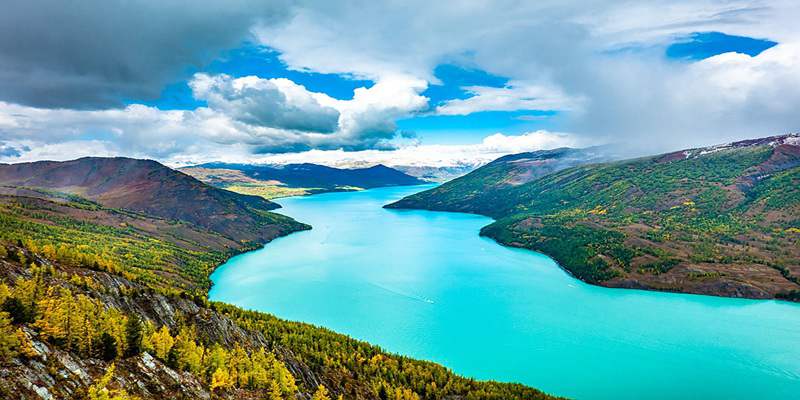
Kanas Lake
The Three Bays: The Crown Jewels of Kanas
The Three Bays—Fairy Bay, Moon Bay, and Dragon Bay—are the absolute highlights of the Kanas Scenic Area, each offering unique scenery and perfect photo opportunities.
- Fairy Bay: Best visited in the early morning when thick mist shrouds the lake and surrounding trees, creating an ethereal, otherworldly atmosphere that lives up to its name. Wake up early to catch this magical moment before the crowds arrive.
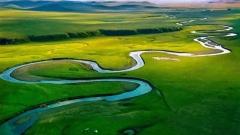
- Moon Bay: Famous for its S-shaped river channel that resembles a crescent moon, Moon Bay features emerald-green waters that reflect the surrounding forests, painting a stunning natural portrait. Whether you view it from the observation deck or walk along the boardwalk, you’ll be captivated by its beauty.
- Dragon Bay: Named after the island in the middle of the lake that looks like a giant dragon lying peacefully in the water, Dragon Bay is surrounded by lush forests and grasslands, creating a powerful and awe-inspiring scene that showcases nature’s incredible artistry.
Guanyu Platform: The Best Spot to Panoramic Kanas
No trip to Kanas is complete without climbing the 1,068 steps to Guanyu Platform, the best vantage point to enjoy a panoramic view of the entire Kanas Lake. From the top, you’ll see snow-capped mountains in the distance, the sparkling lake below, and dense forests stretching as far as the eye can see. On clear days, you can even see the gradual color changes in the lake’s waters, making it the perfect spot to capture stunning landscape photos. We recommend setting aside 1-2 days to explore Kanas Scenic Area, as shuttle buses connect all the major attractions. During peak season, be sure to book your accommodation in advance to avoid any disruptions to your trip.
Hemu Village and Baihaba Village: Hidden Ancient Village Paradises
Near the Kanas Scenic Area lie two peaceful and well-preserved ancient villages that are hidden gems of Northern Xinjiang: Hemu Village and Baihaba Village. These villages offer a glimpse into the simple, authentic life of the Tuvan people, with a charm that’s hard to find in more touristy areas.
Hemu Village: China’s No.1 Village, a Peaceful Paradise
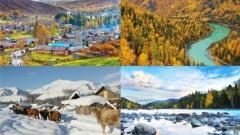
Known as “China’s No.1 Village,” Hemu Village is located about 30 kilometers east of Kanas Lake and is home to the Tuvan ethnic group. The village features traditional wooden houses scattered among birch forests and grasslands, with small bridges crossing flowing streams and smoke curling from chimneys in the morning, creating a scene straight out of a fairy tale.
Climb to Haden Platform in the early morning to watch the mist and smoke blanket the entire village, as the first rays of sunlight turn the wooden houses and birch trees a warm golden yellow. This breathtaking view is enough to wash away all your tiredness and worries. In the evening, the sunset paints the village and distant snow-capped mountains in golden hues, creating a magical atmosphere. At night, with almost no light pollution, the Milky Way shines brightly overhead, offering a romantic and healing stargazing experience that you’ll never forget.
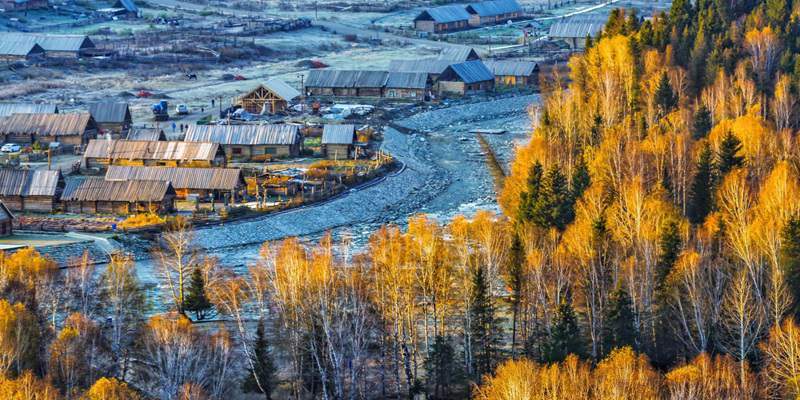
Hemu Village
Baihaba Village: China’s Northwesternmost Village, a Border Oil Painting
Baihaba Village, known as “China’s Northwesternmost Village,” is located west of Kanas Lake, right on the border with Kazakhstan. To visit this village, you’ll need to apply for a border pass in advance. Compared to Hemu Village, Baihaba is quieter and more untouched, with a strong Tuvan cultural vibe. Wooden houses, yurts, and grazing cattle and sheep create a picturesque nomadic scene.
Autumn is the best time to visit Baihaba Village, when the birch forests turn golden yellow, contrasting beautifully with the clear rivers and snow-capped mountains in the background. It looks like a living oil painting, making it a paradise for photographers from around the world.
The Beauty of Ili: The Jiangnan Beyond the Great Wall
Moving on to Ili Kazakh Autonomous Prefecture, another core region of Northern Xinjiang known as “the Jiangnan Beyond the Great Wall” for its lush landscapes and mild climate. Two of the most iconic attractions here are Sayram Lake and Nalati Grassland, which showcase the softness and vastness of Northern Xinjiang’s natural beauty.
Sayram Lake: The Last Tear of the Atlantic Ocean
Known as “The Last Tear of the Atlantic Ocean,” Sayram Lake is in Bole City, Bortala Mongol Autonomous Prefecture. As Xinjiang’s highest and largest alpine lake, it boasts crystal-clear waters that let you see underwater pebbles; on sunny days, it shimmers like a sapphire reflecting the sky, clouds and snow-capped mountains.
Driving or taking the scenic shuttle bus around the lake reveals varied views. From June to July, wildflowers bloom along the shore, pairing beautifully with the blue lake and snow-capped mountains; in winter, it freezes into stunning blue ice, drawing numerous visitors.
A full loop is recommended to enjoy views from multiple observation stops. The lake is windy, so bring a light jacket. For a romantic experience, stay overnight at the RV campground to stargaze.
Nalati Grassland: The Sky Grassland, a Hub of Nomadic Culture
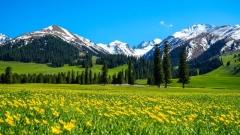
One of the four largest grasslands in the world, Nalati Grassland is located in Xinyuan County, Ili Kazakh Autonomous Prefecture, and is known as “the Sky Grassland” for its average altitude of 2,200 meters. The grassland stretches like a green carpet to the horizon, with snow-capped mountains, forests, and river valleys in the background, creating a rich, three-dimensional natural landscape.
Summer is the best time to visit Nalati Grassland, when the grass is lush and green, wildflowers are in full bloom, and cattle and sheep graze freely across the plains. Kazakh yurts dot the grassland, and the sound of pastoral songs echoes through the valleys, creating a strong nomadic atmosphere.
Nalati Grassland is divided into two core areas: the Sky Grassland and the River Valley Grassland, each with its own unique charm:
- Sky Grassland: Offers the most open views. Climb to Tianjie Platform to overlook the entire grassland, where grazing herds look like scattered pearls and snow-capped mountains stand majestically in the distance, creating a truly breathtaking scene.
- River Valley Grassland: Features gentler terrain with flowing streams and dense forests, making it perfect for walking and horseback riding. Here, you can ride a horse deep into the grassland to experience its vastness, or step into a Kazakh yurt to taste warm salty milk tea and delicious baked buns, experiencing the authentic Kazakh folk culture. In the evening, watch the sunset over the grassland, as the golden light paints everything in warm hues, making you reluctant to leave.
Kalajun Grassland: The Stunning Human Body Grassland
Another must-visit attraction in Ili is Kalajun Grassland, known as “the Human Body Grassland” for its undulating curves that resemble the lines of a human body under the play of light and shadow. The grassland features a unique three-dimensional landscape, with snow-capped mountains, forests, meadows, river valleys, and yurts weaving together to form a stunning natural painting. From June to August, wildflowers bloom in a variety of colors across the grassland, making it even more beautiful.
Kuokesu Grand Canyon: A Geological Secret Hidden in the Grassland
Within the Kalajun Scenic Area, Kuokesu Grand Canyon is also worth a visit. The canyon is home to the Nine Bends and Eighteen Turns and Crocodile Bay, both of which offer unique and spectacular scenery. The emerald-green waters of the canyon contrast beautifully with the surrounding landforms, leaving visitors in awe of nature’s magic.
The Nine Bends and Eighteen Turns winds its way through the canyon, with the water reflecting the blue sky and white clouds. At sunset, the golden light reflects off the water, creating multiple golden streaks that are simply stunning. Crocodile Bay gets its name from the river channel that looks like a crocodile, with steep rock walls and clear waters creating a powerful visual impact.
Yadan Landforms: Urho Ghost City and Colorful Beach
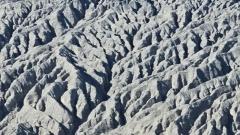
Northern Xinjiang is not just about lakes and grasslands; it also features dramatic wind-eroded Yadan landforms. Urho Ghost City and Colorful Beach are the most representative Yadan attractions, offering a chance to experience the desolate and magnificent beauty of nature.
Urho Ghost City: A Fantasy Castle on the Gobi Desert
Located in Urho District, Karamay City, Urho Ghost City is one of the most beautiful Yadan landforms in China. Over millions of years, wind erosion has carved the earth into strange castle and monster-like shapes, making you feel like you’ve stepped onto another planet. The wind blows strongly here, and as it passes through the rock formations, it makes a howling sound that resembles the roar of ghosts, hence the name “Ghost City.”
In the evening, the sunset paints the rock formations in golden and red hues, creating a magical and breathtaking scene. Urho Ghost City was also the filming location for the movie Crouching Tiger, Hidden Dragon, attracting many visitors to take photos and experience the grandeur and mystery of the Yadan landforms. We recommend taking the scenic train through the area, which stops at multiple observation decks where you can get up close to the strange rock formations and hear the legends about them.
Colorful Beach: A Tale of Two Landscapes: Fire and Ice
Located in Burqin County, Altay Prefecture, right next to the Irtysh River, Colorful Beach is famous for its unique “fire and ice” landscape. The north bank features colorful Yadan landforms with rocks in shades of red, yellow, purple, and green, creating a stunning visual impact. The south bank, on the other hand, is a lush green oasis with dense trees and grass, creating a sharp contrast with the colorful Yadan on the north bank.
The Irtysh River, the only river in China that flows into the Arctic Ocean, runs through Colorful Beach, connecting the two contrasting landscapes into a single beautiful painting. The best time to visit is in the evening, when the sunset makes the colors of the Yadan landforms even more vibrant. Be sure to arrive early to get the best spot for taking photos.
Hidden Gems of Northern Xinjiang: Keketuohai and Tianchi Lake
Beyond the popular tourist spots, Northern Xinjiang also has two hidden gems: Keketuohai and Tianchi Lake. These attractions are perfect for travelers who prefer less crowded places and want to explore more off-the-beaten-path destinations.
Keketuohai: A Canyon Paradise Amid Lush Green Forests
Located in Fuyun County, Altay Prefecture, Keketuohai Scenic Area is known as “the green forest and blue river bay.” Contrary to its name, Keketuohai is not a sea, but a canyon paradise on the upper reaches of the Irtysh River. The scenic area features the Irtysh Grand Canyon, where the river flows westward, and giant granite peaks like Shenzhong Mountain stand tall in various shapes, leaving visitors in awe of nature’s craftsmanship.
One of the iconic attractions in Keketuohai is the No.3 Mining Pit, known as the “Meritorious Mining Pit.” It played a crucial role in helping China repay foreign debts in the past, making it a geological wonder with great historical significance. Walking into the mining pit, you can feel the hardship and glory of the mining era.
Tianchi Lake: The Heavenly Lake of Yaochi, a Snow-Capped Lake Near Urumqi
Located in Fukang City, Changji Hui Autonomous Prefecture, just a short distance from Urumqi, Tianchi Lake is known as “the Heavenly Lake of Yaochi” and is one of the most representative alpine lakes in Xinjiang. It is a glacial moraine lake with crystal-clear waters that reflect the snow-capped Bogda Peak, surrounded by dense spruce forests. The combination of snow-capped mountains, forests, and lake creates a stunningly beautiful scene.
The scenic area features eight classic attractions, including Shimen Yixian, Longtan Biyue, Dingtian Sanshi, and Dinghai Shenzhen, each with its own unique charm. Tianchi Lake is easily accessible from Urumqi, making it a perfect first or last stop on your Northern Xinjiang trip. We recommend setting aside half a day to explore the area.
Northern Xinjiang Is Vast – Plan Around What You Actually Want to Experience
At first, most travelers simply ask what to see in Northern Xinjiang. But once you start mapping things out, it quickly becomes clear that this isn’t a destination you can cover with a checklist. Distances are long, landscapes change dramatically, and trying to fit everything in often leads to a rushed and fragmented experience.
A better approach is to build your trip around one or two key regions – Kanas with Hemu for alpine scenery and culture, or Yili for grasslands and lakes. This way, the journey feels more coherent and less exhausting. If it’s your first time visiting or you’re unsure about logistics, working with a specialist like China Dragon Travel can make a big difference, especially when it comes to route planning and local coordination.
![11 Day Tour[Winter Limited] Drunken Beauty Xinjiang Ice and Snow Kanas Fairy Tale New Vision](https://www.chinadragontravel.com/wp-content/uploads/2025/12/25cff76cef9e445-240x135.jpg)