
For many travelers, “what to do in Western Sichuan” is the first question when planning a trip. Western Sichuan generally refers to the plateau and mountainous areas in western Sichuan, boasting rich landscapes and unique cultures. However, it is vast with scattered attractions, so it is essential to learn about it in advance. This article will directly list the most worthwhile places to visit in Western Sichuan, explain their respective characteristics and suitable ways to travel. Meanwhile, we will provide specific suggestions on transportation, accommodation, health preparations, helping you turn your ideas into an executable travel plan.
Exploring Western Sichuan: Natural Scenery
The natural scenery of Western Sichuan is its most appealing part, mainly featuring snow-capped mountains, lakes, grasslands and glaciers.
Four Girls Mountain: A Snow Mountain Scenic Area for Visitors of All Fitness Levels
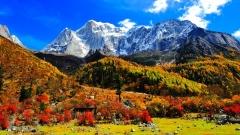
Four Girls Mountain is one of the iconic attractions in Western Sichuan, consisting of four peaks and three major valleys. Shuangqiao Valley can be visited by sightseeing bus throughout the whole journey, with flat roads and wide views, suitable for all tourists to easily enjoy snow-capped mountains and meadows. Changping Valley requires hiking or riding horses, with forests and streams along the way, and the destination is an excellent spot to watch Yaomei Peak, suitable for those who like light hiking. Haizi Valley is more primitive, serving as the starting point for visiting alpine lakes and mountaineering activities, which requires good physical fitness.
Daocheng Yading: An Alpine Secret Land Accessible Only by Hiking
Daocheng Yading is famous for its “Three Holy Mountains” and “Three Holy Lakes”. Visiting most areas here requires hiking. The uphill section from Luorong Pasture to Milk Sea and Five-Colored Sea is at a relatively high altitude, which has certain physical requirements. There are also easier routes in the scenic area, such as the short trail from Chonggu Monastery to Pearl Sea. Please be sure to make a choice based on your own health condition before visiting.
Other Important Natural Scenic Spots
- Hailuogou: Here you can watch low-altitude glaciers up close and enjoy hot springs under snow-capped mountains. There are sightseeing buses in the scenic area, and the walking distance after reaching the viewing platform is not long.
- Xinduqiao: It is not a traditional scenic spot, but refers to a section of road with beautiful scenery along the line. In autumn, the golden poplars, winding rivers and distant mountains by the road form a picturesque scene, very suitable for photography.
- Cuopugou: A relatively niche scenic area integrating lakes, forests, hot springs and temples. The environment is quiet with few tourists, and you can see wild animals.
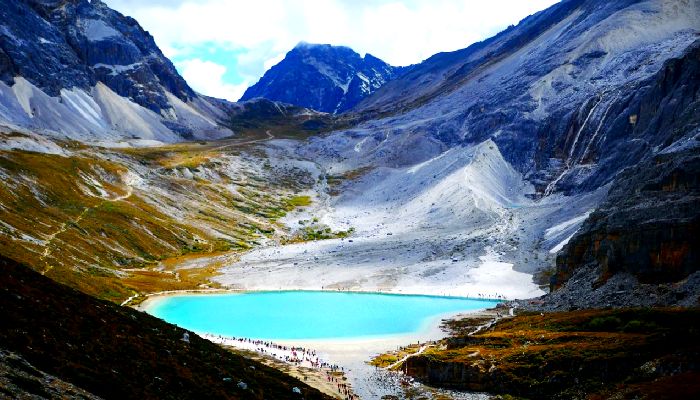
Milk Sea in Daocheng Yading
Exploring Western Sichuan: Cultural Experiences
Western Sichuan is one of the core areas of Tibetan culture, with many unique cultural landscapes.
Seda Larung Gar Buddhist Academy: A Grand Religious Complex
Seda Buddhist Academy is famous for its red wooden houses covering the mountains, with a very shocking visual effect. Please note that visiting regulations may change, and you must confirm the latest entry policy before traveling. Whether you can enter the interior or not, you should always respect local religious activities.
Jiaju Tibetan Village in Danba: Unique Tibetan Village Style
The houses in Jiaju Tibetan Village are built of stone, with white and black decorations on the outer walls, neatly distributed on the hillside. Visiting the Tibetan village allows you to learn about the living environment of local people, and some families open homestays to provide simple accommodation and meals.
Dege Scripture Printing House: A Traditional Tibetan Cultural Center
Located in Dege County, the Scripture Printing House is one of the most important scripture printing houses in the Tibetan area, preserving a large number of woodblocks for printing scriptures. Tourists can watch the process of hand printing by craftsmen and learn about the traditional production of Tibetan books.
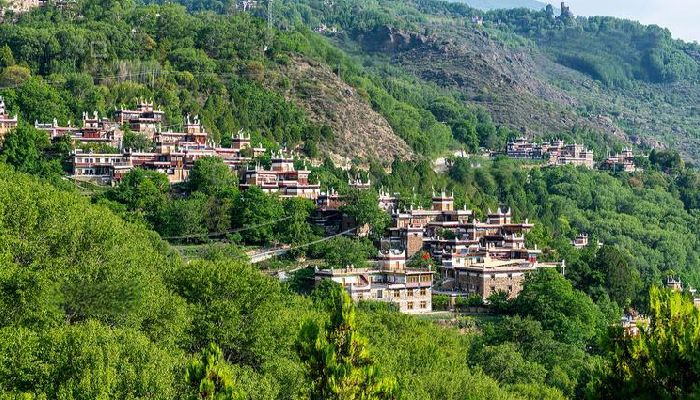
Jiaju Tibetan Village in Danba
Sichuan West Travel Styles and Seasonal Choices
Different travel styles and seasons will give you different experiences of “what to do in Western Sichuan”.
- Self-driving Travel: Self-driving is a common way to travel in Western Sichuan with the highest degree of freedom. Major highways such as National Highway 318 have good road conditions, but some mountain roads have many bends and steep slopes, so you need to drive carefully. You should check the vehicle condition before departure.
- Charter a Car or Join a Tour Group: If you are not used to driving on the plateau, chartering a car or joining a small tour group is a more relaxed choice. Local drivers are familiar with the road conditions, which can save you time in planning and finding routes. For example, the small group service provided by China Dragon Travel usually includes arrangements for transportation, accommodation and some tickets.
Best Travel Seasons:
- April to May: The weather warms up, and pear blossoms bloom in places like Danba.
- June to August: Grasslands turn green in summer, wildflowers bloom, and the climate is cool, but it is also the rainy season.
- September to October: The weather is stable in autumn, with rich colors of scenery, making it the most popular travel season.
- November to March: There are few tourists in winter, and you can see snow scenery, but some high-altitude areas may be closed due to weather.
Practical Tips for Planning a Western Sichuan Itinerary
To make your trip smoother, here are some specific preparation suggestions.
- Transportation Arrangements: Most tourists start from Chengdu. If you choose public transportation, there are shuttle buses from Chengdu to Kangding, Luding and other places, but you may need to transfer multiple times to reach more remote scenic areas. It is important to check the shuttle bus schedule in advance.
- Accommodation Choices: In major towns such as Lhasa, Kangding and Xinduqiao, there are various hotels from budget to mid-range. In places like Daocheng Yading and Seda, the accommodation conditions may be relatively simple, especially in the peak season, rooms may be tight, so it is recommended to book in advance.
- Coping with Altitude Sickness: Most areas in Western Sichuan are at high altitudes. It is recommended not to arrange strenuous activities for the first one or two days of the trip to allow the body to adapt. Drink plenty of water, do not drink alcohol, and ensure rest. You can prepare some glucose, chocolate, etc. to supplement energy.
- Respecting Local Culture: Please keep quiet when entering temples and usually need to take off hats. Before taking photos, especially of people and religious activities, please ask for permission first. When walking around temples, stupas or Mani piles, please follow the clockwise direction.
Pre-Departure Preparation Checklist
After clarifying “what to do in Western Sichuan” and formulating a preliminary plan, please make the final preparations according to this checklist.
- Confirm itinerary details: According to the length of your vacation and interests (natural or cultural), determine the specific places to visit, mark them on the map, and estimate reasonable driving and visiting time.
- Book reliable transportation services: If you decide to charter a car or join a tour group, contact and confirm the vehicle, driver’s qualifications and itinerary content in advance. Choosing a well-documented organization like China Dragon Travel can provide more guarantees for your trip.
- Prepare appropriate clothing and equipment: No matter what season, you need to prepare warm jackets, sunscreen, sunglasses and hats. A pair of waterproof and non-slip hiking shoes is necessary. It is recommended to carry an insulated water bottle.
- Prepare daily necessities: In addition to personal medicines, it is recommended to prepare some cash, because electronic payment may not be available in remote areas. Download offline maps on your mobile phone.
- Keep the itinerary flexible: The weather on the plateau changes quickly, and sometimes roads may be temporarily closed due to weather. Reserve some buffer time when planning to deal with possible delays.
Turning Western Sichuan Travel Ideas into a Realistic Journey
After understanding what Western Sichuan has to offer, the real challenge lies in turning scattered destinations into a well-paced and achievable journey. The region covers vast highland terrain with significant altitude differences, and travel conditions can vary greatly depending on season, weather, and road accessibility. Thoughtful planning is essential to balance sightseeing, driving time, and physical adaptation, especially for travelers unfamiliar with high-altitude environments.
For those who prefer a smoother experience without the complexity of route planning and mountain driving, working with an experienced local operator can make a significant difference. China Dragon Travel specializes in Western Sichuan and plateau travel, offering practical route design and logistical support based on real conditions. This allows travelers to focus less on coordination and more on enjoying the landscapes and cultural encounters that define the region.