
Do you need a permit to visit Everest Base Camp? How bad is altitude sickness? When is the best time to go, and how do you even get there? These are usually the first questions people ask when planning an Everest trip. Unlike most destinations, this is not something you can figure out last minute. Between travel permits, high altitude, and long distances, preparation plays a much bigger role than people expect. This guide focuses on what actually matters before you go, so you can avoid common issues and arrive fully ready.
Procedures for Everest Journey
Everest is located in a border area, and permits and paperwork are the foundation of your entire trip. Without proper documentation, you will be unable to pass through checkpoints, which will directly disrupt your itinerary. Before departure, be sure to check each item to ensure all documents are valid, complete, and carried with you.
- Border Defense Permit: Everest is located in the border management area of Tingri County, Shigatse City. The Border Defense Permit is a mandatory document. You can authorize a travel agency to handle the application on your behalf. Processing takes about 1–2 business days and costs 100–200 RMB. It is recommended to apply for a permit validity period of more than 30 days to cover your entire trip.
- Tibet Travel Permit: All international tourists entering the Tibet Autonomous Region must obtain a Tibet Travel Permit in advance. This is the basic entry permit for Tibet and is issued by the Tibet Autonomous Region. Individual applications are not accepted; you must apply through a qualified travel agency. You will need to provide a scanned copy of your passport’s information page, a scanned copy of your Chinese visa, and a detailed travel itinerary. It is recommended to submit your application at least one month in advance, and more than two months in advance during peak season.
- Vehicle Procedures: If you plan to drive to Everest, you must apply for a vehicle entry permit and pay the required vehicle entry fee in advance. Private vehicles can only reach the entrance gate of the Everest Scenic Area; they cannot drive directly to Everest Base Camp. You must transfer to an official eco-bus. Vehicle owners need to prepare their vehicle registration, driver’s license, insurance policy, and other relevant documents for inspection at checkpoints.
- Passport and Visa: Ensure that your passport is valid for at least another six months, and carry the original with you along with at least two photocopies. If you are eligible for China’s visa-free policy, confirm that the visa-free stay period is sufficient to cover your entire trip to Tibet and Everest. If your itinerary exceeds the visa-free period, you must apply for a tourist visa in advance at the Chinese embassy or consulate in your home country. It is recommended to apply one to two months in advance to allow sufficient processing time.
Permits are the first and most important step for your Everest journey. It is recommended that you re-check all original documents and photocopies the day before departure, storing them separately to avoid loss. With all your paperwork in order, you will be able to pass through the various checkpoints smoothly and begin your sacred mountain journey with peace of mind.
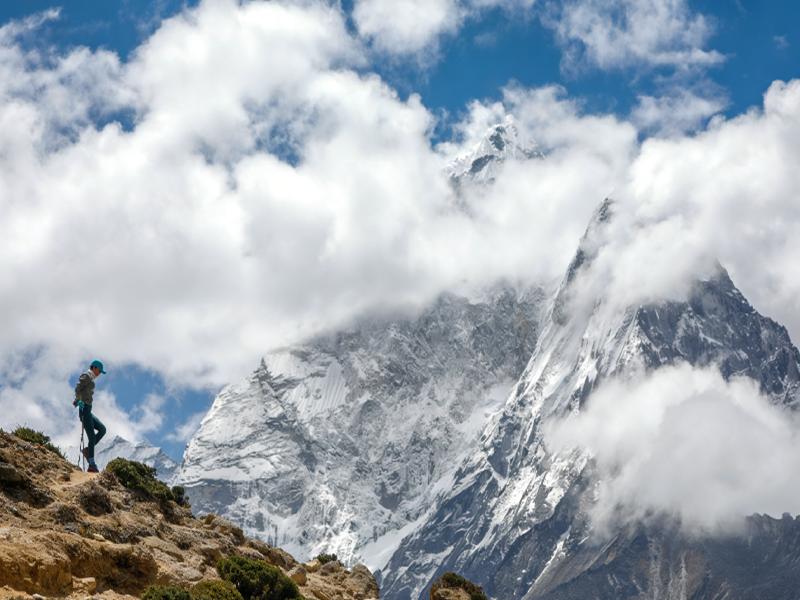
Everest: The Sacred Mountain in Tibet
Managing Altitude Sickness in Everest Journey
Everest Base Camp is located at an altitude of 5,200 meters, far higher than Lhasa’s 3,650 meters. Altitude sickness is a challenge that every traveler to Everest must face, but with the right precautions, it can be effectively managed.
- Physical Assessment: An Everest trip is not an ordinary vacation; it requires a good foundation of physical fitness. It is not recommended for individuals with heart disease, high blood pressure, or severe respiratory illnesses to travel. Before departure, it is advisable to undergo a comprehensive physical examination and consult your doctor about your fitness for high-altitude travel.
- Medication Preparation: Consult your doctor about carrying preventive medication for altitude sickness, such as Acetazolamide. This medication needs to be started 24 to 48 hours before reaching high altitude. Also, prepare a portable oxygen canister, which can be purchased at local pharmacies.
- Mild Altitude Sickness: Symptoms include mild headache, dizziness, fatigue, insomnia, and loss of appetite. The recommended response is to rest more, reduce activity, and drink plenty of warm water. These symptoms usually resolve naturally within one to three days.
- Moderate Altitude Sickness: Symptoms include severe persistent headache, nausea, vomiting, and difficulty breathing. You should stop your itinerary immediately, start using supplemental oxygen, and if there is no improvement, descend to a lower altitude.
- Severe Altitude Sickness: Symptoms include confusion, unsteady walking, and coughing up pink frothy sputum. These are signs of High Altitude Cerebral Edema (HACE) or High Altitude Pulmonary Edema (HAPE), which are extremely dangerous. You must use oxygen immediately and descend to a lower altitude as quickly as possible, seeking medical attention.
If you feel unwell, you should inform your guide immediately. Professional guides are trained in high-altitude first aid and can arrange for medical resources or oxygen support promptly. If you have a cold before departure, it is strongly recommended to postpone your trip, as a cold can easily develop into fatal pulmonary edema at high altitudes.
The Best Season for Everest Journey
The Everest region experiences severe cold, with temperatures fluctuating considerably even in summer. Understanding the weather characteristics of different seasons will help you choose the right time to travel and prepare accordingly.
- Spring (April to May): Spring is the transition period from harsh winter to a warmer season in the Everest region. Temperatures gradually rise, but high-altitude areas remain cold. Daytime temperatures range from -5°C to 5°C, feeling slightly warmer under the sun; nighttime temperatures can plummet to -15°C, so warm clothing is essential.
- Summer (June to August): Summer is the rainy season in the Everest region and also the peak tourist season. During this time, clouds and fog are frequent, and the summit of Everest is often obscured, making it less likely to see the full mountain. Daytime temperatures range from 5°C to 10°C, the warmest period of the year, while nighttime temperatures hover around -5° Frequent rainfall can make roads muddy, and some sections may be closed due to rain.
- Autumn (September to October): Autumn is the best season for traveling to Everest. The rainy season ends in early September, bringing stable weather with clear skies and few clouds. Visibility is excellent, and the air is at its clearest of the year, offering a high probability of seeing the full panorama of Everest and the spectacular “Golden Mountain” sunrise/sunset. Daytime temperatures are between 5°C and 10°C, and nighttime temperatures range from -5°C to -10° Winds are moderate, and road conditions are good.
- Winter (November to March): Winter is the coldest season in the Everest region and the off-season for tourism. Daytime temperatures are around -10°C; although the sun may be bright, it provides little warmth. Nighttime temperatures can plummet to -20°C to -30°C, making it difficult to maintain a comfortable temperature even with a stove in a tent guesthouse. Some road sections may be closed due to snow, and Everest Base Camp itself might be closed.
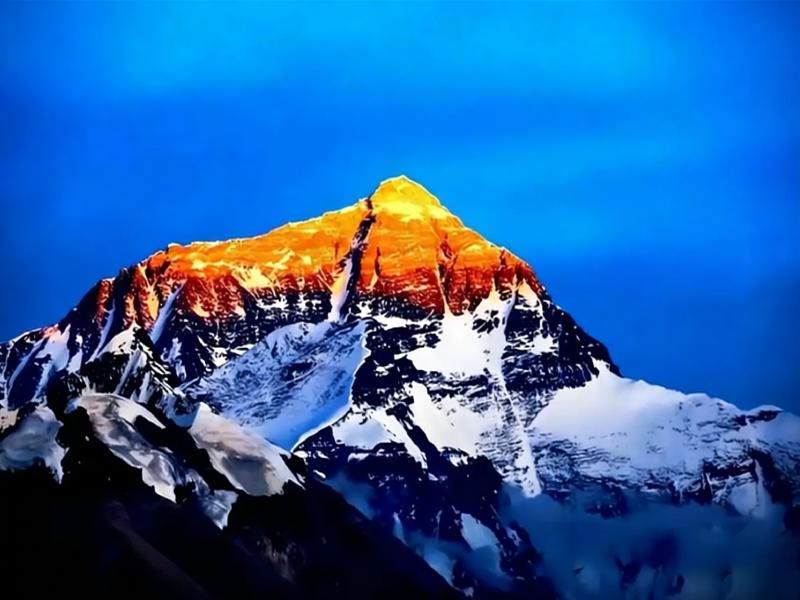
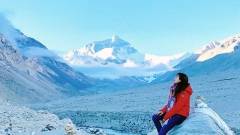
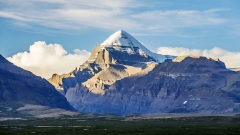
Everest Under the Sunset
Transportation for Everest Journey
Everest is far from the city, with a long journey, many winding mountain roads, and complex driving conditions. Your transportation plan directly determines the smoothness and safety of your itinerary. Whether you choose a shared transfer, a private car, or self-driving, you need to make arrangements in advance.
- Private / Shared Cars: Private cars are the most recommended mode of transport for Everest travel. The vehicle is typically a 4×4 off-road vehicle or a minivan. The cost is about 1,500–2,000 RMB per person, including fuel, driver’s accommodation, vehicle wear and tear, and tolls. Shared cars are an alternative, also using 4×4 vehicles with 4-5 people per car. It is less flexible but more economical, costing about 1,000–1,500 RMB per person.
- Public Transport: Public transport is the most budget-friendly option, but it is time-consuming and involves complicated transfers. You can take a bus from Lhasa to Shigatse, then a shared transfer to Tingri, and finally a scenic area eco-bus to reach Everest. The bus ride takes about 4-5 hours, costing 80-120 RMB. Upon arriving in Tingri County, you’ll need to find another shared transfer or hire a car to the Everest Scenic Area gate, costing about 100-150 RMB per person for an hour’s drive.
- Self-Driving: Self-driving is one of the most comfortable ways to travel to Everest, but it places high demands on the driver’s experience and the vehicle’s capabilities. You need experience driving on high-altitude mountain roads and the ability to react to emergencies. Before driving, you must apply for a vehicle entry permit and pay the vehicle entry fee (about 400-600 RMB). Ensure your vehicle insurance covers remote areas of Tibet. It is recommended to drive a 4×4 off-road vehicle with a ground clearance of no less than 20 cm and to use all-terrain (AT) tires.
- Transport in the Scenic Areas: After arriving at the Everest Scenic Area gate, you must transfer to an official eco-bus. The ride takes about 1 hour and costs 120 RMB. The eco-buses are large tourist coaches, running every 15-20 minutes during peak season. The terminal is the tent guesthouse area at Everest Base Camp. From there, it is a 5-10 minute walk to the best viewpoints. You’ll need to take the same eco-bus for your return trip; the last bus typically departs around 5:00-6:00 PM.
Regardless of your chosen transport method, it is advisable to travel during the day and avoid driving at night. Reduce speed on curves, and avoid overtaking and fatigued driving. The journey from Lhasa to Everest Base Camp is about 700 kilometers and takes about two days. It is strongly recommended to hire an experienced local driver and avoid driving on unfamiliar roads yourself.
Tips for Everest Journey
- Altitude Acclimatization: After arriving in Lhasa, it is recommended to stay for at least two days to allow your body to gradually adjust to the altitude. Engage in light activities and avoid strenuous exercise. If you already show significant symptoms of altitude sickness in Lhasa, you should decisively postpone or cancel your Everest trip and not push forward.
- Staying Warm and Sun Protection: The temperature difference between day and night at Everest is extreme. Even in summer, nighttime temperatures often drop below zero degrees Celsius. It is recommended to wear a down jacket for warmth, paired with a windproof and waterproof outer shell. Wear high-top, waterproof hiking boots and wool socks. To avoid the strong UV rays, apply SPF50+ sunscreen regularly and wear sunglasses.
- Document Management: Your passport, Tibet Travel Permit, and Border Defense Permit are all essential. It is recommended to keep all original documents together in a waist wallet worn close to your body, and prepare two photocopies of each, stored separately from the originals. The day before departure, double-check every item to ensure the document validity dates and destinations are correctly written, to avoid itinerary disruptions due to missing paperwork.
- Pacing Yourself: Everest Base Camp is at an altitude of 5,200 meters. Even walking on flat ground is akin to carrying a heavy load at low altitude. Slow your pace, take breaks to catch your breath, and avoid running or roughhousing. If traveling with elderly or less physically fit companions, consider staying an extra day in Tingri County to acclimate, or explore the Rongbuk Monastery area closer to base camp. Know your limits to go further.
Before You Go: The Key Things That Shape Your Everest Experience
A trip to Everest Base Camp is not just about reaching a destination — it’s about preparing for one of the most extreme travel environments on earth. From permits and transport logistics to altitude adaptation and seasonal timing, every detail directly affects how safe and enjoyable your journey will be. Many travelers underestimate these factors, which is why proper preparation often makes the biggest difference.
If you prefer a smoother and more secure experience, working with a professional local agency like China Dragon Travel can help simplify the process – especially for permits, vehicle arrangements, and high-altitude travel support. With the logistics handled properly, you can focus on what truly matters: experiencing Everest at the right moment, in the right way.