
Tibetan festivals are the most vivid expression of life, faith, and tradition on the Tibetan Plateau. For travelers seeking more than sightseeing, choosing the right festival season is the key to understanding Tibet on a deeper level. Throughout the year, Tibet hosts a wide range of celebrations—from the warmth of Tibetan New Year to the spiritual intensity of Saga Dawa, the grand Shoton Festival, and lively grassland horse racing events. Each festival reflects a unique aspect of Tibetan culture, shaped by religion, geography, and daily life.
Tibetan New Year (Losar) · Feb-Mar
Tibetan New Year is Tibet’s grandest and most important traditional festival, equivalent to the Chinese Spring Festival. It falls on the first day of the Tibetan lunar January (Feb-Mar in the Gregorian calendar), with festive vibes brewing from the 12th Tibetan lunar month and lasting until the 15th day of the first lunar month. It is the perfect time to experience Tibetan family folk customs and the New Year spirit, as the whole of Lhasa—both urban and rural areas—is wrapped in a joyous atmosphere.
Core Festival Experiences
The Gutu Night on New Year’s Eve is the highlight of Tibetan New Year. Every family makes Gutu, a kind of noodle soup with symbolic fillings like wool, chili, salt and charcoal, each carrying a different meaning. Families gather to taste it and joke around, filled with laughter. Early on New Year’s morning, Tibetans go to rivers to fetch “new water”, believed to be auspicious and bring good luck for the new year. Dressed in brand-new Tibetan costumes, people carry the Qiema (a grain bucket filled with highland barley and butter) to pray at temples, or visit relatives and friends, exchange “Tashi Delek” greetings, present Hada, and share butter tea, highland barley wine and Tibetan pastries. During the first lunar month, horse racing, archery, Guozhuang dance and other traditional activities are held in and around Lhasa, with festive bustle everywhere on the streets.
Best Travel Time
Late Feb to early Mar (check the Gregorian date for the Tibetan lunar calendar in advance). It is recommended to stay for 5-7 days to join core events like Gutu Night on New Year’s Eve and praying on New Year’s morning, as well as experience the ongoing folk activities in the first lunar month.
Practical Travel Tips
- Transport: Lhasa’s urban transport is convenient, with buses, taxis (starting fare 10 CNY) and walking available. For folk custom experiences in surrounding villages, chartered cars are recommended, costing 800-1200 CNY per day; carpooling with 4-6 people can share the cost for a more flexible trip.
- Accommodation: Accommodation in Lhasa is in short supply during the festival with prices rising by 50%-100%. Three-star hotels cost an average of 800-1500 CNY per night, and homestays near Barkhor Street are 500-800 CNY per night. Some homestays organize guests to make Gutu and pray; book 2-3 weeks in advance.
- Budget: The average per capita budget is 5000-8000 CNY (including round-trip transport, accommodation, catering and tickets). Catering is mainly Tibetan food, 50-80 CNY per person per meal. You can try Tibetan noodles, butter tea, highland barley wine, Tibetan fragrant pork and other local delicacies. Temples and most folk activities have no entrance fees.
- Customs: Abide by temple etiquette when praying; do not randomly take photos of Buddha statues and pilgrims, and walk clockwise. Remove shoes when visiting Tibetan families; accept Hada and drinks with both hands and do not refuse casually.
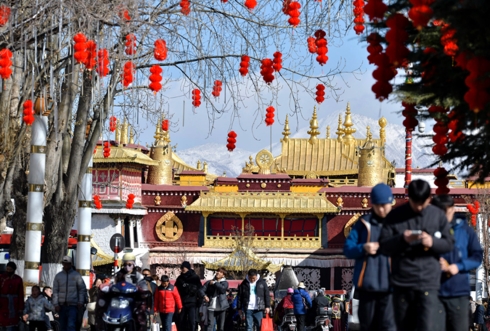
The Jokhang Temple During Tibetan New Year
Saga Dawa Festival · May-Jun
The Saga Dawa Festival is Tibet’s most representative religious festival, commemorating the birth, enlightenment and nirvana of Sakyamuni. It falls on the 15th day of the fourth Tibetan lunar month (May-Jun in the Gregorian calendar). The whole fourth Tibetan lunar month is known as the “Buddha Month”, with prayer activities held across Tibet, creating a strong religious atmosphere. It is the perfect time to experience the devout faith of Tibetans, as the kora paths in Lhasa are crowded with people and filled with a peaceful atmosphere everywhere.
Core Festival Experiences
The core areas of the Saga Dawa Festival are concentrated around Barkhor Street, Jokhang Temple and the Potala Palace in Lhasa. From dawn to midnight, countless believers hold prayer wheels, recite scriptures and walk clockwise along the kora paths with firm steps, creating a solemn and shocking scene. The 15th day of the fourth Tibetan lunar month is the climax of the festival. Thousands of butter lamps are lit in front of the rock carvings on Medicine King Mountain and on Jokhang Temple Square. The twinkling lights blend with the twilight, like a star river falling to the ground, sacred and quiet. Many Tibetans voluntarily give alms on the streets, offering tea and porridge to pilgrims on the kora, conveying kindness and warmth. Tourists can also integrate into this peaceful atmosphere and feel the power of faith on the plateau.
Best Travel Time
Mid May to early Jun. It is recommended to stay for 3-5 days to focus on the core prayer activities on the 15th day of the fourth Tibetan lunar month and experience the strong religious atmosphere of the whole “Buddha Month”.
Practical Travel Tips
- Transport: Walking, rickshaws and taxis (starting fare 10 CNY) are available in Lhasa’s urban area. For attractions like Medicine King Mountain and Drepung Monastery, tourist shuttle buses cost 20-30 CNY per person. Walking allows you to experience the festive atmosphere more deeply.
- Accommodation: Choose hotels or homestays near Barkhor Street and Jokhang Temple for easy participation in kora activities. Three-star hotels cost an average of 600-1000 CNY per night, and homestays are 300-600 CNY per night; book 1-2 weeks in advance.
- Budget: The average per capita budget is 4000-6000 CNY (including round-trip transport, accommodation, catering and tickets). Most temples are open for free, and some special temples charge 50-100 CNY per ticket. Catering options include Tibetan food or Sichuan-style home cooking, 40-60 CNY per person per meal.
- Customs: The religious atmosphere is strong during the festival; dress appropriately and avoid being overly exposed. Do not randomly take photos of pilgrims’ faces or interrupt the kora crowd. Keep quiet in temples and do not touch Buddha statues and ritual utensils casually.
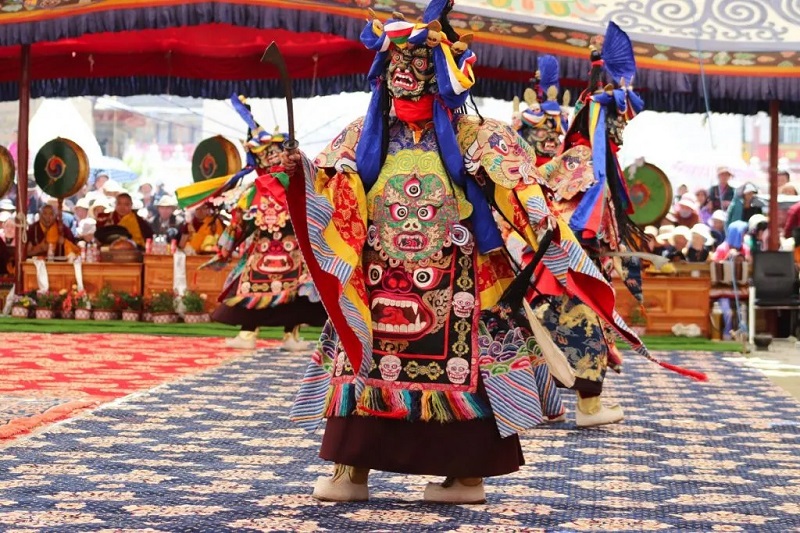
Saga Dawa
Gyangze Dama Festival · Mid Jul
The Gyangze Dama Festival is the most representative folk event in Rear Tibet, with a history of over 600 years. Initially commemorating the anti-British heroes of Gyangze Zongshan, it has now evolved into a grassland grand gathering integrating horse racing, archery, singing and dancing, and fairs. It is held from the end of the fifth to the beginning of the sixth Tibetan lunar month (mid Jul in the Gregorian calendar) and lasts for 5-7 days. The grasslands of Gyangze are lush with water and grass, and herdsmen gather in bright costumes, filled with the bold and warm nomadic culture.
Core Festival Experiences
Horse racing and mounted archery are the highlights of the Gyangze Dama Festival. Most riders are local Tibetan young men, dressed in traditional Tibetan costumes, galloping on horses across the grassland and performing thrilling moves like picking up Hada and shooting arrows on horseback. The horses’ hooves kick up dust, and the cheers and shouts of the audience shake the sky, showing the valiant spirit of the grassland people. A large “tent city” is built on the grassland, forming a temporary folk fair where you can buy authentic pastoral specialties such as butter, milk dregs and air-dried yak meat, as well as exquisite Tibetan jewelry and hand-woven Tibetan carpets. In the evening, herdsmen gather around bonfires to dance the ancient Guoxie circle dance with loud and distant songs. Tourists can join at any time to immerse themselves in the carnival atmosphere of the grassland.
Best Travel Time
Mid Jul to late Jul. It is recommended to stay for 3-4 days to cover the core festival activities such as horse racing, archery, singing and dancing, and also visit nearby attractions like Gyangze Zongshan Fort and Palcho Monastery to experience the unique charm of Rear Tibet culture.
Practical Travel Tips
- Transport: It is recommended to take a chartered car from Lhasa to Gyangze (about 5 hours’ drive), costing 1500-2000 CNY per day; carpooling with 4-6 people is more cost-effective. Taxis are the main transport in Gyangze county (starting fare 8 CNY); you can take a taxi or local shuttle bus to the horse racing main venue for 10 CNY per person.
- Accommodation: The accommodation conditions in Gyangze county are moderate, with rooms in short supply during the festival. Three-star hotels cost an average of 500-800 CNY per night, and homestays are 300-500 CNY per night; book 2 weeks in advance. For more comfort, you can stay in Xigaze urban area and take a chartered car to Gyangze every day (about 2 hours’ drive); three-star hotels in Xigaze cost an average of 600-1000 CNY per night.
- Budget: The average per capita budget is 6000-9000 CNY (including round-trip transport, chartered car fees, accommodation, catering and tickets). The horse racing main venue is open for free; tickets for attractions like Gyangze Zongshan Fort and Palcho Monastery are 50-100 CNY each. Pastoral catering is mainly beef, mutton and butter tea, 60-80 CNY per person per meal.
- Customs: The sunshine on the grassland is strong; take sun protection measures such as wearing a hat and sunglasses, and applying high SPF sunscreen. Ask for permission before taking photos of herdsmen and jockeys, and do not touch items in the tents casually. The temperature difference between day and night on the grassland is large; bring a thin coat to keep warm.
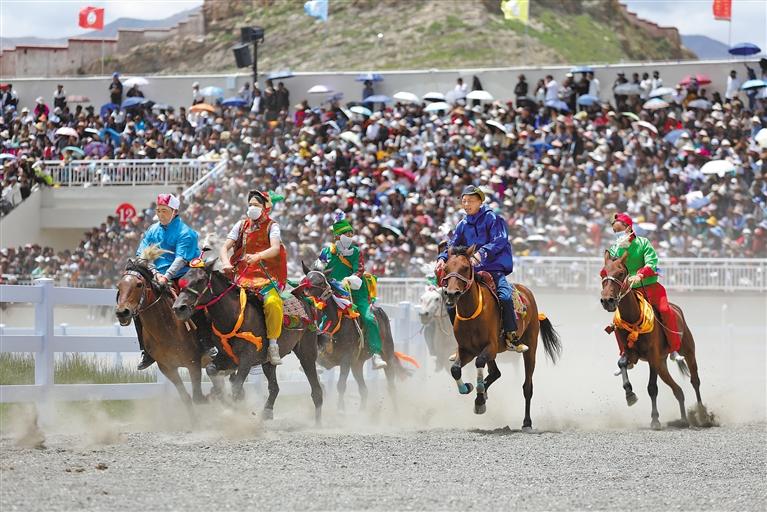
Gyangze Dama Festival
Shoton Festival · Aug
The Shoton Festival is Tibet’s most famous and grand comprehensive festival. “Shoton” means “yogurt feast”, originally a tradition where people presented yogurt to monks who ended their seclusion. Now it has evolved into a grand gathering integrating religious rituals, cultural performances and secular carnivals. It is held from the end of the sixth to the beginning of the seventh Tibetan lunar month (Aug in the Gregorian calendar) and lasts for 7 days. At this time, Lhasa has both solemn religious rituals and lively folk carnivals, making it the perfect time to experience the diverse culture of the plateau.
Core Festival Experiences
The Buddha Unfolding Ceremony at Drepung Monastery is the top highlight of the Shoton Festival. At dawn on the 30th day of the sixth Tibetan lunar month, a huge thangka of Sakyamuni is slowly unfolded on the back mountain of Drepung Monastery. Tens of thousands of believers and tourists gather in the valley. When the first ray of sunlight illuminates the Buddha statue, the sound of scripture recitation echoes in the mountains, striking the soul with a sacred feeling. In the following days, Norbulingka and Zongjiao Lukang Park become open-air Tibetan opera theaters, where classic Tibetan operas such as Princess Wencheng and Prince Norzang are performed in turns. Actors wear gorgeous masks with unique singing styles, full of artistic appeal. In addition, every family in Lhasa sets up tents in the woods, places yogurt, pastries and highland barley wine, sings and dances, plays cards and games, forming a large-scale wood picnic. Tourists can bring their own picnic mats to integrate into this comfortable plateau carnival.
Best Travel Time
Mid Aug to late Aug. It is recommended to stay for 5-7 days to fully experience core activities such as the Buddha Unfolding Ceremony, Tibetan opera and wood picnic, and also feel the festive atmosphere of the whole Lhasa city.
Practical Travel Tips
- Transport: For the Buddha Unfolding Ceremony, it is recommended to leave the urban area at 3:30-4:00 a.m. and walk up the mountain to Drepung Monastery (chartered cars can only reach the foot of the mountain). You can take a local minibus down the mountain for about 20 CNY per person. Buses (2 CNY per person) or taxis (starting fare 10 CNY) are available to Norbulingka and Zongjiao Lukang Park in the urban area.
- Accommodation: The Shoton Festival is the peak tourist season in Lhasa throughout the year. Hotel prices rise by more than 50% and rooms are fully booked 2 weeks in advance. Three-star hotels cost an average of 1000-1800 CNY per night, and homestays are 600-1200 CNY per night. It is recommended to choose accommodation near Barkhor Street or the foot of Drepung Monastery for more convenient travel; book early with careful planning.
- Budget: The average per capita budget is 7000-10000 CNY (including round-trip transport, accommodation, catering and tickets). The Buddha Unfolding Ceremony at Drepung Monastery is free; the ticket for Norbulingka is 60 CNY per person, and the Potala Palace is 200 CNY per person (book 7 days in advance on the official platform). Catering costs 60-100 CNY per person per meal; you can try Tibetan yogurt, Tibetan fragrant pork, zanba and other local delicacies.
- Customs: The Buddha Unfolding Ceremony site is crowded; wear comfortable sports shoes and bring a portable oxygen cylinder, warm clothes (the temperature on the mountain is 5-8℃ in the early morning) and high-energy snacks. It is not recommended to take children under 6 to the site; you can watch the live broadcast at the hotel. Keep quiet during Tibetan opera performances and respect the actors and local audience.
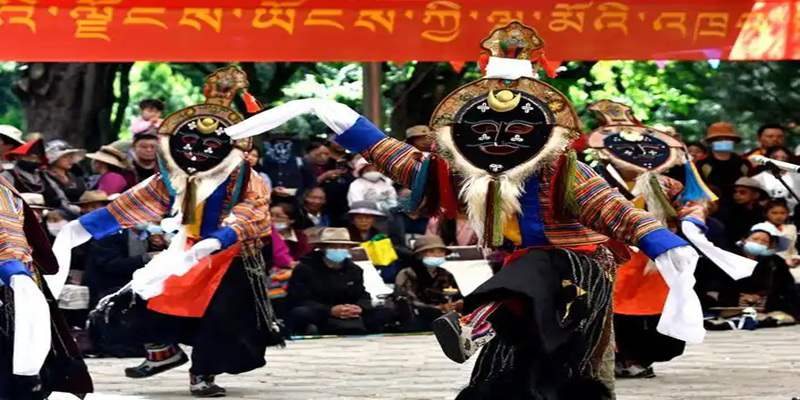
Shoton Festival
Kongpo New Year · Nov
Kongpo New Year is a unique New Year in the Kongpo area of Nyingchi (Gongbo Gyamda, Milin, Bayi District, etc.), nearly two months earlier than the Tibetan New Year in Lhasa. It falls on the first day of the tenth Tibetan lunar month (Nov in the Gregorian calendar), a tradition said to originate from Kongpo men celebrating the New Year in advance before going to war. At this time, Nyingchi still retains the autumn charm with a relatively mild climate and less severe winter cold, making it the perfect choice to experience the unique and niche folk customs of Tibet.
Core Festival Experiences
“Inviting Dogs to Dinner” on New Year’s Eve is the most distinctive custom of Kongpo New Year. Every family serves all the New Year’s Eve delicacies to dogs one by one and observes what the dogs eat first to predict the fortune of the coming year. For example, if a dog eats zanba first, it indicates a grain harvest in the coming year, and eating meat first foretells a prosperous animal husbandry. The most lively activity during the festival is the Thangka arrow shooting competition. When an archer hits the bullseye, the mechanism at the bullseye makes a clear sound, and the relatives and friends on the side immediately offer toasts and sing and dance, creating a warm and lively atmosphere. In addition, you can taste the unique Kongpo delicacy “Jieda”, a kind of dough ball made of butter, milk dregs and sugar, roasted on a wooden stick, sweet and delicious. There are also Nyingchi local delicacies such as Tibetan fragrant pork and stone pot chicken.
Best Travel Time
Mid Nov to late Nov. It is recommended to stay for 3-4 days to visit Nyingchi urban area and Gongbo Gyamda and other attractions, and experience the beauty of the fusion of autumn grasslands and unique folk customs.
Practical Travel Tips
- Transport: You can take a plane from Lhasa to Nyingchi (about 1 hour’s flight, 800-1500 CNY per person) or a car (about 5 hours’ drive, 200 CNY per person). Chartered cars are recommended from Nyingchi urban area to Gongbo Gyamda, costing 1000-1500 CNY per day for a more flexible trip.
- Accommodation: The accommodation conditions in Nyingchi urban area are good. Three-star hotels cost an average of 600-1000 CNY per night and homestays are 400-800 CNY per night during the festival; book 1 week in advance. Homestays in Gongbo Gyamda county cost 300-500 CNY per night, with a quiet environment and closer to local life.
- Budget: The average per capita budget is 6000-9000 CNY (including round-trip transport, accommodation, catering and tickets). The ticket for attractions in Nyingchi such as Basong Co is 120 CNY per person, and Lulang Forest Sea is open for free. Catering costs 50-80 CNY per person per meal; you can focus on trying stone pot chicken, Tibetan fragrant pork, Kongpo Jieda and other local delicacies.
- Customs: Nyingchi has a low altitude (about 3000 meters), suitable for tourists new to Tibet to acclimatize to the plateau environment. Abide by the on-site order when participating in the Thangka arrow shooting competition; do not enter the competition venue casually and ask the organizer for permission before taking photos of the competition.
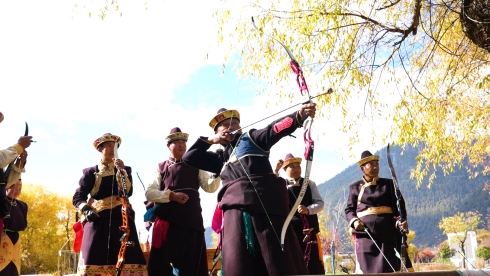
Shooting the Thangga Arrow at the Kongpo New Year
Choose the Right Season to Experience Tibetan Festivals
Experiencing Tibet during its festivals allows travelers to witness moments that cannot be found at any other time of year. Whether it is joining pilgrims on sacred circuits, watching massive thangka unfold at dawn, or celebrating alongside local families in parks and grasslands, Tibetan festivals offer a rare window into the soul of the plateau. With careful timing and thoughtful planning, these cultural encounters become unforgettable memories rather than fleeting impressions. For travelers who wish to explore Tibet’s festivals with confidence and cultural respect, China Dragon Travel provides professional, festival-based travel planning and on-the-ground support, ensuring a smooth journey into the heart of Tibetan tradition.