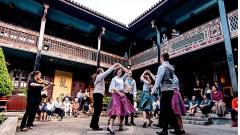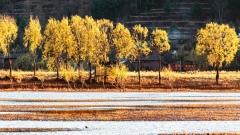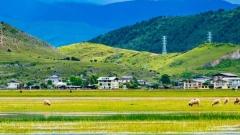

Yunnan, located in southwest China, features a unique combination of low-latitude geography and high-altitude terrain. From tropical rainforests in the south to snow-capped mountains in the north, the province spans multiple climate zones. As a result, the scenery changes dramatically throughout the year. Spring brings vibrant flowers, summer offers cool escapes, autumn showcases colorful landscapes, and winter reveals stunning snow mountains. Instead of asking which month is “the best,” travelers should choose based on the type of scenery they want to experience.
Yunnan Spring: Sea of Flowers and Warm Sunshine
Spring is the golden season for traveling to Yunnan, with rising temperatures, blooming flowers, less rainfall and a comfortable feeling. You can have a great travel experience in any region of Yunnan during this season.
March: Luoping Rapeseed Flowers, Dali Cherry Blossoms
Yunnan in March is a sea of flowers, with two must-see spots.
- Luoping Rapeseed Flowers: From late February to mid-March, 800,000 mu of rapeseed flowers spread out among the karst peak clusters. Jinji Peak Cluster is a classic viewing spot, where you can overlook the flower sea stretching to the horizon from the top of the mountain. The terraced rapeseed flower sea in Luositian is also distinctive, with spectacular layers of golden yellow.
- Dali Cherry Blossoms: Cherry blossoms at Dali University are in full bloom in mid-March, with pink cherry blossoms contrasting with the snow on Cangshan Mountain. You can also enjoy cherry blossoms on the Cherry Blossom Avenue around the Ancient City of Dali.
Practical Information
- It is recommended to stay in the county seat of Luoping and go to Jinji Peak Cluster early in the morning to watch the sunrise for better light.
- The cherry blossom season in Dali attracts a large number of tourists, so it is advisable to book accommodation in advance.
- The daytime temperature in March is around 20 degrees Celsius, so long sleeves with a light coat are sufficient.
- To avoid crowds, you can choose to travel in early March.
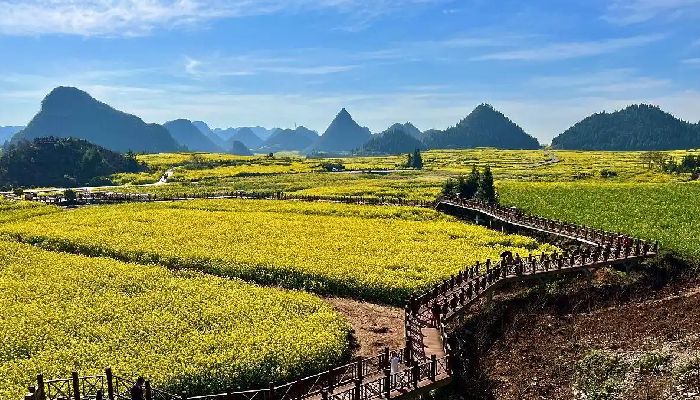
Rapeseed Flowers in Jinji Peak Cluster, Luoping in Spring
April: Water-Splashing Festival in Xishuangbanna
Yunnan starts to get hot in April, and Xishuangbanna enters the liveliest period of the year – the Water-Splashing Festival. Usually held around April 13th to 15th, it is the New Year of the Dai people, when people all over the city splash water on each other to send blessings.
Notes for Attending the Water-Splashing Festival
- Wear light and quick-drying clothes and prepare a change of clothes.
- Waterproof your mobile phone and camera; a waterproof bag is recommended.
- Do not splash water on the elderly, infants and pregnant women.
- Accommodation and tickets need to be booked one month in advance, as accommodation in Jinghong urban area is in short supply during this period.
- The temperature during the Water-Splashing Festival is about 30 degrees Celsius, so pay attention to sun protection.
If you don’t go to Xishuangbanna, you can also admire jacarandas in Kunming in April. Jacarandas lining the entire Jiaochang Middle Road are in full bloom in early May.
May: Rhododendrons in Shangri-La
Winter ends in Shangri-La in May, the grasslands turn green gradually, and rhododendrons around Qianhu Mountain and Pudacuo National Park bloom all over the mountains and plains. Pink and purple rhododendrons cover the hillsides and reflect in the lakes, with snow-capped mountains in the distance.
Practical Information
- May is a good season for hiking in Shangri-La, with no rainy season yet and relatively stable weather.
- It is not the peak summer vacation season, so there are fewer tourists and accommodation prices are 30% to 50% lower than those in July and August.
- The temperature difference between day and night is large, with a daytime temperature of about 20 degrees Celsius and a nighttime temperature that may drop below 5 degrees Celsius; a down jacket or a jacket is a must.
- The altitude of Shangri-La is about 3,300 meters, so avoid strenuous exercise on the first day and drink an adequate amount of water.
Yunnan Summer: Summer Resort and Rainy Season
Yunnan is an ideal summer resort in summer. The daytime temperature in places like Lijiang, Dali and Shangri-La is about 25 degrees Celsius, and the nights are quite cool. June to August is the rainy season in Yunnan, so rain gear is a must for the trip.
June: Lotus Flowers in Puzhehei, Ottelia Acuminata in Lugu Lake
The must-visit destinations in June are Puzhehei and Lugu Lake.
- Puzhehei: 2,000 mu of lotus flowers start to bloom in mid-to-late June. You can row a willow leaf boat through the lotus ponds, and splashing water on each other is a local characteristic activity. The lotus flowers in Puzhehei bloom until August, with the best viewing period from late June to early July.
- Lugu Lake: White small flowers float on the surface of Lugu Lake in June, known as ottelia acuminata locally. This kind of flower has high requirements for water quality and only grows in clean water areas, dotting the lake surface with white blooms when in full bloom.
Practical Information
- It is recommended to bring dry clothes for a change if you have a water fight in Puzhehei.
- The drive from Lijiang to Lugu Lake takes about four hours with many curves on mountain roads; those prone to motion sickness need to prepare in advance.
- Rainfall starts in June, but most are short showers.
- For accommodation in Lugu Lake, Lige and Daluoshui are recommended for a good lake view.
July and August: Summer Resort in Lijiang, Grasslands in Shangri-La
July and August are the peak summer vacation seasons with more tourists, but the summer resort experience is excellent.
Lijiang
- The daytime temperature is about 25 degrees Celsius and below 20 degrees Celsius at night; air conditioners are not needed.
- The snow cover on Jade Dragon Snow Mountain is small, but the water in Blue Moon Valley is bright blue, and wild flowers bloom on the mountain.
- Tickets for the grand cable car are in short supply during the peak season; you need to grab them on the official channel three days in advance, or book through a regular travel agency.
Shangri-La
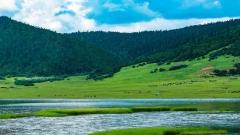
- The Napahai Lake and Yila Grassland in Shangri-La are lush with water and grass in July and August; you can ride a horse to tour the grasslands.
- The Horse Racing Festival is held around the fifth day of the fifth lunar month, where you can watch Tibetan horse racing performances.
- When traveling to Meili Snow Mountain and Yubeng Village during the rainy season, roads may collapse due to rainfall; check the road conditions before departure and reserve one to two flexible days for the trip.
Yunnan Autumn: Clear Skies and Autumn Scenery
Autumn is a season with an excellent comprehensive travel experience in Yunnan. The rainy season ends, the sky is bright blue with high visibility, and the autumn scenery is rich in layers.
September and October: Red Stellera Chamaejasme in Shangri-La
From late September to mid-October, the stellera chamaejasme in Shangri-La turns bright red. Xiaozhongdian and Yila Grassland are dyed red, forming a plateau autumn picture with snow-capped mountains and highland barley racks in the distance.
Yuanyang Terraced Fields in October
- The terraced fields start to be filled with water in October. Although it is not the best viewing period from December to February, the terraced fields at the initial water-filling stage have already presented a mirror effect.
- Duoyishu is a good spot to watch the sunrise, and Laohuzui is ideal for the sunset, with spectacular light and shadow casting on the water surface of the terraced fields.
- The altitude of Yuanyang is not high, but the temperature difference between day and night is large, so a coat is needed.
Practical Information
- The probability of witnessing the golden sunlight over Meili Snow Mountain is relatively high from September to October with stable weather.
- This period is also a suitable season for hiking in Tiger Leaping Gorge with moderate temperatures and good road conditions.
- There are many tourists during the National Day holiday with rising accommodation prices; it is recommended to avoid the first few days of the holiday.
November: Ginkgo Village in Tengchong
November is the late autumn in Yunnan, and the must-visit spot is Ginkgo Village in Tengchong. There are more than 3,000 ginkgo trees in the village, whose leaves all turn yellow in mid-to-late November, with fallen leaves covering the ground. You can rest in the courtyards in the village and taste ginkgo tea.
Tengchong Hot Springs
- Tengchong is rich in hot spring resources; the water temperature of the Big Boiling Pot in Rehai Scenic Area is about 76 degrees Celsius, and eggs can be boiled in the stone crevices by the spring.
- Many homestays in Heshun Ancient Town are equipped with hot spring pools.
- The temperature in November is about 15 degrees Celsius, making it suitable for soaking in hot springs.
Other Recommendations
- The Dongchuan Red Land is bright in color in November, with interlaced red, yellow and green patches.
- There are fewer tourists in Dali in November, making it comfortable to cycle around Erhai Lake.
Yunnan Winter: Warm Sunshine and Snow-Capped Mountains
Most areas in Yunnan have abundant sunshine and warm temperatures in the daytime in winter. Winter is also the best season to watch snow-capped mountains with stable weather and a high probability of seeing the golden sunlight over them.
December and January: Golden Sunlight Over Meili Snow Mountain, Winter Cherry Blossoms in Wuliang Mountain
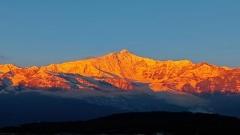
Winter is the best time to watch Meili Snow Mountain. The weather is relatively stable with few clouds and mist, so the probability of witnessing the golden sunlight over it is high. Feilai Temple is a good spot to watch Meili Snow Mountain; it is recommended to stay for one night and wait for the spectacular scene where the snow-capped mountains are dyed golden by the sunshine at dawn.
Wuliang Mountain Cherry Blossom Valley from Early to Mid-December
- The Cherry Blossom Valley in Wuliang Mountain, Nanjian of Dali, enters the flowering period, with the earliest blooming winter cherry blossoms in Yunnan.
- Cherry trees are planted in the tea gardens, with pink flowers interspersed with green tea ridges.
- The flowering period is about 20 days, so pay attention to the travel schedule.
Practical Information
- The altitude of Feilai Temple near Meili Snow Mountain is about 3,400 meters; it is recommended to choose accommodation with floor heating or oxygen supply facilities.
- To watch the golden sunlight over the snow-capped mountains in winter, you need to get up early; the temperature is below zero degrees Celsius in the morning, so prepare a down jacket, a hat and gloves.
- Some sections of roads in Shangri-La may be covered with snow in winter; pay attention to safety if driving by yourself.
February: Luoping Rapeseed Flowers
Rapeseed flowers in Luoping bloom in mid-to-late February, earlier than in spring. If you travel during the Spring Festival holiday, you can include Luoping in your itinerary. Jinji Peak Cluster and Luositian are classic viewing spots with good light in the morning.
Notes for Spring Festival Travel
- The Spring Festival is a tourist peak in Yunnan with rising accommodation prices.
- There are many tourists in the Ancient City of Dali and the Ancient City of Lijiang; it is recommended to book accommodation and tickets at least two months in advance.
- If you want to avoid crowds, you can choose relatively less popular destinations such as Jianshui and Puer.
Xishuangbanna in Winter
- December to February is the suitable season to visit Xishuangbanna with a daytime temperature of about 25 degrees Celsius.
- The main attractions include the Xishuangbanna Tropical Botanical Garden of the Chinese Academy of Sciences, Wild Elephant Valley and Starlight Night Market.
- It is the dry season with less rainfall during this period.
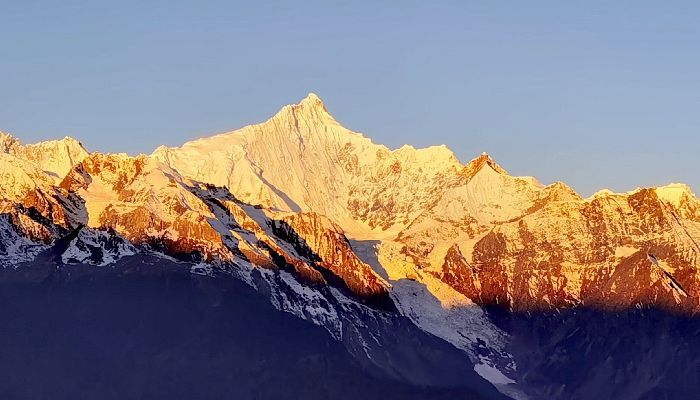
Golden Sunlight over Meili Snow Mountain in Winter
Practical Travel Suggestions for Yunnan Tours
The following suggestions apply no matter which month you visit Yunnan.
Clothing Tips
- The temperature difference between day and night in Yunnan is large; it is recommended to bring a coat when traveling in any season. A light coat for summer and a down jacket or a jacket for winter.
- Layered dressing is recommended: wear sweat-wicking clothes for the inner layer, fleece or a sweater for the middle layer, and a windproof coat for the outer layer, which is convenient to adjust according to the temperature.
- Yunnan has strong ultraviolet rays; bring sunglasses, a hat and sunscreen, with SPF50+ sunscreen recommended.
Altitude Sickness Tips
- The altitude of Lijiang is about 2,400 meters and Dali about 2,000 meters; most people have no obvious symptoms of altitude sickness.
- When traveling to Shangri-La (3,300 meters) or Jade Dragon Snow Mountain (4,680 meters), it is advisable to walk slowly and avoid strenuous exercise.
- You can take Rhodiola rosea one week in advance when visiting a high-altitude area for the first time, drink an adequate amount of water after arrival, and it is not recommended to take a bath on the first day.
- You can prepare a bottle of oxygen; the price is about 20 to 30 RMB in the ancient city and about 70 to 80 RMB in scenic areas.
Transportation Tips
- Kunming is the transportation hub of Yunnan with a well-developed high-speed rail network.
- It takes about two hours from Kunming to Dali, about one and a half hours from Dali to Lijiang, and the bullet train from Lijiang to Shangri-La has been opened.
- It is recommended to take a plane to Tengchong, Xishuangbanna and other places to save time.
- For travel in peak seasons, book train tickets at least half a month in advance.
Ticket Tips
- Tickets for the grand cable car of Jade Dragon Snow Mountain are in great demand; you need to grab them on the official channel three days in advance in peak seasons.
- It is recommended to book through a regular travel agency or choose one-day group tours that include grand cable car tickets.
- When entering temple scenic spots, do not step on the thresholds and avoid talking loudly.
Catering Tips
- Yunnan cuisine is quite spicy; people with sensitive stomachs can bring stomach medicine.
- Dishes such as Cross-Bridge Rice Noodles and Steam Pot Chicken are not spicy and suitable for most people.
- Wild Mushroom Hot Pot is a local specialty, but you need to choose regular restaurants and do not pick and eat wild mushrooms by yourself.
- For Flower Cakes, it is recommended to buy freshly baked ones, which taste better than packaged ones.
Payment Tips
- WeChat Pay and Alipay are widely used in urban areas.
- Cash may be needed in remote areas or at small stalls; it is recommended to prepare about 500 RMB in cash for emergency use.
- Major hotels and shopping malls accept Visa or MasterCard credit cards, but not all merchants support them.
How to Choose the Best Time for Your Yunnan Trip
In general, the best time to visit Yunnan depends on your travel preferences.
- For flower seas: Luoping rapeseed flowers in March, Dali cherry blossoms in mid-March, Shangri-La rhododendrons in May, Puzhehei lotus flowers in June, Tengchong ginkgoes in November, Wuliang Mountain winter cherry blossoms in early December.
- For summer resort: Go to Lijiang, Dali and Shangri-La from June to August, with a daytime temperature of about 25 degrees Celsius.
- For ethnic minority festivals: Water-Splashing Festival in Xishuangbanna in April.
- For snow-capped mountains: The probability of seeing the golden sunlight over Meili Snow Mountain is relatively high from December to February in winter.
- For hot springs: Soaking in Tengchong hot springs is suitable from November to February of the next year.
- For avoiding crowds: There are relatively fewer tourists in early March, May, September and November.
If you still have questions about the travel schedule in Yunnan, or want to plan your itinerary according to the specific travel season, you can contact China Dragon Travel. We are familiar with the seasonal characteristics and road conditions of various places in Yunnan, and can provide itinerary suggestions and assist in handling relevant procedures.