
When people think of winter destinations, Scandinavia often comes to mind—Norwegian fjords, Finnish forests, and Arctic snowfields. Yet far from Europe, deep in northwest China, Xinjiang offers winter landscapes that are just as breathtaking, if not more profound.
Hemu Village and Kanas Lake, located in the Altay region, transform into a silent white world each winter. Covered in deep, dry snow and surrounded by untouched forests, these places offer a kind of beauty that feels raw, honest, and timeless. This raises a compelling question: could Xinjiang’s winter scenery truly rival the snowlands of Northern Europe?
The Geography Behind Xinjiang’s Winter Beauty
Xinjiang’s continental climate plays a crucial role in shaping its winter landscapes. Unlike maritime climates in Scandinavia, Xinjiang experiences dry cold winters with minimal humidity. This results in light, powdery snow that accumulates deeply and remains stable for long periods.
The Altay Mountains act as a natural snow barrier, ensuring consistent snowfall while preserving clear skies after storms. The combination of intense sunlight, blue skies, and thick snow creates dramatic contrasts rarely seen in wetter winter regions.

Altay City Ski Resorts
Hemu in Winter: A Living Snow Village
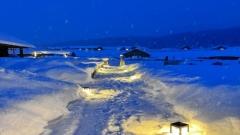
Hemu Village is often described as China’s most beautiful winter village, and winter is when its character truly emerges. Wooden houses, built by the Tuva people, sit quietly under layers of snow. Fences disappear beneath drifts, and narrow paths are carved out by daily life rather than tourists.
In the early morning, smoke rises gently from chimneys as sunlight filters through the valley. This is not a staged scene—it is everyday winter life. The absence of artificial lighting and commercial distractions allows travelers to witness a lifestyle shaped entirely by nature and tradition.
Hemu’s winter charm lies in its authenticity. It feels less like a destination and more like stepping into another rhythm of time.
Kanas in Winter: Frozen Silence and Epic Scale
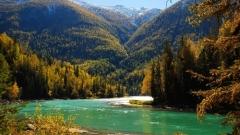
Kanas Lake in winter offers a completely different but equally powerful experience. The lake freezes solid, blanketed in snow, while surrounding forests of spruce and birch form stark patterns against the white ground.
From the viewing platforms, the scenery appears almost monochrome, yet endlessly layered. There are no boats, no crowds, and very few sounds beyond the wind. This silence amplifies the scale of the landscape, creating an emotional impact that many travelers find deeply moving.
For photographers, winter Kanas is a study in form, light, and texture. For others, it is a rare opportunity to disconnect from the modern world.
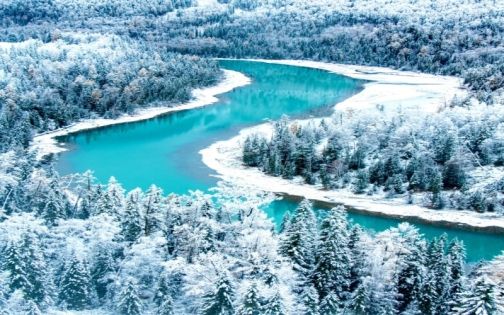
kanas
Comparing Xinjiang and Scandinavia
Scandinavian winter destinations are known for accessibility, polished infrastructure, and iconic imagery. However, they also come with high costs and increasing tourist density.
Xinjiang, by contrast, offers a more untamed experience. Hemu and Kanas are not curated winter parks; they are living environments. The snow feels less like a spectacle and more like an essential part of existence.
For travelers seeking solitude, authenticity, and vast open spaces, Xinjiang’s winter landscapes may feel more powerful than their European counterparts.
Winter Activities Beyond Sightseeing
Winter travel in Xinjiang is not limited to observation. Visitors can experience:
-
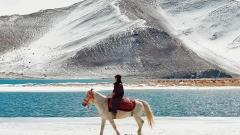
Horse-drawn sled rides across snowfields
-
Home visits with Tuva families
-
Snow hiking through silent forests
-
Winter skiing near Altay
These activities are deeply connected to local culture rather than purely recreational, offering meaningful engagement rather than surface-level entertainment.
Practical Considerations for Winter Travel
Traveling in Xinjiang during winter requires preparation. Temperatures can drop below -30°C, and distances between destinations are long. However, with proper clothing, realistic expectations, and professional planning, winter travel can be both safe and rewarding.
Choosing experienced operators ensures transportation, accommodation, and safety measures are well managed, allowing travelers to focus on the experience itself.
A Snow World Beyond Comparison
Hemu and Kanas do not try to imitate Scandinavia. Their beauty lies in something different—an untouched, grounded, and deeply human connection to winter.
For travelers willing to embrace cold, silence, and authenticity, Xinjiang offers a winter journey that feels more real, more immersive, and often more memorable than famous European snow destinations.
For those looking to explore Xinjiang and the greater northwest region with confidence and depth, China Dragon Travel brings years of experience in highland and remote-area travel, helping turn challenging winter landscapes into meaningful and unforgettable journeys.