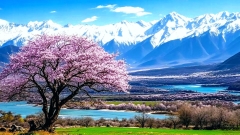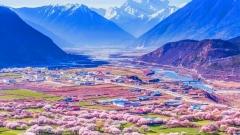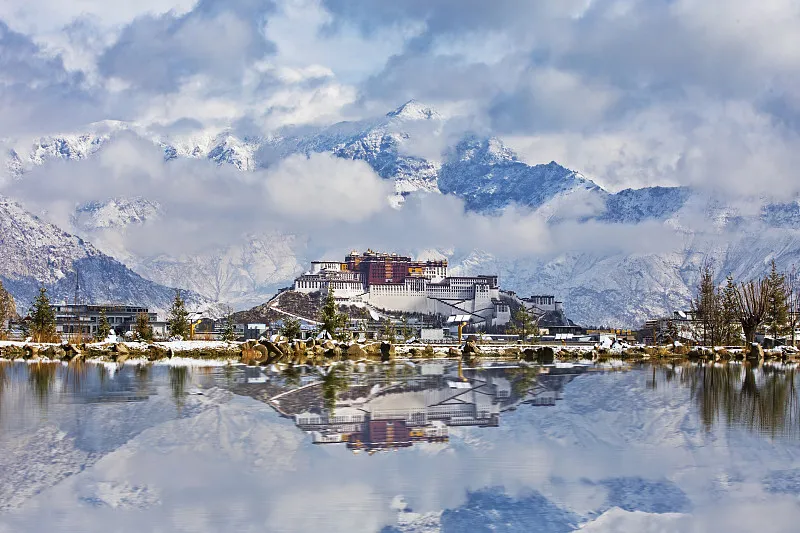

Perched above the Yarlung Valley in Shannan, Yumbu Lhakhang is widely regarded as the very beginning of Tibetan history. Built in the 2nd century BC, it was originally the palace of Tibet’s first king and later transformed into a religious complex during the era of Songtsen Gampo. Over centuries, it evolved into a unique blend of royal palace, temple, and monastic space, making it a living record of Tibet’s political, religious, and agricultural origins. Visiting Yumbu Lhakhang is not simply sightseeing – it is an introduction to how Tibetan civilization took shape.
Quick Facts about Yumbu Lhakhang
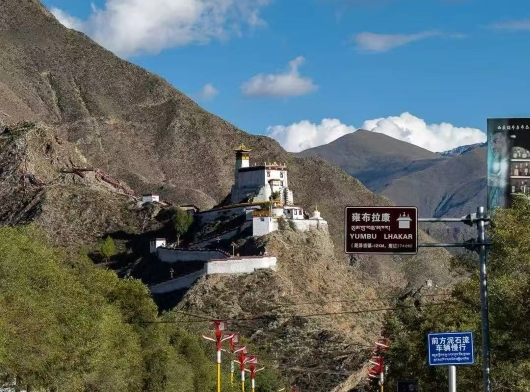
Known as “the first palace of Tibet”, Yumbu Lhakhang in Shannan means “Palace on the Hind Leg of a Female Deer” in Tibetan, named for its location on the top of Zhaxiciri Mountain that resembles a reclining deer. First built in the 2nd century BC for Nyatri Tsanpo, the first Zanpo of the Tubo Dynasty, it was initially a tribal leader’s palace, converted to a temple in the 7th century by Songtsen Gampo, and later renovated by the 5th Dalai Lama into a complex of palace, Buddha hall and monk rooms. It became a national 3A scenic area in 2012. Sitting at 3,700 meters and covering 1,500 square meters, it has a watchtower-style main building, halls and auxiliary rooms. Housing Zanpo statues, Medicine Buddhas and historic murals, it is a core landmark of Tibetan agricultural civilization and Tang-Tubo cultural integration.
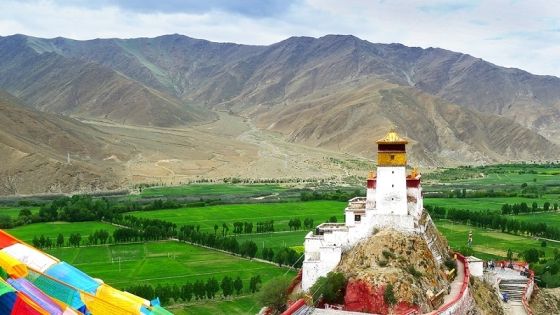
Yumbu Lhakhang
Opening Hours: Regular hours 9:00-18:00, last entry at 16:00. Hours unchanged in winter (Nov-Feb) with fewer visitors and some auxiliary areas closed. Temporary changes may occur during major religious activities; confirm via official channels in advance.
Ticket Prices: Adult ticket CNY 60 per person; free admission in off-season (Oct 15-Apr 30). Half price for students with valid ID and seniors aged 60-69 with ID card; free for seniors over 70 and children under 1.2 meters. Cash, WeChat Pay and Alipay are accepted; no mandatory consumption in the scenic area.
Location: Zhaxiciri Mountain, Changzhu Town, Naidong District, Shannan City, about 5 km from Zedang Town (Shannan downtown) and 180 km from Lhasa downtown. Navigate to “Yumbu Lhakhang” for accurate location; free parking is available at the scenic area entrance.
Recommended Visit Duration: 2-3 hours for a regular tour (including mountain climbing, hall visits and surrounding experience); 3-4 hours for an in-depth tour with hiking and careful appreciation of murals and statues.
Necessary Documents: A Tibet travel permit is required to visit Yumbu Lhakhang and cannot be applied for individually. It must be processed by a qualified agency with a processing time of about 20-30 days and a fee of CNY 50 per person. Indicate “Naidong District, Shannan City” in the itinerary when applying; keep the permit with you for inspection.
Altitude & Climate: The scenic area is at an altitude of about 3,700 meters, similar to Lhasa. Shannan has a large temperature difference between day and night, with a maximum summer temperature of around 25℃ and a minimum winter temperature below -10℃. UV radiation is strong; adequate cold and sun protection is required.
Highlights of Yumbu Lhakhang
Yumbu Lhakhang faces west with its back to east, built along the top of Zhaxiciri Mountain, consisting of core buildings and auxiliary facilities. The core buildings include a watchtower-style main building at the rear, front halls, and monk rooms and the Dalai Lama’s prayer bedroom on the south side, covering a total area of 1,500 square meters. Its development witnesses the changes of Tibetan civilization: built as Nyatri Tsanpo’s palace in the 2nd century BC, it pioneered Tibetan palace architecture; Songtsen Gampo built a Buddha hall here after moving the capital to Lhasa in the 7th century, making it a building with both palace and religious functions; the 5th Dalai Lama added a hip-and-gable golden roof in the 17th century to further improve its religious functions. After multiple renovations, it still retains the combination of Tubo-era stone masonry and later architectural styles.
Watchtower-Style Main Building: The oldest part of Yumbu Lhakhang, said to be built by Nyatri Tsanpo, is constructed with earth and stone, 0.3 meters thick in walls and 11 meters high. It is a square straight cylinder tapering upwards, seemingly five stories high but actually only three inside. The ground floor is small, 2.28 meters square and 1.2 meters high, connected to the second floor by a 0.6-meter-wide passage; the second and third floors are no more than 4.18 square meters each. The third floor has a golden roof added by the 5th Dalai Lama, the visual core of the whole building. Adopting a combination of stone masonry, rammed earth and wood structure, with a flat roof, thick walls and tapering stories, this watchtower is a typical representative of early high-rise buildings in Tibet, witnessing Tibet’s architectural level more than 2,100 years ago.
Front Halls: Built in the Songtsen Gampo period, originally three stories and now restored to two, it is the core religious activity area of Yumbu Lhakhang. The first floor is the Zanpo Hall, consisting of a porch and a scripture hall. The east wall of the porch is painted with murals of the Four Heavenly Kings. The scripture hall houses the main statue of Sakyamuni Buddha, flanked by statues of past Zanpos including Nyatri Tsanpo and Songtsen Gampo, as well as important ministers such as Lu Dongzan and Thonmi Sambhota, with vivid expressions restoring the features of the core figures of the Tubo Dynasty. The second floor is the Dharma King Hall, dedicated to the main statue of Avalokitesvara, flanked by Sakyamuni, Medicine Buddha, White Tara, Thousand-Handed and Thousand-Eyed Avalokitesvara and other Buddha statues. The east wall is equipped with scripture shelves collecting precious Buddhist scriptures such as the Kangyur. The hall is decorated with murals with religious stories as the theme, featuring delicate lines and simple colors, of high artistic value.
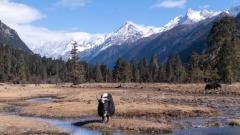
Auxiliary Facilities & Surrounding Scenery: The monk rooms and auxiliary buildings on the south side of the hall have two floors and five rooms, with the Dalai Lama’s exclusive prayer bedroom on the second floor and functional areas such as a kitchen and a temple study on the first floor. There are two unmissable scenic spots around the scenic area: one is the Ga’er Spring 400 meters northeast of the palace, with running water all year round, regarded as holy water by local Tibetans and said to cure all diseases, where you can experience the purification custom; the other is Sarisodang at the foot of the mountain, known as “the first farmland in Tibet”, where the Tibetan people started agricultural civilization more than 2,100 years ago. Today, you can still see stretches of pastoral scenery, forming a pleasant contrast with the palace.
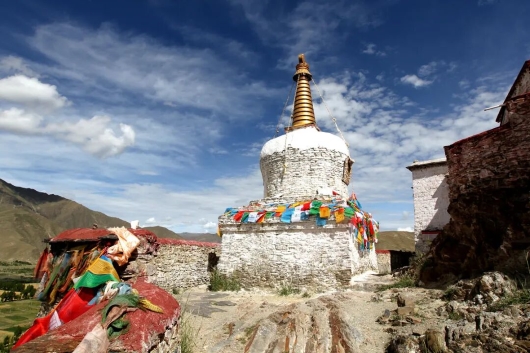
White Stupa at Yumbu Lhakhang
Visiting Notes for Yumbu Lhakhang
Dress Code & Conduct Rules: Maintain a solemn attitude when entering the scenic area; short skirts, shorts, camisoles and crop tops are prohibited. It is recommended to wear long trousers and long-sleeved tops with hemlines below the knees. No loud talking, chasing or frolicking in the scenic area; do not climb building walls or touch murals and statues. Turn off the flash when taking photos; taking photos and videos of all Buddha statues and murals in the halls is prohibited. Violators may be stopped by staff and required to delete the content. Use polite language when communicating with local villagers and monks, keep a polite distance and do not disturb others at will.
Religious Customs & Taboos: Yumbu Lhakhang is an important Tibetan Buddhism site; follow local religious customs: walk around the temple and turn the prayer wheels clockwise, do not cross religious facilities such as prayer flags and mani piles. Take off your hat and sunglasses when entering the Buddha hall; shoe covers (free on site) are required in some areas or you need to take off your shoes. Do not touch religious items such as Buddha statues, scripture shelves and offerings in the hall. You can voluntarily buy butter lamps (CNY 50 each) for worship in the designated area; no mandatory requirements. If you encounter local religious ceremonies or sacrificial activities, keep a distance of more than 5 meters, do not watch or take photos, and respect local religious beliefs and ceremony processes.
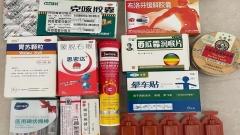
Altitude Sickness Response: At an altitude of 3,700 meters, visitors new to the plateau may experience dizziness, shortness of breath, chest tightness, fatigue and other symptoms. It is recommended to take anti-altitude sickness medicine such as Rhodiola rosea 3-5 days in advance, and prepare glucose oral liquid and portable oxygen cylinders (CNY 50 each in the scenic area) before entering the park. Avoid strenuous exercise and maintain a steady pace whether hiking or riding a horse; drink plenty of water (no less than 2 liters per day), do not drink alcohol or smoke, and ensure adequate rest. In case of severe altitude sickness symptoms such as persistent vomiting, difficulty breathing and confusion, stop the tour immediately, contact the scenic area staff (first aid call: 0893-7833369), or go to Zedang Town Hospital (5 km from the scenic area, 10 minutes by car).
Other Practical Tips: There are few sunshade facilities in the scenic area and UV radiation is strong; wear a sun hat and sunglasses, and apply high-factor sunscreen (SPF50+ , PA+++ or above) to avoid sunburn. Shannan has a large temperature difference between day and night; bring a light coat even in summer, and wear down jackets and thick sweaters in winter for warmth. There is only one small shop at the scenic area entrance selling simple food such as drinking water and instant noodles at high prices (mineral water CNY 10 per bottle, instant noodles CNY 20 per bucket); it is recommended to prepare sufficient drinking water and snacks in advance. Mobile payment is supported in the scenic area, but some services provided by local villagers such as horse riding and Tibetan costume rental only accept cash; it is recommended to exchange small denomination RMB in advance.
Yumbu Lhakhang
Transport to Yumbu Lhakhang
To apply for a Tibet travel permit to visit Yumbu Lhakhang, you need to provide a valid ID card (passport for foreign tourists), round-trip transportation orders and accommodation confirmation. The permit must be processed by a qualified agency or travel agency with a processing time of about 20-30 days and a fee of CNY 50 per person. Plan your travel in advance and reserve sufficient processing time. Keep the permit properly and carry it with you; it will be inspected at checkpoints along the way and the scenic area entrance.
Route 1: Lhasa → Shannan Yumbu Lhakhang (Recommended)
First arrive at Lhasa Gonggar International Airport, about 60 km from Lhasa downtown. You can take an airport bus (CNY 30 per person, 1 hour drive) or a taxi (CNY 200 per car) to Lhasa downtown. It is recommended to rest in Lhasa for 1-2 days to acclimatize to the altitude before departure to avoid altitude sickness combined with travel fatigue. The whole journey from Lhasa downtown to Yumbu Lhakhang is about 180 km with a well-paved asphalt road and a 3.5-4 hour drive. Three travel methods are recommended:
- Charter a car: CNY 800-1200 per day for a car seating 4 people, suitable for 2-4 people traveling together. It offers high flexibility and you can visit nearby scenic spots such as Changzhu Monastery and the Tombs of the Tubo Kings on the way, with high cost performance.
- Join a group tour: Sign up for a one-day or two-day tour to Shannan with a cost of CNY 200-300 per person, including round-trip transportation, tickets and tour guide service. No need for self-planning, suitable for solo travelers.
- Public transport: Take a long-distance bus from Lhasa East Suburb Bus Station to Zedang Town (CNY 80 per person, 4 hours drive), then transfer to short-distance transportation to the scenic area after arrival, suitable for budget-conscious tourists.
Route 2: Zedang Town → Shannan Yumbu Lhakhang (Most Convenient)
Zedang Town is about 5 km from Yumbu Lhakhang with a 10-15 minute drive and flexible transportation methods:
- Public transport: Take Bus No.8 in Zedang Town, which passes through Changzhu Monastery and goes directly to the entrance of Yumbu LhakhangScenic Area. The fare is CNY 2 per person, with a bus every 15 minutes and a 15 minute drive, economical and convenient.
- Take a taxi: Take a taxi from Zedang Town downtown to the scenic area with a one-way fare of about CNY 20-30 per car, suitable for travelers in a hurry or in a group. The round-trip fare can be negotiated, about CNY 40-50 per car.
- Charter/ carpool a car: You can carpool to the scenic area at hotels and inns in Zedang Town with a cost of CNY 10-15 per person and a 10 minute drive, convenient and fast, suitable for travelers with flexible travel plans.
Frequently Asked Questions about Yumbu Lhakhang
Q: What is the best time to visit Yumbu Lhakhang?
A: The best time is April-May and September-October with sunny weather, mild temperatures, lush grasslands and beautiful scenery of the Yarlung Zangbo River Valley. It rains a lot in summer (June-August) but the climate is cool. There are few visitors and a quiet tour experience in winter (Nov-Feb), and free admission is available, but adequate cold and slip protection is required.
Q: Is there a tour guide service in the scenic area?
A: You can book a professional tour guide at the scenic area entrance with a fee of CNY 100 per time (for up to 5 people) with detailed explanations. You can also scan the QR code in the scenic area to purchase an audio guide (CNY 30 per person), which supports multiple languages and is flexible and convenient.
Q: What should I pay attention to when visiting with children?
A: Children under 1.2 meters are free of charge and need to apply for a Tibet travel permit with a household registration book/ passport. It is recommended to ride a horse up the mountain to avoid children getting tired from hiking. Prepare children’s special anti-altitude sickness medicine, snacks and water in advance, and adjust the tour pace according to their physical strength.
Q: Can I use a drone in the scenic area?
A: Drones need to be reported to the scenic area management in advance and can be used only with approval. Flying is prohibited in the core area of the scenic area (above the palace) to avoid affecting religious activities and tourist safety.
Q: Are there restrooms and rest areas in the scenic area?
A: Restrooms are available at the scenic area entrance, midway on the mountain climbing trail and around the palace with basic sanitation conditions. Rest areas are mainly distributed on the mountain climbing platforms and the palace square with mostly open-air seats; it is recommended to bring a portable cushion.
Understanding Tibet Starts at Yumbu Lhakhang
What makes Yumbu Lhakhang truly powerful is not its size, but its historical depth. The stone walls, ancient murals, and statues inside the palace preserve the story of Tibet’s earliest kings, the arrival of Buddhism, and the rise of farming culture in the Yarlung Valley. Standing here offers a rare chance to see how Tibetan identity was formed, layer by layer, over more than two thousand years.
For travelers who want more than a brief stop, thoughtful planning is essential – from permits to transportation and historical context. China Dragon Travel specializes in in-depth Tibet journeys and can help travelers experience Yumbu Lhakhang with clarity, comfort, and cultural understanding, turning a historic site into a meaningful chapter of your Tibet journey.