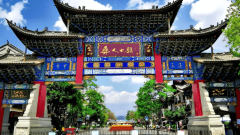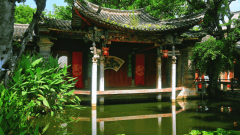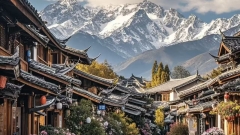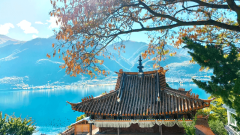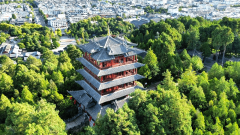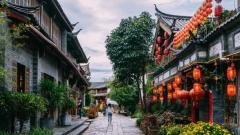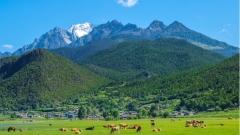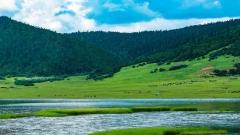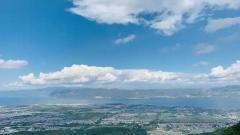

While most travel guides keep repeating classic scenic spots, Yunnan in August quietly opens a door to a hidden world for true explorers. This is no longer a regular summer escape, but an in-depth journey in tune with the earth’s pulse – gazing at the Milky Way spilling over remote alpine meadows, conversing with time in mist-shrouded thousand-year-old villages, and watching the final bloom of “water lilies” by secluded lakes. The unique charm of traveling to Yunnan in August lies in its position at the threshold of seasonal transition: abundant rainfall nurtures an extremely lush green, yet the first hints of autumn begin to emerge; the summer hustle fades, and the earth returns to tranquility, revealing its most authentic face. Below, we uncover the overlooked facets of Yunnan in August missed by regular itineraries and piece together a midsummer map for seclusion seekers.
Why is August Yunnan’s “Secret Exploration Season”?
The conventional “rainy season” and “peak season” actually serve as the perfect cover for in-depth exploration. At this time, the codes of nature and humanity are presented in a unique way:
- Meteorological Spectacle at Its Peak:August is one of the months with the highest frequency of sea of clouds, rainbows and double rainbows. In the high-altitude areas of western and southwest Yunnan, you can witness the grand drama of clouds gathering and dispersing almost every day.
- A Micro-Observation Window for Ecology: At the end of the rainy season, fungi enter their final and most vigorous growth stage. Meanwhile, alpine plants complete their most luxuriant growth cycle of the year, making it an excellent time to observe mosses, lichens and rare orchid plants.
- “Backstage Time” for Cultural Activities: Major festivals such as the Torch Festival have passed, and villages return to daily farming and living rhythms. This is the best time for in-depth observation rather than “watching a performance”, with opportunities to participate in more authentic family activities.
- “Purification Period” for Light Pollution: Frequent rains purify the air, resulting in extremely high visibility. After the rainy season clouds disperse at night, the plateau starry sky presents an incredibly clear and bright view, a golden window period for professional astrophotography.
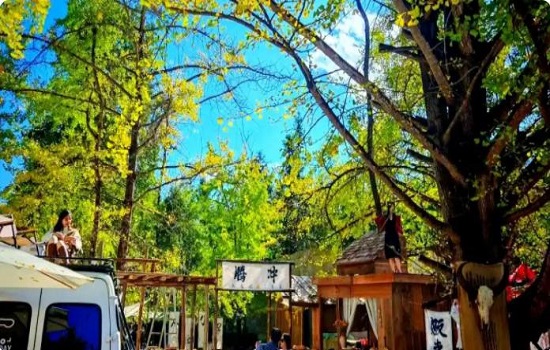
Yunnan
Special Yunnan Travel Experiences in August
1. Northwestern Yunnan “Mountain, Sea and Star Map” Astronomical and Geographical Exploration Route (7-9 Days)
Core Logic: Connect alpine lakes, glacial relics and top-tier dark sky parks to explore geographical changes and cosmic stars.
Unique Itinerary:
- Lijiang (Starting Point, Only for Transfer): Head directly into Laojun Mountain National Park. It is not a substitute for Jade Dragon Snow Mountain, but a wonderland where the unique “Danxia and glacial landforms” coexist. In August, the alpine azalea blooming period is over, but the mountains are covered with lush greenery. You can hike to the Ninety-nine Dragon Pools to find the tranquility of the glacial lake group.
- Tongle Village, Weixi Lisu Autonomous County: Avoid the crowds in Yubeng and go to this ancient Lisu village hanging on the cliff. Hundreds of “log cabins” are scattered like a beehive, with no commercial atmosphere. In August, villagers are busy harvesting walnuts and matsutake, making it a living sample to experience primitive farming civilization.
- Benzi Lan – Baima Snow Mountain Pass: Do not pass by in a hurry. In the Baima Snow Mountain Nature Reserve, under the leadership of a professional guide, conduct a micro-exploration of alpine plants and fungi. Identify various rare fungi and understand their roles in the ecological chain.
- Bottomless Lake (Fairy Lake) in Shangri-La: Give up some time at popular scenic spots and drive to this little-known alpine lake. The color of the lake water changes with the light, and the lakeside is an excellent picnic and stargazing camping spot (professional preparation and permission required). On August nights, the Milky Way is clearly visible here, and the complete star trails can be reflected on the lake surface.
2. Southwestern Yunnan “Cloud-Shrouded Borderland” Ancient Tea Route and Tribal Visit Route (8-10 Days)
Core Logic: Go deep along the Lancang River to find forgotten ancient tea gardens and cross-border ethnic tribal cultures.
Unique Itinerary:
- Jingmai Mountain, Lancang County: Avoid commercialized ancient tea tree villages and go deep into the Bulang and Dai villages such as Mangjing and Wengji. August is the tea forest maintenance period, and the thousand-year-old ancient tea gardens are shrouded in clouds and mist all day long. You can follow tea farmers to learn about rainy season maintenance knowledge and identify symbiotic plants in the tea forest.
- Ximeng Wa Autonomous County: This is the most mysterious corner of Yunnan. Visit the “Longmoye” sacred site and feel the Wa people’s primitive worship of nature and gods. August is not a festival month, but you can have a more authentic contact with the daily practice of ancient customs such as “pulling wooden drums”.
- Nayun Ancient Town, Menglian County: The last Dai ancient city in China. Visit the relics of the chieftain’s mansion in the upper, middle and lower cities, as if traveling through time and space. In August, the rhythm here is so slow that you can hear the flow of time.
- Go Deep into the Hinterland of “Awa Mountain” (Local Guide and Off-road Vehicle Required): Visit the primitive villages bordering Myanmar, where the lifestyle is almost the same as that hundreds of years ago. Note: This part of the itinerary has high requirements for travelers’ adaptability. It must be carried out legally and in compliance with regulations, and local customs must be respected.
3. Central and Southeastern Yunnan “Karst Water World” Geological Wonders and Secluded Pastoral Route (6-8 Days)
Core Logic: Go beyond Puzhehei to explore more hidden karst caves, underground rivers and water forests on the Tropic of Cancer.
Unique Itinerary:
- Chengzi Ancient Village, Luxi County: This is the real “Potala Palace of Yunnan”. Hundreds of earthen houses are connected layer by layer, and the roof of one house is the courtyard of the upper one. In August, villagers dry corn and peppers on the roofs, presenting a scene of golden and fiery red, which is extremely spectacular for photography.
- Jianshui (More Than Just an Ancient City): Give up the small train, rent a bicycle and ride to Tuanshan Folk Residences, where the ancient buildings are preserved more authentically. Late at night, take a flashlight and, under the leadership of a local guide, take a night tour of the ancient wells in Jianshui and listen to the stories behind each well.
- Bamei, Guangnan County (Alternative – Xiyang River Grand Canyon / Nongren Valley): Bamei is no longer a secret, but the surrounding Xiyang River Grand Canyon and Fengyan Stream are not fully developed yet. You can take a boat through the canyon, visit the pure Zhuang villages on the bank and experience a more primitive sense of “paradise”.
- Mengzi (Hometown of Cross-Bridge Rice Noodles): Go deep around Bisezhai to find the abandoned branches of the old French railway and feel the solidification of history in the overgrown grass. Visit the Memorial Hall of Mengzi Branch of National Southwestern Associated University and reflect on “tranquility” and “tenacity” by the South Lake.
4. “Border City” Tengchong Gaoligong Mountain Ecological Scientific Expedition Short Route (5-6 Days)
Core Logic: Focus on the Gaoligong Mountain, a world-class biodiversity hotspot, and conduct a mild natural scientific expedition.
Unique Itinerary:
- Heshun Ancient Town (Only as a Comfortable Base): Choose an inn with a library to stay and learn about the history of the Expeditionary Force and the overseas Chinese hometown as background knowledge.
- Gaoligong Mountain Hiking (Baihualing – Jiujiezi Section): Under the leadership of a professional forest ranger guide, take a one-day hike. August is an excellent season to observe birds, amphibians and insects, and there are several wild hot springs along the way to experience.
- Beihai Wetland: Instead of just taking a boat, participate in the night observation activities organized by the wetland environmental protection agency (if open) to look for fireflies and observe nocturnal creatures.
- Jietou Town: There are no rapeseed flowers in summer, but there are the most peaceful pastures. Visit the villages that make paper by traditional methods and try to make a piece of Gaoligong Mountain paper mulberry bark paper by yourself.
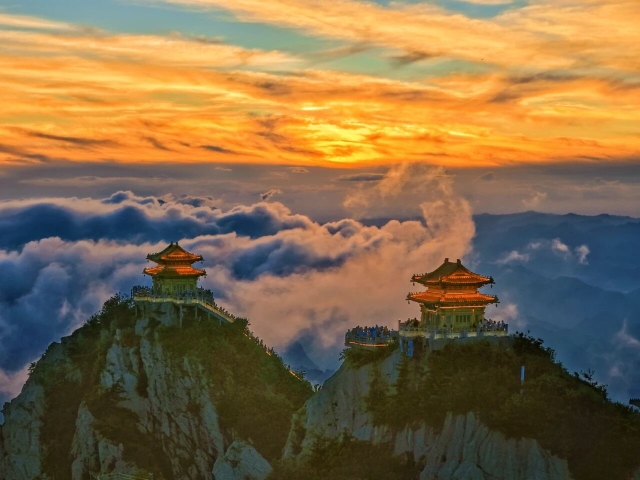
Laojun Mountain National Park
Essential Preparations Before Yunnan August Special Trip
Equipment Revolution
- Observation Tools: Carry a 10x or so magnifying glass and a portable ecological picture album of the northwestern Yunnan / Gaoligong Mountain area (such as the portable version of “Yunnan Wild Mushroom Picture Album”), which will completely change your travel experience.
- Clothing: A hard-shell hiking jacket (not a soft-shell one) is a must to cope with sudden mountain rains. A pair of mid-high top hiking shoes with excellent waterproof performance is crucial.
- Sleeping System:If you stay in remote villages, it is recommended to carry a lightweight fleece sleeping bag liner, which is both hygienic and warm.
Safety:
- Absolute Awe for Nature: Do not pick unknown plants and fungi, do not disturb wild animals, and all explorations must be carried out under the leadership of a guide.
- Respect Cultural Privacy:Be sure to obtain permission before taking photos of people, and do not enter religious or culturally taboo areas.
- Choose Responsible Partners: For trips to remote and secret places, you must arrange them through professional institutions with qualifications, familiarity with the local area, and respect for ecology and culture.Our China Dragon Travel have the ability to develop in-depth travel products. They can connect with real local ecological guides, arrange legal village visit permits, and achieve an excellent balance between safety and experience, which is difficult for individuals to achieve.
August is An Excellent Time to Visit Yunnan
Yunnan in August is a thick classic book with slightly curled pages in the humid air. Regular travelers read its cover and introduction, but you have the opportunity to go deep into its chapters and notes, and find the overlooked metaphors, interlaced timelines and the wisdom of symbiotic life between the lines. The harvest of this journey will not be a bunch of standardized landscape photos, but the perception of the deep breathing of a piece of land, the short intersection with another life logic, and the memory of the brightest starry sky you have ever seen above your head. When you complete a trip to Yunnan in August in this way, you will take away far more than you leave behind.