
Planning a trip to Dali and wondering, “Are the Three Pagodas worth visiting?” or “How can I explore Chongsheng Temple efficiently?” As the most iconic cultural landmark in Dali, the Chongsheng Temple Three Pagodas stand gracefully between Cangshan Mountain and Erhai Lake. Once the royal temple of the Nanzhao and Dali Kingdoms, this UNESCO-recognized heritage site represents a remarkable blend of Buddhist devotion, architectural brilliance, and historical significance.
Entry for Three Pagodas of Chongsheng Temple
As a national 5A-level scenic area, the Three Pagodas site enforces strict ticketing and identity verification. Proper documentation is the foundation for entry, so prepare everything in advance to avoid delays.
- Identification: Mainland Chinese visitors must bring their original second-generation ID card for entry. Foreign visitors need their original passport. Ensure all documents are valid. It is recommended to keep digital copies and physical photocopies stored separately in case of loss.
- Ticket Prices: Adult tickets cost approximately 75 RMB, granting access to the main Three Pagodas area and the Reflection Park. This price does not include the sightseeing bus or other optional add-ons. Discount policies: Children under 1.2 meters, seniors over 70 years old, and active military personnel (with valid ID) get free entry. Students and children between 1.2 and 1.4 meters receive half-price tickets. It is advisable to book tickets in advance on official platforms or reputable travel apps to save queuing time and potentially get a small discount.
- Sightseeing Bus Tickets: The scenic area covers nearly 1,000 acres. A walking tour covers about 7 kilometers and takes over 3 hours, which can be physically demanding. A one-way sightseeing bus ticket costs about 15–20 RMB, and a round-trip ticket costs about 35 RMB. The bus takes you from the entrance directly to the top area near the Mahavira Hall, saving significant effort. It is highly recommended for those with average fitness levels or those traveling with elderly or children.
- Annual Pass: The scenic area occasionally offers an annual pass, priced around 120 RMB, allowing unlimited entry throughout the year with facial recognition. Before purchasing, please check the official announcements and terms of use.
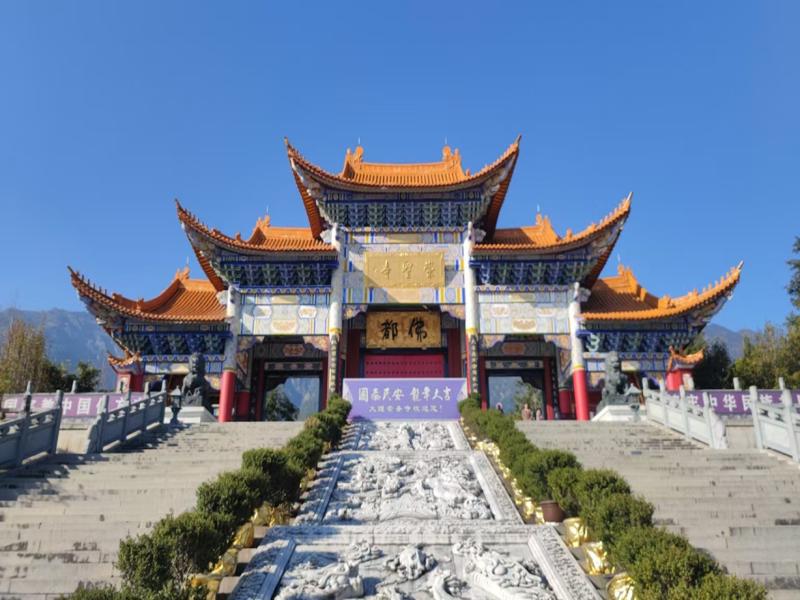
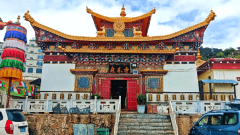
Solemn Entrance of Chongsheng Temple
Rules for Three Pagodas of Chongsheng Temple
To maintain order, protect cultural relics, and ensure a quality experience for all visitors, please read and strictly adhere to all park rules. If you violate related rules, you may be refused to entry or asked to leave.
- Real-Name Verification: The scenic area strictly enforces real-name ticketing and entry verification. You must actively present your original, valid ID for the staff to match with your ticket and identity. Using forged, expired, or others’ IDs is strictly prohibited. Offenders will be denied entry, and the violation will be recorded.
- Prohibited Items: To protect the ancient structures and ensure safety, dangerous items (flammable, explosive, corrosive, toxic/harmful) and weapons (controlled knives, batons) are strictly prohibited. Pets are not allowed (service animals like guide dogs are permitted with valid documentation and must be on a leash). Alcoholic beverages, glass containers, oversized luggage, and other items that may disrupt the visit are also not allowed. Professional photography equipment (tripods, stabilizers, drones) is prohibited without written permission from the scenic area.
- Behavioral Rules: Once inside, please remain quiet and orderly. Shouting, chasing, fighting, or causing disturbances is forbidden. Do not climb the ancient pagodas, temple railings, or relic steles. Do not deface, carve, or paste objects on ancient structures, trees, or rocks. Do not enter areas marked with “No Entry” signs to avoid accidents like falls or injuries.
- Photography Restrictions: General souvenir photos are allowed in open outdoor public areas, but using flash for extended periods, blocking walkways, or occupying core viewpoints for prolonged photoshoots is prohibited. Photography, videography, and live streaming are strictly forbidden inside temple halls, Buddha statue areas, relic exhibition halls, and mural/stele protection zones to prevent light damage to the artifacts.
Attractions of Three Pagodas of Chongsheng Temple
The Three Pagodas site is not only famous for its ancient pagodas but also houses numerous precious religious relics and magnificent ancient architectural complexes, offering a crucial window into Dali’s thousand-year-old civilization.
- Nanzhao Jianji Bell: Cast in 871 AD, this bell was one of the five great treasures of Chongsheng Temple and is the largest bell in Yunnan Province. The recast bell stands 3.86 meters high, has a diameter of 2.138 meters, and weighs 16.295 tons. The bell body is divided into upper and lower sections, the upper decorated with six Paramita patterns and the lower with six Heavenly King figures, showcasing exquisite craftsmanship and grand momentum.
- Yutong Guanyin Hall: The current hall was rebuilt on the original site in 1999. It stands 29.99 meters high and covers an area of 8,100 square meters. Inside, a 2.2-meter-high white marble Sumeru throne supports a 1.8-meter-high gilded bronze lotus pedestal, upon which stands an 8.6-meter-high gilded bronze statue of Yutong Guanyin.
- Chongsheng Temple Architectural Complex: The current Chongsheng Temple was rebuilt in 2005, forming a Buddhist cultural zone covering 400,000 square meters. The Mahavira Hall at Chongsheng Temple was modeled after the Hall of Supreme Harmony in the Forbidden City in Beijing. It features double eaves, nine bays, is 51.7 meters wide, and 26 meters high, presenting a majestic and solemn appearance. Inside, the hall contains over 10,000 dragons, the most of any temple in China. The temple also houses a very large oxhide drum, 3.1 meters in diameter, made from a single piece of oxhide.
- Three Pagodas Cultural Relics Exhibition Hall: Precious artifacts include the 24-centimeter-high golden Acala (Acharya) Guanyin, the gilded Garuda, a cotton-cloth manuscript of the Mukti-garbha-dharani Sutra, a Sanskrit Garbhadhatu Mandala, and fragments of a Vajracchedika Prajnaparamita Sutra written in gold and silver powder on silk.
Every structure and artifact here offers visitors a chance to absorb rich historical knowledge and spiritual inspiration, creating an unforgettable cultural experience during your trip to Dali.
Guide for Three Pagodas of Chongsheng Temple
Arranging your time and route well allows for a relaxed tour of the core attractions while fully appreciating the solemnity and grandeur of this thousand-year-old temple.
- Opening Hours: The opening hours differ between peak and off-peak seasons. From May 1st to October 31st (Peak Season): 7:10 AM to 7:00 PM (Last entry at 6:00 PM). From November 1st to April 30th (Off-Season): 7:30 AM to 6:30 PM (Last entry at 5:30 PM).
- Ticket Prices: Adult tickets are approximately 75 RMB. A round-trip sightseeing bus package is about 110 RMB. Other combinations are available, such as tickets + electric bus (approx. 98 RMB) or tickets + round-trip shuttle from Dali Ancient Town (approx. 73 RMB). It’s recommended to book tickets on travel platforms in advance to save 10-20 RMB.
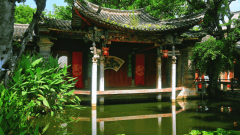
- Recommended Route: The Three Pagodas area is vast. It is recommended to set aside 3-4 hours for your visit. Upon arrival, take the sightseeing bus to the Mahavira Hall, then visit the Nine Dragons Bathing the Buddha, Yutong Guanyin Hall, and the Bell Tower in sequence. Then, walk downhill past the Cultural Relics Exhibition Hall to reach the Three Pagodas Reflection Pool.
- Transportation: Getting to the Three Pagodas from Dali Ancient Town is very convenient. A taxi costs about 10 RMB. Take bus No. 4 and get off at “Three Pagodas Park” station. You can also walk there in about 30 minutes. Self-driving visitors can navigate to “Chongsheng Temple Three Pagodas Cultural Tourism Zone,” where a parking lot is available. The Dali Ancient Town Visitor Center offers a one-way shuttle bus to the Three Pagodas for just 5 RMB.
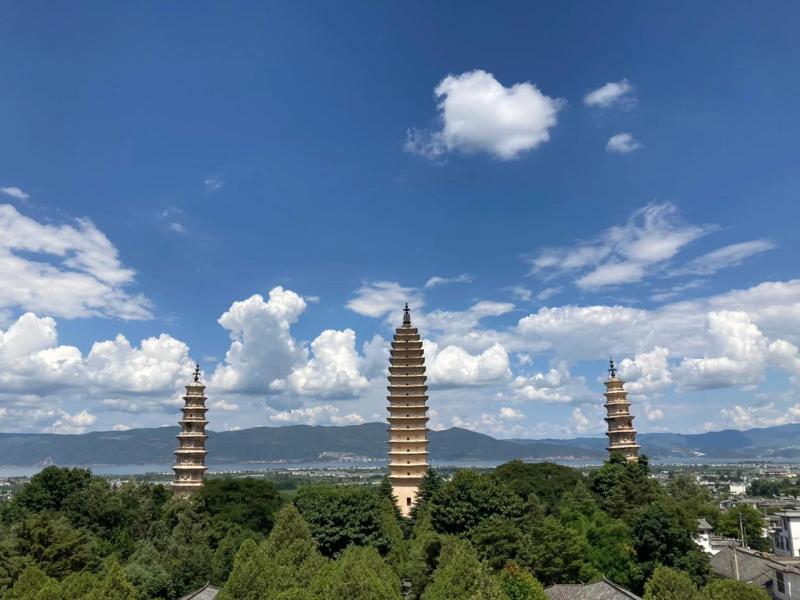
Three Pagodas of Chongsheng Temple
Tips for Three Pagodas of Chongsheng Temple
- Cultural Etiquette: Chongsheng Temple is a Buddhist monastery. Please respect Buddhist customs, religious beliefs, and other visitors’ experiences. During religious activities or ceremonies, avoid crowding, keep a respectful distance, and do not disturb.
- Best Time to Visit: It is recommended to enter the park about an hour before sunset when the light is best for photographing the pagodas with a golden glow. Summer has longer opening hours; you can visit in the afternoon and stay until closing time, and you might also see squirrels and hares.
- Sun Protection and Attire: Dali is on a plateau with extremely strong UV rays. Make sure to protect yourself from the sun, apply sunscreen, wear a hat, and sunglasses. The scenic area has many inclines; comfortable sports shoes are recommended. Bringing a traditional ethnic-style shawl can make for better photos.
- Managing Your Energy: The paths are mostly stone-paved; some sections are steep and can be slippery when wet. Please walk slowly and avoid running. The distance from the entrance to the Mahavira Hall is about 2.5 kilometers with an elevation gain of nearly 100 meters. It is recommended that elderly visitors or those with less stamina take the sightseeing bus round trip. If you choose to walk, go slowly along the main axis, rest briefly after visiting each hall, and avoid overexertion.
Chongsheng Temple Three Pagodas: A Timeless Symbol of Dali’s Spiritual and Cultural Heritage
The Chongsheng Temple Three Pagodas are far more than architectural marvels—they are enduring symbols of Dali’s thousand-year history and spiritual legacy. From the majestic ancient towers to the serene Buddhist halls, every structure reflects the artistic achievements and religious traditions of the Nanzhao and Dali Kingdoms. Whether you are a history enthusiast, a photographer, or a cultural explorer, this landmark offers an unforgettable glimpse into the heart of Yunnan’s heritage.
For a smoother and more immersive travel experience, China Dragon Travel provides expert guidance and tailor-made tours across Dali and Yunnan. With professional planning and local expertise, your journey to the Three Pagodas can become both seamless and deeply meaningful.