
Lijiang Ancient Town is a UNESCO World Cultural Heritage with a history of over 800 years, renowned for its unique Naxi culture and intact architectural pattern of the Ming and Qing dynasties. For first-time visitors, the intricate streets and rich attractions in the ancient town may pose challenges in planning. This guide aims to provide clear and practical information, systematically introducing the core attractions, transportation methods, accommodation areas, dining options and cultural activities of Lijiang Ancient Town.
Main Attractions in Yunnan Lijiang Ancient Town
Reasonable itinerary planning starts with understanding the layout of attractions. The attractions in Lijiang Ancient Town can be divided into the central area, historical and cultural area, and peripheral scenic area. Visiting by concentrating on areas can save time and energy.
Sifang Street & Main Commercial Streets
Sifang Street is the central square and transportation hub of the ancient town, from which all major streets radiate. It is recommended to take this as the starting point of the tour to quickly get familiar with the directions. The Qiyi Street, Wuyi Street and East Street extending from here are the main commercial streets, with dense shops and restaurants. After a short stay in the morning to confirm the location, you can head to quieter cultural attractions. It should be noted that these main roads are crowded with tour groups during the day.
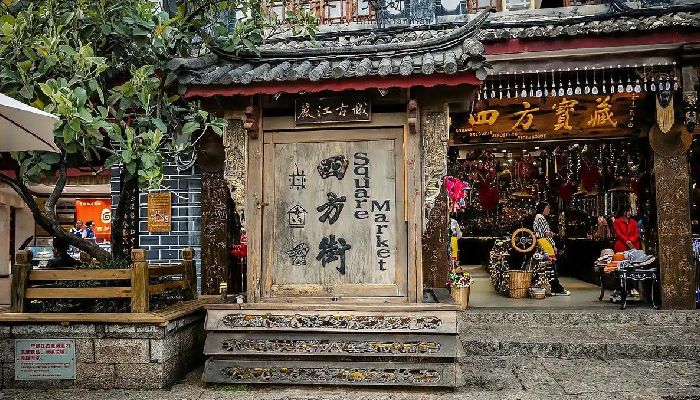
Lijiang Ancient Town Sifang Street
Key Points & Time Required for Visiting Mu Mansion
Mu Mansion, known as the “Naxi Forbidden City”, is a Tusi official residence and a key to understanding local history. It is about a 10-minute walk south from Sifang Street. You need to reserve at least 1.5 to 2 hours for the visit, focusing on the Council Hall, Wanjuan Building and Sanqing Hall in the back garden. The scenic area provides paid guided tour services that can detail architectural features and historical stories. If you have a need for in-depth cultural understanding, this service is worth considering.
Practical Information about Heilongtan Park
Heilongtan Park is located north of the ancient town, about a 25-minute walk from Sifang Street. It is recommended to arrange a separate afternoon for the visit. The park is famous for the reflection of Jade Dragon Snow Mountain, and the best time to take photos is before 9 am on sunny and windless days. Please note that the park ticket is sometimes linked to the ancient town maintenance fee, so it is advisable to check the latest ticketing policy before traveling. There are rest areas in the park where you can relax after the visit.
Transportation Plans to & Around Lijiang Ancient Town
Smooth arrival and efficient movement in and around the ancient town are the foundation of a pleasant journey. The following plans cover specific options for entering from outside and moving inside.
Ways to Reach the Ancient Town from Outside
You can choose different transportation methods to enter Lijiang Ancient Town according to your departure location and budget.
- From the airport to the ancient town: The terminal of the airport shuttle bus at Lijiang Sanyi Airport is the Civil Aviation Station in the urban area, after which you need to transfer to a taxi (about 10 minutes’ drive) to reach the entrance of the ancient town. If you carry large luggage or have a large group, booking an airport pick-up service to directly reach the entrance of the ancient town is more convenient.
- From the railway station to the ancient town: Taking a regular taxi or online car-hailing service is the most direct way after exiting Lijiang Railway Station. Although there are also buses available near the ancient town, they are not convenient for tourists with luggage.
- Arrange pick-up in advance: To avoid the trouble of finding transportation upon arrival, especially when flights or trains arrive late, you can book pick-up services in advance. Some local travel agencies such as China Dragon Travel provide such services, and drivers familiar with all entrances and exits of the ancient town can take you to the drop-off point closest to your inn.
Ways to Get Around Inside & Around the Ancient Town
The ancient town is a completely pedestrian area, but understanding the following information can make your movement more comfortable.
- Walking navigation tips: In addition to the general rule of “Follow the water to exit the town and against the water to enter”, remembering a few key landmarks (such as the Big Water Wheel, Kegongfang) is more reliable than relying on real-time mobile phone maps, as narrow alleys may cause signal delays.
- Solutions for carrying luggage: If the booked inn is deep in the ancient town, contact the inn in advance to ask if they provide luggage handling assistance. Some inns are equipped with trolleys or can arrange staff. Otherwise, when checking in and out, you can consider using rickshaws for point-to-point transportation, but be sure to confirm all fees before getting on the vehicle.
- Traveling to surrounding attractions: When planning to visit Baisha Ancient Town, Shuhe Ancient Town or Jade Dragon Snow Mountain, you usually need to find shared car or chartered car services at the regular parking lot at the entrance of the ancient town. Choosing vehicles with operating qualifications is more secure.
Accommodation Area Analysis & Selection in Lijiang Ancient Town
The choice of accommodation location directly affects travel convenience and experience depth. It is mainly divided into inside the ancient town, on the edge of the ancient town and the new urban area, each with distinct advantages and disadvantages.
Experience & Notes for Staying Inside the Ancient Town
Choosing an inn inside the ancient town is to immerse yourself in its quiet nights and morning atmosphere.
- Waterfront inns: Mostly distributed in areas such as Xinhua Street and Baisui Lane, with beautiful environments, but the sound of flowing water at night may affect sleep, and lower-floor rooms may be humid during the rainy season.
- Central area inns: Surrounding Sifang Street, it is extremely convenient for travel and dining at night, but may be disturbed by continuous crowds and noise, not suitable for tourists with high requirements for sleep environment.
- Inns in quiet alleys: Located in areas such as Wenzhi Lane and Zhongyi Lane of Wuyi Street, they allow you to better experience the daily life of local residents, with a relatively quiet environment. The disadvantage is that it is more difficult to carry luggage on the slate roads.
Advantages of Staying Around the Ancient Town
If you want to strike a balance between quietness, convenience and modern facilities, hotels near several main entrances and exits of the ancient town are ideal choices.
- North Gate area (near the Big Water Wheel): This is the main entrance and exit of the ancient town, with the most convenient transportation, easy boarding and alighting, and rich dining options. However, it may be noisy due to the dense flow of tour groups during the day.
- South Gate area: The environment is relatively quieter than the North Gate, gathering many mid-to-high-end hotels. It takes only 5-10 minutes to walk into the core area of the ancient town, suitable for tourists who value accommodation quality and quiet environment.

Courtyard of an Inn in Lijiang Ancient Town
Dining & Characteristic Experience Suggestions in Lijiang Ancient Town
Dining and cultural experiences are important parts of the journey. The following suggestions aim to help you better arrange these activities.
Specific Places to Taste Local Cuisine
When dining in the ancient town, the choice of location has a significant impact on price and experience.
- Try Naxi cuisine: In addition to the well-known preserved pork rib hot pot, Naxi grilled fish and mixed hot pot are also worth a try. Some authentic local restaurants are not on the main roads; you can try to find them around Zhongyi Market or in the depths of alleys.
- Snacks and breakfast: Zhongyi Market is an affordable choice to experience local people’s daily breakfast, offering various rice noodles and er si (a kind of rice noodle product). Lijiang Baba and kidney bean jelly can be found everywhere in the ancient town, and can be used as snacks during the tour.
- Reasonably plan dining budget: Restaurants located on Bar Street and main commercial streets generally have higher prices. Just walking tens of meters into the adjacent alleys, you can usually find restaurants or cafes with more reasonable prices and a more relaxed atmosphere.
Cultural Experience Activities Worth Investing Time In
Participating in in-depth cultural activities can make your trip go beyond ordinary sightseeing.
- Watch Naxi ancient music performance: Performances are usually held in the evening, lasting about one hour. This is a quiet and ancient art form; it is recommended to check the performance time and buy tickets in advance. It is more suitable for tourists interested in traditional music and culture.
- Learn simple Dongba script: There are Dongba culture experience workshops in Xianwen Lane or some cultural courtyards. Spending an hour or two learning to write your own Naxi name or a blessing is a unique and meaningful souvenir.
- Choose a suitable viewing platform: Wangu Tower on Lion Mountain is the official commanding height. If you don’t want to buy tickets, many cafes and restaurants on the mountain have viewing terraces. You can enjoy the same panoramic view of the ancient town by purchasing a drink, especially the best view at sunset.
Planning a Smooth and Meaningful Lijiang Old Town Trip
Exploring Lijiang Old Town is not simply about ticking off landmarks, but about understanding how the town functions as a living space. Knowing where attractions are clustered helps reduce unnecessary walking, choosing the right accommodation area shapes your daily rhythm, and managing transportation and dining locations directly affects comfort. When these elements are thoughtfully aligned, Lijiang Old Town reveals itself not just as a tourist destination, but as a place where history and daily life quietly coexist.
For travelers who wish to connect Lijiang Old Town with nearby ancient towns, mountain landscapes, or deeper cultural experiences—without overloading the schedule—professional planning can make a significant difference. Local specialists such as China Dragon Travel, with extensive experience in southwest China itineraries, can help structure a realistic and well-paced journey based on your arrival time, travel preferences, and on-the-ground conditions, allowing you to focus on the experience rather than the logistics.