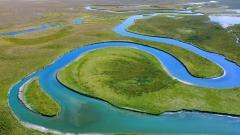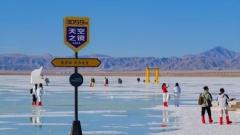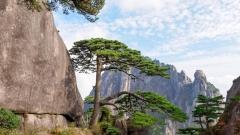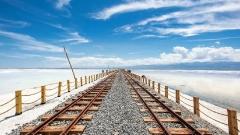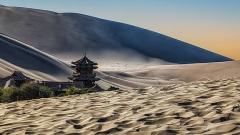

On the northern fringes of the Qinghai-Tibet Plateau lies a territory of profound isolation and surreal beauty: Da Chaidan. As the administrative and geological epicenter of the Haixi Mongol and Tibetan Autonomous Prefecture, it hosts some of the most desolate yet magnificent landscapes on Earth. From the chemically precipitated salt lakes to the wind-carved silent palaces of Yadan, Da Chaidan is not merely a stopover—it is a living textbook of planetary evolution.
This guide provides a rigorous analysis of Da Chaidan’s core features, inviting travelers to understand this land through the lenses of geology, aesthetics, and logistical precision.
Emerald Lake — A Collaborative Masterpiece of Nature and Industry
The Emerald Lake has become a visual icon of the Northwest Loop, yet its allure extends far beyond photography.
The Transition from Salt Bed to Pigment
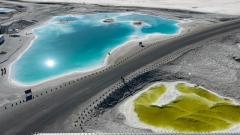
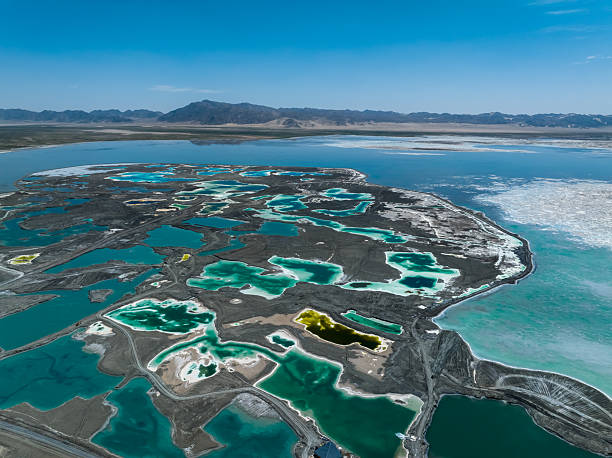
The lake is essentially a legacy of the Da Chaidan Chemical Plant’s salt fields. It represents a rare convergence of human industry and natural chemistry. After salt mining, deep pits were left in the arid crust. Over time, groundwater and seasonal precipitation accumulated, dissolving high concentrations of minerals—such as potassium, magnesium, and lithium—from the subterranean strata.
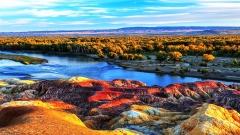
The varying shades of vivid green, cerulean, and pale amber are the result of light scattering against these mineral-saturated waters. Depending on the sun’s angle and the concentration of solutes, the lake bed functions as a giant prism, reflecting a gradient of jewelry-like tones against the stark desert floor.
The Aesthetics of Micro-Crystallization
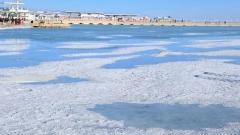
To the observant traveler, Emerald Lake offers a study in “micro-aesthetics.” The stark contrast between the crystalline white salt crusts and the vibrant water showcases the limits of color saturation in extreme environments. Beyond the panoramic view, one should observe the salt walls’ geometric structures. These crystals reflect a delicate equilibrium between evaporation and mineral precipitation, serving as a silent record of the basin’s hyper-arid climate.
Wusute Water Yadan — A Fluid Epoch in the Desert
If Emerald Lake is a laboratory of color, the Wusute Water Yadan is a grand epic of space and form.
The Arid Foundation of Yadan
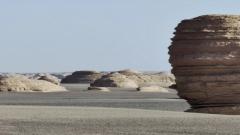
The term “Yadan” describes a landscape sculpted by the wind. Over eons, powerful northwesterly gales have acted as chisels, carving ridges and grooves into the parched earth. In the vastness surrounding Da Chaidan, these landforms exhibit a sense of ancient, sacred order.
The Rare Convergence of Wind and Water
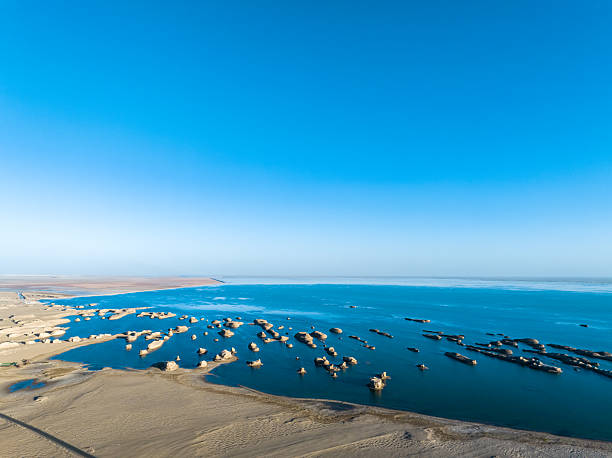
The most striking feature of Wusute is its “geological dissonance.” Globally, Yadan landforms almost exclusively exist in the heart of hyper-arid deserts. However, due to the rising water levels of the Gijiner Lakes, water has flooded the bases of these ancient mounds, creating the illusion of a “ghost fleet” sailing across an inland sea.
Here, travelers can observe the slow-motion battle between hydraulic erosion and wind carving. The mounds are in a constant state of flux, their silhouettes shifting as the water permeates the porous soil. This landscape is a fleeting moment in geological time—a living specimen of the dynamic changes occurring within the plateau’s endorheic basins.
Da Chaidan Snow Mountain Hot Springs — The Science of Healing
In the extreme dryness of the Qaidam Basin, heat is synonymous with life. The Snow Mountain Hot Springs are not just a place for relaxation but a significant geothermal phenomenon.
Vitality in Crustal Fissures
Located in a valley at approximately 3,000 meters above sea level, these springs originate from deep crustal fissures. The water emerges rich in fluoride, strontium, and silicic acid. Against the surrounding barrenness, the lush vegetation around the springs creates a micro-wetland ecosystem that stands in stark contrast to the scorched earth nearby.
Sensory Contrasts: Fire and Ice
In May, the distant peaks remain cloaked in white, while the springs emit a gentle, warm mist. This juxtaposition—the frigid alpine air meeting the geothermic heat—provides a unique sensory experience. From a professional travel perspective, these springs serve as an excellent observation point for the relationship between geothermal activity and high-altitude flora.
The Unsung Aesthetics — Nan Baxian and Red Cliffs
Beyond the primary sites, the administrative region of Da Chaidan holds vast, unnamed landscapes that demand exploration.
Nan Baxian: The Loneliness of the Ghost City
Nan Baxian is one of the largest and most mature Yadan clusters discovered to date. While its name honors the courage of early geological explorers, the landscape itself presents an oppressive, silent beauty. Thousands of towering mounds howl in the wind, forming a natural labyrinth of earth and shadow.
Red Cliffs: Replicating the Martian Surface
The Red Cliffs (Hongya) area near Da Chaidan, with its ferruginous sedimentary rocks and hyper-arid surface, is considered by geologists to be one of the closest terrestrial analogues to the surface of Mars. The iron-rich strata glow like fire under the setting sun, offering immense educational value for those interested in planetary science and astronomy.
Professional Guidelines for the Extreme Environment
Achieving a profound experience in Da Chaidan requires an understanding of the region’s rhythm.
Optics and Atmospheric Coordination
The scenery in Da Chaidan is highly dependent on light. While the atmospheric transparency in May is exceptional, dust activity can be frequent. Professional travelers should learn to anticipate the weather: the calm air of early morning produces the perfect mirror effect on the lakes, while the late afternoon’s low-angle light adds a three-dimensional depth to the Yadan ridges.
The Ethics of Exploration
Due to the hyper-arid climate, the ecosystem here is incredibly fragile. Salt crystals at the water’s edge, once crushed, take years to reform. Adhering to the principles of “Leave No Trace” is not just a suggestion; it is a fundamental responsibility for anyone wishing to preserve this chromatic heritage for future generations.
Da Chaidan is not a place that can be understood at a glance. Its beauty is hidden within the molecular structures of its minerals, in the ancient duel between wind and sand, and in the thermal pulse beneath its snowy peaks.
When we peel away the labels of marketing and step into this wilderness as observers, Da Chaidan offers more than a visual feast—it offers a dialogue with the deep forces of our planet. By understanding its geological background, every ripple in the water and every mound of earth gains a depth that transcends mere scenery.