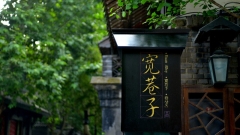

As the core city of Bashu culture, Chengdu has many tourist landmarks with local charm, among which Jinli and Kuanzhai Alleys are the most classic. Both are cultural and tourism business cards of Chengdu, carrying old Chengdu’s folk memories and life atmosphere, but differ significantly in cultural positioning, architectural style and travel experience. Adjacent to Wuhou Shrine, Jinli is immersed in the Three Kingdoms culture and full of market hustle; Kuanzhai Alleys, a Qing Dynasty relic, hides courtyard leisure and focuses on tranquility. First-time visitors often hesitate. This article will analyze their characteristics and differences, providing a guide to help tourists plan their itinerary and enjoy Sichuan’s ancient street charm.
Jinli VS Kuanzhai Alleys: Historical and Cultural Origins
Jinli: The Three Kingdoms Culture Ancient Street
The historical heritage and market characteristics of Jinli are very distinct:
- With a long history, it was named after Shu Brocade. It is an ancient commercial street in Western Shu, adjacent to Wuhou Shrine, with the Three Kingdoms culture as its core.
- The street scenes, cultural and creative products, and snacks are all integrated with the Three Kingdoms elements, reproducing the “front shop and back workshop” market style of old Chengdu, with rich folk performances.
It is suitable for tourists who love the Three Kingdoms culture and enjoy the lively market atmosphere.
Kuanzhai Alleys: The Qing Dynasty Ancient Street
As the only remaining ancient Qing Dynasty street in Chengdu, Kuanzhai Alleys has remarkable historical value and architectural characteristics:
- Basic Overview: Located in Qingyang District, Chengdu, it consists of three parallel streets – Kuan Alley, Zhai Alley and Jing Alley, as well as courtyard complexes, with a history of 300 years.
- Historical Origin: Founded in the Kangxi period of the Qing Dynasty, it was initially a garrison for Manchu and Mongolian troops, and later gradually formed a residential community, witnessing the urban changes of Chengdu in modern times and being a typical representative of old Chengdu courtyard culture.
- Architectural Relics: It retains a large number of architectural elements of Qing Dynasty official residences, such as blue bricks and gray tiles, carved que ti, and horse-tie stones. Some walls can still find relics of the 1911 Revolution Railway Protection Monument, full of a sense of historical vicissitudes.
- Cultural Positioning: Different from the antique reconstruction of Jinli, it is a real historical relic, integrating traditional Western Sichuan dwellings with Western-style architectural styles, and is a classic example of Chengdu urban renewal.
Today’s Kuanzhai Alleys not only retains the tranquility and elegance of the ancient street, but also integrates modern literary atmosphere, making it suitable for tourists who like static travel, appreciate historical architecture and pursue a slow life.
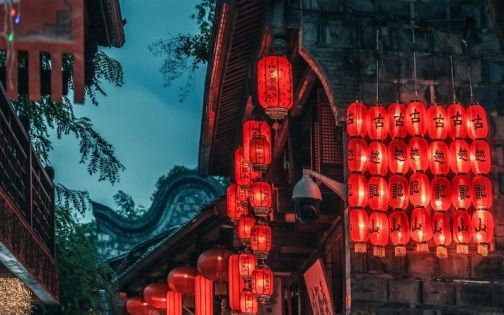
Jinli
Jinli VS Kuanzhai Alleys: Architectural Styles
Jinli: Western Sichuan Antique Courtyards
The architecture of Jinli is centered on Western Sichuan antique courtyards, focusing on a lively and prosperous atmosphere:
- Architectural Style: It adopts late Ming and early Qing Western Sichuan dwelling styles, mainly with bucket-and-girder structures and gable roofs.
- Overall Scale: About 550 meters long, lined with stilted buildings with red railings and red lanterns. At night, the lanterns reflect beautifully, creating a vivid Tianfu prosperity scene.
- Detail Features: Wooden doors, carved grids and bluestone roads restore ancient Chengdu’s commercial street style, evoking a sense of traveling back to the prosperous Jinguan City.
Consistent with its architectural style, the spatial layout and experience of Jinli are centered on “dynamics”:
- Spatial Layout: The main street is connected with branch alleys, with dense shops. Snack stalls, cultural and creative stores, and folk experience stores are scattered in an orderly manner, full of life atmosphere everywhere.
- Folk Integration: There is a traditional stage in the block, where Sichuan opera, shadow puppetry and other folk performances are held regularly. The architecture and folk activities are integrated, full of vitality and dynamics.
- Suitable for Crowds: Tourists who like liveliness and love taking photos. Every corner here can take photos with Sichuan characteristics.
Kuanzhai Alleys: Qing Dynasty Street Courtyards
The architecture of Kuanzhai Alleys is based on Qing Dynasty courtyards, integrating Western elements, with a quiet and elegant style, sharply contrasting with Jinli:
- Overall Style: Based on Qing Dynasty courtyards, it integrates Republic of China Western elements, with a comfortable scale and quiet elegance.
- Characteristics of the Three Alleys: Kuan Alley is wide with large Qing courtyards for strolling; Zhai Alley is narrow, with green-wrapped gray walls and literary cafes; Jing Alley has a 500-meter unique brick wall showing brick evolution from Han to Ming Dynasties, with ornamental and cultural value.
The architectural experience of Kuanzhai Alleys is characterized by “quietness”:
- Spatial Characteristics: The courtyard-style layout makes each courtyard a world of its own, away from the hustle and bustle of commerce, focusing on the tranquility and beauty of ancient architecture.
- Architectural Details: The inverted Fu character lintel, exquisite wooden carvings, and simple bluestone ground all show the artistic value of traditional architecture, which is suitable for slowing down and savoring the charm of ancient architecture.
- Experience Sense: The buildings are sparsely distributed, suitable for walking slowly, feeling the leisure life of old Chengdu, and experiencing the tranquility different from the busy city.
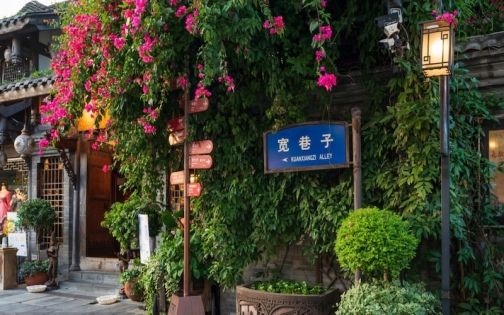
Kuanzhai Alleys
Jinli VS Kuanzhai Alleys: A Competition of Food Experiences
Jinli: One-Stop Snack Tasting
Jinli is a gathering place for Chengdu snacks, where you can taste authentic Sichuan flavors in one stop, with the following core characteristics:
- Snack Scale: It gathers almost all classic Chengdu snacks, with a wide variety and diverse choices, known as a paradise for snack lovers.
- Classic Varieties: There are all kinds of snacks such as Three Bombs, Tangyou Guozi, Dandan Noodles, Zhongshuijiao, Bobo Chicken, and Danhong Gao, with affordable prices and authentic flavors.
The food experience of Jinli focuses on the market style:
- Eating Method: Mainly “fast food” with dense snack stalls; tourists can eat while walking, enjoying various delicacies and immersing in old Chengdu’s market food culture.
- Characteristic Experience: Some snacks have a ritual production process. For example, making Three Bombs involves the master throwing glutinous rice balls hard, making a bang to attract tourists.
- Taste Coverage: Besides traditional spicy snacks, there are sweets like Lianggao and Bingfen, covering spicy, sweet and fresh flavors for different tastes.
Kuanzhai Alleys: Slow Enjoyment of Featured Food
Different from the market snacks in Jinli, the food experience of Kuanzhai Alleys focuses on slow enjoyment and diversification:
- Food Types: In addition to traditional Chengdu snacks, it also integrates featured catering, leisure tea and light meals, with more diverse choices, including not only classic varieties such as Three Bombs and Bobo Chicken, but also improved snacks and fusion dishes.
- Distribution Characteristics: Snacks are scattered in courtyards and street corners. Unlike the dense stalls in Jinli, it is more suitable for sitting down and savoring slowly.
- Experience Core: It focuses on “slow food life”, allowing tourists to feel the leisure rhythm of Chengdu while tasting food.
The food experience of Kuanzhai Alleys focuses on leisure and experience:
- Core Experience: Dominated by tea houses and featured catering, the alley has many antique tea houses with traditional Gaiwan Tea and Flower Tea. Tourists can enjoy tea in the courtyard, sunbathe and have ears cleaned to experience Chengdu’s leisure.
- Characteristic Matching: Some tea houses provide folk performances such as Sichuan opera face-changing and Bangtang, letting tourists enjoy food while feeling Bashu culture’s charm.
- All-Day Experience: The alley has featured hot pot restaurants, private dishes and literary cafes. You can taste traditional food by day and drink in cafes at night to experience Chengdu’s day and night charm.
Jinli VS Kuanzhai Alleys: Travel Characteristics and Experience Projects
Jinli: Folk Customs and Night Tour Experience
The travel experience of Jinli is centered on liveliness, interaction and immersion, suitable for tourists who like lively atmosphere and folk culture:
- Folk Performances: A traditional stage hosts regular Sichuan opera face-changing, shadow puppetry and Bangtang, with affordable tickets for close-up experience of Bashu intangible cultural heritage.
- Handicraft Experience: Street stalls offer traditional crafts like sugar blowing and Shu embroidery. Tourists can participate in making and take their works as souvenirs.
- Cultural and Creative Shopping: Three Kingdoms-themed stores sell feather fans, key chains and commemorative coins, which are exquisitely designed and meaningful.
In addition to regular experiences, Jinli’s night tour is a major highlight:
- Night Tour Experience: Stunning at night with lights and red lanterns reflecting on bluestone roads, more charming than in the daytime.
- Itinerary Suggestion: Visit Wuhou Shrine first to learn about the Three Kingdoms culture, then go to Jinli for a complete cultural experience.
Kuanzhai Alleys: Courtyard and Slow Life Experience
The travel experience of Kuanzhai Alleys is centered on tranquility, literature and art, suitable for tourists who like slow rhythm, love history and art:
- Experience Rhythm: No excessive noise, focusing on leisure strolling and static experience. Visit in the morning or afternoon for fewer people and full enjoyment of the ancient street’s beauty.
- Core Experience: Courtyard exploration and literary leisure. Each courtyard has a unique design, serving as creative stores, art galleries or original residences, with surprises along the way.
- Must-Visit Attraction: Jing Alley’s 500-meter Brick Culture Wall displays ancient bricks, telling Chengdu’s history with ornamental and cultural value.
In addition, Kuanzhai Alleys has distinctive folk experiences and itinerary matching:
- Characteristic Experience: Chengdu’s featured ear cleaning service offers thorough relaxation; weekend creative markets in Jing Alley sell handicrafts and small items, ideal for treasure hunters.
- Itinerary Suggestion: Near People’s Park; after the visit, go to Heming Tea House to continue experiencing Chengdu’s slow life.
Travel Suggestions for Jinli and Kuanzhai Alleys
Transportation and Opening Hours Information
Jinli is located at No. 231 Wuhou Shrine Street, Wuhou District, with convenient transportation. Take Bus 1, 57 or 82 to Wuhou Shrine Station, or Metro Line 1 to Huaxi Dam Station and walk. It is open all day; merchants operate 9:00-22:00, with lights on at 20:00 for the best night tour.
Kuanzhai Alleys is at the intersection of Jinhe Road, Qingyang District. Take Bus 5, 13, 43 to Jinhe Road Station, or Bus 62, 70 to Changshun Upper Street Station. It is open all day; 2026 requires a 7-day advance real-name reservation for core areas, free via the official account.
Suitable Crowds and Itinerary Planning Suggestions
- Tourists suitable for Jinli:
- Love the Three Kingdoms culture and want to understand the history of Shu Han.
- Like the lively market atmosphere and love snacks and night tours.
- Have limited travel time and want to experience Chengdu’s snacks and folk customs in one stop.
- Like taking photos and pursuing a sense of atmospheric night scenes.
Itinerary Suggestion: It is recommended to reserve 1.5-2 hours for visiting Jinli alone. If matching with Wuhou Shrine, reserve 3-4 hours in total. Go in the evening and play until night to feel the different scenery of day and night.
- Tourists suitable for Kuanzhai Alleys:
- Like historical architecture and want to feel the courtyard culture of old Chengdu.
- Pursue a slow rhythm and like a quiet and literary atmosphere.
- Want to experience Chengdu’s tea house culture and ear cleaning characteristic projects.
- Family tours and casual leisure tours.
Itinerary Suggestion: It is recommended to reserve 2-3 hours for visiting Kuanzhai Alleys alone. Go on a working day morning to avoid the peak crowd. After the visit, you can go to People’s Park to continue to experience the slow life of Chengdu.
Precautions and Consumption Suggestions
Precautions for Jinli:
- The price of some snacks in the scenic area is slightly higher. It is recommended to choose regular stalls with clearly marked prices to taste, and avoid buying expensive online celebrity packages.
- The expensive hot pot base sold by street vendors is mostly OEM products. If you want to buy specialties, it is more cost-effective to go to regular supermarkets in the urban area.
- The crowd is very large on holidays. It is recommended to visit during off-peak hours to avoid crowding affecting the experience.
Precautions for Kuanzhai Alleys:
- Strictly abide by the reservation system and make an online reservation in advance to avoid being unable to enter the park without a reservation.
- The price of some high-end catering and cultural and creative products in the courtyard is relatively high. You can choose to consume according to your own needs.
- Avoid buying expensive souvenirs at the entrance of the scenic area. Choose cost-effective characteristic small items.
One Lane of Fireworks and One Lane of Leisure
Jinli and Kuanzhai Alleys each have their own merits, with no advantages or disadvantages, only adaptive differences. Jinli embodies the Three Kingdoms charm and market vitality, highlighted by snacks and night tours; Kuanzhai Alleys preserves Qing Dynasty charm and courtyard leisure, featuring tranquility and elegance.
Choose Jinli for liveliness, food and the Three Kingdoms culture; choose Kuanzhai Alleys for tranquility, ancient architecture and slow life. Those with time can visit both to enjoy the double charm of Chengdu’s ancient streets and enrich their trip.
Either choice lets you experience Chengdu’s unique charm and Bashu culture. May this guide help you plan your trip and create wonderful memories of Jinli and Kuanzhai Alleys.