
One of the first questions travelers ask when planning a trip to Xi’an is: “What are the must-visit attractions in Xi’an?” While the Terracotta Warriors are the city’s most famous landmark, Xi’an offers far more than a single archaeological site. As one of China’s oldest capitals, the city combines imperial history, Buddhist architecture, ancient city defenses, museums, and vibrant local street life in a way few destinations in China can match. Visitors can spend the morning exploring the Terracotta Army, cycle along the ancient City Wall at sunset, and then experience the lively atmosphere of Datang Everbright City and the Muslim Quarter after dark.
Imperial Relic Attractions in Xi’an
Terracotta Warriors
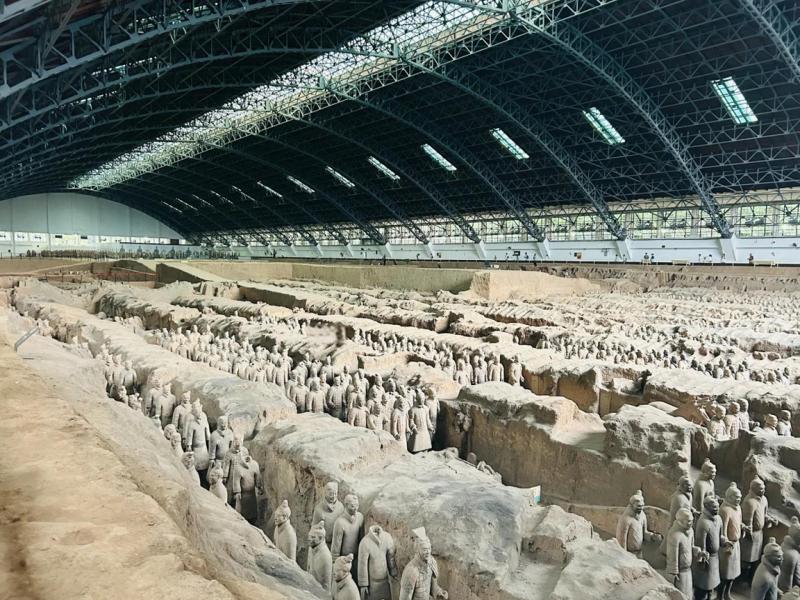
The Terracotta Warriors are located in Lintong District, about 40 kilometers from downtown Xi’an. They are the burial pits of the Mausoleum of the First Qin Emperor. The three pits have yielded nearly 8,000 life-sized terracotta warriors and horses, each with different facial features and no two alike. Pit One is the largest, with infantry and chariots arranged in neat military formations, a spectacular sight. Pit Two has a richer variety, mixing cavalry, crossbowmen, and chariots. Pit Three is the smallest, serving as the army’s command post. The Bronze Chariots Hall displays two exquisite painted bronze chariots with extremely fine details. Admission is 120 RMB. Allow 3 to 4 hours. From downtown, take bus You 5 from the East Square of Xi’an Railway Station for a direct ride (7 RMB). The best visiting times are at opening (8:30 am) or after 3:00 pm to avoid tour group crowds.
Huaqing Palace
Huaqing Palace is located at the foot of Lishan Mountain in Lintong District, about 8 kilometers from the Terracotta Warriors. It was a royal hot spring retreat during the Tang Dynasty. This site witnessed the love story of Emperor Xuanzong and Consort Yang, and is also the site of the Xi’an Incident. The site preserves Tang Dynasty imperial hot spring ruins, including the Consort Yang’s Pool, Star Pool, and Lotus Pool. The Bingjian Pavilion on Lishan Mountain marks the location where Zhang Xueliang and Yang Hucheng detained Chiang Kai-shek to force him to resist Japan. The site also features the “Song of Everlasting Sorrow” live performance, two shows nightly in summer, Xi’an’s most famous evening performance. Admission is 120 RMB; show tickets are separate. It is recommended to visit Huaqing Palace in the morning and the Terracotta Warriors in the afternoon, as they are on the same route.
Mausoleum of the Qin Emperor
The Mausoleum of the Qin Emperor is located about 1.5 kilometers west of the Terracotta Warriors. The tomb mound was originally 115 meters high but now stands at about 76 meters after over two thousand years of erosion. Archaeological surveys indicate a complex internal structure simulating rivers and lakes with mercury. The tomb has not been excavated. Visitors can walk a path around the mound. The site includes the Qinling Relics Museum, displaying pottery figures, bronze ware, and stone tools unearthed from the mausoleum grounds. Admission is included in the Terracotta Warriors ticket. After visiting the Terracotta Warriors, you can walk or take a free shuttle bus. Allow 1 hour. The area is open and spacious, with the best light in the late afternoon.
Inside the Mausoleum of the Qin Emperor
Religious Architecture Attractions in Xi’an
Giant Wild Goose Pagoda
The Giant Wild Goose Pagoda is located within Daci’en Temple in the southern suburbs of Xi’an. It was built by the eminent Tang Dynasty monk Xuanzang to house the Buddhist scriptures he brought back from India. The pagoda is 64 meters high with seven stories. Climbing it offers a panoramic view of the Qujiang New District and the Tang Dynasty Ever Bright City. Daci’en Temple is where Xuanzang translated scriptures and preached Buddhism. The temple houses the Xuanzang Sanzang Yuan, displaying related relics and documents. The North Square of the Giant Wild Goose Pagoda features Asia’s largest musical fountain, with two shows nightly in summer and one in winter, free to watch. Admission to Daci’en Temple is 50 RMB; climbing the pagoda costs an additional 30 RMB. It is recommended to arrive after 4:00 pm, visit the temple and pagoda, watch the fountain show after sunset, then walk to the Tang Dynasty Ever Bright City.
Small Wild Goose Pagoda
The Small Wild Goose Pagoda is located within Jianfu Temple in downtown Xi’an. Built during the Jinglong era of the Tang Dynasty, it is smaller and simpler in appearance than the Giant Wild Goose Pagoda. It stands 43 meters high with 13 stories. The top was damaged by an earthquake in the Ming Dynasty, leaving 12 stories. Jianfu Temple was an important temple in Chang’an during the Tang Dynasty, serving as a translation center after Xuanzang. The adjacent Xi’an Museum houses a collection of artifacts from various periods unearthed in the Xi’an area. Admission to both the Small Wild Goose Pagoda and the Xi’an Museum is free, but reservations are required in advance via WeChat public account. The Small Wild Goose Pagoda is far less crowded than the Giant Wild Goose Pagoda, suitable for travelers who prefer a quieter environment. Morning visits are recommended for the best light for photos. There are free Tang-style music and dance performances on weekends.
Qinglong Temple
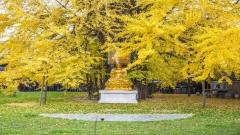
Qinglong Temple is located in the southern suburbs of Xi’an. It is the patriarch temple of the Tang Mi (Esoteric) School of Buddhism and the birthplace of the Japanese Shingon sect. The Japanese monk Kukai studied esoteric teachings here under Master Huiguo during the Tang Dynasty before returning to Japan to found the Shingon sect. The Kukai Monument in the temple symbolizes Sino-Japanese friendship. Qinglong Temple is famous for its cherry blossoms, in full bloom from late March to early April each year, with over ten varieties. The ginkgo trees are also worth seeing in autumn. Admission is free. Cherry blossom season weekends are crowded, so weekday mornings are recommended. It’s about a 15-minute bike ride from the Giant Wild Goose Pagoda, suitable for a combined visit. Qinglong Temple is small, allowing about an hour for a visit.
City Defense Attractions in Xi’an
City Wall
The Xi’an City Wall is the largest and best-preserved ancient city wall in China, stretching 13.7 kilometers. It was expanded during the Hongwu era of the Ming Dynasty on the foundation of the imperial city of Tang Chang’an. The top of the wall is 12 to 14 meters wide, allowing visitors to walk, bike, or take sightseeing carts. Biking the full circuit takes about 1.5 hours; walking takes about 3 hours. Yongning Gate (South Gate) is the main entrance, featuring a grand ceremony nightly. The wall features well-preserved watchtowers, arrow towers, and gate towers. From the wall, you can look down at the cityscape both inside and outside the ancient city. Admission is 54 RMB; bike rental is 45 RMB. It is recommended to get on the wall after 5:00 pm to enjoy the sunset while biking and see the wall lit up after dark. After descending at the South Gate, you can walk to the Bell Tower and the Muslim Quarter.
Drum Tower
The Drum Tower is located about 300 meters northwest of the Bell Tower. It was first built in the 13th year of the Hongwu era of the Ming Dynasty, four years earlier than the Bell Tower. Large drums were originally kept in the tower to mark the evening, signifying the end of the day. One remaining drum is 2.5 meters in diameter, one of the largest in China. The architectural style is similar to the Bell Tower but slightly larger. A plaque on the north side reads “Sheng Wen Yu Tian” (Sound Reaching Heaven). The Muslim Quarter is located behind the Drum Tower, easily accessible after visiting. Admission is 30 RMB, or 50 RMB for a combined ticket with the Bell Tower. It is recommended to visit the Bell Tower first, then the Drum Tower, a 5-minute walk between them. The Muslim Quarter around the Drum Tower is liveliest in the evening.
Local Culture Attractions in Xi’an
Muslim Quarter
The Muslim Quarter is Xi’an’s most famous food street, located behind the Drum Tower in the heart of the Muslim residential area. It gathers hundreds of snack stalls open late into the night. Roujiamo (Chinese burger), yangrou paomo (pita bread soaked in lamb soup), liangpi (cold noodles), zenggao (steamed rice cake), persimmon cakes, and sour plum drink are all must-try foods. The main street is crowded and noisy, but turning into nearby Huajue Alley or the big and small piyuan alleys leads to shops frequented by locals. Admission is free, open all day. It’s best to arrive after 7:00 pm to avoid afternoon crowds. Weekends and holidays are extremely crowded; weekday evenings are recommended.
Tang Dynasty Ever Bright City
The Tang Dynasty Ever Bright City is a 2.1-kilometer pedestrian street at the foot of the Giant Wild Goose Pagoda, themed on Tang Dynasty culture. The buildings on both sides mimic Tang style, spectacularly lit up at night. The street features a sculpture group of Tang Dynasty figures, including Emperor Taizong, Wu Zetian, Li Bai, and Du Fu. Street performances like the “Tang Dynasty Lady” and “Stone Man” are iconic. The sides of the street have restaurants and souvenir shops, very lively at night. Admission is free, open all day. It’s best to come after 8:00 pm when all lights are on and performances are most frequent. Enter from the South Square of the Giant Wild Goose Pagoda and walk south to Kaiyuan Square, about 30 minutes.
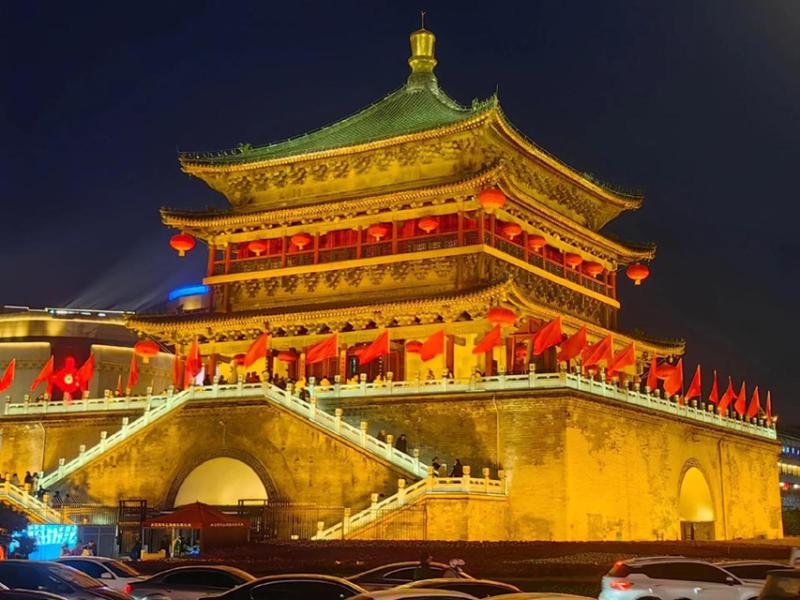
The Brightly Lit Tang Dynasty Ever Bright City
Museum Attractions in Xi’an
Shaanxi History Museum
The Shaanxi History Museum is located northwest of the Giant Wild Goose Pagoda. It was China’s first large-scale, modern national-level museum. The collection includes over 370,000 artifacts, providing a complete sequence from the Lantian Man to the Tang Dynasty. Treasures include the Tang Dynasty gilded silver beast-head cup, the gilded silver pot with dancing horse design, and the celadon pot with a loop handle. The museum’s Tang Tomb Murals Gallery houses a unique collection of Tang dynasty tomb murals. General admission is free, but reservations are required in advance via WeChat public account. Weekend tickets often sell out within hours of release. The Tang Tomb Murals Gallery costs an additional 270 RMB. Allow at least 3 hours. Morning light is best for viewing.
Stele Forest Museum
The Stele Forest Museum is located inside the South Gate city wall. It is China’s earliest and largest collection of stone steles. The museum houses over 4,000 stone steles, epitaphs, and stone carvings from the Han Dynasty to the Qing Dynasty. Famous exhibits include the Kaicheng Stone Classics, Yan Zhenqing’s Duobao Pagoda Stele, Liu Gongquan’s Xuanmi Pagoda Stele, and Huai Su’s Thousand Character Classic. Four of the six Zhaoling Horses are also kept here. The museum building itself is a cultural relic, originally the Confucius Temple of Xi’an. Admission is 65 RMB. Allow 2 to 3 hours. Morning light is good for viewing the details of the steles. The Stele Forest Museum is a 5-minute walk from Shuyuanmen, making it easy to combine visits.
Practical Tips for Xi’an Travel
Ticket Booking
Terracotta Warriors tickets can be booked in advance via the official WeChat public account. It’s recommended to book a week ahead during peak season. Free tickets for the Shaanxi History Museum and Xi’an Museum require reservations 7 days in advance via their public accounts. Weekend tickets are in high demand. Stele Forest Museum tickets can be bought on-site, but it’s recommended to buy online a day in advance on weekends to save time.
Transportation
The Terracotta Warriors and Huaqing Palace can be visited in one day. Take bus You 5 from the East Square of Xi’an Railway Station (about 1 hour). For downtown attractions, subway lines 2, 3, and 4 reach them easily. The Giant Wild Goose Pagoda and Small Wild Goose Pagoda have their own subway stops. The Muslim Quarter is best explored on foot; both areas are within 1 kilometer of the Drum Tower.
Must-buy Souvenirs
Replica terracotta figures at the Terracotta Warriors site exit range from 10 to several hundred RMB. Small, mass-produced versions are 10-30 RMB, suitable as gifts. The Stele Forest Museum sells rubbings (50-200 RMB) on rice paper from the actual stones, more valuable than printed copies sold at the site entrance. Zenggao and persimmon cakes from the Muslim Quarter only last a day or two, not suitable for long-distance travel. Sour plum drink mix packets can be taken home to brew.
Xi’an Is More Than Just the Terracotta Warriors
What surprises many travelers about Xi’an is how naturally history blends into daily life. Ancient walls still surround the city center, Tang Dynasty landmarks stand beside modern neighborhoods, and local food streets remain busy late into the night. Xi’an does not feel like an open-air museum frozen in time – it feels like a historic capital that people still genuinely live in today.
For international travelers visiting China for the first time, Xi’an is often one of the easiest cities to connect with Chinese history and culture in a more immersive way. The city also works well as part of a larger China itinerary, with convenient high-speed rail and flight connections to Beijing, Chengdu, Shanghai, Tibet, and Silk Road destinations. China Dragon Travel also offers customized Xi’an and multi-city China tours, helping travelers arrange transportation, hotels, and sightseeing more smoothly throughout their journey.