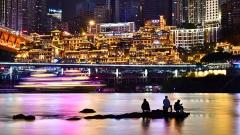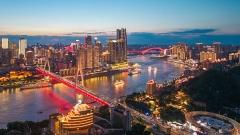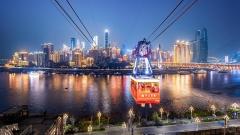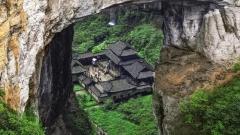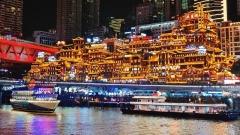

When travelers first arrive in Chongqing—the mesmerizing, vertically stacked “Cyberpunk” city built into the mountains—their immediate impressions are usually captured by the glittering night lights of Hongyadong, the surreal sight of monorails passing directly through residential buildings, or the sweeping views of the Yangtze River from the cable cars. However, for true explorers and culinary enthusiasts, the absolute soul of Chongqing is not found in its skyline. It is deeply etched into the sharp, numbing, and fiery aroma that blankets every street corner.
Within Chongqing’s fiercely competitive and dizzyingly complex food ecosystem, there exists a unique class of dining establishments. They do not boast flashing neon signs or luxurious storefronts. Their plating is practically non-existent, and their air conditioning units often look as though they haven’t been serviced since the turn of the century. Yet, paradoxically, these places command staggering, endless lines. No matter the hour, you will find corporate office workers, nomadic backpackers, and local tycoons who parked their luxury sports cars down the block, all willingly standing on the crowded sidewalk under the humid heat, waiting to cram themselves onto tiny, wobbling plastic stools.
In the local dialect, these legendary establishments are known as “Cangying Guanzi”—literally translated as “Fly Restaurants.” Far from being a deterrent, they represent the very pinnacle of local comfort food and the beating heart of Chongqing’s urban culture.
Why Are They Called “Fly Restaurants”? Decoding the Local Terms of Endearment
International visitors hearing the term “Fly Restaurant” for the first time usually knit their brows, an involuntary wave of skepticism washing over them regarding the establishment’s hygiene. However, in the culinary lexicon of Southwest China, the term is absolutely not derogatory. Instead, it is a badge of honor, a raw title of endearment dripping with “Jianghu” (underworld/folkloric) charisma.
The name stuck not because actual flies are swarming over the food, but because these establishments vividly mirror three distinct, highly cinematic characteristics:
Tiny, Microscopic Spaces
These shops are almost always tucked away inside decaying mid-century residential compounds (what locals call Jia Shu Qu), buried within the labyrinthine network of wartime air-raid shelters, or clinging precariously to the sharp bends of steep stone staircases (Tikan). The indoor footprint is often no larger than a few dozen square meters, barely fitting two or three tables. To accommodate the relentless flood of hungry patrons, the owners must expand their territory outward, spilling tables and stools onto the pavements, beneath the shade of banyan trees, or along the corridors of apartment blocks.
Patrons Swarming Like Flies
Because the flavors are so exceptionally mind-blowing, the moment the lunch or dinner rush hits, foodies from all walks of life gravitate toward the shop simultaneously. Like flies drawn to honey, they crowd the small storefront and the surrounding alleyways. The boisterous shouting of orders, the clinking of heavy beer bottles, and the roaring laughter blend into a symphonic chaos that radiates an intense, irresistible urban vitality.
Unapologetic Wear and Tear
Stepping into an authentic Fly Restaurant is like walking into a time capsule. You are greeted by yellowed white-tiled walls, weathered wooden square tables that have absorbed decades of chili oil, heavy canvas aprons worn by the staff, and old oscillating fans buzzing loudly in the corner. This environment is undeniably crude, yet by stripping away the polished pretension of fine dining, it fosters a profound sense of warmth, approachability, and authentic human connection.
The Four Irresistible Charms of Chongqing’s Fly Restaurants
In an era where dining concepts are constantly being modernized and standardized, why have Chongqing’s Fly Restaurants resisted corporate displacement? Why have they instead become the crown jewels of customized itineraries for premium travelers? Their survival relies on four unyielding strengths:
The “Jianghu Masters” of High-Heat Frying
The wok masters anchoring the kitchens of Fly Restaurants are the unrecognized wizards of the culinary underground. They do not rely on the calculated precision of modern molecular gastronomy; instead, they cook entirely by a muscle memory honed over decades of intense labor. Chongqing flavor profiles demand a heavy hand with oil, chilies, and Sichuan peppercorns (Zhong You, Zhong La, Zhong Ma), and Fly Restaurants push this to the absolute limit. House-fried chili crisps, hand-pounded ginger-garlic water, premium wild Sichuan peppercorns, and high-grade beef tallow collide violently in blazing woks over roaring flames. The resulting explosion of numbing, spicy, and savory depth possesses a soul that standardized chain restaurants can simply never replicate.
Shocking, Unmatched Cost-Performance (Value)
By completely bypassing the exorbitant rents of commercial shopping districts, the costs of luxury interior designers, and complex marketing campaigns, Fly Restaurants channel 100% of their capital and energy back into ingredient freshness and portion sizes. Here, for an incredibly modest price that frequently leaves travelers astonished, you are served massive portions of pristine meats and ultra-fresh local produce cooked to perfection.
The Equalizing Culture of the Square Table
In a high-end restaurant, diners are often expected to speak in hushed tones and mind their etiquette. Inside a Fly Restaurant, however, all social armor instantly shatters. Here, people sit shirtless in the summer heat, propping their feet up on crates of local beer, blasting themselves with roaring industrial fans while wiping sweat away as they feast. Whether you are a corporate executive in a bespoke suit or a local porter (Bangbang) who spent the day hauling freight up the city’s hills, everyone sitting around the greasy wooden table shares a single, equal identity: a devout lover of extraordinary food. This blunt, generous, and egalitarian atmosphere is the truest expression of Chongqing’s hospitality.
Brilliant Adaptation to Surreal Mountain Terrain
As a world-renowned mountain city, Chongqing’s architecture is layered vertically against cliffs and rivers. Many Fly Restaurants double as architectural anomalies. You might enter a shop on what appears to be the ground floor of a residential building, only to discover that the window looks out over a massive drop into a canyon. Other vendors place their tables directly on steep, outdoor stone steps, forcing diners to subtly balance their weight while eating. Dining in these spaces is not just a meal; it is a sensory adventure through urban geography.
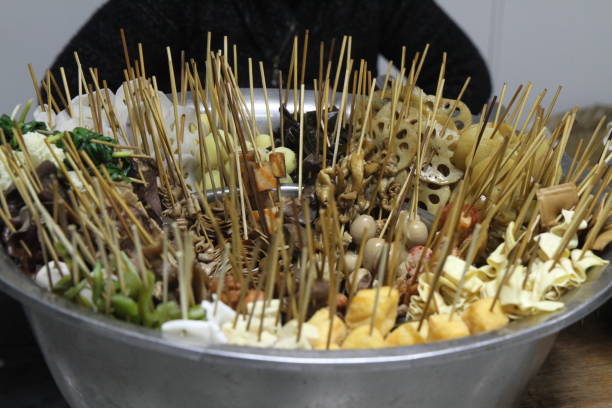
Eating Like a Local: An Insider’s Secret Map of Iconic Establishments
If you wish to experience the most authentic, comfortable, and soul-stirring culinary journey on your next trip to Chongqing, bypass the heavily curated influencer traps designed for mass tourism. Instead, follow the footsteps of local gourmands into these legendary categories of street-level dining:
Old-District “Bench Noodles” (Bandeng Mian) & “Staircase Noodles” (Tikan Mian)
In the older quarters of the city, such as Yuzhong and Jiulongpo districts, there are noodle stalls that don’t even own indoor seating. Every morning, the sidewalk becomes blanketed in high and low plastic stools. Diners sit on a low stool and use a slightly higher stool as their makeshift table—hence the famous name, “Bench Noodles.”
-
The Culinary Highlight: These minimalist stalls typically serve nothing but basic Chongqing small noodles (Xiaomian), minced pork noodles (Zajiang Mian), or beef noodles. The house-cooked yellow peas are velvety soft, melting beautifully into a brilliant red, incredibly aromatic chili oil broth laced with fresh scallions and ground Sichuan peppercorns. As you toss the noodles, every strand becomes coated in the dense, savory paste. The explosive synergy of numbing spice and wheat aroma is how locals jumpstart their day.
“Air-Raid Shelter Hot Pot” (Fangkongdong Huogu)
Chongqing is crisscrossed by a vast subterranean network of air-raid shelters carved out during World War II. The inventive and resilient people of Chongqing converted these deep, echoing tunnels into boiling, high-octane hot pot havens.
-
The Culinary Highlight: The interiors of these tunnels are naturally cool in the summer and warm in the winter, providing an escape from the elements. Sitting deep inside the cave, huddled over a boiling nine-grid copper pot (Jiugongge) thick with aged beef tallow and a mountain of dried chilies, the atmosphere is electric. Swirling sheets of fresh tripe (Maodu) and duck intestines (Yachang) are flash-cooked in the boiling oil for mere seconds. Eaten straight from a bowl of garlic and pure sesame oil, the rich, primal flavors of the tallow blend with the surreal, historic surroundings to create a profound dining experience.
The Old Compound “Jianghu Cuisine” (Jianghu Cai)
Jianghu Cuisine is a vital pillar of Chongqing’s food culture. It originated in roadside pit stops catering to long-haul truck drivers along mountain highways before migrating into the Fly Restaurants of secluded residential courtyards.
-
The Culinary Highlight: Think of legendary dishes like “Spicy Pointed-Pepper Chicken” (Jianjiao Ji), “Blazing Pork Intestines” (Huobao Feichang), or slow-simmered, melt-in-your-mouth pork trotters in yellow pea soup. The defining characteristic of Jianghu cuisine is that the ingredients are chopped finely and buried beneath a literal mountain of fresh green chilies, dried red peppers, and Sichuan peppercorns—part of the joy is hunting for pieces of succulent chicken hidden within the spices. Cooked over immense wok fires, the food carries an intense smoky charred aroma (Wok Hei). It is fiercely spicy, deeply satisfying, and pairs flawlessly with bowls of steamed white rice.
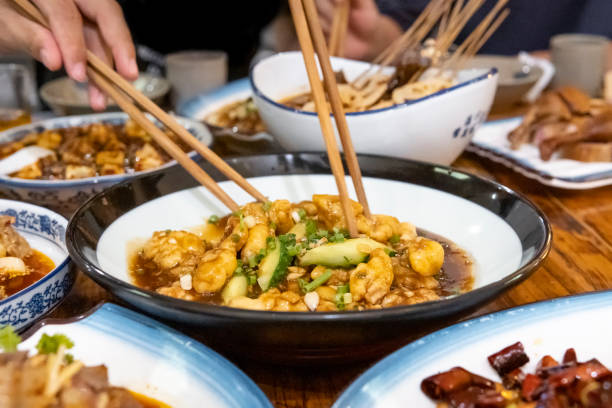
Finding Chongqing’s True Warmth Amidst the Smoke and Fire
It is often said that to truly understand a city, you must look away from its polished skyscrapers. You must wander through its wet markets, and you must eat at its curbside stalls.
Chongqing’s Fly Restaurants are exactly like the city and its people—unpretentious, raw, fiercely passionate, and profoundly straightforward. They do not offer elegant background music, and they will frequently require you to wait patiently on a noisy street corner. Yet, the moment that steaming bowl of numbing, spicy comfort is placed in front of you, all the exhaustion of travel dissolves instantly.
On your next journey to Chongqing, shed the tight armor of a typical tourist. Let an experienced local team guide you down an unassuming, slightly weathered alleyway, pull up a plastic stool, and dive into the rising steam of the city’s culinary underground. What you taste there will be far more than just an explosive meal; it will be the authentic, unforgettable soul of Chongqing itself.