Located in the lower reaches of the Wujiang River in southeastern Chongqing, about 129 kilometers from the downtown, Wulong Karst Tourism Area stands as the core of China’s South China Karst World Natural Heritage, alongside being a national tourist resort and 5A-rated scenic spot. For hundreds of millions of years, geological evolution has sculpted its diverse karst landforms—natural bridges, ground fissures, and caves—blending breathtaking natural wonders with rich folk traditions. Whether you’re a movie buff chasing iconic filming locations, an outdoor enthusiast craving landscapes, or a family on a leisure trip, this destination promises unique delights. This guide covers key attractions, transportation, cuisine, accommodation, and more, helping you plan an efficient and immersive journey to explore the charm of this natural secret.
Must-see Attractions in the Wulong Karst
Centered on Wulong urban area, the tourism area radiates with several core scenic spots, each boasting distinct features. Plan your route based on your travel days to avoid a superficial visit.
Three Natural Bridges – Cinema’s Favorite Geological Marvel
As the world’s largest cluster of natural bridges, Three Natural Bridges is the signature attraction of Wulong Karst and a key filming location for Curse of the Golden Flower and Transformers: Age of Extinction, hailed as a “Heritage of the Earth, Wonder of the World.” Three natural stone bridges—Tianlong Bridge, Qinglong Bridge, and Heilong Bridge—stretch in sequence, each averaging over 300 meters in height and with a total span exceeding 503 meters. Such a grand cluster of natural bridges within one kilometer is unparalleled globally.
The walking route is approximately 2 kilometers, mostly downhill, so comfortable sneakers are a must. Upon entering the scenic area, take the sightseeing elevator down to the valley floor to instantly experience the dramatic visual contrast from mountain top to canyon. At the elevator exit lies the relics of the post station from Curse of the Golden Flower, perfect for photos. Along the way, you’ll pass attractions like Tianlong Sinkhole, Qinglong Pond, and Heilong Cave. Look up to see the bridge arches slicing the sky, listen to the gurgling streams beneath your feet, and admire the cascading waterfalls on the cliffs—every shot is a masterpiece. The best shooting time is morning, when sunlight penetrates the canyon, highlighting the rock textures and light-shadow layers.
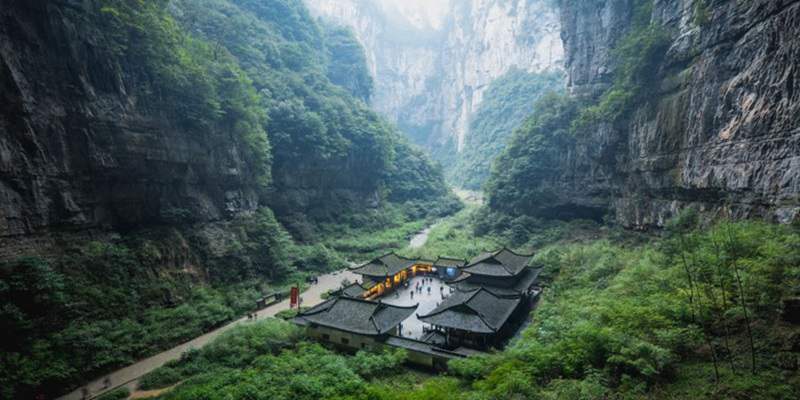
Three Natural Bridges
Furong Cave – The Underground Art Palace
Formed over 1.2 million years ago during the Quaternary Pleistocene, Furong Cave developed in ancient Cambrian dolomitic limestone and ranks among the world’s top three caves, known as the “Underground Art Palace.” The deep cave maintains a stable temperature of 16.1°C, offering a comfortable visit year-round, whether in sweltering summer or freezing winter. The main cave stretches 2,700 meters, with a 1,860-meter tourist trail, and its magnificent hall covers 11,000 square meters—truly spectacular.
The cave’s highlights are its sedimentary landscapes, with five must-see attractions: “Source of Life,” “Giant Waterfall Curtain,” “Coral Lake,” “King of Stone Flowers,” and “Dogtooth Crystal Pool.” The entire tour takes about 1.5 hours on flat paths, suitable for visitors of all ages. Bring a light jacket if visiting in summer. For photographers, flash is prohibited in some areas to protect the landscapes. Detailed guided tours are available at the entrance—highly recommended to learn about the formation of these natural wonders.
Fairy Mountain National Forest Park – A Southern Grassland Paradise
Covering 100 square kilometers with an altitude ranging from 1,650 to 2,033 meters, Fairy Mountain has an average annual temperature of 11.2°C, earning titles like “Southern Pasture,” “Oriental Switzerland,” and “Eden on Earth.” Here, 330,000 mu of forests blend with 100,000 mu of alpine grasslands, featuring forests, peaks, meadows, and snowfields—an ideal resort for spring outings, summer escapes, autumn foliage, and winter snow viewing.
The scenic area offers over 20 recreational activities, including alpine golf, horse riding, skiing, grass sliding, and go-karting. Horse riding and grass sliding are particularly popular, letting you experience the thrill of galloping across the grasslands. The core areas are the Great Grassland and Horse Racing Field—lush and green in summer, with cattle and sheep grazing leisurely, perfect for picnics and camping. In winter, Fairy Mountain is transformed by snow, a rare snow-watching destination near Chongqing. Given its large size, the sightseeing train is recommended for a time-saving and effortless tour.
Longshui Gorge Ground Fissure – Nature’s Three-Dimensional Sculpture
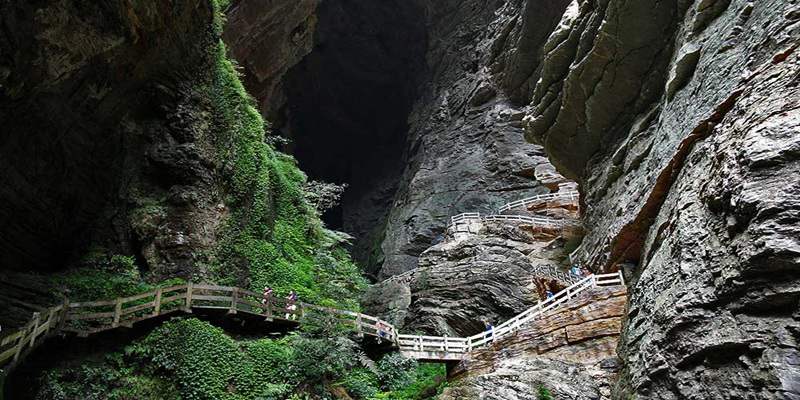
Located 15 kilometers from Wulong urban area, Longshui Gorge Ground Fissure was formed by tectonic movements tens of millions of years ago, representing a typical medium-deep mountain canyon karst landform and a key part of Wulong Karst Tourism Area. Stretching 5 kilometers long, with a depth of 200-500 meters, the fissure is 20 meters wide at its broadest and less than 1 meter at its narrowest. Steep cliffs rise on both sides, covered with primitive vegetation and twisting vines, creating stunning scenery.
The walk takes about 2 hours, with some slippery sections—non-slip shoes are essential. The scenic area consists of three parts: the entrance fissure, the middle cave exit, and the canyon. Along the way, you can admire attractions like “Nine Shoals and Eighteen Pools,” “Natural Mini Stone Bridge,” “Nine Heavens Waterfall,” and “One-Line Sky.” A stream flows through the fissure, and looking up, only a narrow strip of sky is visible—so quiet you can hear your own heartbeat, ideal for visitors who love serene environments. It’s recommended to visit alongside Three Natural Bridges, as they are close to each other, saving travel time.
Longshui Gorge Ground Fissure
Other Featured Attractions
Furong River: The largest tributary of the lower Wujiang River, stretching 32 kilometers within Wulong. With clear water and dense vegetation on both banks, it features natural and cultural attractions like Red Army Ferry, Agate Waterfall, and Reclining Buddha Cliff. Take a cruise to enjoy the canyon scenery.
Tiankeng Village: Located in the core of the karst world heritage, it is home to 50 Tujia indigenous households and was a filming location for Where Are We Going, Dad? Season 2. Experience Tujia customs and watch intangible cultural heritage performances here.
Baima Mountain: Facing Fairy Mountain across the Wujiang River, it has a forest coverage rate exceeding 90% and an average altitude of 1,200 meters, perfect for summer retreats and hiking. The tea garden scenery at Tianchi Ping in the core area is uniquely charming.
Transportation Guide: Convenient Access via Multiple Ways
Wulong Karst Tourism Area is easily accessible by self-driving, public transport, or air—choose the option that suits you best.
Self-driving: Departing from downtown Chongqing, take the Chongqing-Xiangxi Expressway (West Line). Exit according to your destination: take Baima Mountain Interchange for Baima Mountain Scenic Area, Wulong South Interchange for Furong Cave/Furong River, or Fengshan Interchange followed by Wulong urban area for Fairy Mountain. The journey takes about 1.5-2 hours with good road conditions and clear signs along the way.
Public transport: Take a train from Chongqing North Railway Station to Wulong Station (about 1.5 hours). After arrival, take a scenic area shuttle bus or taxi to each attraction. Long-distance buses depart from Chongqing Sishili Bus Hub directly to Wulong Bus Station (about 2 hours). Buses to Fairy Mountain and other scenic spots are available near the station, offering great value for money.
Air: Fly to Wulong Fairy Mountain Airport, which is close to Fairy Mountain National Tourist Resort. Shuttles or taxis connect the airport to all scenic areas, ideal for long-distance travelers seeking quick access.
Must-Try Cuisine: Taste the Flavors of Wulong
No trip to Wulong is complete without savoring local specialties—from steaming hot pots to fresh river fish, there’s something to satisfy every palate.
Spicy Lamb Hot Pot: Made with locally pastured black goats, simmered with chili and Sichuan pepper, the meat is tender and odor-free. Recommended: Dailao Yao Fish & Lamb Hot Pot in Fairy Town, around 80 RMB per person—warm and comforting, perfect for autumn and winter.
Wujiang River Fish: Try Yuelai Restaurant in Jiangkou Town. Freshly caught fish cooked in a spicy broth, tender and flavorful, around 60 RMB per person—experience the unique taste of river fresh.
Bowl Lamb: Thinly sliced lamb served with tofu pudding and rice, light and refreshing, around 50 RMB per person—a classic local snack.
Other specialties include Yangjiao Dried Tofu (great as a souvenir, around 15 RMB per bag, available everywhere in scenic areas), Wulong Bayberry Juice, and Tujia Preserved Pork.
Travel Tips: For a Smoother Chongqing Journey
Ticket Reservation: Book tickets for all scenic areas via the WeChat Mini Program “Wulong Karst Tourism Scenic Area,” official WeChat account “Wulong Scenic Area,” or platforms like Qunar, Meituan, and Ctrip. Some scenic areas have different opening hours for peak and off-seasons: 8:00—17:00 from May 1 to August 31, and 8:30—16:30 from September 1 to April 30 of the following year. Check in advance and reserve tickets.
Clothing Recommendations: Most scenic areas feature mountains and canyons—wear comfortable sneakers or hiking shoes. For summer visits, bring sun protection (sunhat, sunscreen) and a light jacket for caves. For winter trips to Fairy Mountain, Baima Mountain, etc., pack warm clothes and non-slip footwear.
Itinerary Planning: For a 2-day trip: Day 1: Visit Three Natural Bridges and Longshui Gorge Ground Fissure, stay in Fairy Town at night to enjoy local cuisine. Day 2: Explore Fairy Mountain National Forest Park and return in the afternoon. For a more in-depth experience (3-4 days), add Furong Cave, Furong River, and Tiankeng Village to fully immerse yourself in Wulong’s charm.
The Beauty of Wulong Karst: A Hassle-Free Journey Choice
The allure of Wulong Karst lies in the grandeur of natural bridges, the splendor of caves, and the vastness of grasslands—every landscape is worth savoring. Here, you can touch the traces of Earth’s hundreds of millions of years of evolution and feel the rich Tujia folk customs. For a more hassle-free journey, consider China Dragon Travel. With extensive local tourism experience, it seamlessly connects scenic routes and offers customized services, letting you focus on the stunning karst landscapes without worrying about transportation or tickets. Pack your bags, take this guide, and embark on your own secret journey to Wulong!