
If you picture Tibet as a land of monasteries and high desert plateaus, Eastern Tibet will surprise you. Stretching across the traditional Kham region — including western Sichuan, northwestern Yunnan, and parts of Qinghai — this is a world of dense forests, glacier-capped peaks, turquoise lakes, and river canyons that rival any nature destination in Asia. For travelers who want raw, untouched landscapes without the crowds of Lhasa, Eastern Tibet is where the plateau shows its wildest, greenest side.
Key Takeaways
- Eastern Tibet (Kham) is greener and lower in elevation than Central Tibet, with forests, meadows, and river valleys alongside snow peaks.
- Top nature spots include Yading Nature Reserve, Meili Snow Mountain, Ranwu Lake, and Bomi, each offering a different landscape experience.
- Autumn (September–October) is widely considered the best season, with golden forests and clear mountain views; spring and summer bring wildflowers and alpine grasslands.
- The region supports rich biodiversity, including habitats for black-necked cranes and snow leopards, making it a draw for wildlife and photography enthusiasts.
- Responsible travel — hiring local guides, respecting Tibetan communities, and minimizing environmental impact — helps protect this fragile high-altitude ecosystem.
What Is Eastern Tibet (Kham)?
Eastern Tibet refers to the historical Kham region, a vast area that spans present-day western Sichuan, northwestern Yunnan, and parts of Qinghai. Unlike Central Tibet (the U-Tsang region around Lhasa), Kham sits at generally lower elevations, where deep river gorges carved by the Yangtze, Mekong, and Salween rivers create dramatic changes in climate and vegetation within short distances. This geographic diversity is what gives Eastern Tibet its reputation as the most ecologically varied part of the Tibetan Plateau — a place where snow peaks, pine forests, and alpine meadows exist within view of one another.
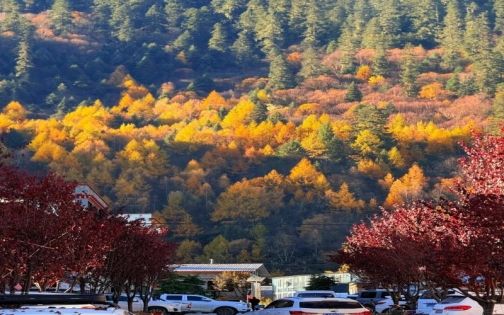
Nyingchi
Why Nature Lovers Love Eastern Tibet
Untouched forests and alpine meadows
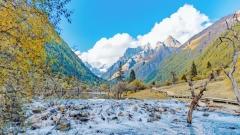
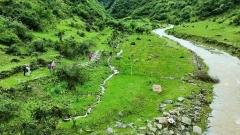
Much of Kham remains covered in old-growth conifer forest and rolling grassland that has largely escaped the development seen in more accessible parts of China. Wide alpine meadows dotted with grazing yaks and seasonal nomad tents stretch toward the horizon, framed by distant snow peaks. Because many of these areas sit far from major cities, they retain a genuinely wild character — you can walk for hours through pine and rhododendron forest without encountering another traveler, something increasingly rare anywhere on the plateau.
Snow mountains and glaciers
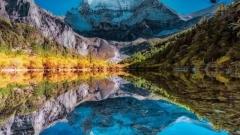
Eastern Tibet is home to some of the most photogenic peaks in China, including Yading’s sacred trio of Chenrezig, Jampelyang, and Chana Dorje, as well as Meili Snow Mountain near the Yunnan border. These peaks combine glacier ice, dense forest, and Tibetan Buddhist pilgrimage culture in a single view, since many of them are considered sacred and are circled by pilgrims on multi-day kora routes. The contrast between glinting glaciers above and green forest below, often within the same frame, is part of what makes Eastern Tibet’s mountains feel so different from the drier peaks of Central Tibet.
High-altitude sacred lakes
Glacial lakes such as Ranwu Lake and Cuoka Lake reflect surrounding snow peaks in still, mineral-blue water that shifts in color with the light and season. Many of these lakes hold deep spiritual significance for local Tibetan communities, who consider them sacred and visit them for pilgrimage and prayer, adding a layer of cultural meaning to their natural beauty. For photographers, the combination of glassy water, forested shoreline, and snow-capped backdrop makes these lakes some of the most rewarding stops on any Eastern Tibet itinerary.
Dramatic canyons and rivers
The Mekong (Lancang) and Yangtze (Jinsha) rivers cut through Kham in steep, forested canyons, creating some of the most striking road-trip scenery in the region. Driving along these river valleys, the landscape can shift from subtropical valley floors thick with vegetation to alpine snowline within a single day, a dramatic elevation change rarely seen elsewhere on the plateau. These canyons also shape local life, with terraced fields and small Tibetan villages clinging to the slopes above the water.
Wildlife and rare species
The region’s varied elevation, from warm river valleys to high alpine ridgelines, supports habitats for black-necked cranes, blue sheep, red pandas in some southern forest pockets, and elusive snow leopards in the higher ranges. This ecological range has made Eastern Tibet increasingly popular with wildlife watchers and photographers seeking less-visited terrain than the more famous nature reserves of Southwest China. Conservation efforts in areas like the Sanjiangyuan and Yading reserves have also helped protect these habitats from overdevelopment.
Distinct seasonal scenery
Eastern Tibet transforms dramatically across the year, giving travelers a reason to return in different months. Rhododendrons and wildflowers blanket the hillsides in spring, meadows turn lush and deep green through summer, forests erupt into fiery red and gold in autumn, and winter leaves the high peaks quiet and snow-draped with far fewer visitors. Few destinations on the Tibetan Plateau offer this much visual variety within a single region.
Top Nature Destinations in Eastern Tibet
Yading Nature Reserve
Often called the “last Shangri-La,” Yading is arguably Eastern Tibet’s signature nature destination, centered on three snow-capped holy peaks — Chenrezig, Jampelyang, and Chana Dorje — that rise above turquoise alpine lakes and pine forest. The reserve offers everything from short walks to Pearl Lake and Milk Lake to multi-day treks around the sacred peaks, along with horseback options for travelers who want the views without the full physical effort. Its combination of accessibility, scenery, and spiritual significance makes it the natural starting point for most Eastern Tibet nature itineraries.
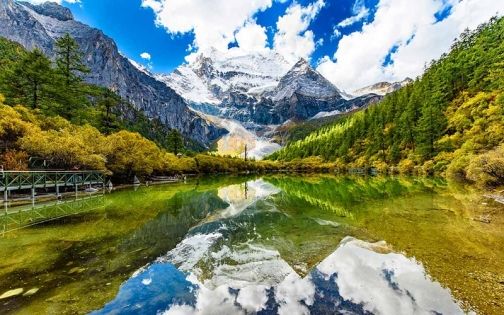
Daocheng Yading
Meili Snow Mountain
Straddling the Yunnan–Tibet border, Meili is revered as one of Tibetan Buddhism’s most sacred mountains, and its main peak, Kawagarbo, has never been officially summited out of respect for local belief. The mountain is a prime spot for sunrise photography, when its glaciers and thirteen peaks catch the first light in shades of gold and pink — a moment locally known as the “golden summit.” Nearby viewpoints and the small town of Feilaisi make it easy to base yourself here for a few days of mountain watching.
Ranwu Lake
A glacier-fed lake surrounded by forested mountains, Ranwu is one of the most scenic stops along the Sichuan–Tibet Highway and a favorite for travelers driving between Eastern Tibet’s major destinations. Its water shifts between deep blue, jade green, and milky turquoise depending on season and glacial melt, and nearby glaciers such as Laigu are accessible on short hikes from the lakeshore. The area’s mix of accessibility and dramatic scenery makes it a natural overnight stop on longer road-trip itineraries.
Bomi (Peach Blossom Valley & Ancient Spruce Forest)
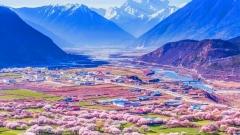
Known for its spring peach blossoms and centuries-old spruce forests, Bomi has an almost alpine-forest feel that surprises many travelers who expect Tibet to be dry and treeless. In spring, the valley’s peach trees bloom against a backdrop of snow peaks, while the region’s ancient spruce forest, some trees estimated to be hundreds of years old, offers cool, shaded walking trails at other times of year. Bomi works well as a quieter, less-touristed stop between Ranwu and other major Eastern Tibet destinations.
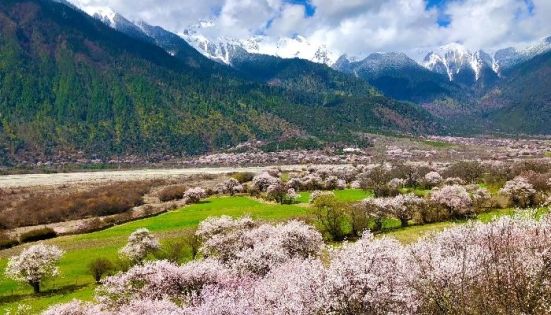
Bomê Peach Blossom Valley
Litang and the Yading grasslands corridor
The high-altitude grasslands and rolling hills along the route to Yading offer some of the most open, big-sky scenery in the region, with herds of yaks grazing against a backdrop of distant peaks. Litang town itself, one of the highest towns in the world, serves as a good acclimatization stop and a base for exploring the surrounding grassland and its traditional horse festival culture. Travelers who enjoy wide-open landscapes and nomadic Tibetan culture often find this corridor as memorable as the destinations at either end of it.
Shangri-La and Diqing (Yunnan side)
Bordering the southern edge of Kham, the Diqing Tibetan Autonomous Prefecture blends Tibetan culture with landscapes that shift from subtropical valleys to alpine terrain within a short distance. The area includes forested nature reserves such as Pudacuo National Park, along with highland lakes and meadows that make it an easy add-on for travelers combining Eastern Tibet with a Yunnan itinerary. Because it is more developed for tourism than much of Kham, it also offers a gentler introduction to the region’s landscapes for travelers new to high-altitude travel.
Best Time to Visit for Nature Lovers
Spring (April–May): Rhododendrons and wildflowers bloom across lower valleys; ideal for travelers who want fewer crowds and fresh greenery.
Summer (June–August): Grasslands turn deep green, rivers run full, and wildflower meadows peak — good for trekking, though this is also the rainy season in parts of the region.
Autumn (September–October): Widely regarded as the best season, with golden and red foliage, clear skies, and excellent visibility for mountain photography.
Winter (November–March): A quieter, more austere season with snow-capped peaks and fewer travelers, suited to those seeking solitude over lush scenery.
Eco-Travel Tips for Responsible Exploration
Eastern Tibet’s ecosystems are high-altitude and slow to recover from damage, so responsible travel matters here more than in most destinations. Stick to marked trails in nature reserves, carry out all trash, and avoid disturbing wildlife or grazing livestock. Hiring local Tibetan guides not only improves your understanding of the region’s culture and geography but also directs tourism income back into local communities. When visiting sacred sites — mountains, lakes, or monasteries — follow local customs, such as walking clockwise around religious structures and asking before photographing people.
Practical Travel Tips
Most of Eastern Tibet sits above 3,000 meters, and some routes cross passes over 4,500 meters, so acclimatization matters — spend a day or two at moderate elevation before pushing higher, and stay hydrated. The most common overland routes into the region start from Chengdu (via the Sichuan–Tibet Highway) or from Shangri-La and Lijiang in Yunnan. For a nature-focused trip, plan at least 7–10 days to comfortably cover multiple destinations without rushing between high-altitude stops. Accommodation ranges from simple Tibetan homestays to small eco-lodges near major nature reserves, both of which offer a more immersive alternative to city hotels.
Ready to Explore Eastern Tibet?
Eastern Tibet offers something increasingly rare: vast, biodiverse landscapes that remain largely untouched by mass tourism, paired with genuine Tibetan culture at every stop. For travelers who want more than temples and cityscapes — who want forests, glaciers, wildlife, and silence — Kham delivers an experience that few other regions in Asia can match. Ready to explore Eastern Tibet’s wild side? Browse our Eastern Tibet nature itineraries or get in touch to build a custom trip with a local guide.