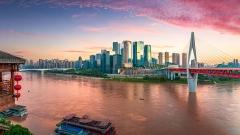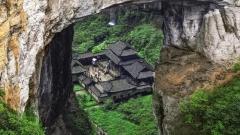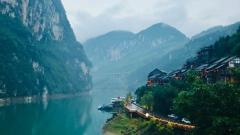

For visitors planning to travel to China, understanding China’s landforms is the key to unlocking this land. China has a vast territory with complex and highly diverse landforms. From the towering “Roof of the World” to the gentle plains along the East China Sea, from the desolate inland basins to the green Jiangnan Hills, each type of landforms has shaped unique natural landscapes, climatic characteristics, and cultural customs. Whether you are a mountaineer who loves outdoor adventures, a casual traveler who enjoys rural scenery, or an explorer curious about cultural relics, you can find your favorite place in China’s diverse landforms. Next, let’s step into the wonderful world of China’s landforms and discover those unmissable tourist treasures.
Call of the Roof of the World: The Snowy Sacred Land Hidden in China’s landforms
When it comes to China’s landforms, the Qinghai-Tibet Plateau is undoubtedly the most iconic. It is not only the highest region in China but also the highest plateau in the world, known as the “Roof of the World”. With an average altitude of over 4,000 meters, the unique plateau landforms has created extremely magnificent natural landscapes. For foreign visitors, coming here is like breaking into a pure snowy sacred land. On the Qinghai-Tibet Plateau, you can see the majestic Himalayas stretching across the south, with Mount Everest, the world’s highest peak, standing tall among them. Its snow-capped peak glistens in the sun, attracting countless mountaineers to challenge it. In addition to the towering mountains, there are many crystal-clear blue lakes scattered on the plateau, such as Namtso and Yamdrok Lake. The lake water is so clear that you can see the bottom, reflecting the surrounding snow-capped mountains and white clouds, presenting a picturesque scene. Although the air here is thin, the sky is extremely blue, and the white clouds seem within reach. At the same time, the unique landforms has nurtured the brilliant culture of the Tibetan people. Famous cultural relics such as the Potala Palace and Jokhang Temple are embedded on the plateau, allowing you to feel the strong ethnic customs while admiring the magnificent landforms. However, it should be noted that the plateau landforms has a cold climate with large temperature differences between day and night. You need to prepare warm clothes and take precautions against altitude sickness when traveling here.
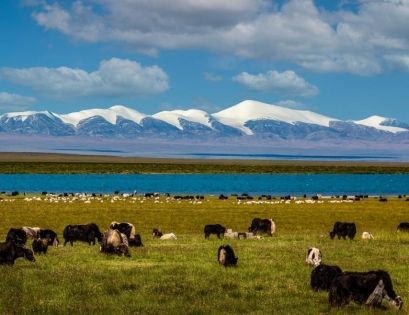
Scenery along the Qinghai–Tibet Railway
Surprises in Basins: Contrasting Scenery in China’s landforms
Basins are another distinctive landform type in China’s landforms. They have flat landforms and are surrounded by high mountains, forming unique geographical units and containing completely different landscapes. The Sichuan Basin in southwestern China is undoubtedly the outstanding representative of basin landforms, known as the “Land of Abundance”. With flat landforms, mild and humid climate, it is rich in grain and various specialties, and also has unique natural and cultural landscapes. Surrounded by mountains such as the Qinling Mountains and the Hengduan Mountains, the Sichuan Basin is often shrouded in light mist due to the landforms, adding a hazy beauty to cities and villages. This is also the reason why Chongqing is called the “Mountain City” and “Fog City”. In the basin, you can walk into Kuanzhai Alley in Chengdu, taste authentic hot pot and snacks, and experience the leisurely Bashu culture; you can also visit Mount Emei and Leshan Giant Buddha to admire the beautiful mountain scenery and magnificent Buddhist statues. The Tarim Basin in northwestern China, however, presents a completely different scene from the Sichuan Basin. As China’s largest inland basin, it is home to the Taklamakan Desert, China’s largest desert, due to the influence of landforms and climate. The sand dunes in the desert roll and undulate, forming various shapes under the action of the wind. At sunset, the golden desert is dyed crimson by the setting sun, creating a stunning scene. In addition, the oases on the edge of the Tarim Basin are also unmissable attractions. With gurgling water and lush green trees, they form a sharp contrast with the surrounding desert, demonstrating the diverse charm of basin landforms.
Endless Fertile Plains: The Liveliness of Human Life on China’s landforms
If plateaus and basins show the grandeur and uniqueness of China’s landforms, then plains present its gentle and peaceful side, and are important areas for nurturing human life in China’s landforms. The North China Plain and the Middle and Lower Reaches of the Yangtze River Plain are the two major plains in China. With flat and open landforms and fertile soil, they are China’s major grain-producing areas and also home to many prosperous cities and historical relics. Located in northern China, the North China Plain has distinct four seasons. In spring, the wheat fields roll like waves; in autumn, the rice fields are filled with a rich fragrance, presenting a charming rural scene. Cities such as Beijing and Tianjin on the plain are not only modern international metropolises but also ancient capitals with a long history. In Beijing, you can climb the Great Wall and feel the perfect combination of ancient military defense projects with mountain and plain landforms; you can also walk into the Forbidden City to appreciate the grandeur of imperial architecture. The Middle and Lower Reaches of the Yangtze River Plain, located in southern China, is in the subtropical monsoon climate zone with abundant rainfall and a crisscross network of rivers, known as the “Land of Fish and Rice”. Cities such as Suzhou and Hangzhou here have long been praised as “Above there is heaven, below there are Suzhou and Hangzhou”. The flat landforms has created well-proportioned water towns. Ancient towns such as Wuzhen and Zhouzhuang are built along the water, and the scene of small bridges, flowing water and houses is full of poetic charm. When traveling in these plain areas, you can easily travel between cities and villages, taste fresh agricultural products and aquatic products, feel the integration of Chinese traditional culture and modern civilization, and experience the warmth and vitality brought by China’s landforms.
Graceful and Diverse Hills: The Pastoral Poetry in China’s landforms
Hills have gentle undulations and low altitudes, and are widely distributed in China’s landforms, especially concentrated in the southeast region, such as the Jiangnan Hills and the Fujian-Zhejiang Hills. This type of landforms is not as grand as plateaus nor as flat as plains, but with its graceful and diverse style, it has become the most pastoral part of China’s landforms, very suitable for casual travel. The Jiangnan Hills span provinces such as Jiangxi, Hunan, and Zhejiang. With a warm and humid climate and abundant rainfall, the unique hilly landforms makes the mountains here not high but layered, covered with lush green trees. Every spring, the tea gardens on the hills are full of greenery. The busy figures of tea farmers in the tea gardens and the surrounding scenery form a beautiful pastoral picture. Well-known teas such as Longjing from Hangzhou and Maofeng from Huangshan are produced in this area. You can walk into the tea gardens, experience the fun of picking tea leaves, and taste freshly brewed tea. In addition to tea gardens, the Jiangnan Hills area also has many well-known tourist attractions, such as Huangshan and Lushan. Although these mountains are located in the hilly area, they are world-famous for their unique mountain shapes, sea of clouds, and hot springs. The four wonders of Huangshan – peculiar pines, strange rocks, sea of clouds, and hot springs – attract countless foreign visitors; Lushan has become a famous summer resort for its cool climate and beautiful scenery. When traveling in the hilly areas, you can walk along the paths in the mountains, breathe fresh air, and also walk into ancient villages built against the mountains to feel the simple folk customs of the local people.
Majestic and Precipitous Mountains: The Adventure Paradise in China’s landforms
Mountains are an important part of China’s landforms, accounting for a large proportion of China’s land area. These mountainous landforms are majestic and precipitous with unique scenery, making them a paradise for outdoor adventure enthusiasts. In addition to the aforementioned Himalayas, China has many famous mountains, such as the Qinling Mountains, Huashan Mountain, and the Five Great Mountains, each with its own unique charm. The Qinling Mountains are the geographical dividing line between northern and southern China. Stretching for hundreds of kilometers, the mountains are majestic with dense vegetation. It not only has magnificent natural landscapes but also is home to rare wild animals such as giant pandas and golden monkeys, making it an important nature reserve in China. Huashan Mountain is famous for its precipitousness and is known as the Western Mountain among the Five Great Mountains. With steep mountains and towering cliffs, the climbing path is extremely dangerous, and there is a saying that “there is only one road to Huashan”. But it is precisely this precipitous landforms that attracts countless adventurers to challenge it. When you climb to the top of Huashan Mountain and overlook the mountains below, you will feel an unparalleled sense of accomplishment. The other four of the Five Great Mountains – Taishan, Hengshan (Southern), Hengshan (Northern), and Songshan – also have their own characteristics: Taishan is majestic, Southern Hengshan is beautiful, Northern Hengshan is precipitous, and Songshan is ancient. They are not only masterpieces of natural landscapes but also important carriers of Chinese traditional culture. Countless inscriptions by literati and ancient temples are left on the mountains. When traveling in mountainous landforms, you can experience the fun of climbing, admire the magnificent mountain scenery, and also explore the waterfalls, canyons, and karst caves in the mountains to feel the uncanny craftsmanship of nature. However, when traveling to the mountains, you should pay attention to weather changes and landforms dangers, and take good safety protection measures.
Myriad Styles of the Coastline: The Coastal Wonders of China’s landforms
China not only has a vast inland landforms but also a long coastline. From north to south, the coastal landforms is diverse with different scenery, showing countless styles, making it an ideal place for foreign visitors to enjoy coastal tourism. The Liaodong Peninsula and Shandong Peninsula in northeastern China have tortuous coastlines and many rocky beaches. The sea water here is clear and the sea breeze is cool, making it a great summer resort. The beaches in Qingdao have fine sand, and there are many European-style buildings around, full of exotic charm; the coastal road in Dalian has beautiful scenery, along which you can enjoy the magnificent coastal landscapes and unique rocky landforms. Coming to the Fujian-Guangdong region in southeastern China, the coastal landforms is more diverse, with both gentle beaches and unique karst coasts. Gulangyu Island in Fujian is a beautiful island with beautiful scenery and a strong literary atmosphere. The red-brick buildings around the beach set off against the blue sky and sea, forming a pleasant scene. Xunliao Bay in Guangdong is famous for its clean beaches and clear sea water. The coastline here stretches for several kilometers, making it a great place for beach leisure and water sports. Hainan Island in southern China is undoubtedly a top destination for coastal tourism. The island has many high-quality beaches, such as Yalong Bay and Sanya Bay. The beaches are as white as snow, the sea water is as blue as gemstones, and the underwater coral reef resources are rich, making it an excellent choice for diving and beach vacations. In these coastal landforms areas, you can sunbathe, swim in the sea, taste fresh seafood, and feel the comfort and relaxation brought by the ocean.

The sea at Sanya Bay
Travel According to landforms: Travel Wisdom from China’s landforms
The diversity of China’s landforms determines the richness of its tourism resources, but it also means that foreign visitors need to make corresponding preparations according to the characteristics of different landforms when planning their trips to travel better. For visitors traveling to plateau landforms such as the Qinghai-Tibet Plateau, due to the high altitude and thin air, they need to prepare in advance to adapt to the plateau environment, avoid strenuous exercise, and carry drugs for preventing altitude sickness and warm clothes. When traveling to desert areas such as the Tarim Basin, attention should be paid to sun protection, sand prevention, and water supplementation, and avoid long-term outdoor activities during high-temperature periods. Traveling in plain areas is relatively convenient for transportation, and it is suitable to plan trips that combine cities and villages to experience different lifestyles. However, it is necessary to carry appropriate clothes according to the season – the northern plains are cold in winter, and the southern plains are hot and rainy in summer. In hilly and mountainous landforms areas, the landforms is relatively complex. When climbing, you should choose appropriate routes and equipment, pay attention to the weather forecast, and avoid climbing in rainy days or bad weather. For tourism in coastal landforms areas, attention should be paid to tide changes and marine weather. When carrying out water sports, you should choose regular venues and equipment to ensure safety. Each type of landforms has its unique charm. As long as you make plans and preparations according to the landforms characteristics, you can fully experience the wonderful travel experience brought by China’s landforms and gain an unforgettable journey.
Understand China’s landforms: Practical Wisdom for a Great Journey
The diversity of China’s landforms is the most precious gift from nature to this land. It not only shapes magnificent natural landscapes but also nurtures brilliant cultural heritage. From the sacredness of the snowy plateau to the grandeur of the basin desert, from the warmth of the plain countryside to the beauty of the hilly mountains, and then to the romance of the coastal shore, each type of landforms is telling you the unique charm of China. For foreign visitors, stepping into China’s landforms is not only a visual feast but also a cultural exploration and spiritual purification. Whether you like exciting adventures or leisurely vacations, whether you are fond of natural landscapes or love cultural relics, you can find your own tourist paradise in China’s diverse landforms. Now, pack your bags, plan your trip, step into the wonderful world of China’s landforms, and start a fantastic journey full of surprises and touches. I believe that the diverse landforms of this land will definitely leave you with unforgettable beautiful memories.