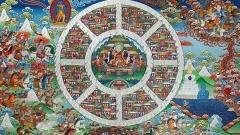

Visiting glaciers in Tibet is a key goal for many travelers. The success of this journey relies on sufficient information and practical preparations. This article aims to provide a systematic action guide, detailing the famous and accessible glaciers in Tibet, analyzing their respective characteristics and suitable groups of travelers, and step-by-step explaining the entire process from itinerary planning, document processing, equipment preparation to on-site safety regulations.
What Are the Famous Tibet Glaciers?
Tibet Plateau is home to numerous glaciers. The following four are common in travel routes, highly accessible, and representative in landscape. Understanding their differences is the first step in making a plan.
Midui Glacier: A Low-Altitude Choice for First-Time Visitors
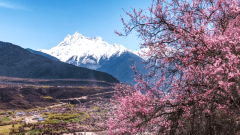
Located in Bomi County, Nyingchi City, Midui Glacier’s notable advantage is its low terminal altitude and well-developed plank road leading to the glacier front. Travelers can easily walk along the trail to the viewing point and enjoy the integrated scenery of the glacier with surrounding forests and villages up close without professional mountaineering skills. It is a low-risk and comfortable introductory choice for travelers visiting Tibet for the first time or those concerned about their adaptability to high altitudes.

Midui Glacier
Rongbuk Glacier: A Landmark Scenery Backdropped by Mount Everest
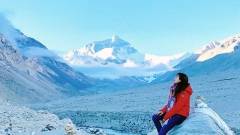
Originating from the north slope of Mount Everest, Rongbuk Glacier is mainly experienced by ordinary travelers through long-distance viewing on the way to Everest Base Camp or at the base camp’s observation deck. Its core value lies in its unparalleled geographical location—as a direct derivative of the world’s highest peak, it offers an extremely magnificent visual backdrop. Choosing this destination means you need to accept the physical challenges of long-distance driving and activities in higher altitude areas (over 5,000 meters).
No. 40 Glacier (Punan Glacier): Accessible Blue Ice Scenery
Also known as Punan Glacier, No. 40 Glacier is located in Langkazi County, Shannan City. It is famous for allowing travelers to hike under the ice towers and explore blue ice caves. Vehicles can drive to the nearby area, and then a short walk led by a guide will allow access to the ice. Safety must be taken extremely seriously: the glacier surface has complex terrain and unstable ice cave structures. Activities must be accompanied by a professional guide throughout, and equipment such as crampons must be used correctly. Solo actions are strictly prohibited.
Laigu Glacier: A Comprehensive Destination for Glacier Group Viewing
Located upstream of Ranwu Lake in Baxoi County, Qamdo City, Laigu Glacier is a group of glaciers composed of multiple ice streams. Here, you can witness the spectacular scene of multiple ice tongues pouring down from the mountains at once. Tour options include viewing from the lake shore or getting closer to the glacier terminal by horseback riding or hiking. It is suitable for travelers who wish to appreciate the style of glacier clusters and pursue diverse photography angles.
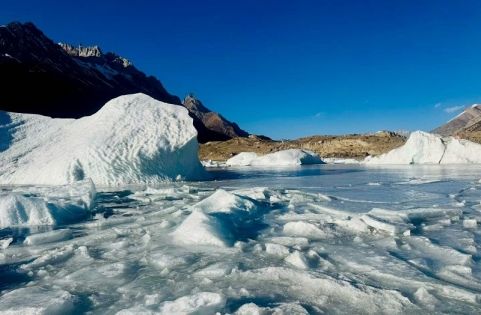
Laigu Glacier
Planning Your Tibet Glacier Trip
After clarifying your goals, the next step is to make specific itinerary plans. Decisions in the following aspects will directly affect your travel experience, budget, and smoothness.
Choosing a Travel Style: Group Tour vs. Private Charter
Joining a Group Tour Organized by a Travel Agency:
This is the most hassle-free way, especially suitable for first-time visitors to Tibet, solo travelers, or those who wish to minimize self-coordination. Regular travel agencies will handle core matters, including: application for the Tibet Travel Permit, full transportation arrangements, hotel bookings, attraction ticket purchases, and provision of tour guides. When choosing a group, carefully confirm all items included in the cost, the approximate number of group members, the type of vehicles used, and verify whether the travel agency has the corresponding qualifications. Choosing a reliable travel agency is crucial—for example, China Dragon Travel—can ensure efficient processing of the Tibet Travel Permit and arrange drivers and guides familiar with glacier routes, making the entire trip more secure.
Private Custom Charter Service:
If you are traveling with relatives or friends and pursue a high degree of itinerary flexibility and privacy, a private charter is an ideal choice. You can independently decide the details of the daily itinerary, the duration of stay at each attraction, and freely combine different famous Tibet glacier destinations. The key to success is to find reputable drivers and vehicles familiar with glacier routes (4WD off-road vehicles are recommended), and also apply for the necessary Tibet Travel Permit through a qualified travel agency. Be sure to confirm the itinerary route, cost details, and service scope in writing in advance.
Determining the Best Travel Season & Time
Choosing the right time to visit is crucial for the travel experience
- Recommended Season (Early May to Early October): This is the main window period for visiting Tibet glaciers. The climate is relatively mild, and most roads remain accessible. Among them, September to early October is generally regarded as the best period—with little rainfall, clear skies, extremely high visibility, and it is very suitable for photography.
- Peak Tourism Season (July to August): The temperature is the most comfortable, but it is also the period with the largest number of tourists, leading to increased airfare, hotel, and vehicle costs, as well as tight resources—bookings need to be made several months in advance. This period is also the rainy season, and occasional mountain landslides or mudslides may cause temporary traffic disruptions.
- Winter (November to April next year): Generally not recommended for ordinary travelers. The climate is extremely cold, most areas receive heavy snowfall, many roads leading to glaciers are closed, and a large number of accommodation and catering services along the route are suspended. Travel conditions are harsh and risks increase significantly.
On-Site Guide to Tibet Glaciers
When you arrive at Tibet glaciers, following the below guide will help you gain a richer experience and ensure personal safety.
How to Fully Enjoy the Glacier Travel Experience
- Follow Professional Guides Closely: When engaging in activities in glacier areas or high-altitude wilderness, always follow the guide’s instructions. They are familiar with the terrain, weather changes, and potential risks, and will lead the team to move within safe areas.
- Carry Necessary Basic Equipment: Even if the itinerary is marked as “sightseeing”, you should bring your own waterproof and non-slip high-top hiking boots to cope with possible wet and gravel roads. Sunglasses, wide-brimmed hats, and high-factor sunscreen with SPF50+ are essential for protecting against strong high-altitude ultraviolet rays.
- Conduct Conscious Observation: In addition to taking photos, take note of the glacier’s color, texture, and shape, listen to the sound of melting ice water, and observe the deposits at the glacier front. The guide’s explanation will help you understand the landscape from a geographical perspective.
Safety Guidelines to Strictly Follow
- Take Altitude Sickness Seriously: After arriving in Lhasa, arrange 1 to 2 days for altitude acclimatization. Avoid strenuous exercise, drinking alcohol, and taking baths. If symptoms such as worsening headaches, vomiting, shortness of breath, or confusion occur, immediately report to fellow travelers and the guide, and resolutely consider descending to a lower altitude area.
- Never Act Without Permission Away from the Group: Glacier areas may have hidden crevasses covered by snow, which are extremely dangerous. Under no circumstances should you leave the safe route and scope designated by the guide for photography or curiosity.
- Adopt Layered Dressing: High-altitude weather changes rapidly. Even in summer, you must carry windproof and waterproof outerwear as well as warm clothing such as fleece jackets and down jackets to cope with sudden temperature drops.
- Purchase Appropriate Special Travel Insurance: Standard travel insurance usually does not cover high-altitude trekking or mountaineering activities. Be sure to buy insurance products that explicitly cover “high-altitude adventure” (usually referring to activities above 3,000 meters), “acute illness medical treatment”, and “emergency medical evacuation/repatriation”. Carry the insurance policy and emergency contact information with you at all times.
Detailed Pre-Trip Preparation Checklist for Tibet Glacier Travel
Before departing for the famous Tibet glaciers, please check and complete the following preparations one by one:
- Travel Documents & Permits: Ensure your passport and other travel documents have sufficient validity (it is recommended that the remaining validity period be more than 6 months). Confirm that the Tibet Travel Permit has been successfully obtained through the travel agency, and you have received a clear electronic or paper document for inspection.
- Health Management & Medications: Maintain a good schedule one week before departure and avoid overfatigue. Consult a doctor and prepare some auxiliary items for altitude sickness, such as ibuprofen (for relieving headaches), acetazolamide (prescription required, for preventing altitude sickness), and oral glucose.
- Clothing & Personal Equipment: Prepare clothing in accordance with the principle of “base layer for moisture wicking, middle layer for warmth, outer layer for protection”. Pay special attention to keeping your head and hands warm (warm hat, gloves). Break in your hiking boots in advance to ensure a good fit. Prepare an insulated water bottle with sufficient capacity.
- Other Essential Items: High-energy snacks, power bank, personal regular medications, lip balm, and a headlamp or flashlight (for emergencies).
- Insurance & Finances: Ensure you have purchased the required insurance, and store a copy of the policy and the insurance company’s emergency contact number separately. Prepare some cash—although mobile payment is popular in major towns, cash may still be needed in remote areas.
- Communication & Itinerary Notification: Keep the contact information of the travel agency, driver/guide. Inform your family or friends of the detailed itinerary and agree on a regular contact method.
Seeing Tibet’s Glaciers Safely Starts With the Right Support
Tibet’s glaciers are not destinations to approach on impulse. Route planning, travel permits, altitude pacing, and on-the-ground safety conditions all require careful preparation before the journey begins.
For many travelers, the most reliable way to experience Tibet’s glaciers is to rely on a team that understands how these trips actually work in practice.
China Dragon Travel specializes in high-altitude journeys across Tibet and nearby regions. With long-term experience operating glacier routes, the team provides practical, well-paced travel planning based on seasonal conditions, physical adaptability, and real road situations. By handling permits and logistics in advance, travelers can focus on the landscapes themselves—rather than the uncertainties along the way.