As a unique Chinese tourist destination, Tibet attracts global tourists with magnificent plateau scenery and profound Tibetan culture. For foreign tourists, understanding Tibet’s entry management policies in advance is the core of itinerary planning and key to a smooth trip. In 2026, Tibet’s foreign tourist policies continue the standardization principle, with clear requirements for document application, travel methods, scenic area visits and more. Not all areas are accessible freely; specific application procedures must be followed. Master these rules in advance and prepare well to better experience Tibet’s unique charm. The following analyzes 2026’s latest policies, covering documents, itineraries, scenic areas and other core contents.
Core Restrictions for Foreign Tourists Entering Tibet: Detailed Explanation of Document Application
The primary restriction for foreign tourists entering Tibet lies in document application. Unlike domestic tourists who can travel freely, foreigners traveling to Tibet must apply for an exclusive Tibet Travel Permit, which cannot be applied for individually. Meanwhile, additional corresponding permits are required according to different travel areas. Having complete documents is a necessary prerequisite for entering Tibet.
Tibet Travel Permit Agency Service
The full name of the Tibet Travel Permit is the Approval Letter for Foreigners and Taiwan Compatriots to Travel to Tibet. It is a basic document for foreigners to enter Tibet, uniformly issued by the Tibet Autonomous Region Department of Culture and Tourism, with strict legal effect. In 2026, it remains a necessary document for foreign tourists to enter Tibet, with clear application restrictions.
- Application Entity Restriction: Individual applications for the Tibet Travel Permit are not accepted. It can only be handled by local Tibet travel agencies with foreign-related reception qualifications. Tourists need to confirm their itinerary with the travel agency in advance, and the travel agency will submit the application to the relevant departments.
- Application Time Restriction: The processing time for the Tibet Travel Permit for regular itineraries is about 10 working days. If you plan to travel to border closed areas such as Ngari, additional military area approval is required, which will increase the processing time by more than 5 working days. It is recommended to submit the materials 1 month in advance.
- Material Submission Restriction: A scanned copy of the passport homepage and a scanned copy of a valid Chinese visa are required. Tourists from visa-exempt countries only need a scanned copy of the passport. At the same time, a detailed itinerary plan including entry time, travel days and visited scenic areas must be submitted.
- Usage Rule Restriction: The original Tibet Travel Permit is a necessary document for boarding flights to Tibet; holding photos or copies may result in refusal to board. A copy can be used when taking the train. During the trip, the Tibet Travel Permit will be kept by the accompanying tour guide. After the trip, it will be recovered by the travel agency and filed with the relevant departments. Tourists are not allowed to take it out of Tibet without permission.
Additional Documents Required for Different Areas
A direct reflection of the restrictions for foreigners traveling to Tibet in terms of scenic area visits is that different areas require corresponding additional documents. The Tibet Travel Permit alone is not sufficient to travel to border areas or some characteristic scenic areas. In 2026, the application requirements and fees for various additional documents are clear, and all can be handled with the assistance of travel agencies.
- Areas such as Nyingchi Basong Co, Samye Monastery and Mount Everest Base Camp: In addition to the Tibet Travel Permit, a Foreigner Travel Permit is required. The official fee is 50 yuan per person, and the application process is simple, which can be quickly completed with the assistance of the travel agency.
- Border closed areas such as Bomi, Ranwu, Shannan Samye Monastery and Ngari: On the basis of the Tibet Travel Permit and Foreigner Travel Permit, an additional military area approval is required. The processing time is about half a month, and it is necessary to confirm the group itinerary with the travel agency more than 20 days in advance.
- Cultural relic scenic areas such as Ngari Tholing Monastery and Guge Kingdom Ruins: In addition to the above documents, exclusive approval from the local cultural relics bureau is also required. The travel agency will submit the application to the cultural relics bureau in advance according to the itinerary.
Document Application Restrictions for Special Groups
Not all foreigners can apply for the Tibet Travel Permit as tourists. In 2026, there are clear restrictions on the application of Tibet entry documents for foreigners with special occupations and identities, who cannot apply in accordance with the ordinary tourist process.
- Foreign journalists and diplomats: They cannot apply for the Tibet Travel Permit as tourists. If they need to enter Tibet for work, they must apply separately through diplomatic channels and have their itineraries arranged uniformly by the corresponding departments.
- Holders of non-tourist visas: Foreign tourists holding work visas, business visas or student visas need to provide additional corresponding certificates when applying for the Tibet Travel Permit. Work visa holders need to provide a company certificate, and student visa holders need to provide a school enrollment certificate.
- Overseas Chinese and compatriots from Hong Kong, Macao and Taiwan: Overseas Chinese without Chinese passports shall apply for the Tibet Travel Permit in accordance with the standards for foreign tourists; Taiwan compatriots need to apply for the Tibet Travel Permit; Hong Kong and Macao residents do not need to apply and can enter Tibet freely with their HKSAR passports, MSAR passports or Mainland Travel Permits.
Restrictions for Foreign Tourists Entering Tibet: Travel and Itinerary Management Rules
In 2026, Tibet has strict restrictions on the travel methods of foreign tourists. Free and independent travel is not allowed; the entire trip must follow the group itinerary arranged by the travel agency. At the same time, there are clear rules on transportation methods and itinerary changes to ensure that tourists’ itineraries are within the scope of standardized management.
Free and Independent Travel Prohibited
The core travel restriction among the restrictions for foreigners traveling to Tibet is the prohibition of free and independent travel. Regardless of the number of tourists, they must travel in an organized and planned group form. This policy has not been adjusted in 2026 and is a mandatory requirement for foreign tourists entering Tibet.
- Group Form Requirement: You can choose to join a group tour with other individual tourists or a private customized small group. Both must be arranged by a travel agency with foreign-related qualifications, with an exclusive tour guide accompanying the entire trip. Traveling alone is not allowed.
- Itinerary Execution Requirement: You must strictly follow the itinerary approved by the relevant departments by the travel agency. You are not allowed to arbitrarily change the visited scenic areas or adjust the itinerary time. If you need to change the itinerary due to special circumstances such as illness or bad weather, the travel agency must submit a change application to the relevant departments, and the adjustment can only be made after approval.
- Reception Standard Requirement: The travel agency must uniformly arrange vehicles, drivers and tour guides with foreign-related qualifications. The vehicles must be registered, and the drivers must have plateau driving experience to ensure the safety of tourists.
Tibet Entry Transportation Restrictions
There are clear restrictions on the transportation methods for foreign tourists entering Tibet. In 2026, self-driving, carpooling or self-driving into Tibet via highways such as the Sichuan-Tibet Line are still not allowed. Only planes or trains can be chosen, and tickets must be purchased with the Tibet Travel Permit.
- Air Ticket Purchase: Air tickets to Tibet must be purchased by the travel agency on behalf of the tourist with the Tibet Travel Permit confirmation. Individual tourists cannot directly purchase air tickets to Tibet. When boarding, the original Tibet Travel Permit, passport and valid Chinese visa must be presented.
- Train Ticket Purchase: Similarly, train tickets must be handled by the travel agency with the Tibet Travel Permit. Train tickets to Tibet on the Qinghai-Tibet Railway are in short supply. It is recommended to confirm the ticket booking with the travel agency 60 days in advance. A copy of the Tibet Travel Permit can be used when taking the train, and the original passport must be carried at the same time.
- Intra-region Transportation Restriction: Transportation within Tibet is uniformly arranged by the travel agency. Registered vehicles such as off-road vehicles and commercial vehicles can be chosen. Tourists are not allowed to rent cars or carpool privately. If a foreign vehicle plans to enter Tibet, it is necessary to apply for a domestic driver’s license in advance, and an accompanying Tibet tour guide is required for the entire trip.
Management Restrictions on Itinerary Changes and Departure from Tibet
Foreign tourists must follow the corresponding management restrictions on itinerary changes and departure time from Tibet during their stay. They are not allowed to arbitrarily extend their stay in Tibet, and departure must be carried out in accordance with the itinerary plan to ensure consistency with the approved information on the Tibet Travel Permit.
- Itinerary Change: If you need to change the itinerary due to special circumstances such as illness or bad weather, you must inform the accompanying tour guide immediately. The travel agency will submit a change application to the Tibet Autonomous Region Department of Culture and Tourism, and the adjustment can only be made after approval. No arbitrary changes are allowed without approval.
- Departure Time: The entry and departure times are clearly marked on the Tibet Travel Permit. Tourists must depart Tibet within the specified time and are not allowed to extend their stay arbitrarily. If you need to extend your stay in Tibet, the travel agency must go through the relevant formalities again; otherwise, it will affect the subsequent entry and exit procedures.
Restrictions for Foreign Tourists Entering Tibet: Scenic Area Visits and Opening Scope
Due to ecological protection, military management and other reasons, some scenic areas in Tibet implement visit restrictions on foreign tourists. In 2026, scenic areas accessible to foreign tourists, those requiring additional documents and those prohibited from visiting are clearly divided. Foreign tourists must strictly abide by these regulations and are not allowed to enter prohibited areas without permission.
Scenic Areas Accessible Directly
Foreign tourists holding the Tibet Travel Permit can directly visit the basic open scenic areas in Tibet without applying for additional documents. These scenic areas are the core areas for foreign tourists traveling to Tibet, covering major scenic spots in core cities such as Lhasa and Shigatse.
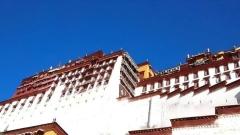
- Lhasa Urban Area: All scenic areas such as the Potala Palace, Jokhang Temple, Barkhor Street, Drepung Monastery and Sera Monastery are accessible with the Tibet Travel Permit.
- Shigatse Area: Core scenic areas such as Tashilhunpo Monastery, Yamdrok Lake and Karola Glacier are accessible without additional documents.
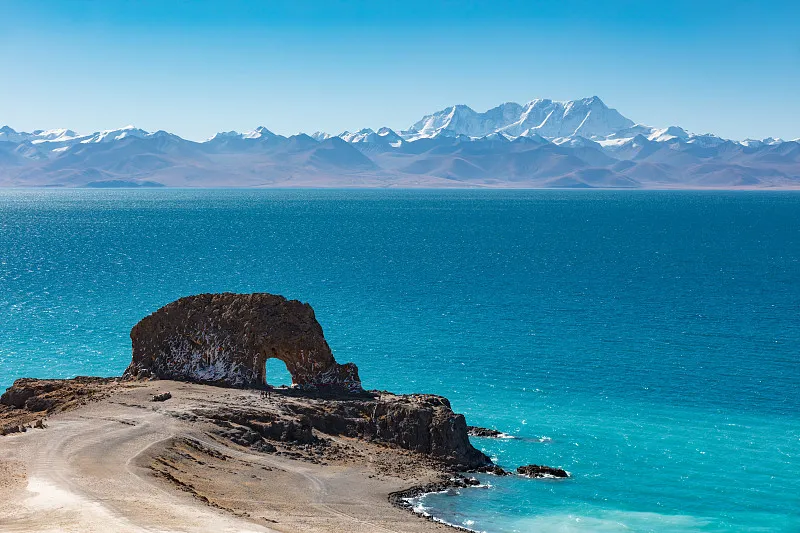
- Nam Co Scenic Area: The entire area is accessible with the Tibet Travel Permit, which is the main choice for foreign tourists to enjoy Tibet’s lake scenery.

Potala Palace
Scenic Areas Requiring Additional Documents
In addition to the basic open scenic areas, some characteristic scenic areas and scenic areas near the border in Tibet implement hierarchical visit restrictions on foreign tourists. Corresponding documents such as the Foreigner Travel Permit and military area approval are required to enter. In 2026, the visit requirements for these scenic areas have not been adjusted.
- Scenic Areas Requiring Foreigner Travel Permit: Nyingchi Basong Co, Shannan Samye Monastery, Mount Everest Base Camp, Tingri County, etc. After applying for the Foreigner Travel Permit (50 yuan per person), you can visit with the group.
- Scenic Areas Requiring Military Area Approval: Bomi, Ranwu, Shannan Namgyal Monastery, Yongbulakang Palace, Nedong, Gacha, Langxian, most areas of Ngari, etc. Military area approval must be applied for in advance, and an exclusive itinerary will be arranged by the travel agency.
- Scenic Areas Requiring Cultural Relics Bureau Approval: Cultural relic scenic areas such as Ngari Tholing Monastery, Guge Kingdom Ruins and Zhada Earth Forest require exclusive approval from the local cultural relics bureau to enter and visit.
Prohibited Scenic Areas
The highest-level restriction for foreigners traveling to Tibet in terms of scenic area visits is complete prohibition of access. These areas are not open to foreign tourists due to military management, fragile ecology or cultural protection. This regulation is still strictly implemented in 2026, and tourists are not allowed to include these areas in their itineraries.
- Shannan Area: Areas such as Namtso Cirenmaco (Ramla Co) and Tibetan Kings’ Tombs are completely prohibited for foreign tourists to enter.
- Nyingchi Area: The Yarlung Zangbo Grand Canyon, Nanyi Valley, Medog County, Zayu County, etc., are not open to foreign tourists.
- Other Areas: Parts of Yadong, Cona, Qamdo, as well as some military management areas in Tibet are all prohibited for foreign tourists to enter.
Restrictions for Foreign Tourists Entering Tibet: Accommodation and Code of Conduct
In 2026, Tibet has clear restrictions on the accommodation choices of foreign tourists, and at the same time requires tourists to abide by the local cultural customs and code of conduct during their stay in Tibet. This is also an important part of the restrictions for foreigners traveling to Tibet. Abiding by these rules is an important guarantee for a smooth trip.
Accommodation Restrictions: Only Foreign-related Establishments Allowed
There are clear restrictions on the accommodation choices of foreign tourists in Tibet. Unlike domestic tourists who can arbitrarily choose homestays or ordinary hotels, in 2026, foreign tourists can only stay in hotels with foreign-related reception qualifications. In some remote areas, they can stay in designated guesthouses arranged by the travel agency.
- Urban Accommodation: In core cities such as Lhasa, Shigatse and Nyingchi, you must stay in registered foreign-related hotels. These hotels have the qualification to receive foreign tourists and can cooperate with the relevant departments to complete the registration procedures.
- Remote Area Accommodation: In remote areas such as Ngari and Mount Everest Base Camp, there are few foreign-related hotels. You can stay in designated guesthouses or registered tent camps arranged by the travel agency. Staying in local private residences or unregistered accommodation establishments is not allowed.
- Accommodation Registration Restriction: When checking in, you must present the original passport and Tibet Travel Permit for registration. The travel agency will make unified reservations in advance. Individual tourists cannot book rooms temporarily, and the accommodation location must be consistent with the itinerary plan.
Code of Conduct Restrictions
During their stay in Tibet, in addition to following the general travel rules, foreign tourists must also abide by the code of conduct for Tibet’s local culture. This is also an important precaution for foreigners traveling to Tibet. Respecting the local culture is the premise of a smooth trip.
- Code of Conduct in Religious Sites: Hats must be removed when entering Tibetan Buddhist monasteries. Taking photos of Buddha statues, scriptures and precious cultural relics in the monasteries is prohibited. Do not arbitrarily touch religious items such as Buddha statues and prayer flags, and do not step on the thresholds of the monasteries.
- Code of Conduct for Local Customs: Respect the living customs of local residents. Do not arbitrarily drive away cattle and sheep used for worship, do not disturb the normal life of local residents. When watching folk activities such as sky burials, you must follow the on-site regulations and do not take photos arbitrarily.
- Code of Conduct for Ecological Protection: Tibet’s ecological environment is fragile. Tourists must consciously take away all garbage, do not arbitrarily damage vegetation or litter, do not hunt wild animals, and abide by the ecological protection regulations of the scenic areas.
- Other Code of Conduct Restrictions: Do not engage in activities unrelated to tourism in Tibet, do not issue inappropriate remarks, and do not participate in any illegal activities. Otherwise, the travel qualification will be revoked, and corresponding penalties will be imposed in accordance with relevant regulations.
Corresponding to Tibet Entry Restrictions for Foreigners: 2026 Itinerary Planning Suggestions
After understanding the restrictions for foreigners traveling to Tibet, combined with the 2026 latest policies, making itinerary planning and preparations in advance can effectively avoid problems during the trip. The following are exclusive planning suggestions for foreign tourists, covering time, cooperation, supplies and other aspects.
Plan in Advance: Reserve Sufficient Time for Document Processing
Document application is the core link for foreign tourists to enter Tibet. It is recommended to confirm the itinerary at least 1 month in advance and contact a local Tibet travel agency with foreign-related qualifications to submit relevant materials to ensure that the Tibet Travel Permit and various additional documents can be processed smoothly.
- Regular Itineraries: Submit materials 1 month in advance to ensure the 10-working-day processing time for the Tibet Travel Permit, and reserve sufficient time for air ticket and train ticket booking.
- Border Area Itineraries: Confirm the itinerary 2 months in advance to ensure the processing time for additional documents such as military area approval and cultural relics bureau approval, avoiding the impact on the itinerary due to unprocessed documents.
Choose a Regular Foreign-related Travel Agency
All document processing and itinerary arrangements for foreigners traveling to Tibet rely on travel agencies with foreign-related reception qualifications. Therefore, choosing a regular travel agency is a crucial step. In 2026, it is recommended to give priority to established local Tibet travel agencies to ensure service quality and policy implementation capabilities.
- Qualification Verification: Confirm that the travel agency has the foreign-related reception qualification issued by the Tibet Autonomous Region Department of Culture and Tourism. You can ask the travel agency to show the relevant certificates to avoid choosing unqualified institutions.
- Service Confirmation: Confirm that the travel agency can provide one-stop services such as full-time tour guide accompaniment, registered vehicles and foreign-related hotel reservations, and can assist in handling all additional documents without the need for tourists to operate by themselves.
Plateau Adaptation and Group Cooperation
Tibet has a high average altitude, and altitude sickness is a problem that all tourists need to face. Due to physical differences, foreign tourists need to make more preparations in advance. At the same time, during their stay in Tibet, they need to cooperate with the group management of the travel agency and abide by the itinerary arrangement to ensure their own safety.
- Plateau Adaptation: Avoid strenuous exercise before entering Tibet. In the first 24-48 hours after arriving in Tibet, avoid taking a bath and strenuous activities, drink plenty of warm water, and eat a light diet. You can carry a portable oxygen cylinder. If severe altitude sickness occurs, inform the tour guide immediately and seek medical treatment.
- Cooperation with Group Management: Strictly follow the itinerary arrangement of the tour guide and do not travel alone, especially in remote areas and plateau scenic areas, to avoid safety problems such as getting lost or physical exhaustion. Obey the safety reminders and management of the tour guide.
Pay Attention to Policy Dynamics: Avoid Impact on Itinerary
Tibet’s management policies for foreign tourists will be slightly adjusted according to actual conditions. Although the overall policy is stable in 2026, it is recommended that foreign tourists communicate with the travel agency in a timely manner before departure to understand the latest policy dynamics and ensure that the itinerary planning is consistent with the latest policies.
- Document Policies: Confirm whether there are any adjustments to the application materials and processing time of documents such as the Tibet Travel Permit and Foreigner Travel Permit to avoid affecting the processing due to incomplete materials.
- Scenic Area Policies: Confirm whether there are any adjustments to the opening of the planned scenic areas and changes to the prohibited areas, and adjust the itinerary plan in a timely manner.
- Transportation Policies: Confirm whether there are any adjustments to the ticketing and boarding rules for planes and trains to Tibet, and cooperate with the travel agency to complete the relevant procedures.
Core Points of Restrictions for Foreign Tourists Entering Tibet
The restrictions for foreigners traveling to Tibet mainly focus on four aspects: document application, travel methods, scenic area visits and accommodation choices. In 2026, the relevant policies are generally stable, focusing on standardization and safety, taking into account both Tibet’s ecological and cultural protection and the travel safety of foreign tourists.
Foreign tourists only need to understand the restriction policies in advance, choose a regular foreign-related travel agency, cooperate with the processing of relevant documents and follow the group itinerary to enter Tibet smoothly. With adequate preparations and abiding by the regulations, you can experience Tibet’s scenery and culture, and at the same time, you must respect the local customs and protect the ecology.