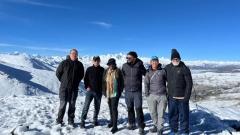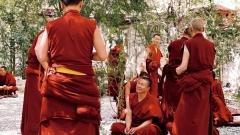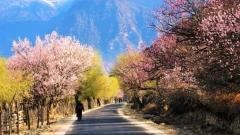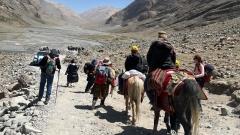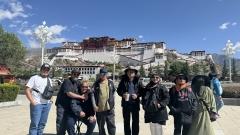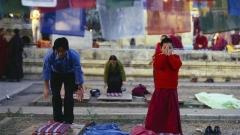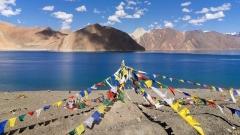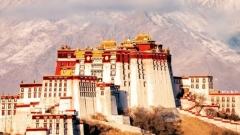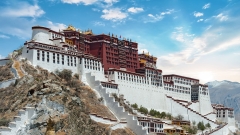

Planning a journey to the legendary Guge Kingdom Ruins? Hidden deep within the dramatic clay forests of Zanda County in western Tibet’s Ngari region, this once-powerful kingdom flourished for over 700 years before vanishing mysteriously from history. Today, its majestic palace remains, exquisite Buddhist murals, and awe-inspiring desert landscapes captivate travelers, historians, and photographers alike. This comprehensive guide provides essential information on permits, transportation, must-see attractions, and packing tips to help you plan a seamless and unforgettable expedition to one of Tibet’s most enigmatic destinations.
Documents for Traveling to the Guge Kingdom
Passport and Visa
Before traveling to the Guge Kingdom Ruins, ensure your passport is valid for at least another six months. If your passport has less than six months of validity left, it is recommended to apply for a renewal from the passport issuing authority in your country before departure.
- Visa-Free Conditions: If your passport qualifies for China’s visa-free policy, you may enter China without a visa for a stay of up to 30 days. Visa-free entry applies only to entry into mainland China, not to the special permit requirements of the Tibet Autonomous Region. You must still obtain a Tibet Travel Permit to visit the Guge Kingdom Ruins.
- Visa Application: If you plan to stay in China for more than 30 days, or if your passport type does not meet the visa-free conditions, you must apply for a Chinese tourist visa in advance at the Chinese embassy or consulate in your home country.
- Application Channels: You can submit your application to the Chinese embassy or consulate-general in your country, or through officially authorized visa service centers. Most jurisdictions now support online applications, eliminating the need to submit paper documents in person. You will need to log in to the Chinese Visa Online Application website, fill in the required information, and upload your documents.
- Required Documents: Original passport valid for at least six months; a recent, bareheaded, white-background passport photo (48mm x 33mm); round-trip flight booking confirmation with clear entry and exit dates; hotel reservation confirmations; and a detailed itinerary listing destinations, attractions, and transportation methods. Clearly mark “Ngari Prefecture, Zanda County” in your itinerary to facilitate the subsequent Border Defense Permit application.
Application for Tibet Travel Permit
The Tibet Travel Permit is a mandatory entry document for foreign tourists entering the Tibet Autonomous Region. To visit the Guge Kingdom Ruins, you must first obtain this permit.
- Application Channels: The Tibet Travel Permit is not available for individual application. It can only be arranged through a travel agency with the appropriate qualifications. It is recommended that you confirm your itinerary with a travel agency, which will then submit the application to the relevant authorities on your behalf.
- Required Documents: A scanned copy of the information page of your passport (valid for at least six months), a scanned copy of your valid Chinese visa (or proof of visa-free entry), and your detailed itinerary. The itinerary must clearly state your intention to visit the Guge Kingdom Ruins, Zanda County, and Ngari Prefecture to facilitate the Border Defense Permit application.
- Processing Time: A standard itinerary takes about 10 working days. Since the Guge Kingdom Ruins are located in the border area of Ngari, an additional military area permit is required, adding another 5 working days or more to the processing time. It is recommended to submit your application at least one month in advance.
Application for Border Defense Permit
The Guge Kingdom Ruins are located in Zanda County, Ngari Prefecture, Tibet, which is a border management area. Without a Border Defense Permit, you will be unable to pass the checkpoints along the way and will not reach the Guge Kingdom Ruins.
- Authorized Application: You can authorize a friend or relative in China to apply for the permit for free at the public security bureau in their registered residence. This requires providing a copy of your passport and a detailed itinerary clearly stating “Ngari Prefecture, Zanda County, Guge Kingdom Ruins”. The authorized person must go to the bureau with their own ID card.
- Application in Lhasa: After arriving in Lhasa, you can apply through a legitimate travel agency. The cost is about 100-200 RMB. You will need to provide your original passport and hotel check-in confirmation. The permit can usually be issued on the same day. When applying, ensure the permit’s destination clearly includes “Zanda County”.。
You must carry the original paper copy of the Border Defense Permit with you at all times. It is recommended to prepare two photocopies, stored separately from the original. The permit’s validity period should be requested for 30 days or more to cover your entire Guge Kingdom tour.
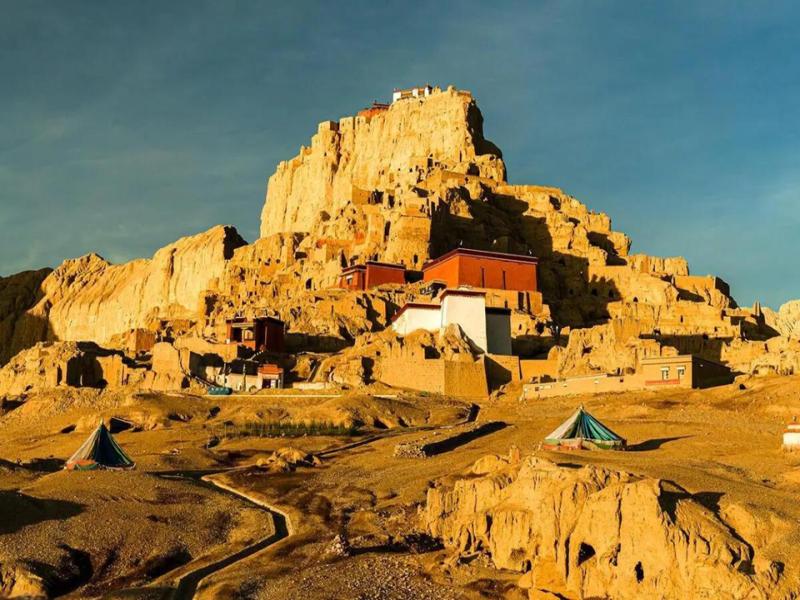
The Ruins of the Guge Kingdom
Transportation to the Guge Kingdom
Self-Driving
- Route: Starting from Lhasa, it is recommended to take National Highway 219 via Shigatse, Saga, Zhongba, and Burang to reach Zanda County. The total distance is about 1500 kilometers and takes 4-5 days.
- Required Vehicles: A four-wheel-drive off-road vehicle with a ground clearance of no less than 20 centimeters is recommended. Before departure, conduct a full vehicle inspection, including engine oil, coolant, brake system, tires, spare tire, and jack.
- Documents and Procedures: If you choose to self-drive, you need to apply for a vehicle entry permit and pay a vehicle entry fee of approximately 400-600 RMB. Ensure your vehicle insurance covers remote areas of Ngari and consider purchasing additional roadside assistance insurance.
- Notes: Road conditions in Ngari are complex, mostly mountainous dirt roads and gravel surfaces, with some sections lacking guardrails. During the rainy season, be aware of mudslides and rockfalls; during winter, watch for snow and ice accumulation. Limit daily driving to no more than 8 hours, stopping for a 15-minute break every 2 hours. Avoid driving while fatigued.
Chartered Car
- Routes and Costs: From Zanda County town to the ruins takes about 20 minutes by car, costing about 200-300 RMB. From Shiquanhe Town to Zanda County takes about 4-5 hours, costing about 800-1000 RMB per day. For a full charter from Lhasa, costs are about 2000-3000 RMB per day, taking 4-5 days.
- Required Vehicles: It is recommended to choose a four-wheel-drive off-road vehicle, which has a high chassis and strong power, suitable for the gravel roads and winding mountain paths of Ngari.
- Notes: Choose a licensed vehicle and confirm the driver holds a valid certificate and is familiar with Ngari road conditions. The charter fee usually includes fuel, driver’s meals and accommodation, and tolls. A written confirmation of the cost breakdown with the driver or agency is recommended before departure.
Public Transportation
- Routesand Costs: Take a long-distance bus from Lhasa North Suburb Bus Station to Shiquanhe Town (about a 2-day journey, requiring an overnight stop in Shigatse or Saga; fare about 500-600 RMB). Upon arrival in Shiquanhe, transfer to a bus to Zanda County (about 5 hours, only 1-2 buses per week, check schedule in advance; fare about 100-150 RMB). Finally, from Zanda County town, hire a local car to the ruins (about 200-300 RMB).
- Notes: Bus frequency is very low; they may be full during peak season or cancelled during off-season. Multiple transfers are required, and you need to manage your luggage. Large suitcases are not recommended. This entire journey from Lhasa to the ruins takes about 3-4 days, with no control over stopovers along the way.
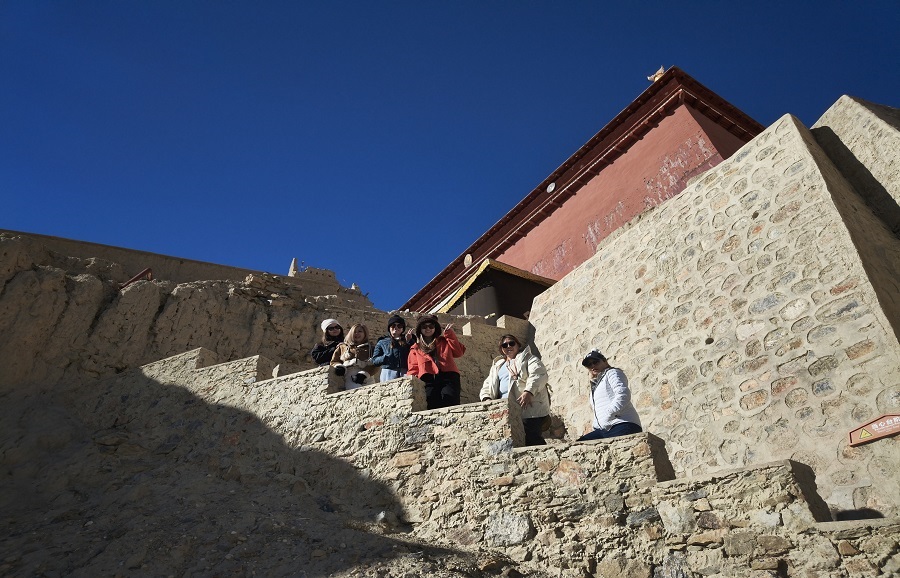
Guge Kingdom Tourists Photos
Must-Visit Attractions in the Guge Kingdom
Dudma Hall
Located at the entrance at the foot of the hill, Tara Hall is the first temple you encounter, serving as your introduction to Guge Buddhist art.
- Overview: Tara Hall is close to the ticket checkpoint. The structure is relatively small but well-preserved. The temple door faces east, offering a view of the first rays of sunlight hitting the earth forest.
- Features: Inside, a statue of Tara is enshrined. The walls are adorned with murals themed around Green Tara, characterized by delicate, soft brushwork and smooth lines, showing distinct Kashmiri and Gandharan artistic influences. Despite being centuries old, the colors in some areas remain vibrant.
White Hall
Named for its whitewashed exterior walls, the White Hall is one of the largest temples in the ruins and was the central place for Buddhist ceremonies in the Guge Kingdom.
- Overview: The White Hall covers an area of about 300 square meters. It originally had 36 pillars supporting the roof; today, only some plinths and wall bases remain. The door faces south, allowing winter sunlight to shine directly inside, creating unique light and shadow effects.
- Features: The walls are covered with murals on various themes. The most precious is on the east wall, depicting the lineage of Tibetan Tsanpos (kings) and the kings of Guge. Several clay Buddha statues are preserved here; although centuries old, the folds of their robes and postures are still discernible. The main figure is Sakyamuni Buddha, flanked by disciples, their expressions solemn and compassionate.
Red Hall
Adjacent to the White Hall and named for its red exterior walls, the Red Hall is the most striking temple in the ruins and a must-see core attraction.
- Overview: The Red Hall was built during the peak period of the Guge Kingdom. Its murals record religious and cultural exchanges between the Guge Kingdom and surrounding regions.
- Features: The Red Hall’s mandala murals are hailed as a “Western Paradise,” featuring mandala patterns with precise composition and rich colors. Painted with mineral pigments, the colors remain remarkably vivid and bright, with a bold, rustic style and heavy hues.
Royal Palace Area
Located on the hilltop, occupying the highest point of the entire site, this area was the living quarters of the Guge king and his family and offers the best vantage point overlooking the Zanda Earth Forest.
- Summer Palace: The king’s summer residence, situated in an open area on the hilltop. The structures are ruined, with only foundations and partial walls remaining. It offers a 360-degree panoramic view of the Zanda Earth Forest. It is recommended to arrive before 5 PM to wait for the golden light of sunset.
- Winter Palace: The king’s winter residence, an underground palace about 12 meters below the hilltop. A steep staircase, about 13.5 meters long and only wide enough for one person, leads down to it. Inside, there are cave rooms, secret passages, and a water collection cave.
- Council Hall: Covering about 200 square meters, this was the assembly hall for kingdom affairs and the most spacious building in the royal city. Today, only walls and some pillar bases remain.
- Secret Tunnels: Several secret tunnels were built within the mountain, connecting the palace area with the foot of the hill for both defense and emergency escape. The tunnels are narrow and winding, requiring bending over in some sections.。
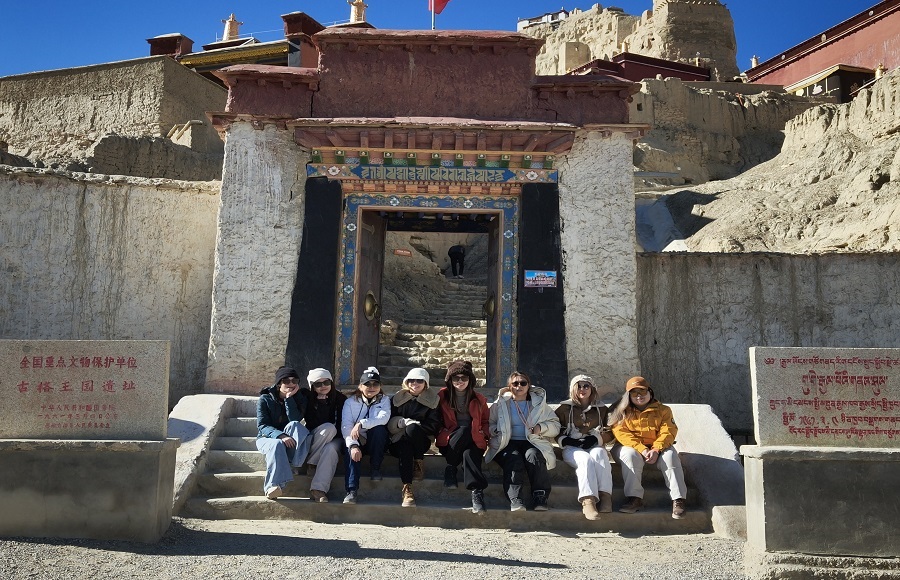
Guge Kingdom Tourists Photos
Gears for Traveling to the Guge Kingdom
- Clothing: It is recommended to wear a base layer of moisture-wicking, quick-dry thermal underwear, a middle layer of fleece or a lightweight down jacket, and an outer layer of a windproof, waterproof shell jacket. For trousers, windproof, waterproof trekking pants with a warm inner layer are advised. High-top waterproof hiking boots are essential, paired with wool socks. A warm hat is necessary for head warmth.
- Sun Protection: UV intensity in Ngari is extremely high. Use SPF50+ sunscreen, reapplying every 2-3 hours. Lip balm with SPF prevents chapped lips. Bring sunglasses to prevent snow blindness.
- Trekking Gear: The terrain at the ruins is complex. A pair of trekking poles provides stable support on rocky sections. A thermos is crucial, as drinking hot water at high altitudes helps maintain body temperature. A headlamp is essential for visiting the Winter Palace.
- Medical Supplies: It is recommended to bring medication for altitude sickness, stomach issues, colds, pain relief, and any personal medications. A portable pulse oximeter is useful for monitoring blood oxygen saturation levels.
Begin Your Journey to the Guge Kingdom: Discover Tibet’s Most Enigmatic Heritage
The Guge Kingdom Ruins stand as a timeless testament to the rise and fall of a remarkable Himalayan civilization. From the golden glow illuminating the Zanda Clay Forest at sunset to the intricate murals preserved within ancient temples, every corner of this archaeological wonder tells a story of faith, artistry, and mystery. For travelers seeking an authentic and profound cultural experience, Guge remains one of the most extraordinary destinations in Tibet.
Due to its remote location and special permit requirements, careful planning is essential. China Dragon Travel specializes in tailor-made Tibet tours, offering expert assistance with Tibet Travel Permits, border permits, transportation, and customized itineraries to the Ngari region. With professional support and local expertise, your journey to the lost Guge Kingdom will be both seamless and unforgettable.