
On the vast map of Northwest China, Lanzhou stands as a legendary hub split cleanly by the rushing waters of the Yellow River. As a critical trading post along the ancient Silk Road, this city has spent thousands of years blending different cultures, spices, and traditions, giving birth to a bold, robust, and distinctively hearty culinary heritage.
When traveling to Lanzhou, half the journey lies within the steaming broths and aromatic roasted meats found in its lively night markets and century-old eateries. Below is a deep dive into the history, folklore, and flavors of Lanzhou’s four most iconic foods.
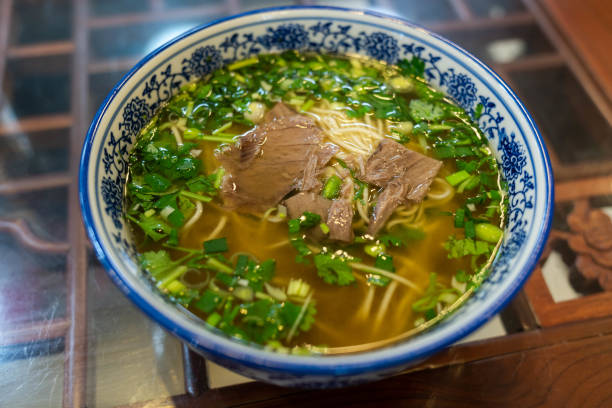
1. Lanzhou Beef Noodles: A Century-Old Heritage in a Single Bowl
Often generalized abroad as “Lanzhou Lamian,” locals simply call it Lanzhou Beef Noodles (or affectionately, “Niu Da”). It is the ultimate morning ritual that wakes up the soul of the city.
-
History & Origins: The dish traces back to the Jiaqing era of the Qing Dynasty (around 1799), when a Dongxiang poet named Ma Liuqi brought a unique noodle technique home from Henan Province. In 1915, a Hui chef named Ma Baozi refined the dish into portable “hot pot noodles,” peddling them from a shoulder yoke. Ma Baozi established a tradition of serving guests a complimentary bowl of clear broth the moment they sat down. Its crystalline soup and rich aroma quickly took the city by storm.
-
The Five Fine Art Standards: A truly authentic bowl of Lanzhou Beef Noodles must strictly adhere to the visual and sensory harmony known as the “Five Concepts”:
-
One Clear : A crystal-clear, intensely savory broth slow-simmered from beef bones and local spring chicken.
-
Two White : Translucent, thinly sliced white radish disks representing purity.
-
Three Red : A layer of slow-infused chili oil floating on top—rich and fragrant without overpowering heat.
-
Four Green : Freshly chopped garlic sprouts and cilantro adding a sharp herbal punch and visual pop.
-
Five Yellow : Hand-pulled wheat noodles with a subtle yellow hue, achieved by adding penghui (a natural alkaline ash from desert plants) to give the dough its legendary springy texture. From hair-thin strands to flat ribbons as wide as a leather belt, diners can choose from nine different noodle widths, showcasing the ultimate craftsmanship of Northwestern flour work.
-
2. Hand-Grabbed Mutton: The Ultimate Gift from the Silk Road Pastures
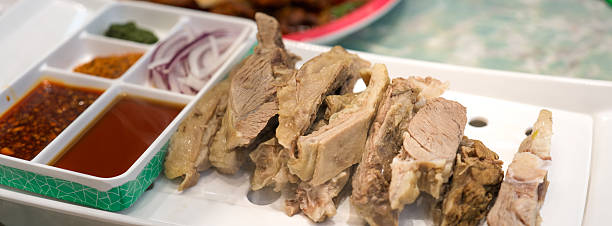
If beef noodles dominate Lanzhou’s mornings, Hand-Grabbed Mutton (Shouzhua Yangrou) is the undisputed star of its evenings.
-
History & Origins: This style of eating dates back over a millennium, originating from the nomadic traditions of the Dongxiang, Tibetan, and Mongolian tribes roaming the Northwest. Historically, herders would simmer fresh mutton in large cauldrons over open fires out in the wild. Once cooked, everyone would hold a small knife, using one hand to grab the meat and the other to slice it, hence the name. As trade flourished along the Silk Road, this rustic feast entered urban Lanzhou and was refined for royalty and travelers alike.
-
Why Is It Never Gamey? Lanzhou’s hand-grabbed mutton exclusively uses young, castrated lambs sourced from the high-altitude pastures of Linxia Dongxiang or the dry Gansu steppes. These lambs drink pure snowmelt from the Qilian Mountains and graze on wild herbs, resulting in remarkably tender, lean meat entirely devoid of the gamey odor often associated with mutton.
-
The Local Ritual: It can be served hot or cold. The meat, balancing perfectly tender fat and lean muscle, is simply dusted with a pinch of Sichuan peppercorn salt. True local foodies always peel a raw clove of garlic to accompany the feast; one bite of rich mutton followed by a sharp bite of raw garlic cuts through the fat beautifully, intensifying the natural sweetness of the lamb.
3. Sanpaotai (The Eight-Treasure Gaiwan Tea): Gentle Romance in a Rugged Land
After enjoying a rich plate of hand-grabbed mutton, locals invariably order a round of Sanpaotai. This elegant, soothing tea service offers a striking, poetic contrast to the rugged winds of the Northwest.
-
History & Origins: Also known as “Gaiwan Tea,” Sanpaotai originated during the Tang Dynasty and gained massive popularity among Silk Road merchants and regional Muslim communities as the Tea-Horse Trade flourished. The name “Sanpaotai” (Three-Platform Stage) comes from its traditional three-piece teaware consisting of a lid, a bowl, and a saucer.
-
The Eight-Treasure Elixir: This is far more than a simple cup of tea; it is a carefully balanced wellness recipe. A standard brew features premium spring green tea leaves combined with a luxurious medley of seven treasures: sweet dates from Linze, Goji berries from Ningxia, Xinjiang seedless raisins, Persian longans, Lanzhou’s homegrown Kushui roses, walnuts, and large crystals of rock sugar.
-
The Experience: Pouring boiling water over the ingredients, you gently use the lid to brush away the floating tea leaves. The rising steam carries a complex symphony of floral, fruity, and honeyed aromas. It is the perfect digestive aid and an enduring symbol of Lanzhou’s slow-paced hospitality.
4. Tianpeizi & Huidouzi: Ancient Fermentation and Highlands Desserts
Strolling down the buzzing alleys of the Zhengnian Road Night Market or Dazhong Lane, you will find that Lanzhou has a completely unique perspective on sweet treats. The two undisputed local favorites are Tianpeizi and Huidouzi.
1. Tianpeizi (Fermented Highland Oats)
-
Historical Origins: Dating back to the Tang Dynasty, this dish evolved from ancient, rural rice-wine brewing techniques adapted to the harsh Northern climate.
-
The Flavor: Unlike Southern Chinese sweet wine made from glutinous rice, Lanzhou’s version uses native oats or highland barley. Once washed and steamed, the grains are fermented with local wine yeast. The result is a delightfully chilled summer treat that is sweet, tangily alcoholic, and features an incredibly satisfying, poppy chewiness as the grains burst in your mouth.
2. Huidouzi (The Alkaline Purple Pea Soup)
-
Historical Origins: This comforting dessert is a recognized piece of Lanzhou’s intangible cultural heritage, utilizing a centuries-old slow-cooking method involving natural plant ash.
-
The Flavor: Premium grey peas are boiled with white sugar and a touch of penghui (natural plant alkali), then slow-simmered over a low flame for up to ten hours. The resulting stew is thick, purple, and creamy. The peas melt into a velvety paste, offering a deeply comforting, earthy sweetness accented by a unique, ancient mineral aroma—the ultimate warmth during cold desert nights.
Practical Lanzhou Travel & Culinary Tips
Because Lanzhou is typically the primary entry hub for travelers embarking on the Gansu-Qinghai Loop, the Hexi Corridor, or journeys onward to Tibet, keeping these culinary tips in mind ensures a smooth and enjoyable transition into the Northwest:
-
Vegetarian & Vegan Travel Guide: Despite the region’s famous love for beef and lamb, plant-based travelers can navigate Lanzhou with ease. Most beef noodle shops are happy to serve “Jing Mian” (Plain Noodles)—simply request the chefs to omit the meat and substitute the traditional beef broth with a simple savory soy sauce dressing or chili oil blend (Mala Banmian). Additionally, Sanpaotai tea, Tianpeizi, and Huidouzi are 100% plant-based, making them completely vegan-friendly ways to experience local culture.
-
Pacing Your Arrival Day: It is highly recommended to dedicate your first day in Lanzhou to food exploration. Because checking out the local food scenes requires very little physical exertion, it pairs perfectly with a gentle afternoon stroll along the Yellow River Mother Sculpture. As dusk falls, take a leisurely walk across the historic Zhongshan Iron Bridge straight into the Zhengning Road Night Market to effortlessly soak up the city’s ancient Silk Road charm without getting tired on day one.