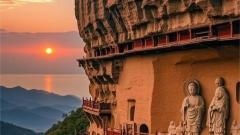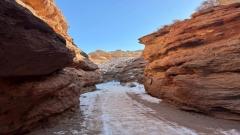

The Mogao Grottoes are located 25 kilometers southeast of Dunhuang City, Gansu Province, and represent the largest and best preserved Buddhist art treasure in the world. The murals and painted sculptures here span a thousand years, covering the essence of Buddhist art from the Sixteen Kingdoms period to the Yuan Dynasty. The Mogao Grottoes implement strict visitor limits, and regular tickets require advance online booking, with tickets being very limited during peak season. For foreign travelers, understanding the rules, procedures, and climate is essential. This guide details in how to visit the Mogao Grottoes, covering information, ticket types, visiting, top sights, tips, helping you to plan a successful visit.
Information for Foreign Visitors
Best Time
The best time to visit the Mogao Grottoes is from May to October. June and September offer the most moderate temperatures, with daytime highs around 25°C to 30°C, suitable for outdoor activities. In July and August, daytime temperatures can reach above 35°C, though the grottoes themselves remain relatively cool. October brings clear autumn skies and soft light. Winter (December to March) sees fewer visitors, but temperatures are lower, with daytime highs around 0°C to 10°C. The Dunhuang area has a dry climate with large temperature differences between day and night, so you should pack appropriate clothing for the season.
Opening Hours
The opening hours of the Mogao Grottoes vary by season. Peak season runs from April 1 to November 30, with opening hours from 8:00 am to 6:00 pm (last admission at 4:10 pm). Low season runs from December 1 to March 31, with opening hours from 9:00 am to 5:00 pm (last admission at 3:10 pm).
Ticket Purchase
Foreign visitors holding passports can purchase tickets through the official WeChat public account “Mogao Grottoes Reservation Network” or through the official website. You may also visit the Digital Exhibition Center in person and exchange your passport for a paper “Mogao Grottoes Ticket Information Sheet” at the manual ticket window. Please note that you must bring your original passport for both ticket purchase and entry, and your ticket, passport, and personal identity must match for admission.
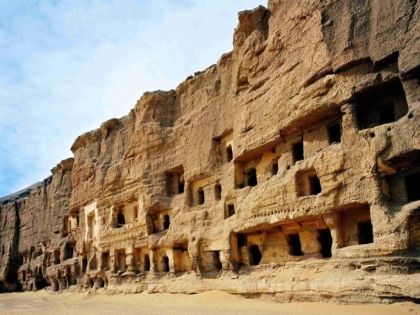
Classic Grottoes at the Mogao Grottoes
Ticket Types of the Mogao Grottoes
Regular Admission Ticket
The regular admission ticket is the preferred choice for foreign visitors, with a daily limit of 6,000 tickets. This ticket includes two films at the Digital Exhibition Center (“Thousand Year Mogao” and “Dream of the Buddha’s Palace”), a guided tour of 8 physical grottoes with a professional guide, and round trip shuttle bus service to the grotto area. The price is 238 RMB (peak season). Foreign visitors holding passports can purchase this ticket type, and the tour takes about 3 to 4 hours.
Emergency Admission Ticket
When regular tickets are sold out, the scenic area activates emergency admission mode, with a daily limit of 12,000 tickets. This ticket includes visits to 4 physical grottoes and round trip shuttle bus service, but no digital films or professional guide. The price is 100 RMB. The experience is significantly inferior to the regular ticket, so it is recommended that you book a regular ticket first.
Special Grotto Admission
Special grottoes are the most artistically valuable grottoes in the Mogao Grottoes and are only open in limited numbers for conservation reasons. Special grotto tickets must be purchased after completing the regular tour, at the Special Grotto Office in the grotto area with your valid passport. The list of special grottoes includes Grottoes 45, 57, 156, 158, 159, 217, 220, 254, 275, 320, 321, 322, 420, and others. Prices range from 150 to 200 RMB per grotto. It is recommended that you consult your guide for advice.
Tips
Mogao Grottoes tickets can be booked up to 15 days in advance. During peak season, regular tickets sell out immediately when released. It is recommended that you book promptly at 7:00 am on the day tickets become available. When booking, choose the 9:00 am to 10:00 am time slot, when visitor numbers are lowest and the experience is best.
Visiting Process for the Mogao Grottoes
Arrive at the Digital Exhibition Center
The Mogao Grottoes Digital Exhibition Center is located at 8899 Yangguan East Road, Dunhuang City. The first stop for visiting the Mogao Grottoes is the Digital Exhibition Center. Do not drive directly to the grotto area (there is no parking or ticket office there). It is recommended that you arrive 30 minutes early to exchange your passport for a paper Mogao Grottoes Ticket Information Sheet at the manual ticket window.
Watch the Digital Films
During this step, you will watch two films at the Digital Exhibition Center. The first is “Thousand Year Mogao” (about 20 minutes), which introduces the historical background and construction of the Mogao Grottoes. The second is “Dream of the Buddha’s Palace” (about 20 minutes), an 8K dome film that reveals the details of the grotto murals and painted sculptures, serving as the best introduction to Mogao Grottoes art.
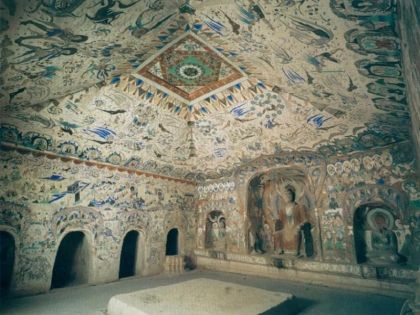
Inside the Mogao Grottoes in Dunhuang
Travel to the Grottoes
After watching the films, take the scenic area bus to the grotto area (about a 15 minute ride). The buses operate on a continuous loop. Please follow the staff’s instructions to board in an orderly manner. Upon arrival at the grotto area, you will be assigned a professional guide, with each group consisting of about 20 to 25 people. The guide will lead you through 8 grottoes (with the regular ticket), spending about 5 to 8 minutes per grotto. The guide will explain the stories and artistic value of the murals in accessible language.
Free Exploration and Return
After the grotto tour, you are free to explore the Exhibition Center, where you can see replica murals and excavated artifacts. The lighting here is excellent, making it ideal for taking photos. You can also visit the Library Cave Exhibition Hall to learn about the discovery of the Library Cave and the history of the artifacts that were lost abroad. When you finish, take the shuttle bus back to the Digital Exhibition Center. The entire process takes about 3 to 4 hours.
Top Sights in the Mogao Grottoes
Giant Buddha at Nine Story Building
Grotto 96 is the landmark structure of the Mogao Grottoes, commonly known as the Nine Story Building. Inside the grotto is a 35.5 meter tall seated Maitreya Buddha, one of the largest indoor clay Buddha statues in the world. The nine story exterior is the most visible landmark of the Mogao Grottoes. This grotto is a must see core grotto for all visitors and is included in both regular and emergency tickets.
Central Pillar Grotto of Northern Zhou
Grotto 428 is the largest central pillar grotto from the Northern Zhou period and features the famous mural of “Prince Sattva Giving His Body to Feed the Hungry Tiger.” This mural tells a Jataka story of a previous life of Sakyamuni, who gave his body to save a starving tigress. It is one of the most moving murals in the Mogao Grottoes.
Zhang Qian’s Mission to the Western
Grotto 323 preserves a mural depicting Zhang Qian’s mission to the Western Regions, recreating the history of the opening of the Silk Road during the Han Dynasty. This mural is a precious visual resource for understanding Silk Road history.
Library Cave
Grotto 17, known as the Library Cave, is the most legendary grotto in the Mogao Grottoes. In 1900, a Taoist priest named Wang Yuanlu discovered over 50,000 sutras, documents, and silk paintings here, causing a worldwide sensation. Today, most of these artifacts are held abroad, but the grotto itself remains an important place for understanding this history.
Special Grottoes
Special grottoes are the most artistically valuable grottoes in the Mogao Grottoes and require an additional ticket. Special grottoes worth seeing include Grotto 45, featuring fine Tang Dynasty painted sculptures with beautifully proportioned main Buddha and attendant bodhisattvas; Grotto 57, containing Early Tang murals; Grotto 158, featuring a large Nirvana image of a reclining Sakyamuni Buddha measuring 15.8 meters long; Grotto 220, an Early Tang mural masterpiece preserving the earliest Medicine Buddha sutra illustration; and Grotto 320, a High Tang mural site known as the “Flying Apsaras Grotto.”
Tips for Visiting the Mogao Grottoes
Services for Foreign Visitors
Foreign visitors can access one stop services through the “China Bound Dunhuang” English language platform. The platform offers AI powered Q&A, itinerary planning, and online booking functions. You can access the Dunhuang page through the China Bound mini program on WeChat or Alipay.
Sun Protection and Hydration
The Dunhuang area has strong UV radiation and a dry climate. It is recommended that you prepare high SPF sunscreen, sunglasses, and a wide brimmed hat. You should carry at least 1.5 liters of drinking water per person, as there are few water vendors within the scenic area. Lip balm and moisturizing lotion can prevent dry skin and cracking. While the grottoes are relatively cool in summer, you will be walking outdoors for extended periods, so take precautions against heat.
Recommended Clothing
It is recommended that you wear light, breathable clothing and comfortable hiking shoes. Visiting the Mogao Grottoes requires considerable walking, with some sections on stone paths. In summer, you can wear short sleeves or thin long sleeves with a sun protection layer. In spring and autumn, prepare a light jacket for the significant temperature differences between day and night. In winter, temperatures are low, so you will need a down jacket and warm shoes. The temperature inside the grottoes is about 15°C to 20°C. In winter, wear warm layers when entering the grottoes; in summer, the grottoes are relatively cool.
Cultural Tips
Once inside the grottoes, absolutely no photography or video recording is allowed, as light can cause irreversible damage to the murals. Photography is only permitted in the Digital Exhibition Center, the Exhibition Center, and outside the grottoes. Additionally, do not touch the murals or painted sculptures, as the oils and sweat on your hands can corrode the surfaces.
How Should Foreigners Visit the Mogao Grottoes: A Glance to the Silk Road Culture
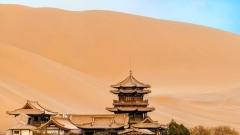
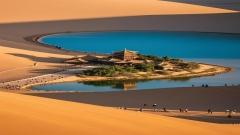
The Mogao Grottoes are the most brilliant cultural jewel on the Silk Road and the best window for foreign travelers to understand Chinese Buddhist art and Silk Road history. Booking regular tickets in advance, understanding the basic rules of grotto visitation, and respecting local cultural taboos are key to a successful cultural journey. The classic one day Dunhuang itinerary is to visit the Mogao Grottoes in the morning and then head to Mingsha Mountain and Crescent Lake in the afternoon to see the desert sunset. Whether you are an art lover or a history enthusiast, the murals and painted sculptures of the Mogao Grottoes will leave a lasting impression. We hope this guide helps you plan a satisfying visit to the Mogao Grottoes.