
Known as China’s “Mountain Park Province,” Guizhou is a captivating blend of dramatic landscapes and vibrant ethnic cultures. Its top 10 standout destinations—from thundering waterfalls to age-old villages—encapsulate the very best of natural wonders and human heritage. Whether you’re chasing awe-inspiring scenery or delving into time-honored traditions, these spots promise an unforgettable journey. Below is a detailed guide to unlock their unique charms, helping you craft a perfect Guizhou adventure.
Must-see Natural Wonders in Guizhou
Huangguoshu Waterfall
As Asia’s largest waterfall, Huangguoshu is undoubtedly Guizhou’s iconic attraction. The waterfall is 77.8 meters high and 101 meters wide. The water flows straight down the cliff into the Rhinoceros Pool, with a roar like ten thousand horses galloping, which is awe-inspiring. Ming Dynasty geographer Xu Xiake made a special trip to witness it, penning the praise: “Pearl curtains hang unrolled, silk ribbons drape distant peaks.”
The scenic area is more than just a single waterfall—it’s a vast cluster comprising the main Huangguoshu Waterfall, Dopotang Waterfall, and Tianxingqiao Scenic Area. Dopotang, the widest in the cluster, gained fame as a filming location for Journey to the West’s ending theme. Tianxingqiao shines with the clever combination of rocks, trees, and water, featuring unique underwater stone forests and the Silver Chain Waterfall. For the most spectacular view, visit during the rainy season when water flow peaks—mist shrouds the canyon, often forming rainbows that add a fairy-tale touch.
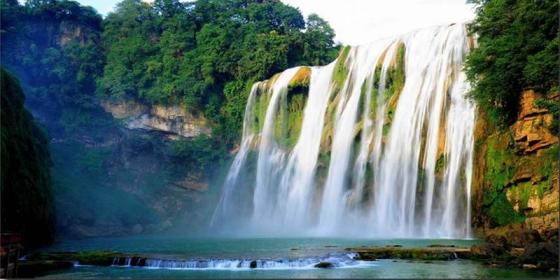
Huangguoshu Waterfall
Libo Xiaoqikong (Seven Small Arches)
Hailed as the “Emerald on the Earth’s Belt,” Libo Xiaoqikong is a masterpiece of karst landforms and a UNESCO World Heritage Site. At its core stands a 19th-century (Qing Dynasty Daoguang period) seven-arch stone bridge, draped in vines and ferns, lying serenely on the crystal-clear Xiangshui River, blending seamlessly with the surrounding green mountains and waters like a pastoral poem.
Following the 1.6-kilometer river valley, you’ll encounter a series of stunning sights: the 68-step Waterfall, Laya Waterfall, Mandarin Duck Lake, and Underwater Forest. The 68-step Waterfall resembles a string of silver pearls, tumbling down the riverbed with pleasant splashes. In the Underwater Forest, tree roots intertwine with flowing water—visitors can walk barefoot through the stream for an intimate brush with nature. Mandarin Duck Lake, renowned for its turquoise waters, offers bamboo raft rides that feel like gliding into a paradise.
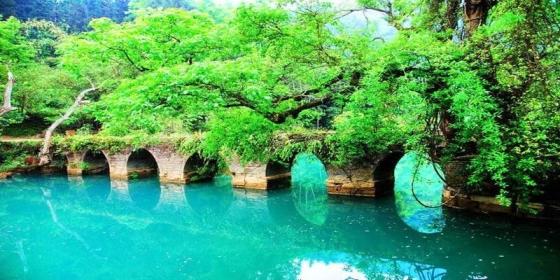
Libo Xiaoqikong
Fanjingshan Mountain
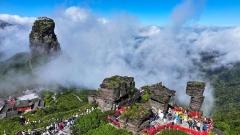
As the main peak of the Wuling Mountains, Fanjingshan is not only a UNESCO World Heritage Site but also a sacred Buddhist mountain with a geological history spanning 1 billion years. The mountain’s iconic wonders—such as Mushroom Stone and Ten-Thousand-Volume Book Rock—are masterpieces of tectonic movements, witnessing countless years of change. The most breathtaking spot is Hongyun Golden Summit (Red Cloud Golden Peak), standing 2,336 meters above sea level. Split in two by Jindaoxia Gorge, the peak is home to two Ming Dynasty temples dedicated to Sakyamuni Buddha and Maitreya Buddha, connected by a sky bridge. Shrouded in clouds, it feels like a city in the sky.
Fanjingshan is a ecological treasure trove, housing rare species like the Guizhou golden monkey and dove tree. Its scenery transforms with the seasons: blooming rhododendrons in spring, cool temperatures in summer, vibrant foliage in autumn, and sparkling rime in winter. For the best experience, hike at dawn to catch the magnificent sunrise and sea of clouds, while soaking in the mountain’s tranquility and sacredness.
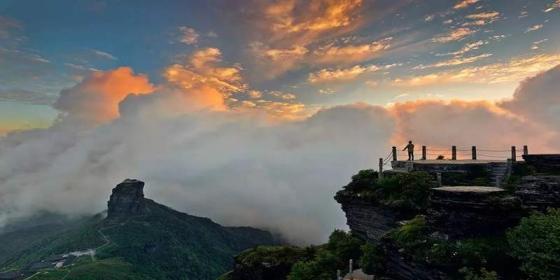
Fanjing Mountain
Zhijin Cave
Dubbed the “King of Karst Caves,” Zhijin Cave is the centerpiece of a global geopark. This 6.6-kilometer underground palace boasts over 40 types of karst formations, serving as a living encyclopedia of karst geology. With a spacious interior—reaching up to 150 meters high and 175 meters wide—wandering through the cave feels like traveling through a geological time tunnel.
The cave’s three must-see attractions are the Silver Rain Tree, Overlord’s Helmet, and Grand Mural. The 17-meter-tall Silver Rain Tree, crystal clear and rare in global caves, is insured for 1.5 billion yuan with a real-time monitoring system. The Overlord’s Helmet, shaped like an ancient general’s helmet, stands 14 meters high with a base diameter of 12 meters, formed 150,000 years ago. The Grand Mural resembles a vast landscape painting, with natural rock textures that look vivid and lifelike. Divided into 12 halls and featuring over 150 scenic spots, every step in the cave brings a new surprise.
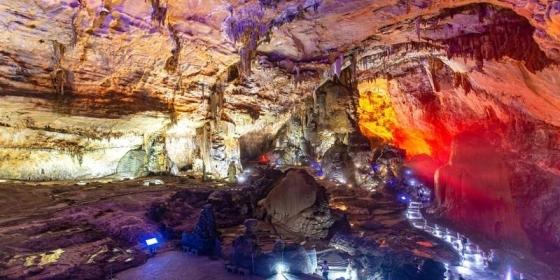
Zhijin Cave
Wanfenglin Scenic Area / Maling River Gorge
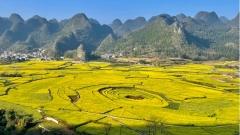
Located close to each other, these two attractions form the unique three-dimensional karst landscape of Xingyi. Wanfenglin (Ten Thousand Peaks Forest) was praised by Xu Xiake as “Among all the peaks under heaven, none are as dense as here.” Tens of thousands of green peaks surround Buyi ethnic villages, with rapeseed flowers covering the fields in spring and golden rice waves rolling in autumn. Natural spots like Bagua Field and Earth Eye add charm to the idyllic scenery.
Maling River Gorge, known as “the Most Beautiful Scar on Earth,” stretches 74.8 kilometers, cutting over 100 meters deep. Steep cliffs face each other on both sides, and dozens of waterfalls hang like silver ribbons, forming a spectacular waterfall cluster. The travertine waterfalls and mural rocks in the gorge are unique, and rafting is a popular activity. Drifting down the river on a rubber boat, you can enjoy the scenery while feeling the thrill. Above the gorge lies Wanfenglin, and below is Wanfeng Lake—their mutual reflection makes for a masterpiece of nature.
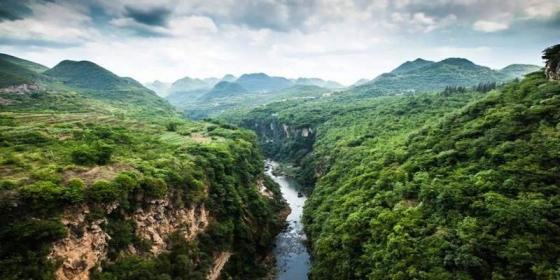
Maling River Gorge
Must-see Cultural and Scenic Places in Guizhou
Xijiang Qianhu Miao Village
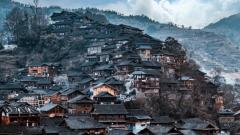
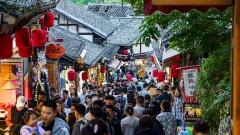
As the largest Miao settlement in China and even the world, Xijiang Qianhu Miao Village consists of over a dozen natural villages built along the mountains. Home to 1,468 Miao households, it preserves intact Miao culture. The Baishui River flows through the village, dividing it into two parts. More than a thousand stilted wooden buildings cling to the terrain, row upon row—shrouded in morning mist, they look like a layered fairyland.
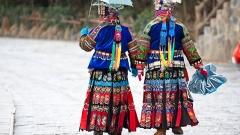
This is an open-air Miao cultural museum, where intangible cultural heritages like silver forging and embroidery are vividly passed down. Visitors can experience the warmth of the “twelve courses of welcome wine,” savor local delicacies such as Miao sour fish and drum festival meat, and join the “ten-thousand-person long-table banquet” to feel the Miao people’s hospitality. The village is even more enchanting at night—when thousands of lights illuminate the stilted buildings, forming a brilliant sea of lights. Overlooking from the viewing platform, the scene is unforgettable. Additionally, during traditional festivals like Miao New Year, Harvest Festival, and Drum Festival, the village holds grand celebrations with melodious lusheng music and lively dances.
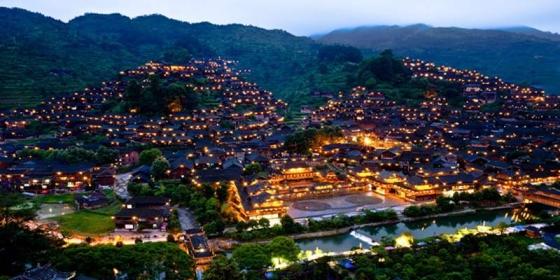
Xijiang Qianhu Miao Village
Zhaoxing Dong Village
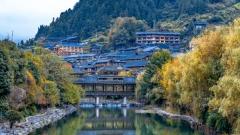
Unlike the bustling Xijiang Miao Village, Zhaoxing Dong Village exudes tranquility and simplicity, famous for its unique cluster of drum towers. The village’s five drum towers represent the five clans of Ren (Benevolence), Yi (Righteousness), Li (Propriety), Zhi (Wisdom), and Xin (Faith). The tallest, the Wisdom Drum Tower, has 13 stories with exquisite carvings, a masterpiece of Dong architecture. Drum towers, flower bridges, stages, and stilted buildings complement each other, forming a complete Dong architectural system.
The Dong Grand Choir is the cultural soul of Zhaoxing. This polyphonic a cappella singing, like celestial music, has been listed as an intangible cultural heritage of humanity. Every night, elderly villagers lead young people in singing—their voices echoing through the streets, filling the air with warm daily life. During the Harvest Festival in the sixth lunar month and Dong New Year in the tenth lunar month, the village hosts activities such as lusheng dance and Dong Grand Choir competitions, embodying the Dong philosophy: “Food nourishes the body, and songs nourish the soul.” It’s recommended to stay overnight to experience the slow pace of Dong life.
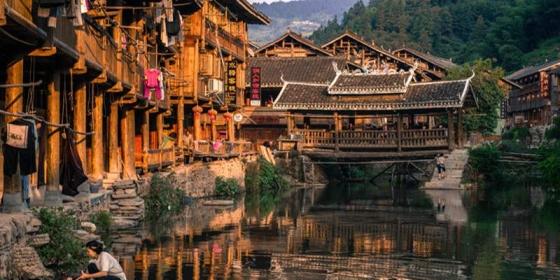
Zhaoxing Dong Village
Qingyan Ancient Town
As Guiyang’s only 5A-level scenic spot, Qingyan Ancient Town was first built in the Ming Dynasty as a military fortress. Today, it serves as an important window to experience Guizhou’s Ming and Qing cultures. Built along the mountains, the town features winding bluestone streets flanked by well-preserved courtyard houses, ancient post stations, and piers from the Ming and Qing dynasties. Its city walls and gates stand tall, witnessing the passage of time.
The town boasts profound cultural heritage, with symbols of Confucianism (Wenchang Pavilion), Buddhism (Yingxiang Temple), and Taoism (Dragon King Temple) coexisting harmoniously. Additionally, its local cuisine is not to be missed—specialties like braised pork knuckles, rose candy, and tofu balls are uniquely flavorful and beloved by visitors. Free from excessive commercialization, wandering through the town allows you to feel the peace and tranquility accumulated over time.
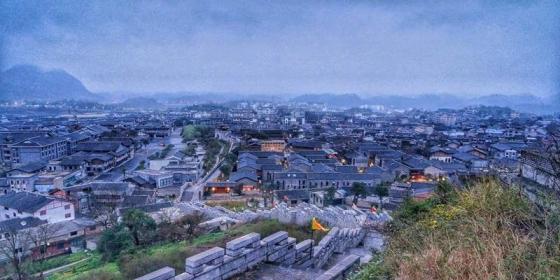
Qingyan Ancient Town
Jiaxiu Tower
Located on the Nanming River in Guiyang, Jiaxiu Tower was first built in the Ming Dynasty. It is Guiyang’s city symbol and a national key cultural relic protection unit. Standing 22.9 meters tall, the tower features a three-story, three-eaves, four-cornered pyramidal roof with a unique architectural style. Combined with bridges, pavilions, and terraces, it forms a beautiful waterside picture. The “Jiaxiu Tower” plaque hanging on the tower was written by a famous Qing Dynasty scholar, with bold and vigorous calligraphy.
Jiaxiu Tower’s charm lies not only in its architecture but also in its profound cultural connotations. Scholars and poets throughout history have composed poems and paintings here, leaving countless masterpieces. The tower is most enchanting at night—illuminated by lights, its reflection shimmers on the Nanming River, like a fairyland. Surrounding attractions such as Cuiwei Garden and Riverside Park are connected to Jiaxiu Tower, making it a popular spot for Guiyang residents and tourists to relax and stroll.
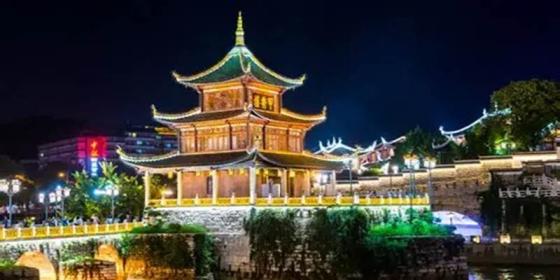
Jiaxiu Tower
Wujiangzhai International Tourism Resort
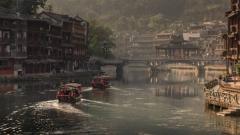
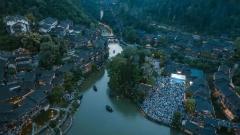
As a rising star among Guizhou’s tourist attractions in recent years, Wujiangzhai International Tourism Resort is located in Bozhou District, Zunyi City. Centered on northern Guizhou’s folk customs and pastoral landscapes, it offers an immersive travel experience. Covering 5.08 square kilometers, the resort is built around karst canyons and a Wujiang River tributary, with 12 restored century-old stilted building clusters. In 2025, it added an intangible cultural heritage workshop cluster and a smart night tour system, earning it the reputation of “Guizhou’s Fenghuang Ancient Town PLUS.”
The resort is packed with must-visit highlights: every night at 19:30, the 800-mu terraced fields host the “Qianyun Mountains and Rivers” light show, combining drone formations and water projections for a stunning visual feast. At the “Single Bamboo Rafting” intangible cultural heritage theater, Miao men demonstrate “water kung fu” by standing on a single bamboo pole to cross the river—visitors can also try it for a fee. The indigo dyeing workshops on Ranfang Street allow you to make your own unique handkerchiefs, perfect for photos. Additionally, night bamboo raft rides on the Wujiang River, Miao long-table banquets, and stays in stilted building homestays let you deeply experience northern Guizhou’s charm.
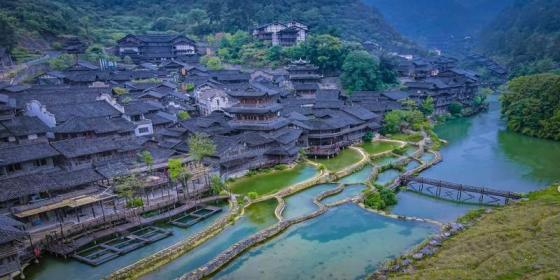
Wujiang Village International Tourism Resort
Embark on a Journey of Scenery and Culture in Guizhou
From the thunder of Huangguoshu Waterfall to the sea of clouds over Fanjingshan, from the warmth of Miao and Dong villages to the charm of ancient towns and new resorts—Guizhou’s top 10 must-visit spots each hold unique allure, collectively depicting the province’s grandeur and warmth. Its landscapes soothe the soul, and its cultures captivate the heart. Whether traveling alone or with family and friends, you’re sure to gain countless joys and memories. For a hassle-free adventure, China Dragon Travel offers a wealth of Guizhou travel routes, tailored to your needs—allowing you to fully immerse yourself in Guizhou’s unique charm without any regrets.