

Before booking a trip to China, most travelers need to answer one practical question first: do they need a visa, can they enter visa-free, or will they also need a special permit for certain destinations? In 2026, China’s entry rules have become more flexible for many foreign passport holders, but the exact documents still depend on nationality, length of stay, and where you plan to go. A standard city break, a cross-country itinerary, and a trip to Tibet or border regions may all require very different preparation. This guide brings those requirements together in one place, so you can check your entry status early and avoid last-minute problems.
China The Visa Policy of China in 2026
Policy Overview
In 2026, China’s visa policy features expanded visa free access, digitalized application processes, and improved supporting services. The unilateral visa free policy has been extended to December 31, 2026, with the number of eligible countries increased to 50. At the same time, China has extended the policy exempting fingerprint collection for all short term visa applicants with a stay of 180 days or less until December 31, 2026. Visa applications have fully transitioned to online processing, significantly simplifying the traditional paper based application process.
Fingerprint Collection Exemption
Until December 31, 2026, Chinese visa authorities abroad exempt all short term visa applicants with a stay of 180 days or less from fingerprint collection. This means that the vast majority of short term visa applicants, including tourist visa applicants, do not need to appear in person to provide fingerprints and can authorize others or travel agencies to submit their application materials on their behalf. This policy greatly simplifies the application process, especially for applicants living far from visa application centers. The fingerprint collection exemption policy is valid until December 31, 2026.
Online Entry Card
Since November 20, 2025, foreign nationals can complete their entry card online before coming to China through the official website of China’s National Immigration Administration, government service platforms, and mini programs on WeChat and Alipay. After completing the form, the system generates a QR code, which you can save as a screenshot or print as a paper copy. Upon arrival at a Chinese port of entry, you only need to show this QR code and your passport to border inspection personnel, eliminating the need to fill out a paper entry card by hand.
The Visa Free Entry Policy of China Travel
Unilateral Visa Free Policy
As of March 2026, China has implemented a unilateral visa free policy for 50 countries. Holders of ordinary passports from these countries can enter China without a visa for up to 30 days for business, tourism, family visits, exchanges, or transit. This policy is valid until December 31, 2026. The policy applies to most EU countries, including the United Kingdom (effective February 17, 2026), Canada (effective February 17, 2026), Australia, New Zealand, Japan, South Korea, Singapore, Malaysia, the United Arab Emirates, several Latin American countries, and Russia (under a separate arrangement valid until September 14, 2026).
Mutual Visa Exemption Policy
As of March 2026, China has signed mutual visa exemption agreements with 29 countries. Citizens of these countries holding ordinary passports can enter China without a visa under the conditions stipulated in the agreements. The duration of stay typically ranges from 30 to 90 days, varying by country. It is recommended that you consult the “List of Mutual Visa Exemption Agreements Between China and Foreign Countries” or visit the official website of the Chinese embassy or consulate in your country to confirm the latest information, ensuring that your nationality is on the mutual exemption list and that the permitted duration of stay matches your travel itinerary.
Visa Upon Arrival Policy
Foreign travelers can apply for a visa upon arrival at designated ports of entry in China. This policy applies to travelers who need to enter China for urgent reasons, have not obtained a visa in advance, but meet the eligibility requirements. Application conditions include holding a passport valid for at least six months, having supporting documents proving the urgent reason for entry, and holding a confirmed departure ticket. Cities where this type of visa can be obtained include Beijing Capital Airport, Shanghai Pudong Airport, Guangzhou Baiyun Airport, Chengdu Tianfu Airport, and other major international airports.
240 Hour Transit Visa Free Policy
If you are traveling through China to a third country or region, you may consider using the 240 hour transit visa free policy. Currently, China applies this policy to 55 countries, including Spain. Eligible travelers holding valid international travel documents and connecting tickets with confirmed dates and itineraries can enter visa free at any of the 65 open ports in 24 provinces and stay in designated areas for up to 10 days. During the stay, you may engage in tourism, business, visits, family visits, and other activities.

Foreign Tourists Experiencing China
How to Apply for China’s Tourist Visa
Application Process
Since September 30, 2025, China has fully launched a new online visa application system, replacing the traditional paper based application process. The new process consists of three steps. First, log in to the China Visa Online Application website, register an account, complete the online application form, and upload electronic copies of all required documents. You will need to prepare scanned copies of your passport information page, a compliant electronic photo, travel itinerary, and other supporting documents. After submission, you must check your application status regularly. If the status shows “rejected for additional materials” or “rejected for revision,” you will need to provide the requested supplements or corrections. Finally, download and print the China Visa Application Form with its barcode, sign it yourself or have your representative sign it, and then submit it in person along with your original passport and paper copies of other uploaded materials at a Chinese Visa Application Service Center.
Required Materials
You need to prepare the following materials: your original passport must be valid for at least six months and have at least two blank visa pages. When applying for a multiple entry visa, some embassies and consulates require a passport valid for 12 months or more. The visa application form must be completed and printed from the COVA system and must include the barcode. Your electronic photo should be a 2 inch, full face, bareheaded, color photo with a white background taken within the last six months (48mm x 33mm). After successful online upload, you usually do not need to submit a paper photo. Copies of your previous Chinese passport and visa are required if you previously held Chinese citizenship and later acquired foreign citizenship, or if you have been issued a Chinese visa before.
Processing Time
The standard processing time is approximately 4 business days. Expedited service (2 to 3 business days) requires an additional fee. It is recommended that you submit your application at least one month in advance to allow sufficient processing time.
Validity and Duration
The standard duration of stay for a tourist visa is 30 days, which is the most common length issued to first time applicants. You may also apply for a 60 day or 90 day stay, subject to consular approval and the supporting materials you provide. Regarding visa validity, single entry and double entry visas are typically issued with a validity period of 3 to 6 months. For frequent visitors to China, you may apply for a multiple entry visa with a validity period of 6 months, 1 year, 2 years, 5 years, or even 10 years.
Permits for Special Regions Travel
Tibet Travel Permit
The Tibet Travel Permit is a mandatory travel document for foreign nationals entering the Tibet Autonomous Region. All foreign passport holders must apply in advance through a licensed Tibet travel agency, as independent travel is not permitted in Tibet. The permit is issued by the Tibet Tourism Bureau. When applying, you must provide scanned copies of your passport and Chinese visa page. It is recommended that you begin the application process at least 4 to 6 weeks before your planned arrival in Tibet. The Tibet Travel Permit is only valid for Lhasa and surrounding major attractions. If you plan to visit remote areas such as Everest Base Camp, Namtso Lake, or the Ngari region, you will need to apply for additional travel permits. The permit will be sent by the travel agency to your hotel at your first port of entry in China. You must carry the original permit with you at all times, as multiple checkpoints along the way will require inspection.
Border Pass
The Border Pass is a permit required for traveling to certain border areas and military sensitive zones in China. Unlike the Tibet Travel Permit, the Border Pass can usually be obtained from the local Public Security Bureau through a relatively straightforward process. Popular destinations requiring a Border Pass include: Tashkurgan County in Xinjiang, Baihaba Village in Xinjiang, the Mazongshan area in Gansu, parts of the Manzhouli area in Inner Mongolia, and some border towns in Xishuangbanna, Yunnan. To apply, you need to bring your original passport and Chinese visa, complete an application form, and state your travel purpose. In most cases, the permit can be issued on the same day. It is recommended that you contact local travel agencies or hotels in advance to confirm the specific application location and required documents, as some areas may require application through a travel agency.
Xinjiang Travel Permits
In addition to the Border Pass, some areas of Xinjiang have additional travel restrictions and requirements for foreign travelers. When traveling to Baihaba Village in the Kanas Scenic Area, the Khunjerab Pass in Tashkurgan, or some border towns in the Hotan region, you may need to report to the local public security authorities in advance, in addition to obtaining a Border Pass. It is recommended that you contact local travel agencies or your accommodation in advance to confirm the latest policies when planning your Xinjiang itinerary. Unlike Tibet, most regular tourist cities in Xinjiang, such as Urumqi, Turpan, Kashgar city center, and Ili, allow foreign travelers to travel freely without special permits. However, it is recommended that you carry your original passport with you at all times during your Xinjiang trip for inspection at checkpoints along the way.
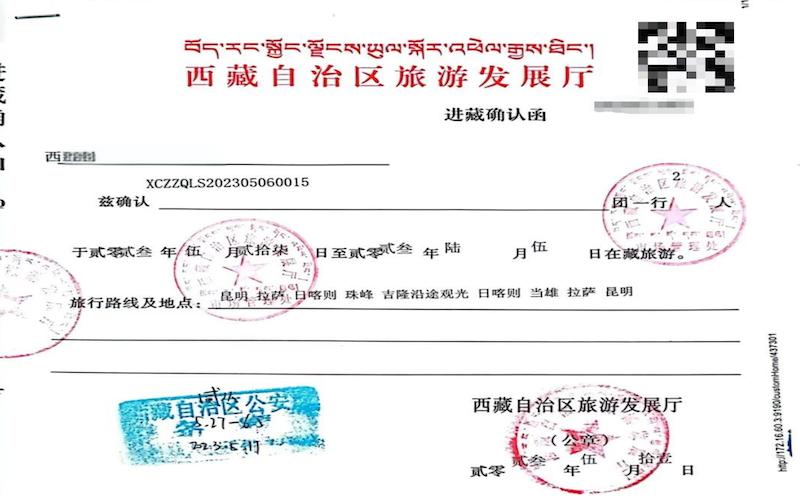
Tibet Travel Permit
Tips for Applying for Tourist Visa to China
Check Your Visa
Before booking flights and hotels, confirm whether you need a visa. Even if your country is on the visa free list, be sure to check the official website of the Chinese embassy or consulate in your country for the latest policies, as the visa free list and validity periods may be adjusted at any time.
Plan Your Tibet Trip in Advance
If you plan to visit Tibet, be sure to contact a licensed travel agency 4 to 6 weeks in advance to arrange your Tibet Travel Permit. Do not wait until after you arrive in China to start the process, as you cannot apply for it from within the country.
Apply Through Official Channels
You should submit your visa application through the official website of the Chinese Visa Application Service Center. Avoid using third party agency websites to prevent personal information leaks or unreasonable fees.
Comply with China’s Laws and Regulations
When traveling within China, please comply with local laws and regulations and respect local customs. Photographing military facilities, government buildings, and other sensitive locations is strictly prohibited.
Documents for China Travel in 2026
A smooth China trip usually starts long before departure. Once you know whether you qualify for visa-free entry, need a tourist visa, or can use a transit policy, the rest of the planning becomes much easier. The same is true for special destinations such as Tibet, where extra permits may be required and advance planning matters more than anything else. Taking care of the paperwork first helps you avoid delays, rejected applications, and unnecessary stress at the border. If your itinerary includes Tibet or other regulated areas, China Dragon Travel can help you turn the entry rules into a clear and workable travel plan, so you can focus on the journey itself.