
Travelers who seek a journey that doubles as an experience choose the Lhasa–Chongqing train not merely to move between points A and B, but to travel through a string of dramatic landscapes and engineering marvels. Z224 departs Lhasa in the evening and delivers passengers to Chongqing in the early morning of the third day — roughly a 35-hour rail odyssey across 3,030 kilometers. For many international tourists, this route is an ideal continuation after a Tibet tour, especially if you plan a Yangtze River cruise or want to explore China’s southwest urban culture after the high plateau.
Why Choose the Lhasa to Chongqing Train?
Experience the Qinghai-Tibet Railway
The Qinghai-Tibet Railway is widely regarded as one of modern engineering’s standout achievements. Riding Z224 allows travelers to appreciate the Lhasa–Xining high-altitude section and then watch the landscape descend into China’s interior — a succession of plateaus, desert, river valleys, and eventually the lush mountain cityscapes of Chongqing.
Practical Benefits for Outbound Travelers
Outbound train tickets from Lhasa to mainland China are often easier to secure than inbound tickets to Tibet during peak season. Demand is very high for trains into Tibet (especially in summer), while trains leaving Tibet tend to be less crowded. That can mean lower fares, higher availability of preferred berths, and a more relaxed booking process — useful for visitors finishing a Tibet itinerary who want a scenic, reliable exit option.
Seamless Link to a Yangtze Cruise or Southwest China Tour
Chongqing is a major gateway for Yangtze River cruises and southwestern China travel. Arriving by train early in the morning gives you time to connect to cruise terminals, local flights, or high-speed rail links to nearby attractions.
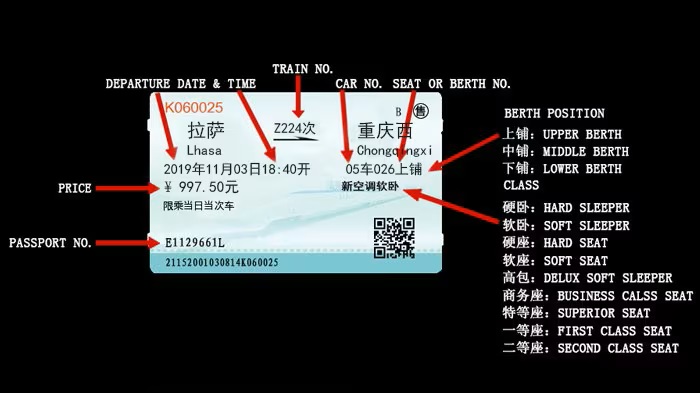
Lhasa to Chongqing Train Ticket
Practical Details and Schedule
Core Schedule for Z224
Z224 typically departs Lhasa Railway Station at 19:00 and arrives at Chongqing West Railway Station at 06:10 two mornings later, making the journey about 35 hours and 3,030 km long. The train stops at key stations including Nagchu, Golmud, Delingha, Xining, Lanzhou, Guangyuan, and Nanchong North before reaching Chongqing West. Its return counterpart is Z223 (Chongqing → Lhasa).
Frequency and Calendar Notes
Z224 runs every other day; because patterns can shift for operational needs and seasonal changes, travelers should confirm the exact running dates for their planned month. In practice, alternating daily patterns mean trains that depart on odd days may be paired with a different route on even days; when in doubt, check your confirmed ticket information and local advice.
Booking Tickets and Understanding Prices
Typical Fare Tiers
- Hard Seat: economical choice; listed net price in the sample information is about ¥302.5 (note: fares fluctuate).
- Hard Sleeper (Second Class): roughly ¥627.5.
- Soft Sleeper (First Class): roughly ¥997.5.
These are base prices and do not include additional service fees that many agencies charge to secure hard-to-get Tibet tickets. International travelers often rely on reputable agencies to secure tickets (especially soft sleepers) because official online booking portals require Chinese payment methods or local ID.
Best Practices for International Bookers
- Book early: soft sleepers are in high demand; securing them 2–3 months in advance (or earlier during peak seasons and festival periods) greatly improves your odds.
- Use a trusted travel agency that can handle non-Chinese payment and booking queues for you. Agencies can also advise on alternatives when direct tickets are not available.
- Keep scanned passport copies ready, as you will need official documents for purchase and pickup.
Soft Sleeper or Hard Sleeper: Which Should You Choose?
Soft Sleeper — Recommended for Comfort
Soft sleeper compartments have four bunks with a door, measuring roughly 75cm × 190cm per bed. These cabins are quieter, more private, and more comfortable for long overnight travel — strongly recommended for the Lhasa → Chongqing run given the duration.
Hard Sleeper — Budget and Social Option
Hard sleeper cars contain six bunks per open compartment (no door). They are cheaper and more social but offer less privacy and comfort. For budget travelers who don’t mind limited space and want to meet fellow passengers, hard sleeper is an acceptable alternative.
Booking Tip
If soft sleeper tickets sell out, viable alternatives include taking a partial train to Xining and flying onward, or taking Lhasa → Chengdu and then a fast train to Chongqing. Each option trades travel time for ticket availability and flexibility.
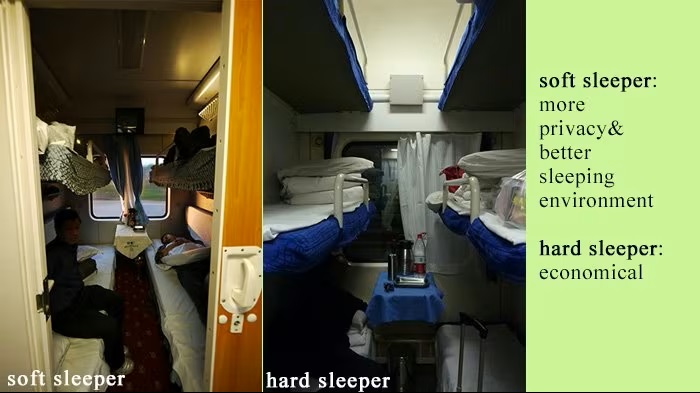
Soft sleeper is more spacious than the hard one
Life Onboard: Food, Facilities and Daily Routines
Dining and Snacks
Z224 provides dining car services (simple Chinese meals, noodles, soups) and food trolleys carrying snacks and drinks. Expect to pay modest prices and use cash or Chinese digital payments where accepted — carrying some cash is prudent for remote sections.
Facilities Built for Highland Travel
Trains on the Qinghai-Tibet route are specially equipped with pressurization and oxygen supply systems. Expect oxygen outlets in the compartments and along the aisles, an altitude display, air-conditioning, and charging sockets. Soft sleeper cars typically include at least one western-style toilet and better wash facilities; hard sleeper cars rely mainly on squat toilets.
Mobile Charging and Connectivity
Power outlets are available near bunks and in common areas. Connectivity is intermittent in remote stretches; plan offline entertainment and bring power banks.
Altitude Change and Health Considerations
The Altitude Profile
After leaving Lhasa (around 3,650 m), the train climbs toward Tanggula Pass, the highest point at roughly 5,072 m, then descends gradually across Golmud and Xining toward lower altitudes and finally Chongqing at about 244 m.
Managing Altitude Sickness
Passengers are usually better acclimatized leaving Lhasa after days spent on the plateau, but brief symptoms can occur as the train reaches the high pass. Onboard oxygen systems and trained staff help manage discomfort. Carry basic altitude medication if you are prone to symptoms and drink plenty of fluids. If severe symptoms occur, seek immediate assistance from the conductor and medical staff on board.
Scenic Highlights En Route
Plateau Sunrises and Desert Vistas
Expect dramatic sunrises in places like Golmud and sweeping desert or saline-salt plain views between Golmud and Delingha. The route offers an unusual mix: high-altitude rocks and tundra, wide desert expanses, and the stark infrastructure that supports the railway itself.
Rivers, Lakes and Cultural Stops
As the train descends toward Xining and Lanzhou, the environment shifts to include river valleys and famous sights such as the Yellow River near Lanzhou. The change from Tibetan plateau to central China is one of the most visually striking transitions possible by rail.
Stations and Transfers: Lhasa and Chongqing West
Lhasa Railway Station — The Gateway on the Plateau
Lhasa Railway Station is a striking building blending traditional Tibetan architectural forms with modern railway facilities. It sits roughly 8 km outside downtown Lhasa and is fully equipped to handle international passengers — but prepare for thorough security checks and crowding in peak seasons.
Chongqing West Railway Station — Your Arrival Hub
Chongqing West is a major transport interchange situated some distance from the city center (roughly 27 km). From the station you can access downtown by taxi, high-speed lines, or dedicated airport buses. Allow transfer time for luggage and traffic if you need to catch onward transport.
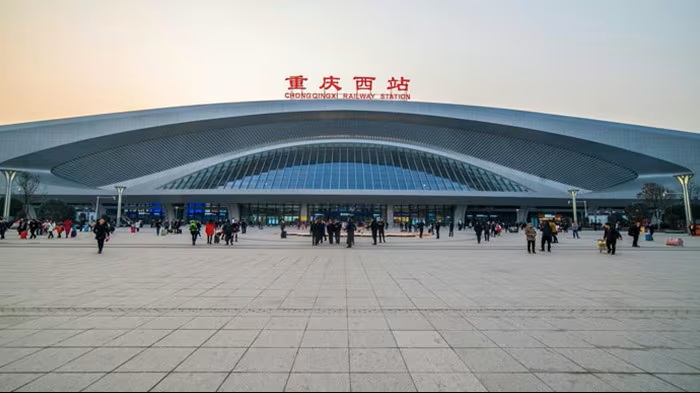
Chongqing West Railway Station
Alternatives and Contingency Plans
If Direct Tickets Are Unavailable
- Lhasa → Xining + Flight to Chongqing: Shorter train time and direct flights often open more availability.
- Lhasa → Chengdu + High-speed Train to Chongqing: Chengdu–Chongqing high-speed trains run frequently and take roughly 1.5–3 hours depending on service.
- Switch Travel Modes: If your dates are fixed, consider flying into Tibet and leaving by train, or vice versa.
Why Flexibility Pays Off
Because Tibet rail demand is seasonal, travelers who remain flexible on departure dates or open to partial rail + flight combinations will usually secure smoother, more comfortable journeys.
How to Collect Your Paper Ticket and Board
Collect at the Station
International travelers must collect paper tickets at the ticket window in the main hall using the booking confirmation and passport. Automated machines may not accept foreign documents, so collecting at a window is standard.
Security and Boarding Steps
Expect a careful security screening: present passports, scan luggage, and pass through detectors. Boarding usually begins 15–30 minutes before departure; keep your ticket handy for platform checks.
Packing and Practical Tips
- Bring cash in small denominations for dining car purchases and remote stalls.
- Pack toilet paper and wet wipes; supplies on board can run low.
- Carry a refillable water bottle — free boiled water dispensers are usually available.
- Prepare for temperature variation: nights can be cool even on trains with heating; bring layers.
- Download offline maps and entertainment — mobile signal is intermittent.
Frequently Asked Questions About Lhasa to Chongqing Train
Is the Lhasa–Chongqing train safe for solo travelers?
Yes. Compartments are monitored, train carriages are locked to non-ticketed passengers, and there are surveillance systems and patrols. Soft sleeper adds privacy for solo travelers.
Can I swap berths to stay with friends in my group?
Swapping is usually done through the conductor; many passengers successfully arrange swaps when space permits.
Are credit cards accepted on the train?
Onboard vendors may accept Chinese mobile payments (WeChat Pay, Alipay) and sometimes cash — foreign credit card acceptance is rare. Carry cash as backup.
Is Z224 Right for You?
If you value scenery, long-form travel experiences, and a soft landing into China’s interior after Tibet, Z224 is a top choice. It transforms necessary transit into a memorable leg of your trip — blending alpine wonder, historic engineering, and the everyday life of Chinese rail. For travelers aiming to connect to a Yangtze cruise or explore southwestern cultural hubs, arriving in Chongqing by train can be both practical and evocative.