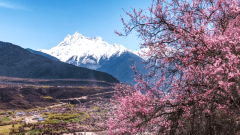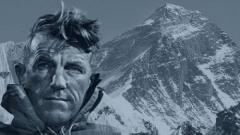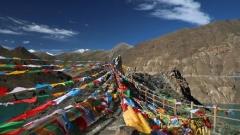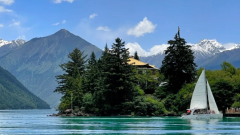

There are road trips, and then there is the journey from Lhasa to Kathmandu. Covering approximately 1,330 kilometers along the legendary Friendship Highway, this overland route crosses the entire Tibetan Plateau, passes within touching distance of the world’s highest mountain, descends through some of the most dramatic landscape transitions on earth, and delivers you into the warm, chaotic embrace of Kathmandu – all in seven days.
A direct flight between the two cities takes roughly two hours. But the travelers who choose the overland route are not looking for a shortcut. They are looking for something far harder to find: an experience that unfolds slowly, that reveals its wonders one mountain pass at a time, and that stays with you long after the journey ends.
This guide covers everything you need to know before booking your Lhasa to Kathmandu overland tour – the highlights, the itinerary, the road conditions, the permits, the altitude, the costs, and the practical details that make the difference between a smooth crossing and an avoidable headache.
Why choose overland instead of flying
A flight from Lhasa to Kathmandu covers 571 kilometers in around two hours. The overland route covers 1,330 kilometers over seven days. On paper, the flight wins easily. In practice, the comparison misses the point entirely.
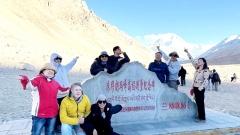
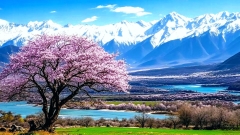
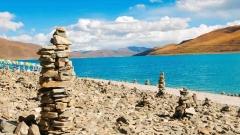
The overland journey gives you central Tibet. It gives you Yamdrok Lake’s extraordinary turquoise spread across the plateau, the Karola Glacier tumbling down toward the road, the ancient walled town of Gyantse, and the imposing Tashilhunpo Monastery in Shigatse. It gives you Everest Base Camp – a close-up encounter with the north face of the world’s highest mountain that no flight path can replicate. It gives you the slow, cinematic descent from the high plateau through the Gyirong Valley, where the landscape shifts from stark and treeless to lush and subtropical within the span of a single afternoon.
The flight gives you none of this. If your time allows for seven days, the overland route is not the slower option – it is simply a different journey, and an incomparably richer one.
What makes this journey stand out
The Lhasa to Kathmandu overland tour is regularly cited among the great road trips of the world, and for good reasons that go beyond the individual highlights.
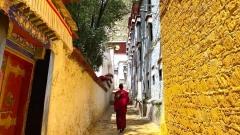
It is rare for a single journey to combine this density of experience: Tibetan culture in its living, practicing form; some of the highest mountain passes accessible by road anywhere on the planet; the world’s most famous mountain seen from its own base camp; sacred lakes revered for centuries; and then the dramatic physical crossing from one of the earth’s highest plateaus into the subtropical foothills of Nepal. The sheer range of what changes – the landscape, the altitude, the vegetation, the air, the light – across seven days of driving makes it one of the most visually varied overland journeys in Asia.
Lhasa to Kathmandu Overland Tour
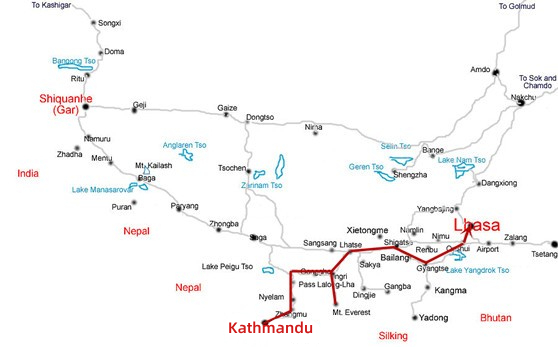
The classic Lhasa to Kathmandu overland 7-day itinerary
Arrive in Lhasa by plane or by train
- Lhasa Sightseeing: Drepung Monastery/Sera Monastery
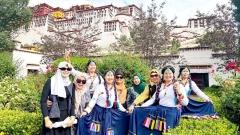
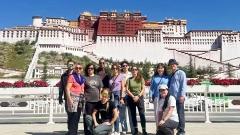
- Lhasa Sightseeing: Potala Palace/Jokhang Temple/Barkhor Street
- Lhasa/Yamdrok lake/Gyangtse/Shigatse
- Shigatse/Lhatse/Tingri (Shegar)/Rongbuk Monastery
- EBC/Mount Shishapangma/Gyirong Town
- Gyirong Town/Gyirong Border/ Kathmandu
Adding Mount Kailash and Lake Manasarovar
Travelers who want to extend the journey into western Tibet can incorporate Mount Kailash and Lake Manasarovar before continuing to the Gyirong border.
From Everest Base Camp, the route continues west via Saga to the Kailash region in the Ngari Prefecture – one of the most remote and spiritually significant areas in all of Tibet. Lake Manasarovar, revered across four religions as one of the holiest bodies of water in Asia, and the three-day Kailash Kora, a pilgrimage circuit revered by Buddhists, Hindus, Jains, and Bon followers alike, are the centerpieces of this extension.
After completing the pilgrimage, the route returns east via Saga before turning south through the Gyirong border and into Nepal. The full Lhasa to Kathmandu journey via Everest Base Camp and Kailash takes approximately 13 days and represents one of the most comprehensive Tibet-Nepal travel experiences available.
Best time to travel
The overland route from Lhasa to Kathmandu can be traveled in most seasons, but April to early June and September to November offer the most favorable conditions.
During these shoulder seasons, weather is stable, temperatures are comfortable for both driving and outdoor sightseeing, and mountain views – including Everest – are at their clearest. Permits are generally available, and the route between Tibet and Nepal is at its most reliably passable.
The summer months of mid-June through August bring the monsoon. Rain on the Tibetan side is not usually severe, but on the Nepal side of the border, heavy rainfall can cause landslides and road closures, and mountain views are frequently obscured by cloud. Summer travel is possible but requires more flexibility around road conditions and weather delays.
Winter from mid-November through March is dry and clear, with excellent sky conditions for photography and relatively uncrowded sites. Temperatures drop sharply, particularly at Everest Base Camp, and some high mountain sections may be affected by snow. Winter travel suits experienced highland travelers who come prepared for cold conditions.
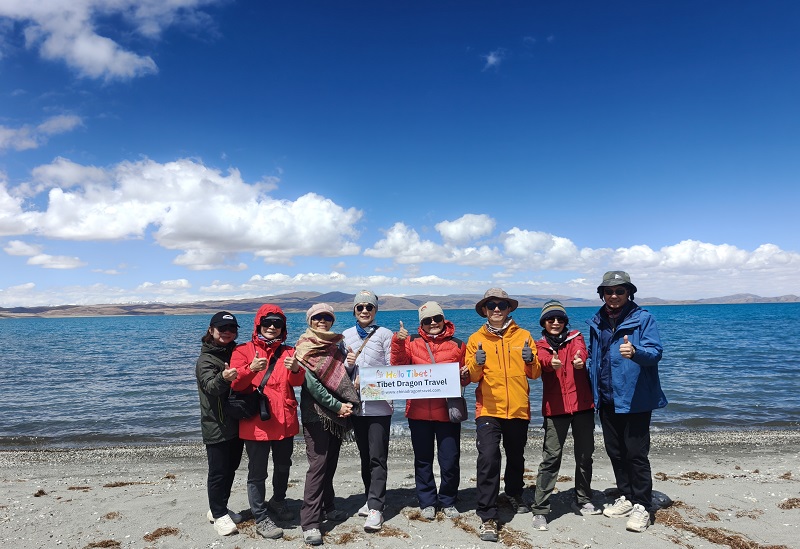
Tibet Tourists
Road conditions along the route
The Friendship Highway and National Highway G318, which form the backbone of the overland route, are generally well-maintained and suitable for regular tourist vehicles throughout Tibet.
The Lhasa to Shigatse section is the smoothest part of the journey – an excellent paved highway covering approximately 270 kilometers in around six hours. The road to Everest Base Camp has been significantly improved in recent years and is fully accessible by vehicle, though it involves mountain curves and significant elevation changes. The final stretch into the base camp area uses an eco-bus transfer for the last 40 minutes.
The section from Everest Base Camp to Gyirong crosses good mountain roads through the Shishapangma area and descends steadily into the valley. The Nepal side of the border introduces more variable conditions – winding mountain roads, occasional traffic congestion, and the possibility of weather-related disruption during the monsoon – which accounts for much of the six to eight hour estimate for the 160-kilometer Gyirong to Kathmandu leg.
Some driving days are long. The Shigatse to Everest Base Camp leg involves seven to eight hours of driving, and Everest Base Camp to Gyirong covers around nine to ten hours. Travelers should be prepared for substantial time in the vehicle on these days and bring entertainment, snacks, and water accordingly.
Altitude and how to manage it
The route climbs from Lhasa at 3,650 meters to its highest point at Gyatso La Pass at 5,280 meters, before descending steadily through Gyirong and into Kathmandu at 1,350 meters. The itinerary is specifically designed to allow for gradual acclimatization, starting with two to three days at Lhasa’s elevation before ascending further.
Most travelers experience mild symptoms on arrival in Lhasa – headaches, fatigue, or slight breathlessness – which typically ease within 24 to 48 hours. The key to managing altitude well is straightforward: rest on your first day, avoid alcohol and strenuous activity, drink plenty of water, eat light meals, and give your body time to adjust before pushing higher.
If symptoms worsen rather than improve, or if you experience severe headache, confusion, loss of coordination, or difficulty breathing, inform your guide immediately. These are signs that require prompt attention and may necessitate descending to a lower altitude. Portable oxygen is available on China Dragon Travel vehicles throughout the journey.
Permits and documents
Four key documents are required for the overland journey from Lhasa to Kathmandu.
A valid passport with at least six months of remaining validity is the baseline. A Chinese Visa is required for most nationalities, unless your country is eligible for China’s visa-free entry policy – check current eligibility before applying. The Tibet Travel Permit is the essential document for entering Tibet and cannot be applied for independently – it must be arranged through a registered local Tibetan travel agency. The Frontier Pass is required for restricted areas including the Everest region and the Gyirong border zone, and is typically included and arranged by your tour operator.
On the Nepal side, a visa on arrival is available at the Gyirong immigration checkpoint. Fees are USD 30 for 15 days, USD 50 for 30 days, or USD 125 for 90 days. Bring passport-sized photos and cash in US dollars to make the process as smooth as possible.
China Dragon Travel handles the Tibet Travel Permit and Frontier Pass applications on behalf of all travelers who book through us, and delivers permits to your hotel or directly to you at the gateway city before travel begins.
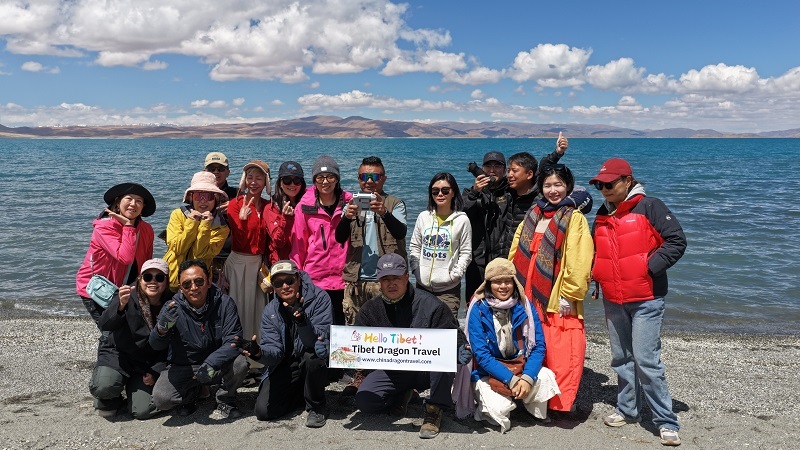
Tibet Tourists
Cost
A small group overland tour from Lhasa to Kathmandu typically starts from around USD 979 to USD 989 per person, with pricing varying based on season, hotel standard, and group size. Private tours cost more, with the premium depending on how many people share the vehicle and what level of accommodation is selected.
Standard inclusions across most tour packages cover the Tibet Travel Permit and related regional permits, accommodation at each overnight stop, a private tourist vehicle and experienced local driver, a licensed local Tibetan guide for the Tibet portion, entrance fees to major attractions listed in the itinerary, and meals as specified.
The most effective way to reduce per-person cost is to join a small group tour, where transportation and guide expenses are shared. Booking in the shoulder season and choosing standard hotel options over premium upgrades also help manage the budget without compromising the core experience.
Accommodation along the route
Lhasa and Shigatse offer the strongest range of accommodation, with 3 to 5-star hotels available that meet international standards for private bathrooms, heating, Wi-Fi, and general comfort.
Everest Base Camp is a different proposition. The Rongbuk Hotel – recently upgraded – is the only property in the area offering private rooms and en-suite bathrooms at this elevation, and it books up well in advance during peak season. Tent hotels are an alternative for those who prefer a more immersive base camp experience.
Gyirong’s accommodation is comfortable local hotel standard – clean, practical, and entirely adequate for an overnight stop before the border crossing. It is not a city of high-end hotels, but the town’s lower altitude and warmer air make it a genuinely pleasant place to spend a final night before entering Nepal.
Food along the route
In Lhasa and Shigatse, the dining range is broad – Tibetan cuisine, Sichuan dishes, Nepalese food, and Western options are all available, catering to most tastes and dietary requirements.
At Everest Base Camp, options are limited to simple, high-altitude staples: yak meat hot pot, noodles, and fried rice. The food is functional rather than gastronomic, but entirely adequate for the one or two meals eaten at that elevation.
Gyirong offers a mix of Tibetan, Chinese, and Nepalese food before the crossing. Kathmandu, at the end of the journey, provides access to a full range of international cuisine alongside Nepal’s own rich food culture.
Travelers with dietary requirements – vegetarian, vegan, or food allergies – should communicate these to China Dragon Travel when making their booking. Arrangements can be made for most requirements in Lhasa and Shigatse; options at Everest Base Camp are less flexible by nature.
What to pack
The overland journey covers a range of climates and conditions. Layering is the most practical approach – temperatures at Everest Base Camp can drop sharply even on sunny days, while Gyirong and the Nepal side of the journey are noticeably warmer and more humid.
Essential items include a warm down jacket, fleece mid-layer, comfortable walking shoes suitable for monastery visits and short hikes, a sun hat, UV-protective sunglasses, and high-factor sunscreen – the high-altitude sun is significantly stronger than at sea level. A good camera, power bank, universal adapter, and charging cables are all worth packing. Bring personal medication and any altitude medication your doctor has recommended. A reusable water bottle, tissues, and wet wipes round out the practical essentials.
Most daily items are readily available in Lhasa, which is a good place to top up supplies before leaving the city behind.
Booking your Lhasa to Kathmandu overland tour with China Dragon Travel
China Dragon Travel organizes small group and private overland tours between Lhasa and Kathmandu year-round, with small group departures running at least three times per week during peak season. The team handles all permit applications, border crossing logistics, and on-the-ground coordination, including seamless transfer arrangements from the Gyirong border to Kathmandu for a smooth final day.
Whether you are looking for the classic 7-day journey, an extended route that takes in Mount Kailash, or a cycling or motorcycle adventure along the same corridor, the team at China Dragon Travel can match you with the right itinerary and ensure every detail is in place before you depart.
Get in touch with China Dragon Travel to start planning one of the world’s great overland journeys.