
It’s one of those questions every traveler wants answered before booking a trip to Tibet, but few like to ask out loud: just how rough are the toilets, really? The honest answer is reassuring – toilet conditions across Tibet are generally far better than most international visitors expect, particularly along the well-traveled routes.
That said, facilities do vary quite a bit depending on where you go. In cities like Lhasa, Shigatse, and Nyingchi, modern Western-style bathrooms are now standard in most hotels. Once you head toward Everest Base Camp or set off on the Mount Kailash kora, things become noticeably more basic. This guide walks through what you can realistically expect at each stage of a Tibet trip, so you can prepare with confidence rather than guesswork.
The Three Tiers of Toilets You’ll Encounter in Tibet
Toilet facilities in Tibet generally fall into three categories, and which one you encounter depends largely on how far you’ve traveled from the major cities.
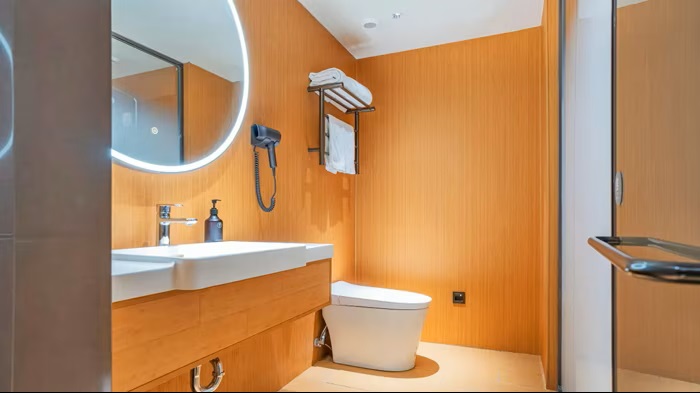
Modern Western-style bathrooms are common in hotels, airports, and shopping centers in larger cities. These come with flush toilets, sinks, and reliable hygiene standards comparable to other popular travel destinations in Asia.
Squat toilets are by far the most widespread type across the region, found in everyday restaurants, roadside rest stops, and rural towns. Along the main tourist routes, these are typically kept reasonably clean and well-maintained.
Basic pit toilets appear mostly in remote villages and high-altitude areas with limited infrastructure. These have no flushing mechanism and are sometimes little more than a simple structure over open ground. As tourism infrastructure continues to expand, this type is becoming less common, though it still exists on certain routes.
Modern Western-style Bathrooms
Lhasa: Where Toilets Are the Least of Your Worries
As Tibet’s primary gateway city, Lhasa offers the most consistent and comfortable toilet experience of anywhere in the region.
Hotel Bathrooms in Lhasa
From mid-range business hotels to upscale boutique properties, most accommodations in downtown Lhasa include private bathrooms with Western-style toilets, sinks, and hot water. The standard here is broadly on par with what travelers would expect in other major Asian cities, so long as you book a reputable property.
Restaurants and Shopping Centers
A number of higher-end restaurants, cafés, and modern shopping malls in Lhasa also provide Western-style toilets, typically clean and easy for international visitors to use without hesitation.
Lhasa Gonggar Airport
The airport — most travelers’ first stop in Tibet — offers a solid mix of Western-style and squat toilets, both well-maintained. For visitors still adjusting to the altitude after landing, a clean, familiar restroom at the airport is a welcome first impression.
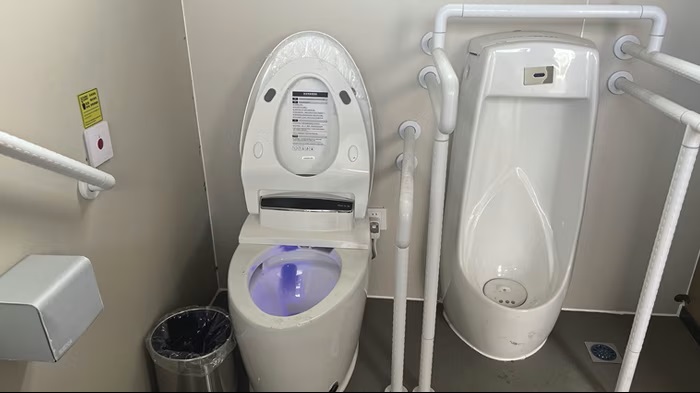
Toilet at Lhasa Gonggar Airport
Public Toilets Near Major Attractions
Around landmarks like the Potala Palace and Jokhang Temple, public restrooms are typically squat-style but regularly cleaned by attendants, making them perfectly manageable for a day of sightseeing.
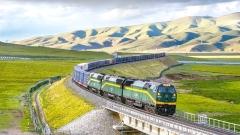
Everest Base Camp: Better Than the Rumors, But Bring Realistic Expectations
Everest Base Camp is a bucket-list destination for many travelers, and it’s also where toilet conditions become a genuinely relevant planning consideration. The good news: thanks to ongoing upgrades to accommodation and visitor infrastructure, conditions here have improved considerably in recent years.
Rongbuk Hotel: The Only Western-Style Option
Of all the accommodation near Everest Base Camp, Rongbuk Hotel is the sole property offering private bathrooms with Western-style toilets — and this is limited specifically to its double rooms, not the entire hotel. Travelers who want this level of comfort should book ahead.
It’s worth noting that even with a private bathroom, Rongbuk Hotel does not have shower facilities, due to the extreme high-altitude environment. Most experienced travelers and tour operators recommend packing wet wipes as a practical substitute.
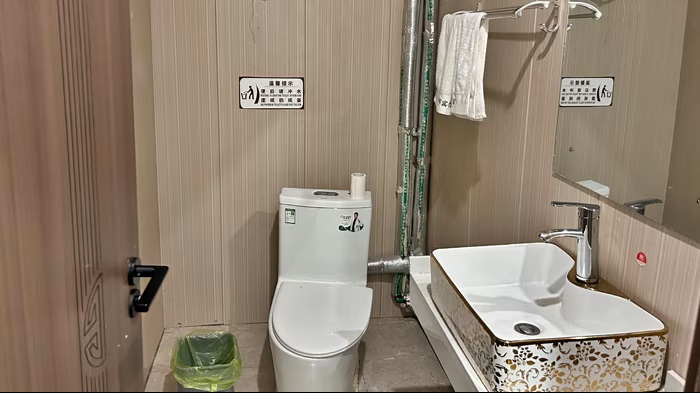
Toilet at Rongbuk Hotel
Eco-Friendly Public Toilets at the Tent Camp Area
Travelers staying in the tent camp area near Base Camp will find eco-friendly container toilets designed specifically to handle Tibet’s harsh high-altitude conditions. These squat-style facilities tend to be cleaner and more comfortable than visitors anticipate, though water scarcity at this elevation means flushing capacity is often limited. Wet wipes and hand sanitizer go a long way here.
Toilets Along the Route to Everest Base Camp
The overland journey from Lhasa to Everest Base Camp passes through a mix of facilities. Hotels in Lhasa, Shigatse, and Tingri generally offer modern bathrooms, while restaurants and rest stops along the way are mostly squat-style. In smaller villages or less-developed scenic areas, basic pit toilets may still be the only option.
Overall, while facilities become more basic the closer you get to Base Camp, most travelers manage just fine with a little preparation.
The Mount Kailash Kora: The Most Demanding Stretch for Toilet Conditions
Mount Kailash holds deep spiritual significance across Tibetan Buddhism, Hinduism, Jainism, and Bon traditions, drawing pilgrims and trekkers each year to its roughly 52-kilometer kora route, which crosses a pass above 5,600 meters. This is also the leg of a Tibet trip where toilet planning matters most.
Darchen: The Most Comfortable Base
As the starting and ending point of the kora, Darchen has the best facilities along the entire route, with some hotels offering private bathrooms and Western-style toilets.
Guesthouses Along the Trek
Once the trek begins, accommodation along the route typically provides shared squat toilets. These are basic but functional — given the remoteness and extreme altitude, having any reliable facility at all is a meaningful convenience, and most trekkers adapt to this without much difficulty.
Outdoor Pit Toilets and Open-Air Stops
In certain sections of the kora, particularly near the high mountain pass, facilities are extremely limited. Some rest points have basic outdoor pit toilets, while in the most remote stretches, trekkers may need to find a discreet spot in the natural surroundings.
Limited Water for Washing
Western Tibet’s arid climate means water is scarce throughout the kora. Most guesthouses provide only minimal water for washing, and showers are essentially unavailable during the trek itself. Packing a generous supply of wet wipes, tissues, and hand sanitizer is strongly recommended to maintain basic hygiene throughout.
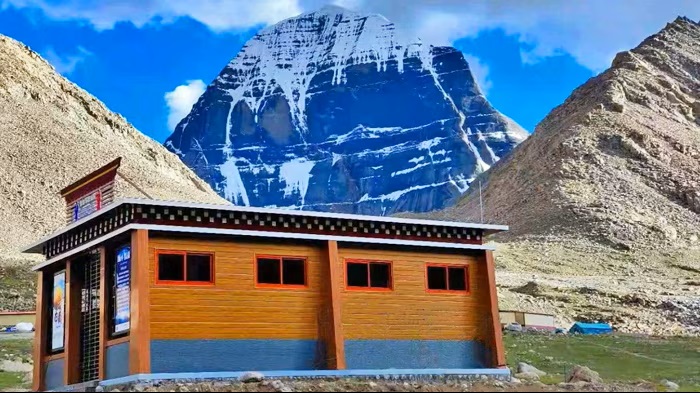
Toilet along Mount Kailash Kora
Toilets on the Tibet Train: What to Expect on Long Journeys
Traveling to Tibet by train via the Qinghai-Tibet Railway is a memorable experience in its own right, with journeys from cities like Beijing, Shanghai, Chengdu, and Guangzhou ranging from 22 to over 53 hours. Naturally, onboard toilet facilities become a practical concern for a trip this long.
The good news is that conditions on Tibet trains tend to exceed expectations. Both Western-style toilets and squat toilets are available onboard: soft sleeper carriages typically offer a choice of both, while hard sleeper and hard seat carriages generally provide squat toilets only.
These facilities are shared among passengers in each carriage and are cleaned periodically by onboard staff, keeping them in reasonable condition throughout the journey. Note that toilets may be temporarily closed during station stops, so it’s worth timing bathroom breaks accordingly. Toilet paper isn’t always guaranteed, so packing your own tissues, wet wipes, and hand sanitizer is a smart move for the long haul.
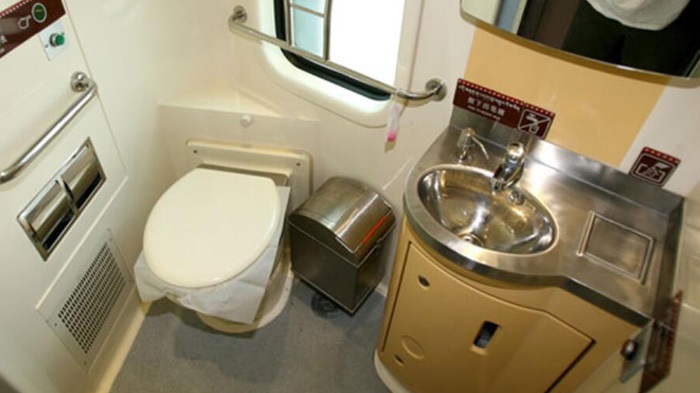
Toilets on the Tibet Train
Essential Items to Pack for Toilets in Tibet
A few small items can make a significant difference to your comfort throughout a Tibet trip, especially once you venture beyond the major cities:
Toilet paper or tissues — many public restrooms and rural facilities don’t provide it, so carrying your own is the safest bet.
Wet wipes — invaluable wherever water is scarce or flushing is limited, particularly at Everest Base Camp and along the Kailash kora.
Hand sanitizer — soap and running water aren’t always available, making this a simple but essential backup.
A small bag for used tissues — useful in outdoor or remote areas where bins are scarce, helping you avoid leaving waste behind.
Small change — most public toilets in Tibet are free, but some at major attractions, transport hubs, or roadside stops may charge a small fee, usually around 1 RMB.
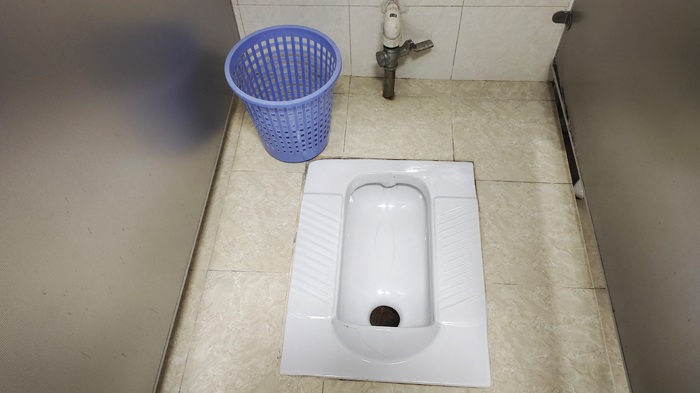
Squat Toilets
Why High-Altitude Conditions Shape Tibet’s Toilet Facilities
It’s worth understanding why some toilets in Tibet are more basic than travelers might expect from other destinations — the answer lies largely in the region’s extreme geography.
At elevations above 4,000 meters, water is a genuinely scarce resource. Frozen rivers, high evaporation rates, and the practical difficulty of laying plumbing infrastructure all make consistent water supply a real engineering challenge. At Everest Base Camp (roughly 5,200 meters) and the Mount Kailash area (around 4,700 meters), this scarcity directly affects how much flushing capacity facilities can offer.
Environmental protection is another major factor. To minimize the impact on these fragile high-altitude ecosystems, sensitive areas like Everest Base Camp use eco-friendly container toilets specifically designed to manage waste with minimal environmental disruption.
Understanding this context can help travelers approach more basic facilities with the right mindset — as a natural part of high-altitude travel, rather than a sign of poor overall trip quality.
Toilet Conditions at a Glance
Hotels in Lhasa, Shigatse, and Nyingchi — private bathrooms with modern Western-style toilets; generally the most comfortable facilities on any Tibet itinerary.
Restaurants and roadside rest stops — predominantly squat toilets, reasonably maintained along main tourist routes.
Highway service areas — generally clean public squat toilets, often staffed during peak travel seasons.
Everest Base Camp (Rongbuk Hotel double rooms) — the only spot offering private Western-style toilets; no shower facilities available.
Everest Base Camp tent camp area — eco-friendly public squat toilets with limited flushing capacity.
Mount Kailash kora guesthouses — shared squat toilets; basic but functional.
Remote sections of the Kailash kora — outdoor pit toilets or open-air conditions with very limited infrastructure.
Tibet trains — both Western-style and squat toilets onboard, shared among passengers, cleaned periodically.
Frequently Asked Questions About Toilets in Tibet
Is toilet paper available in Tibet? Yes, toilet paper is commonly available in hotels, restaurants, and urban facilities across major cities. However, some public restrooms in remote areas may not provide it, so carrying your own tissues is a wise precaution.
Are toilets clean in Tibet? Generally, yes — cleaner than many travelers expect. Hotels, airports, shopping centers, and tourist facilities in Lhasa, Shigatse, and Nyingchi maintain solid hygiene standards. Remote and high-altitude areas have more basic facilities, but they remain manageable for most visitors.
Do public toilets in Lhasa charge a fee? Most public toilets in Lhasa are free. A small number near major attractions or transport hubs may charge a nominal fee, usually around 1 RMB, so it’s worth keeping some small change on hand.
Will I find toilets during long overland journeys? Yes. Major overland routes in Tibet typically have restrooms available at restaurants, service areas, and towns along the way, though quality varies depending on location.
Are toilets manageable for elderly travelers? In major cities, elderly travelers should have no trouble using Western-style facilities. For trips to Everest Base Camp or the Kailash kora, choosing accommodation with better facilities and packing essential hygiene items can make the experience considerably more comfortable.
Planning Ahead With TibetYulong
Knowing what to expect from Tibet’s toilets is just one part of preparing for the trip — choosing a tour operator who genuinely understands these conditions on the ground makes the rest of the journey far smoother.
TibetYulong has years of experience guiding international travelers through every corner of Tibet, from cultural explorations of Lhasa to overland adventures toward Everest Base Camp and pilgrimages around Mount Kailash. The team’s familiarity with local facility conditions means itineraries can be planned with practical comfort in mind — recommending accommodations with better bathroom options where they exist, and setting realistic expectations for the more remote legs of the journey.
Tibet is a place of extraordinary landscapes, profound spirituality, and some of the most dramatic scenery on Earth. Toilet conditions shouldn’t be the reason that holds you back from experiencing it. With the right preparation — and a knowledgeable team like TibetYulong handling the details — your trip to Tibet can be everything you’ve imagined, without unnecessary surprises along the way.