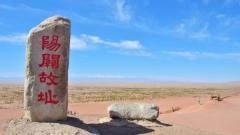

Stretching over 1,000 kilometers from Wushao Ridge in the east to Yumen Pass in the west, Gansu’s Hexi Corridor was the golden artery of the ancient Silk Road. Nestled between vast Gobi deserts and lush oases, it holds some of China’s most precious cultural relics and breathtaking natural landscapes. This comprehensive guide takes you through the corridor’s unmissable destinations, blending millennia of history, exquisite art and dramatic nature for an unforgettable journey.
Dunhuang: The Timeless Pearl of the Silk Road
When talking about the most spectacular spots along the Hexi Corridor, Dunhuang stands out as the undisputed crown jewel. This desert city rose to fame as the crossroads of Eastern and Western civilizations, where camel caravans once carried silk, spices and ideas across continents, and Buddhist chants echoed through the valleys. Today, it preserves the most complete legacy of the Silk Road, allowing visitors to step back in time and touch the grandeur of ancient trade and faith.
Mogao Caves
A UNESCO World Heritage Site, the Mogao Caves were first carved in 366 AD and expanded over ten successive dynasties. Today, it houses 735 caves, 45,000 square meters of murals and over 2,000 painted sculptures, making it the largest and richest repository of Buddhist art in the world. Iconic images like the flying apsaras murals, the Nine-Colored Deer Jataka tale, and the dancer playing the pipa upside down have become global symbols of Chinese art. Each mural and sculpture tells stories of ancient beliefs, daily life and cultural exchange. To visit, you must book tickets one month in advance on the official website. We highly recommend the Type A ticket (priced at 238 RMB), which includes access to 8 caves and two immersive digital films that bring the murals’ history to life. Please note that photography is strictly prohibited inside the caves, and touching the murals is forbidden to protect these fragile treasures for future generations.
Mingsha Mountain and Crescent Spring
This is a world-famous natural wonder where rolling sand dunes and a crystal-clear spring coexist in perfect harmony, earning Crescent Spring the title of “the No.1 Spring in the Desert”. Mingsha Mountain gets its name from the melodious sound the sand makes when blown by the wind or stepped on, like a celestial orchestra. Crescent Spring, shaped like a crescent moon, has remained unfilled by sand and never dried up for thousands of years, creating a striking contrast with the surrounding golden dunes. The best time to visit is around 6 a.m. or 7 p.m., when you can avoid the scorching midday sun and enjoy soft golden light ideal for watching sunrise or sunset. Popular activities include camel riding, sand sledding and desert off-roading. Climbing to the top of the dunes offers a panoramic view of the entire spring and the endless desert, a moment that will stay with you forever. Wear comfortable closed-toe shoes to keep sand out of your feet.
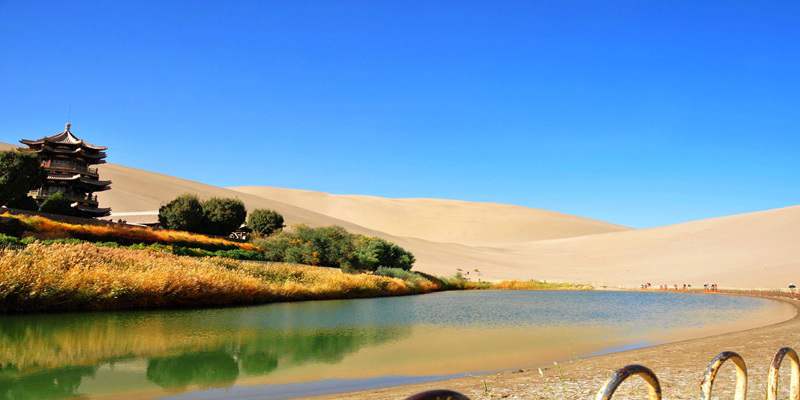
Crescent Spring
Yumen Pass and Yangguan Pass
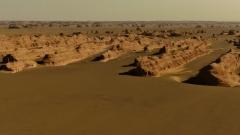
These two ancient passes have been immortalized in Tang Dynasty poetry, becoming cultural symbols of departure and the edge of Chinese civilization. Though only weathered ruins remain today, standing before them, you can almost hear the jingle of camel bells and the shouts of frontier soldiers. Yumen Pass, also known as Xiaofangpan City, was a crucial checkpoint on the Silk Road, surrounded by endless Gobi desert that evokes the classic image of “solitary smoke rising straight in the vast desert”. Yangguan Pass was the main gateway from central China to the Western Regions, with its rammed earth walls still standing as a testament to its former military and commercial prosperity. Near Yumen Pass lies the Yardang Ghost City, a landscape of bizarre wind-eroded rock formations that glow golden at sunset. It is a paradise for landscape photographers and anyone who loves dramatic natural scenery.
Jiayuguan: The Greatest Pass Under Heaven
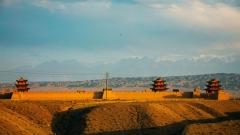
Jiayuguan is the western starting point of the Ming Dynasty Great Wall and the most representative military fortress along the Hexi Corridor. Built during the Hongwu reign of the Ming Dynasty, it is the largest and best-preserved ancient military fortress in China, earning the title “the Greatest Pass Under Heaven”. Nestled between the Qilian Mountains and the Black Mountain, it occupied a strategic position as the throat of the Hexi Corridor, standing guard over China’s western frontier for centuries and witnessing countless wars and peaceful trade.
Jiayuguan Fortress
The fortress consists of three lines of defense: an inner city, an outer city and a moat, with a rigorous layout that showcases the ingenuity of ancient Chinese military architecture. The towering city walls and magnificent pavilions dominate the landscape. Climbing the walls offers sweeping views of the entire fortress, the surrounding Gobi desert and the snow-capped Qilian Mountains in the distance, evoking a sense of awe at the grandeur of the frontier. Inside the fortress, you’ll find the General’s Office, Wenchang Pavilion and Guandi Temple, which provide insights into the daily life of soldiers and officials stationed here. Hiring a local guide is highly recommended, as they can explain the fortress’s construction history and military defense system in detail, helping you appreciate the wisdom and craftsmanship of ancient builders.
Overhanging Great Wall
Named for its steep, hanging appearance as it clings to the mountainside, the Overhanging Great Wall was an integral part of Jiayuguan’s defense system. Built during the Jiajing reign of the Ming Dynasty, it winds up the mountain like a giant dragon, connecting with Jiayuguan Fortress to form an impenetrable defense line. Though only about 750 meters long, climbing it is quite challenging due to its steep slopes and narrow steps. Reaching the top rewards you with panoramic views of the Gobi desert and the Black Mountain, allowing you to imagine the hardships faced by frontier soldiers who guarded this remote outpost centuries ago.
The First Beacon Tower of the Great Wall
Also known as the Taolai River Beacon Tower, this is the westernmost beacon tower of the Ming Great Wall and another key part of Jiayuguan’s defense system. Perched on a nearly 100-meter-high cliff above the Taolai River, it offered an unobstructed view for watching for enemy movements and sending smoke signals. The scenic area features an underground observation deck that provides a close-up view of the spectacular Taolai River Gorge, a masterpiece of nature’s erosion. Standing here, you can feel the determination of the soldiers who defended China’s western border in this harsh and remote land.
Zhangye: Colorful Danxia and Buddhist Grottoes
Known as “the Golden Zhangye”, this oasis city lies at the northern foot of the Qilian Mountains, with a mild climate and lush scenery that earned it the praise: “If you don’t see the snow on Qilian Mountain, you’ll mistake Zhangye for the Jiangnan water towns”. It combines the rugged grandeur of the northwest with the delicate beauty of southern China, offering both stunning natural landscapes and exquisite Buddhist art.
Zhangye Colorful Danxia
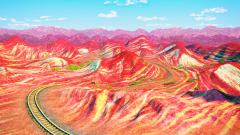
One of China’s most beautiful Danxia landforms, this is the most visually striking natural attraction along the Hexi Corridor. Thousands of cliffs and hills display vibrant shades of red, orange, yellow and purple, layered like a giant watercolor painting. It is often described as “God’s spilled paint palette”. The best time to visit is during sunrise and sunset, when the soft sunlight enhances the colors and creates dramatic shadows, making the landscape look even more magical. The scenic area has several viewing platforms, with Platforms 1, 4 and 5 offering the best panoramic views. It is a must-visit destination for photographers and nature lovers alike.
Binggou Danxia
Unlike the colorful Danxia, Binggou Danxia is famous for its bizarre and dramatic landforms, offering a completely different style of natural beauty. Formed over millions of years of weathering and erosion from the Jurassic to the Tertiary period, it features unique rock formations like the Greeting Camel, the Earth’s Root, and the Louvre Phantom, each so lifelike that they seem to be carved by a divine hand. Often called “the No.1 Wonder Under Heaven”, Binggou Danxia stretches across a vast, desolate landscape that feels like stepping into another planet. Walking among these extraordinary formations, you can’t help but marvel at the power and creativity of nature.
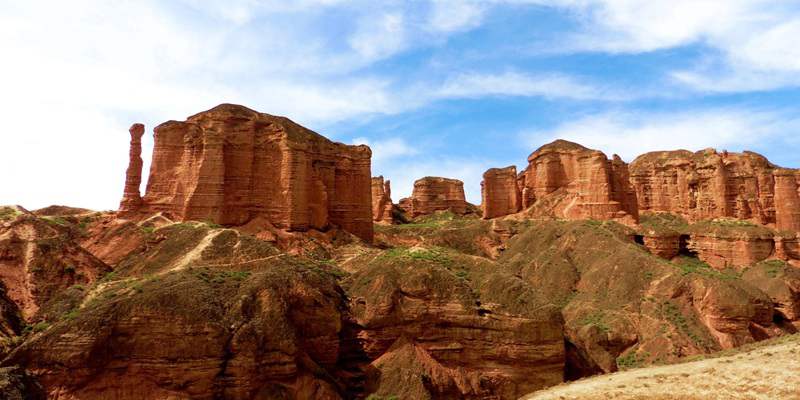
Binggou Danxia
Mati Temple Grottoes
Built during the Northern Liang Dynasty over 1,600 years ago, the Mati Temple Grottoes are one of the most important Buddhist grotto complexes along the Hexi Corridor and a representative of early Chinese grotto art. Carved into steep cliff faces, the complex includes South Temple, North Temple and Thousand Buddha Caves. The most famous part is the Thirty-Three Heavens Grottoes, which consists of 21 caves arranged in seven layers, stacked one above the other in a unique and spectacular design. Mati Temple is not only a Buddhist holy site but also home to the Yugur ethnic minority. Visitors can experience the rich Yugur culture, taste local specialties and enjoy the warm hospitality of the local people.
Wuwei: Hometown of the Flying Horse of Gansu
Formerly known as Liangzhou, Wuwei was a major hub on the ancient Silk Road and one of the most historically and culturally rich cities along the Hexi Corridor. It is the birthplace of the Flying Horse of Gansu, China’s national tourism symbol, and was once the political, economic and cultural center of northwest China during the Han Dynasty. Its numerous historical relics offer a window into the prosperity and splendor of ancient Liangzhou.
Leitai Han Tomb
Famous for being the excavation site of the Flying Horse of Gansu, this is a large brick-and-stone tomb from the Eastern Han Dynasty, belonging to a general surnamed Zhang. The tomb yielded 99 bronze chariots, horses and warrior figurines, the most famous of which is the Bronze Running Horse, known worldwide as the Flying Horse of Gansu. This masterpiece of ancient Chinese bronze art depicts a horse galloping with three hooves in the air, one hoof resting on a flying swallow, capturing a moment of perfect balance and dynamic movement. It has become a symbol of Chinese tourism and the Silk Road culture. The Leitai Han Tomb itself is a magnificent structure that reflects the economic prosperity and cultural achievements of the Han Dynasty in the Hexi region.
Kumarajiva Temple
Built in honor of Kumarajiva, one of the four greatest Buddhist translators in Chinese history, this temple is an important Buddhist holy site along the Hexi Corridor. Kumarajiva lived in Liangzhou for 17 years, where he translated 74 Buddhist scriptures totaling 384 volumes, profoundly influencing the development of Buddhism in China. He is regarded as a monument in the history of Chinese Buddhist translation. The temple’s iconic Kumarajiva Pagoda, standing 32.8 meters tall with 12 stories, is a landmark of Wuwei. It is said to enshrine Kumarajiva’s tongue relic, which remained intact after his cremation, a testament to his profound wisdom and spiritual practice.
Tiantishan Grottoes
Also built during the Northern Liang Dynasty over 1,600 years ago, the Tiantishan Grottoes are known as “the Ancestor of Chinese Grottoes” and had a significant influence on the development of later grottoes such as Mogao Caves and Maijishan Grottoes. Carved into the cliffs beside the Huangyang River Reservoir, the grottoes consist of 19 caves arranged in three layers. The centerpiece is a 28-meter-tall seated statue of Sakyamuni Buddha, which towers over the landscape with a serene and majestic expression. Though the murals and sculptures have been damaged by centuries of wind and rain, they still retain their original artistic charm, showcasing the superb craftsmanship of ancient grotto artists.
Practical Travel Tips for the Hexi Corridor
Proper preparation is essential for a smooth and enjoyable trip to the Hexi Corridor. The best time to visit is from May to October, when the weather is mild and pleasant, ideal for outdoor activities. July and August are the peak tourist seasons, with larger crowds and higher prices for tickets and accommodation, so it is advisable to book in advance.
Transportation Options
- Self-driving or Chartering a Car: As the Hexi Corridor’s attractions are scattered over hundreds of kilometers, self-driving or chartering a car is the most convenient choice. It allows you to set your own schedule and adjust your itinerary flexibly, which is perfect for travelers with ample time.
- Lanzhou-Xinjiang High-Speed Railway: The high-speed railway runs through the entire corridor, connecting major cities such as Lanzhou, Wuwei, Zhangye, Jiuquan, Jiayuguan and Dunhuang. It offers fast and comfortable travel, making it an ideal option for travelers with limited time.
- Recommended Route: A popular and efficient route is to enter from Lanzhou and exit from Dunhuang. This avoids backtracking and helps you make the most of your sightseeing time to visit the core attractions of the Hexi Corridor.
- Group Tour: For travelers who prefer a hassle-free experience, joining a group tour is a great option. China Dragon Travel offers professional group tours with experienced guides, covering all core attractions and handling all details such as tickets, accommodation and transportation, allowing you to fully enjoy the journey without worrying about arrangements.
Key Notes for Travelers
- Climate and Sun Protection: The northwest region has a dry climate and strong ultraviolet radiation. Be sure to pack sunscreen, sunglasses, a hat and lip balm to protect your skin and lips from damage.
- Temperature Difference: There is a large temperature difference between day and night. Even in summer, bring a light jacket to avoid catching a cold in the cool morning and evening.
- Altitude Sickness: Some attractions, such as Zhangye Danxia and Jiayuguan, are located at an altitude of 1,500-2,000 meters, which may cause mild altitude sickness. Avoid strenuous exercise and drink plenty of water to acclimatize gradually.
- Local Cuisine: The local food mainly features noodles and beef/mutton dishes, with rich and oily flavors. You can ask restaurants to adjust the seasoning according to your taste, and always pay attention to food hygiene to prevent stomach discomfort.
The Hexi Corridor Leaves More Than Just Images Behind
Most travelers come to the Hexi Corridor for its landscapes, but what stays after the trip is usually something less visual and more emotional.
Standing on the walls of Jiayuguan as the desert stretches endlessly ahead, or watching the colors of Zhangye Danxia change with the setting sun, you begin to understand why this route has existed for thousands of years.
For smoother planning, many international travelers choose local operators such as China Dragon Travel to connect Dunhuang, Zhangye, and Jiayuguan without worrying about transport logistics, allowing more time to actually experience the places instead of managing the journey.