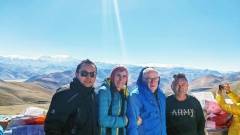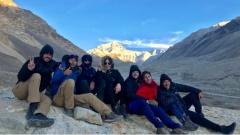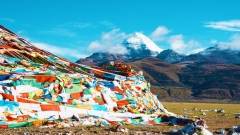

Many people travel to Tibet for a glimpse of majestic Mount Everest, and choosing the right viewpoint is the key to this awe-inspiring experience. There are distinct viewing spots around the mountain—some ideal for capturing the golden sunrise over the peak, others perfect for shooting starry skies above the snow-capped summit, and a few offering an up-close view of its grandeur. This guide breaks down each spot’s location, access routes, optimal viewing times, highlights and precautions. It also includes practical tips on transport, accommodation and supplies preparation, helping you avoid travel pitfalls. Whether you are a self-driving enthusiast, a photography buff or a first-time visitor to Tibet, you can find a tailored viewing plan here.
Detailed Inventory of Mount Everest’s Best Viewpoints
- Rongbuk Monastery Viewpoint
This classic viewpoint for Mount Everest is about 8 kilometers from Everest Base Camp, at an altitude of around 5,100 meters. It offers an unobstructed view of the mountain’s full landscape. During sunrise and sunset, the sunlight bathes the summit, creating the magnificent “Golden Peak” spectacle, making it a must-visit spot for photographers. You can reach it from Shigatse by driving along National Highway 318 and then turning onto the Everest Road. The road conditions are mostly good, but there are many sharp bends, so self-drivers need to control their speed. Simple viewing facilities are available here for short stays and photo-taking. However, due to the high altitude, avoid lingering too long to prevent altitude sickness.
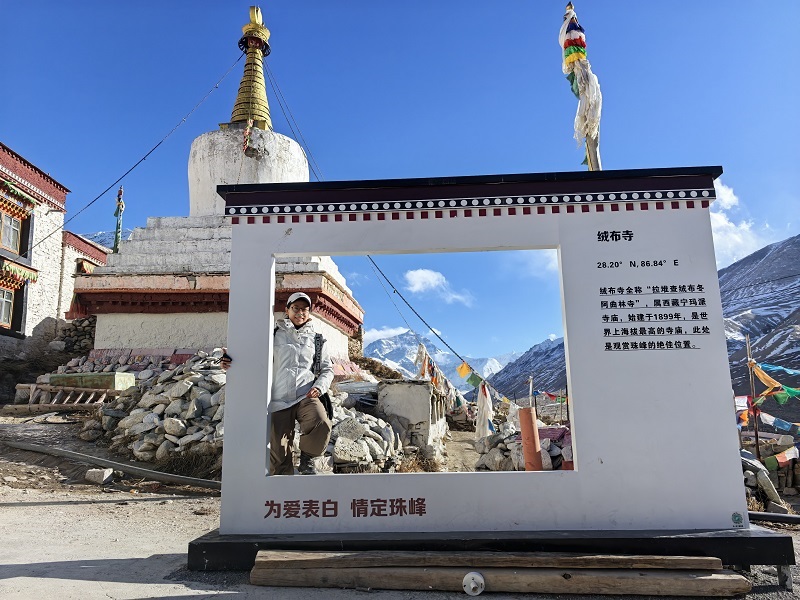
Rongbuk Monastery Tourist Photos
- Jawula Pass
At an altitude of about 5,200 meters, Jawula Pass is a must-pass when entering the Everest scenic area, and also the only viewpoint in the world where you can see five snow-capped mountains over 8,000 meters above sea level at the same time. Standing here, you can not only admire the majestic Mount Everest but also overlook other peaks like Makalu, Lhotse and Cho Oyu, presenting a stunning sight. Signboards at the pass clearly mark the names and positions of each snow-capped mountain for easy identification. The best viewing time is early morning and late afternoon, when the soft light highlights the clear outline and vibrant colors of the snow-capped mountains. Note that the pass is windy and cold, so visitors need to take windproof and warm-keeping measures.

Jawula Pass
- Everest Base Camp Viewing Area
Located at the foot of Mount Everest, this viewing area sits at an altitude of around 5,200 meters, making it one of the closest spots to the mountain. Here, visitors can feel the grandeur and solemnity of Mount Everest up close, and also witness its glacial landforms. Affected by environmental protection policies, the opening hours and accessible area of Everest Base Camp are subject to dynamic adjustments, so visitors need to check the latest policy information in advance. A border pass is required to enter Everest Base Camp, which can be applied for in Shigatse or Lhasa. Please prepare relevant documents such as ID cards in advance.
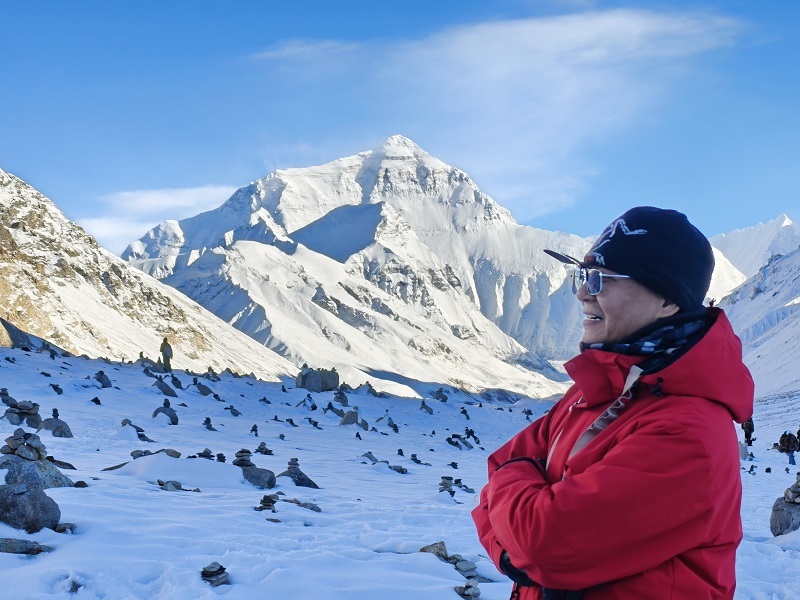
Mount Everest Tourist Photos
- Gangga Town Viewpoint
Situated in Gangga Town, Dingri County, Shigatse, this viewpoint is at an altitude of about 4,300 meters, offering a perfect panoramic view of Mount Everest. It is about 30 kilometers away from the mountain, with an unobstructed view of the full mountain landscape and the surrounding mountain ranges. It is also an excellent spot for shooting the starry sky over Mount Everest. You can reach it from Dingri County by driving west along National Highway 318 for about an hour, with smooth road conditions suitable for self-driving or chartered cars. There are many homestays and restaurants in Gangga Town, so visitors can choose to stay here to watch the sunrise over Mount Everest early the next morning.
- Zhaxizong Viewpoint
Located in Zhaxizong Township, Dingri County, at an altitude of about 4,100 meters, this viewpoint is more friendly to visitors’ health compared with other high-altitude spots, making it suitable for those prone to altitude sickness. Close to National Highway 318, it enjoys convenient transportation and can be visited without detours. Standing here, you can see the charming scene where Mount Everest is set against the surrounding villages and highland barley fields, integrating cultural and natural landscapes, and it is an ideal spot for shooting pastoral scenery with Mount Everest as the backdrop.
Recommended Viewing Times and Seasons for Mount Everest
The climate around Mount Everest is complex and changeable, with significant differences in scenery and viewing experiences across seasons. Choosing the right season and time slot can greatly increase the chance of seeing the mountain’s full landscape.
- Spring (March–May)
This is one of the golden seasons for viewing Mount Everest. In March, the temperature is still low, and there may be residual snow on mountain roads, making it suitable for experienced self-driving travelers in high-altitude areas. From April to May, the temperature rises gradually, with stable climate, scarce rainfall and high visibility. The mountain stands clearly against the clear blue sky, and the “Golden Peak” at sunrise is particularly spectacular. At this time, high-altitude vegetation begins to recover, and peach blossoms and azaleas dot the foot of the snow-capped mountains, creating a layered natural landscape.
- Summer (June–August)
This is the rainy season in Tibet and the off-season for viewing Mount Everest. Thick clouds often shroud the mountain, so the chance of seeing its full landscape is low. Even if it appears briefly, it is usually in a hazy state surrounded by clouds and mist. However, summer has its advantages: the temperature is relatively mild, the alpine meadows are lush and green, and the highland barley fields in surrounding villages are vibrant, presenting a unique landscape that combines culture and nature. It is suitable for visitors who prefer ecological scenery rather than focusing on seeing the full view of Mount Everest.
- Autumn (September–October)
This is another golden season for viewing Mount Everest, and the best choice for photography enthusiasts. The rainy season ends at this time, with dry climate and clear blue sky, almost no clouds to block the view. You can clearly see the mountain’s outline and glacial textures, and the viewing effect of sunrise, sunset and starry sky reaches the best level of the year. From late September to early October, the high-altitude vegetation turns golden and fiery red gradually, setting off the white Mount Everest and creating a visually striking picture.
- Winter (November–February next year)
The climate is extremely cold, making it the slowest season for viewing Mount Everest. The temperature in mountainous areas can drop below minus 20 degrees Celsius, with strong winds. Mountain roads are often covered with snow and ice, making it difficult to guarantee the safety of ordinary visitors. Most supporting viewing facilities are also suspended. However, Mount Everest in winter is less crowded with tourists, standing more majestic and solemn against the clear sky, and only a few professional explorers and photography enthusiasts choose to visit during this period.
Practical Guide to Transportation and Accommodation
- Transportation Options
There are three main ways to reach the viewing spots of Mount Everest: self-driving, chartered cars and group tours. For self-driving, it is recommended to choose a robust off-road vehicle, as some sections of the road are complex and require good vehicle performance. Starting from Lhasa, drive along National Highway 318 to Shigatse, then turn onto the Everest Road to Dingri County, with a total distance of about 600 kilometers and a driving time of about 12 hours. For chartered cars, you can contact regular car rental companies in Lhasa or Shigatse. The drivers are familiar with the road conditions and can provide travel suggestions, with a cost of about 300–500 CNY per person per day. Group tours are suitable for first-time visitors to Tibet, eliminating the need for self-planning routes and applying for documents, which is time-saving and hassle-free.
- Accommodation Recommendations
Accommodation conditions around Mount Everest are relatively simple, mainly consisting of homestays and tents. There are a few accommodation beds near Rongbuk Monastery, priced at about 200–300 CNY per night. The accommodation environment is simple, but it has the advantage of being close to the viewpoint, facilitating early morning sunrise viewing. There are no accommodation facilities at Jawula Pass, so it is recommended to stay in Dingri County or Gangga Town. Dingri County offers a variety of accommodation options including hotels and homestays, priced at about 150–400 CNY per night, with relatively complete facilities. Homestays in Gangga Town are mostly family-run, priced at about 100–200 CNY per night, allowing visitors to taste authentic Tibetan food and experience local customs. Homestays in Zhaxizong Township are priced at about 80–150 CNY per night, with high cost-effectiveness, suitable for budget-conscious visitors. Note that most accommodation spots in the Mount Everest area are at high altitudes and lack oxygen supply facilities, so altitude sickness is common. It is recommended to prepare anti-altitude sickness drugs in advance.
Essential Supplies and Precautions for Viewing Mount Everest
- Essential Supplies
Adequate supplies preparation is necessary for viewing Mount Everest. First of all, prepare windproof and warm-keeping clothing such as windbreakers, down jackets, thermal pants, hats and gloves. The temperature in the Mount Everest area is low and windy, and may drop below zero degrees Celsius even in summer. Secondly, prepare anti-altitude sickness drugs such as Rhodiola rosea and Gaoyuan’an, which can effectively relieve altitude sickness symptoms when taken in advance. In addition, prepare sun protection products such as sunscreen, sunglasses and masks, as the ultraviolet radiation in high-altitude areas is strong, which may easily cause sunburn to the skin and eyes. Finally, it is advisable to carry high-calorie food and drinking water such as chocolate, beef jerky and energy bars for emergencies.
- Precautions
① Border Pass Application: A border pass is required to enter the Mount Everest area. It can be applied for free at the public security bureau in your place of household registration, or through a travel agency in Lhasa or Shigatse, with an agency fee of about 50–100 CNY per person.
② Altitude Sickness Prevention: The average altitude of the Mount Everest area is over 4,000 meters. Visitors should take anti-altitude sickness drugs one week in advance, avoid strenuous exercise, drink plenty of warm water and ensure adequate sleep. If severe symptoms such as headache and difficulty breathing occur, descend to a lower altitude and seek medical treatment promptly.
③ Compliance with Scenic Area Regulations: After entering the Everest scenic area, comply with all regulations of the scenic area. Do not litter randomly or enter unopened areas to protect the ecological environment of Mount Everest.
④ Traffic Safety Attention: The roads in the Mount Everest area have many bends and steep slopes. Self-drivers should maintain a safe distance from other vehicles, avoid speeding and drive cautiously in rainy and snowy weather.
Common Misconceptions and Pitfalls for Viewing Mount Everest
Misconception 1: You can see the full view of Mount Everest anytime
Many visitors think they can see the full view of Mount Everest as long as they reach the viewpoint. In fact, the mountain is often shrouded in clouds and mist all year round. Only in stable climate periods (April–May and September–October), the chance of seeing its full view is high. It is recommended to visit during these periods and check the weather forecast in advance to increase the success rate.
Misconception 2: The higher the altitude of the viewpoint, the better
Some visitors believe that higher-altitude viewpoints offer better viewing effects, but this is not the case. High-altitude areas are more likely to cause severe altitude sickness, and the view of some spots may be blocked by surrounding mountains. Low-altitude viewpoints such as Gangga Town and Zhaxizong Township have unobstructed views and are more friendly to the body, providing equally excellent viewing experiences.
Misconception 3: You can travel on a whim without advance preparation
The Mount Everest area has a high altitude and harsh climate. A “whim” trip without adequate preparation may easily lead to problems such as altitude sickness and frostbite. It is recommended to plan the itinerary in advance, prepare warm clothing and anti-altitude sickness drugs to ensure a safe trip.
The Right Viewpoint Makes All the Difference
Seeing Mount Everest is not just about reaching Everest Base Camp. Each viewpoint around the mountain offers a completely different perspective—golden sunrise views, dramatic multi-peak panoramas, star-filled night skies, or peaceful scenes blending villages and snowfields. Some travelers seek the overwhelming scale at Rongbuk Monastery, others prefer the wide-angle grandeur of Gyawula Pass, while many choose quieter locations for a more balanced and comfortable experience. By selecting the right viewpoint based on your physical condition, travel schedule, and visual expectations—and by choosing the right season—you greatly increase your chances of seeing Everest clearly and memorably. With thoughtful planning and realistic expectations, the world’s highest peak reveals its beauty from exactly the angle meant for you.