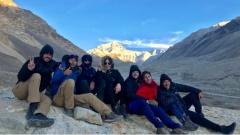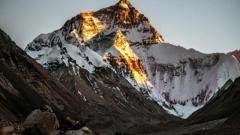

Located in southwestern Tibet, Shigatse is a major birthplace of Tibetan culture, home to world-class attractions such as Tashilhunpo Monastery and Mount Everest, attracting numerous visitors. To reach Shigatse smoothly, travelers must plan their transportation, obtain necessary Tibet travel permits, and understand the local climate and travel precautions. This guide comprehensively addresses the key question of “how to get to Shigatse, Tibet” by covering essential items, transportation options, budget estimates, and other potential concerns. It includes detailed itineraries and costs for flights, trains, and self-drive routes, providing thorough guidance and practical advice for your journey.
Essential Travel Items for Shigatse
Valid Passport and Chinese Visa
This is your core travel document and must be carried with you in its original form at all times. You will be required to present it for identity verification when purchasing transport tickets such as flights and trains, checking in at hotels, and entering scenic spots and cultural venues. Please keep it in a secure place to avoid loss or damage.
Tibet Travel Permit
This is a legally required document for entering the Tibet Autonomous Region. Without it, you will not be able to book flights or trains to Lhasa or Shigatse, nor pass through Tibet entry checkpoints.
- Application Method: Applications must be submitted through a formally authorized travel agency in the Tibet Autonomous Region. Individual applications are not accepted, and you must travel as part of a group organized by the agency.
- Required Documents: A scanned copy of your passport’s information page, a scanned copy of your valid Chinese visa, and a detailed travel itinerary for Tibet. Visa-exempt visitors only need to provide a scanned copy of their passport.
Border Defense Permit
Several counties under Shigatse’s jurisdiction are designated border management areas, including Dingri County (home to Everest Base Camp), Nyalam County (where Zhangmu Port is located), Gyirong County, Yadong County, and Kangmar County. A separate Border Defense Permit is mandatory for visiting these areas.
- Application Method: The travel agency handling your Tibet Travel Permit can assist you with the application process. You will need to provide the original copies of your passport and Tibet Travel Permit, and personal attendance is not required. A small service fee may apply in some cases.
- Important Notes: Clearly specify the names of the border counties you plan to visit when applying. Ensure the permit’s validity period fully covers your entire travel itinerary.
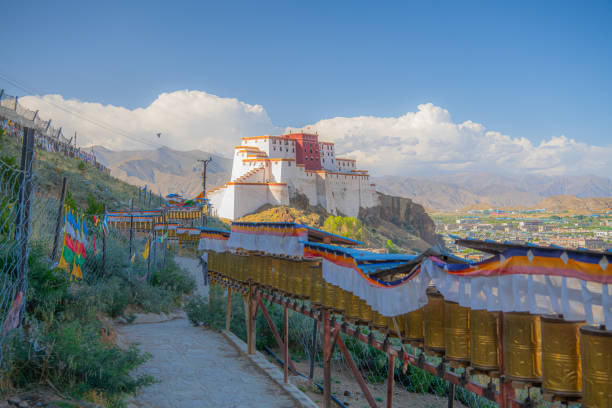
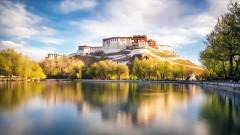
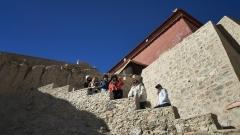
Palace of Panchen Lamas in Shigatse, Tibet
Main Transportation Methods to Shigatse
By Plane: Fast and Efficient, Suitable for Time-Constrained Tourists
Shigatse Heping Airport is one of the important regional airports in Tibet. At present, it has opened multiple domestic routes connecting Lhasa, Chengdu, Chongqing, Xi’an and other cities.
- Route Options
– Direct Flights: Cities such as Chengdu Shuangliu International Airport and Chongqing Jiangbei International Airport offer direct flights to Shigatse Heping Airport, with a flight duration of about 2–3 hours. For specific flight schedules, you can check the official websites of airlines or ticketing platforms.
– Connecting Flights: If there are no direct flights from your city, you can first fly to Lhasa Gonggar International Airport, then transfer to Shigatse by plane or car. Flights from Lhasa to Shigatse take only about 40 minutes, with multiple daily round-trip flights, which are very convenient.
- Ticket Purchase and Notes
– Ticketing Channels: Tickets can be purchased through airline official websites, Ctrip, Fliggy and other platforms. Overseas tourists can pay with international credit cards. It is recommended to book tickets 1–2 months in advance to get more favorable fares.
– Fare Reference: During the peak season (June–September), the one-way ticket price from Chengdu to Shigatse is about 1,500–2,500 CNY; during the off-season (November–April of the following year), the price is about 800–1,500 CNY. The one-way ticket price from Lhasa to Shigatse is about 500–800 CNY in peak season and 300–500 CNY in off-season.
– Airport Transportation: Shigatse Heping Airport is about 43 kilometers away from the urban area. The airport bus is the most convenient transportation option, with a fare of about 30 CNY and a travel time of about 1 hour. You can also choose a taxi, with a one-way fare of about 150–200 CNY, and you can share the cost by carpooling.
By Train: Cost-Effective, Enjoy Plateau Scenery Along the Way
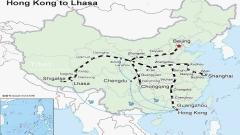
Shigatse Railway Station is the terminal station of the Lhasa-Shigatse Railway. The railway connects Lhasa and Shigatse, with a total length of about 250 kilometers. Running on the Qinghai-Tibet Plateau, the train allows you to enjoy the stunning scenery of the Yarlung Zangbo River, grasslands and snow-capped mountains along the way, making it an excellent way to experience plateau travel.
- Train Schedule Information
There are multiple EMU and regular speed trains running between Lhasa and Shigatse every day. EMU trains take about 2.5 hours for the whole journey, while regular speed trains take about 3.5–4 hours. For specific train numbers such as D8951 and Z8801, you can check real-time schedules and ticket availability on the 12306 official website or app.
Tourists can purchase tickets with their original passports at railway station ticket windows or designated ticket agencies, or register an account on the 12306 app, bind passport information and purchase tickets online.
- Fare and Seat Selection
The second-class seat fare of EMU trains is about 89 CNY, and the first-class seat is about 142 CNY. The hard seat fare of regular speed trains is about 40.5 CNY, the hard sleeper fare is about 86.5–96.5 CNY, and the soft sleeper fare is about 134.5–141.5 CNY.
It is recommended to choose a window seat to enjoy the scenery along the way. Especially after departing from Lhasa, the train runs alongside the Yarlung Zangbo River, with a wide river surface, rich vegetation on both banks, and occasional herds of yaks and Tibetan villages, presenting a beautiful and breathtaking view.
- Transportation from Railway Station to Urban Area
Shigatse Railway Station is about 5 kilometers away from the urban area. After exiting the station, you can take a bus with a fare of 1 CNY and a travel time of about 20 minutes. The starting price of a taxi is about 10 CNY, and the cost from the railway station to the downtown area is about 15–20 CNY, which is very convenient.
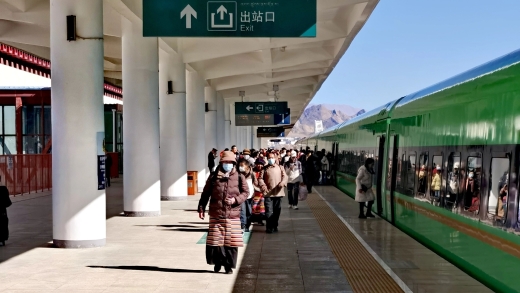
Shigatse Railway Station
By Car: Flexible and Free, Suitable for In-Depth Tourists
Traveling by car includes two options: long-distance bus and self-driving, which are suitable for tourists who like to arrange their itineraries flexibly and want to stop and explore along the way.
Long-Distance Bus
There are frequent long-distance bus services from Lhasa to Shigatse, with buses departing from Lhasa West Suburb Passenger Station every day. The journey takes about 4–5 hours, and the fare is about 100–150 CNY. The buses are in good condition, equipped with air conditioning and oxygen supply equipment to alleviate altitude sickness.
In addition, Shigatse also has long-distance buses to surrounding counties and districts, such as Dingri County and Gyangze County. The fares vary according to the distance, generally ranging from 50 to 200 CNY, which is suitable for tourists who want to explore the rural areas of Shigatse in depth.
Self-Driving
– Route Options: Driving from Lhasa to Shigatse, you can choose the Lhasa-Shigatse Highway (a section of National Highway G318), which is fully paved with asphalt and in good condition, allowing sedans to pass easily. You can also choose the Yarlung Zangbo Grand Canyon loop line, which passes through attractions such as Mira Pass and Basongcuo along the way, with richer scenery. However, the distance is longer, about 500 kilometers, requiring 2–3 days of travel time.
– Car Rental Costs: Renting a car in Lhasa costs about 300–500 CNY per day for an economy sedan and 500–800 CNY per day for an SUV. To rent a car, you need to provide an ID card and a driving license. Overseas tourists need to provide an international driving permit and a passport.
– Self-Driving Precautions: Road conditions in plateau areas are complex, with many curves and steep slopes on some sections, so you need to drive carefully. Pay attention to refueling—there are gas stations in counties along the way, but gas stations are scarce in remote areas. It is recommended to refuel in time when the fuel tank is half full. Obey traffic rules—some sections in Tibet have speed limits and interval speed measurement, so avoid speeding fines.
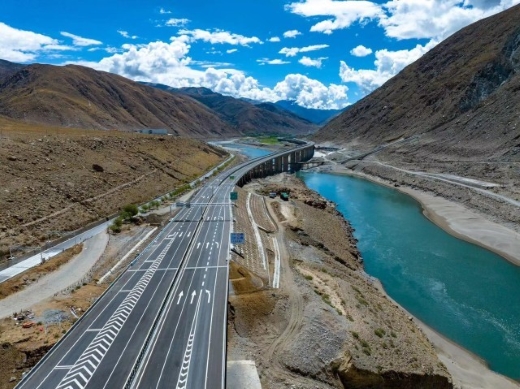
Lhasa-Shigatse Highway
Shigatse Travel Budget Reference
Transportation Costs
- External Transportation: Taking Chengdu as the departure point, the one-way flight ticket to Shigatse is about 1,500–2,500 CNY per person in peak season and 800–1,500 CNY per person in off-season. The second-class seat ticket of the train from Lhasa to Shigatse is about 89 CNY per person, and the long-distance bus fare is about 100–150 CNY per person.
- Internal Transportation: The short-distance taxi fare in the urban area is about 10–20 CNY per trip. Chartering a car to visit attractions such as Mount Qomolangma Base Camp costs about 800–1,200 CNY per day for a 5-seat sedan, about 200–300 CNY per person per day. The price of a tourist special line bus is about 200–300 CNY per person.
Accommodation Costs
- Urban Accommodation: The price of budget hotels is about 200–400 CNY per night, mid-range hotels are about 400–800 CNY per night, and high-end hotels are about 800–1,500 CNY per night.
- Scenic Area Accommodation: The accommodation conditions at Mount Qomolangma Base Camp are relatively simple, mostly tent hotels, with a price of about 100–200 CNY per night. The price of homestays around Yamdrok Lake is about 200–400 CNY per night.
Catering Costs
The catering in Shigatse mainly consists of Tibetan food and Sichuan cuisine. The per capita consumption of Tibetan food is about 50–100 CNY per meal, Sichuan cuisine is about 30–50 CNY per meal, and simple noodles and fast food are about 10–20 CNY per meal.
Common Q&A About Shigatse Travel
Q: Overseas tourists do not have a Chinese ID card. How can they buy train tickets to Shigatse?
A: Overseas tourists can purchase train tickets at any railway station ticket window or designated ticket agency with their original valid passports. They can also register an account on the 12306 official app, bind passport information and purchase tickets online. The ticketing process is basically the same as that for domestic tourists.
Q: Can the border pass for Mount Qomolangma Base Camp be applied for directly at the place of departure?
A: Yes. Overseas tourists must first obtain a Chinese visa, then carry their passports, visas and itinerary descriptions to apply for the border pass at the exit-entry administration department of the public security bureau in their place of household registration (or place of residence). Mark the destination as “Dingri County, Shigatse”. The process is free of charge and can usually be completed within 1–3 working days.
Q: If I miss the last airport bus from Shigatse Heping Airport to the urban area, what other transportation options are available?
A: You can choose to take a taxi or carpool. There are many taxis waiting outside the airport, with a one-way fare of about 150–200 CNY to the urban area. You can also carpool with other tourists, with the per capita shared cost of about 30–50 CNY, which is both economical and convenient.
Q: Will altitude sickness be severe? Do I need to carry an oxygen cylinder specially?
A: Altitude sickness varies from person to person. The altitude of downtown Shigatse is about 3,800 meters, and first-time visitors may experience mild symptoms such as headache and shortness of breath. It is recommended to take anti-altitude sickness medicine in advance, avoid strenuous exercise after arrival, rest more and drink plenty of water. You can carry a small portable oxygen cylinder for emergency use. Portable oxygen cylinders are also readily available for purchase or rent at pharmacies and hotels in the urban area.
Q: What conditions do vehicles need to meet for self-driving to Shigatse?
A: It is recommended to choose a well-conditioned SUV or off-road vehicle. Although the entire Lhasa-Shigatse Highway is paved with asphalt, some remote sections have many curves and steep slopes, and off-road vehicles have better trafficability. Before departure, comprehensively check the vehicle’s brakes, tires, fuel tank and other components, and prepare snow chains, a spare tire and basic maintenance tools.
Shigatse Travel Precautions
- Altitude Sickness Management:Take anti-altitude sickness medicines such as Rhodiola rosea one week in advance. After arrival, avoid bathing, drinking alcohol and strenuous exercise. Eat more vegetables and fruits, drink plenty of water and get adequate sleep. If severe altitude sickness symptoms occur, such as severe headache, difficulty breathing and vomiting, seek medical attention or inhale oxygen to relieve symptoms in a timely manner.
- Climate and Clothing: Shigatse has a large temperature difference between day and night. In summer, the daytime temperature is about 15–25℃ and the nighttime temperature is about 5–10℃. In winter, the daytime temperature is about -5–10℃ and the nighttime temperature is about -15–-5℃. You need to carry warm clothing such as a jacket, down jacket and sweater, as well as a windproof and waterproof coat.
- Catering Precautions:Tibetan specialties such as butter tea, zanba and yak meat are local highlights, but some tourists may not be accustomed to them, so you can try them in moderation. Pay attention to food hygiene, avoid eating raw and cold food, drink plenty of water to prevent gastrointestinal discomfort.
- Shopping and Consumption: There are many Tibetan specialty stores in downtown Shigatse, selling products such as Tibetan incense, Thangka paintings and yak horn crafts. You can negotiate the price when purchasing and pay attention to distinguishing the authenticity of the goods. Local consumption mainly uses cash and mobile payment, and most merchants support WeChat Pay and Alipay.
- Communication and Network:There is mobile phone signal and 4G network coverage in downtown Shigatse and major scenic spots, but the signal may be weak in remote areas. It is recommended to apply for a mobile data package for the Tibet region in advance to facilitate navigation and communication.
Warm Tips for Shigatse Travel
The meaning of travel lies in experiencing different customs and cultures. The beauty of Shigatse lies not only in its magnificent natural scenery, but also in its profound Tibetan cultural heritage. During your trip, please respect local cultures and customs, protect the environment, do not litter, and let this beautiful scenery be preserved for a long time. If you need professional guidance and arrangements when planning your trip, China Dragon Travel can provide you with thoughtful services to help you start an unforgettable journey to Shigatse.