For international travelers, September in Northern Xinjiang is nature’s most generous gift—it offers the chance to encounter a breathtaking autumn wonderland of layered, color-drenched forests while avoiding the crowds of midsummer. The key to this journey lies in the unique rhythm of Northern Xinjiang in September: the warm daytime sun casts a golden glow over the colorful forests, the sudden drop in temperature at night gives rise to morning mists and frost flowers, and occasional light rains bring a translucent vitality to the lakes and mountains. Master this weather guide, and you will truly appreciate the boundless charm of Northern Xinjiang’s golden autumn.
September Weather in Northern Xinjiang: Diurnal Temperature Difference and Precipitation
Northern Xinjiang spans the Altai Mountains and the Junggar Basin. Its unique terrain creates a climate characterized by “four seasons in one mountain, and different weather every ten miles”—and September is when this variability is at its most fascinating. From a meteorological perspective, Northern Xinjiang’s weather in September is marked by distinct features: “warm days and cool nights, more sunshine than rain, and occasional snow in some areas”. While this brings rich travel experiences, it also requires advance preparation.
Daytime in Northern Xinjiang is pleasantly warm, with midday temperatures stabilizing between 15-20°C in most areas. Places like Nalati Grassland in Ili and the shores of Sayram Lake in Bortala can even reach around 20°C. This temperature is ideal for outdoor activities, whether you’re hiking through birch forests or strolling by Kanas Lake, you’ll enjoy a comfortable experience. The sunlight at this time is clear yet gentle—it highlights the layers of the forests without being as harsh and dazzling as in midsummer, making it a golden period for capturing light and shadow in photography.
However, as the sun sets, the “other side” of Northern Xinjiang’s weather in September emerges. Nighttime temperatures generally drop to 5-10°C, and high-altitude areas like Kanas and Hemu in the Altay region can even fall below 0°C. Some mountainous areas may see their first snow in late September, with a probability of about 20%. This temperature difference of over 15°C between day and night is the most prominent climatic feature of Northern Xinjiang in autumn, and it makes “layered dressing” an essential part of any trip.
In terms of precipitation, the probability of rain in Northern Xinjiang in September is only 15-20%, and most of it is short-lived showers in mountainous areas. These showers are often followed by brilliant rainbows and fresher air. It’s worth noting that wind is relatively strong in mountainous areas and river valleys—the “lake wind” at Sayram Lake and the “yardang wind” at Devil City often reach level 3-4. While this doesn’t affect sightseeing, it does call for windproof gear.
Weather and Guide for Various Regions in Northern Xinjiang in September
Northern Xinjiang’s scenic spots are widely distributed, ranging from grasslands and lakes to yardang landforms and border villages. The weather in September varies significantly across different regions. Adjusting your itinerary and equipment according to your specific destination will ensure a smoother trip.
Altay Region: A Fairyland of Autumn Snow and Morning Mist
The “Northern Xinjiang Core Triangle” composed of Kanas, Hemu, and Baihaba is the most popular destination in September, and the weather here is also the most dramatic. The average daily temperature ranges from 8-18°C—during the day, a thin wool sweater paired with a windproof jacket is sufficient, but when shooting morning mist at dawn, temperatures often drop below 5°C, so a light down jacket and gloves are a must.
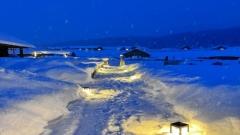
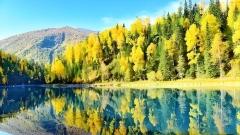
Northern Xinjiang’s weather in September endows this area with unique landscapes: in the early morning, the low temperature of around 0°C in the river valley condenses water vapor into floating morning mist, which drifts between the golden birch forests and the wooden houses of the Tuvan people—this is the origin of the “fairyland on earth” that is Shenxian Bay. If you happen to encounter the first snow in late September, the sight of snow-capped mountains contrasting with colorful forests will become a memory to last a lifetime. However, it’s important to note that snowfall may temporarily close some mountain paths. It is advisable to check the scenic area announcements in advance, and self-driving travelers should prepare snow chains.
Mid-September in Baihaba coincides with the peak period of the Kazakh nomads’ migration. When thousands of cattle and sheep pour over the hillsides, the clear weather perfectly combines the silhouettes of the herders waving their whips with the light and shadow. Shooting such scenes requires staying outdoors for a long time, so it is recommended to bring a portable hand warmer and wear waterproof hiking shoes to deal with the dew on the grassland.
Ili Region: The Final Movement of the Grassland Under the Warm Sun
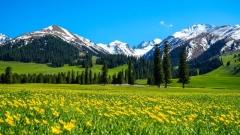
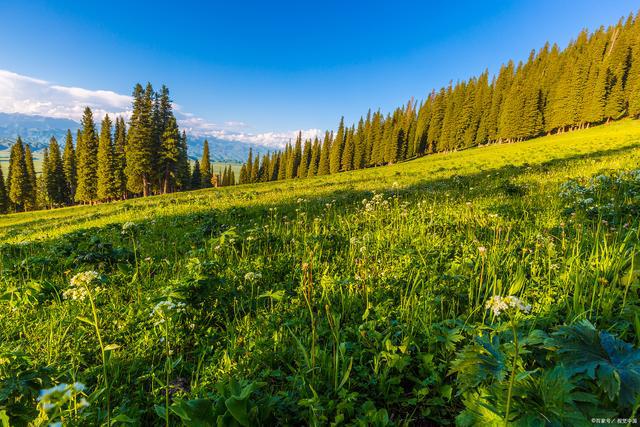
The Ili River Valley, home to Nalati, Kalajun Grassland, and Sayram Lake, has relatively mild weather in September, with an average daily temperature of 10-20°C—it is the “last golden period” for grassland scenery. During the day, the grassland still features a blend of remaining green and spreading gold; a long-sleeved T-shirt paired with a fleece jacket is enough to cope with the weather. The wind while horseback riding will make you feel slightly cooler, so adding a windproof vest will be more comfortable.
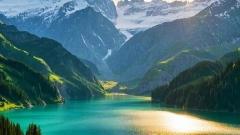
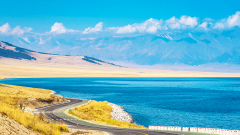
Special attention should be paid to the “lake microclimate” at Sayram Lake: when the midday sun is strong, the lake water takes on a deep sapphire blue. At this time, sun protection is essential—an SPF 50+ sunscreen, a wide-brimmed windproof hat, and sunglasses are indispensable, otherwise the strong ultraviolet rays can cause sunburn in a short time. In the evening, the wind by the lake picks up, and the temperature drops rapidly. It is recommended to carry a light down jacket with you to avoid catching a cold while enjoying the sunset.
Rainfall in Ili in September is mostly in the form of showers. After the rain, the Nalati Sky Grassland will bloom with scattered wildflowers, and the air will be filled with the fragrance of grass and earth. This short-lived rainfall has little impact on the itinerary—bringing a folding umbrella or wearing a 3-in-1 waterproof jacket is sufficient.
Karamay and Burqin: A Feast of Colors Amid Dry Weather
Wuerhe Devil City and Burqin Wucai Beach represent the arid landforms of Northern Xinjiang. The weather here in September is characterized by “extreme dryness, hot days, and cool nights”. Daytime temperatures can exceed 20°C, so a quick-drying long-sleeved T-shirt is enough, but the midday sun will cause the temperature of the yardang landforms to rise sharply. It is recommended to avoid the high-temperature period from 12:00 to 14:00 and choose to visit in the early morning or evening.
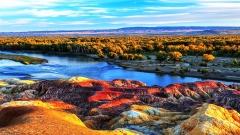
The sunset at Wucai Beach is a must-see landscape in Northern Xinjiang. At this time, the “light and shadow magic” of Northern Xinjiang’s weather in September is brought to the fullest: the setting sun dyes the rock formations on both sides of the river valley in various colors such as red, orange, and yellow, creating a striking contrast with the sapphire blue of the Irtysh River. When shooting the sunset, the temperature has dropped to around 10°C, so you need to put on a jacket in time. At the same time, bring a moisturizing spray to cope with the dry air and prevent skin dehydration.
The wind in this area is relatively strong, and the “wind howling” phenomenon at Devil City is particularly obvious. It is recommended to wear a windproof mask and put electronic devices such as cameras into dust-proof bags to prevent sand and dust from entering.
Ili
Essentials for International Travelers: A Weather-Driven Packing List
In response to the variability of Northern Xinjiang’s weather in September, scientific equipment planning can greatly enhance the travel experience. Combined with the travel habits of international travelers, the following list is divided into “core essentials” and “scenario-specific recommendations” to facilitate luggage organization.
Core Essential Equipment
Layered Clothing Set: This is the key to coping with the day-night temperature difference in Northern Xinjiang. For the base layer, choose a quick-drying long-sleeved T-shirt (for sweat absorption and breathability); for the middle layer, match it with a thin wool sweater or fleece jacket (for warmth); and for the outer layer, prepare a 3-in-1 waterproof jacket (windproof and waterproof, with a detachable down liner). For bottoms, fleece-lined casual pants are recommended—they can be worn alone during the day and paired with thermal underwear at night for warmth.
Protective Equipment Combination: Strong ultraviolet rays are a “hidden challenge” in Northern Xinjiang in September. You need to bring an SPF 50+ sunscreen, polarized sunglasses, and a wide-brimmed windproof hat. In the dry climate, moisturizing face cream, lip balm, and facial masks are essential. It is recommended to choose portable small bottles that meet airport security requirements.
Footwear and Accessories: Waterproof hiking shoes are the best all-region choice—they can handle the dew on the grassland and adapt to the stony paths in scenic areas. For accessories, thin gloves (for early morning photography), woolen socks (for moisture retention and frost protection), and a folding umbrella (for coping with showers) should be included in your luggage.
Scenario-Specific Recommended Equipment
For Photographers: In addition to cameras and lenses, it is recommended to bring a tripod (essential for shooting morning mist and starry skies), a windproof camera bag (to cope with sand and dust at Devil City), and spare batteries (battery power drains quickly at low temperatures).
For Self-Driving Travelers: Snow chains (to cope with the first snow in mountainous areas), a car-mounted heater (for warmth during night driving), and an emergency medical kit (including antipyretics and band-aids) are indispensable. At the same time, download offline maps to avoid signal loss in mountainous areas.
For Cultural Experience Enthusiasts: When visiting Tuvan villages or Kazakh herders’ homes, you can bring small gifts. Wearing a brightly colored shawl (such as red or blue) will not only keep you warm but also help you take stunning photos against the golden background. Avoid wearing yellow clothing, as it may make you “blend into the scenery”.
September Itinerary for Northern Xinjiang: A Weather-Based Tour Schedule
The daily variation pattern of Northern Xinjiang’s weather in September determines that “off-peak sightseeing” is the best strategy. The following itinerary is planned according to the timeline to maximize the use of weather advantages.
Early Morning (6:00-9:00): Capture Wonders Created by Low Temperatures
This is the coldest time of day in Northern Xinjiang (below 5°C), but it is also the best time for photography. In Hemu, climbing to the viewing platform allows you to capture the scene of “cooking smoke dancing with morning mist”: the white smoke rising from the chimneys of wooden houses blends with the mist in the river valley, and the golden birch forests gradually wake up in the morning light. At this time, you need to be fully equipped for warmth—wear a down jacket and gloves, and set aside enough time to walk up the mountain to avoid missing the “blue hour” before sunrise.
The morning mist at Kanas’ Shenxian Bay is equally unmissable. It is recommended to stay at a homestay inside the scenic area one day in advance, arrive at the shooting location before 6 a.m., and use a small aperture with a tripod to capture the dynamic beauty of the drifting mist.
Noon (12:00-15:00): Take a Break During Peak Hours or Explore Mild Areas
At noon, the temperature rises to 15-20°C, and the sun is strong—this is a good time to arrange relatively relaxing activities. You can taste grilled fish and naan wrapped in meat in downtown Burqin, or experience folk culture at the Urumqi International Grand Bazaar. These activities not only help you avoid the high temperatures but also allow you to experience local life. If you are in a scenic area, you can choose to take a boat tour on Kanas Lake—the gentle breeze on the lake will bring a sense of coolness.
During this period, it is important to stay hydrated and protected from the sun. Reapply sunscreen every 2 hours, and carry a thermos with warm water to avoid sore throats caused by dryness.
Evening (17:00-20:00): Chase the Pinnacle of Colors in Light and Shadow
The slanting sunlight before sunset is nature’s “best lighting director”, and at this time, Northern Xinjiang’s weather in September best highlights the characteristics of the scenic spots. At Wucai Beach, you can capture the spectacle of “one river separating two banks, like two different worlds”: the colored rocks on the west bank glow with rust-red in the setting sun, the poplar forests on the east bank are golden, and the Irtysh River flows through like a silver ribbon.
The evening at Devil City is equally charming—the wind-eroded landforms present surreal outlines in the long shadows, and the color of the mounds transitions from beeswax yellow to dark brown, constantly changing as time passes. It is recommended to enter the scenic area 1 hour in advance, choose a high shooting spot, and wait for the “golden light and shadow” during sunset.
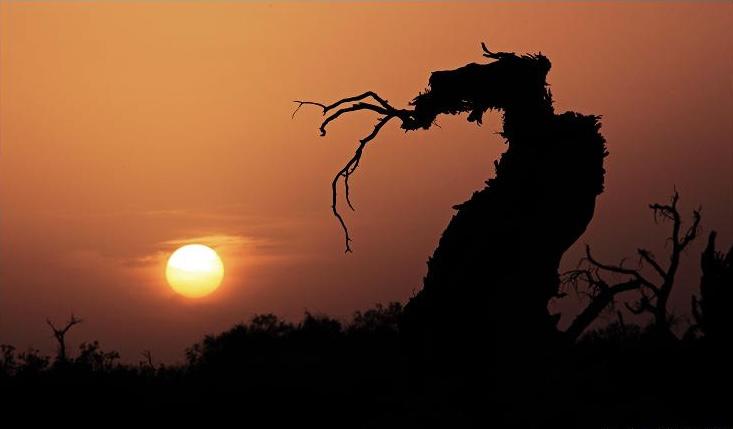
Sunset in the Southern Xinjiang
Encounter the Most Beautiful Golden Autumn in Northern Xinjiang in September
For international travelers, what makes September in Northern Xinjiang so unique is precisely the distinctive experiences created by Northern Xinjiang’s weather in September: waiting for the first ray of sunlight in the morning dew, feeling the warm breeze blowing through the colorful forests at noon, chasing the mountains dyed red by the sunset in the evening, and gazing at the bright starry sky in the low temperatures at night. This interplay of temperature differences and light and shadow fills every part of the journey with surprises.
After reading this September weather strategy in Northern Xinjiang, you must have a clear grasp of the local climate characteristics, temperature difference changes and coping tips – from the morning fog and the first snow in Altai to the warm sun grassland in Ili, every detail lays the foundation for the journey.
This is a good time to go to the golden autumn in northern Xinjiang: go to Kanas to capture the moment of the birch forest in the morning mist, and go to Sailimu Lake to meet the gem blue lake after the rain. If you haven’t finalized the itinerary, just contact China Dragon Travel – we will tailor a cost-effective travel plan according to your time, budget and preferences. From route planning to dressing reminders, the whole process is thoughtful, so that you can immerse yourself in the golden autumn scenery without worry.