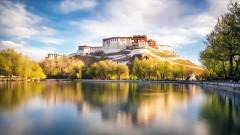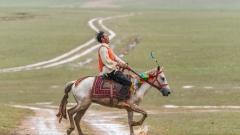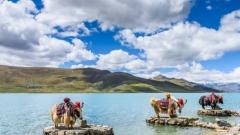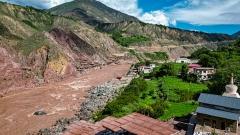

Deep in Tibet’s Shannan Yarlung Zangbo River Valley, among Qiongjie County’s quiet mountains, stand the sacred Shannan Tibetan Kings’ Tombs, carrying the Tubo Dynasty’s glorious and magnificent past. As the solemn resting places of 7th-9th century Tubo kings and nobles, they are Tibet’s largest and best-preserved existing Tubo mausoleums and a precious living fossil for interpreting ancient Tibetan history, unique burial systems and profound religious beliefs. Unlike bustling and crowded scenic spots, they exude a rare calm solemnity, with every ancient mound, weathered stele and stone lion telling touching royal and cultural stories—an unmissable cultural secret for all Tibet tourists to truly understand plateau civilization.
Shannan Tibetan Kings’ Tombs: Millennia-Old Mausoleums
Overview of Shannan Tibetan Kings’ Tombs
The Shannan Tibetan Kings’ Tombs are in Qiongjie County, Shannan City, ~90km from Zedang Town in the Yarlung Zangbo River Valley. Backed by Pire Mountain and facing the river, it follows Tibet’s “backing mountains and facing water” feng shui, and is Tibet’s largest existing Tubo mausoleum group, listed as a national key cultural relic in 1961.
Tibetan records note 21 original mausoleums; some are unidentifiable due to weathering. Currently, 9 have confirmed owners, including Songtsen Gampo and other Tubo kings; most existing ones are later clothes and crowns tombs, precious for exploring Tubo civilization.
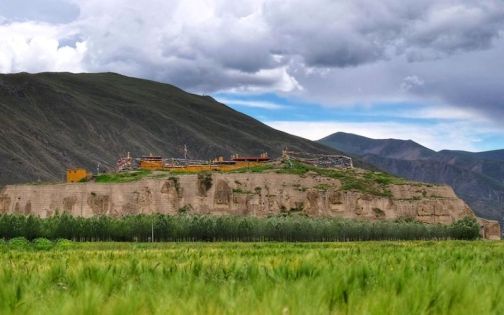
Tibetan Kings’ Tombs
Core Values of Shannan Tibetan Kings’ Tombs: Why Visit
For tourists to Tibet, the Shannan Tibetan Kings’ Tombs value lies in its profound history, cultural significance and unique scenery. As a cultural secret distinct from Tibet’s snow-capped mountains and lakes, its core values have three aspects:
- Historical Value: As Tubo Dynasty mausoleums, they witnessed the dynasty’s rise and fall. Their shape and layout provide precious data for studying Tubo systems, a living fossil of ancient Tibetan history.
- Cultural Value: Its architecture blends Tubo and Central Plains styles; stone steles and lions reflect both regions, confirming thousands of years of Han-Tibetan cultural integration.
- Landscape Value: Backed by mountains and facing water, earthen mounds contrast with Yarlung’s pastoral scenery and snow-capped mountains, an excellent spot for cultural-nature photography.
Must-See Attractions at Tibetan Kings’ Tombs
The Shannan Tibetan Kings’ Tombs are not a single mausoleum, but a group of mausoleums, stone steles and stone lions. Each scenic spot has a unique historical background and story. When visiting, tourists can focus on the following core scenic spots to immerse themselves in the marks of millennia-old royal power.
Songtsen Gampo’s Tomb: The Legendary Core
As the core and legendary part of the Shannan Tibetan Kings’ Tombs, Songtsen Gampo’s Tomb is a must-see highlight for tourists. The historical stories behind it and its unique architectural style are highly ornamental. Let’s explore together:
- Core Status: The most famous and legendary tomb in Shannan. Legend says it is the joint burial place of Songtsen Gampo, Princess Wencheng and Tritsun, beloved by Tibetans.
- Architectural Form: A tall, magnificent earthen mound with a square flat top—rectangular base and elliptical upper part, ~130m east-west, ~10m high, with a grand layout.
- Tomb Top Landscape: Southwest-facing gate, a small temple with three statues on top, full of incense. Tibetans worship here on important Tibetan festivals.
- Cultural Mark: Ink-written Tibetan records on the temple gate mark Tubo kings’ tombs. Folk legends say Songtsen Gampo became Guanyin, with a mysterious secret passage to the Dragon Palace.
King Trisong Detsen’s Tomb and Stone Stele: Inscribing Immortal Achievements
King Trisong Detsen’s Tomb and the stone stele beside it are a group of scenic spots with extremely high cultural value in the Shannan Tibetan Kings’ Tombs, which not only inscribe the immortal achievements of the king, but also retain precious cultural relic marks.
- Tomb Owner and Achievements: Adjacent to Songtsen Gampo’s Tomb, it houses King Trisong Detsen of Tubo. He governed diligently, promoted Buddhism, achieved great political success, and was praised as a wise monarch.
- Mausoleum Scale: The rectangular earthen mound is up to 180 meters long and 18 meters high, similar in size to a football field. Its outline is slightly blurred by weathering, but its solemn momentum remains.
- Status of the Stone Stele: The King Trisong Detsen Stone Stele on the tomb’s eastern slope is a representative relic of the Shannan Tibetan Kings’ Tombs and key data for Tubo history research.
- Characteristics of the Stone Stele: Square column-shaped with a treasure bead roof, it is carved with clouds, apsaras and dragons, combining Tubo and Tang styles, with clear ancient Tibetan characters.
King Tri Ralpachen’s Stone Stele and Tomb Guardian Lions
In addition to King Trisong Detsen’s Stone Stele, King Tri Ralpachen’s Stone Stele and the tomb guardian lions in the Shannan Tibetan Kings’ Tombs are also artistic treasures preserving Tubo civilization. The two complement each other and bring out the best in each other, fully showing the cultural heritage of the royal mausoleum.
- Location and Form of the Stone Stele: Standing near the tombs (now Qiongjie County Hospital gate), its form resembles King Trisong Detsen’s Stele, with a double-bead top (no apsaras) and cloud dragon patterns on both sides.
- Core Information of the Stone Stele: About 3.56 meters of the stele is exposed, with ancient Tibetan characters on the south (some blurred by weathering). Built to commemorate King Tri Ralpachen, recording his reign’s prosperity.
- Overview of the Tomb Guardian Lions: A pair of Tubo sculpture treasures stand in front of the tombs; one is incomplete, the other has a broken left leg, well-preserved with simple momentum and artistic value.
- Detailed Characteristics of the Stone Lions: 1.55 meters high (with base: 1.2m long, 0.76m wide), carved simply and powerfully, showing Tubo sculpture skills and royal dignity vividly.
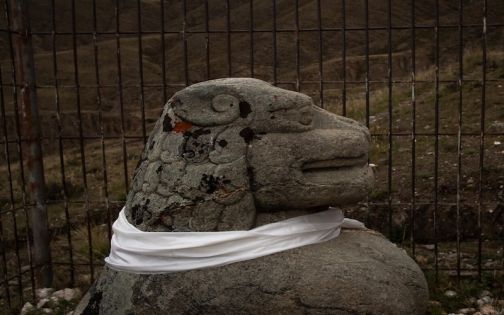
Stone Lion
Other Mausoleums: Unlocking the Historical Code of Tubo
In addition to the above-mentioned key mausoleums and cultural relics, the other mausoleums in the Shannan Tibetan Kings’ Tombs also have unknown values. Even though some of them are difficult to identify the tomb owners due to long-term weathering, they still retain the historical marks of the Tubo Dynasty.
- Main Mausoleums: Including King Mangsong Mangtsen’s, Me Agtsom’s and Langdarma’s Tombs, scattered in the group, echoing Songtsen Gampo’s and Trisong Detsen’s Tombs to form a grand complex.
- Characteristic Mausoleum: King Langdarma’s Tomb is small (about 30m in side length). As the last Tubo king’s mausoleum, it witnesses the dynasty’s decline.
- Common Characteristics: Most mausoleum mounds are square or trapezoidal, with rammed earth and stones on top. Walls have neat niches that once held pottery pagodas and Buddha statues, clues for Tubo burial and religion studies.
Guide to Shannan Tibetan Kings’ Tombs: Travel Without Pitfalls
As a must-visit cultural secret for tourists to Tibet, the Shannan Tibetan Kings’ Tombs have relatively complete tourism supporting facilities. When visiting, tourists can refer to the following practical guide to make preparations in advance, avoid pitfalls, enjoy a smooth and comfortable cultural journey, and better feel the millennial charm of the Shannan Tibetan Kings’ Tombs.
Transportation Guide: Direct Access to Tibetan Kings’ Tombs
The Shannan Tibetan Kings’ Tombs are located in Qiongjie County, about 90 kilometers from Zedang Town, Shannan City and 180 kilometers from Lhasa. Transportation is relatively convenient. Tourists can choose a suitable way to go according to their own needs:
- Self-Driving: Suitable for independent travelers. Drive from Lhasa to Zedang Town, then 90km to the tombs (3-hour journey, good road, sedan-accessible).
- Chartered Car: Convenient from Lhasa/Zedang, optional for combined Shannan tours. Daily fee 500-800 yuan, ideal for groups; driver knows roads and history.
- Public Transportation: Take Lhasa-Zedang coach (50 yuan, 2.5hrs), transfer to Qiongjie (15 yuan, 1.5hrs), then taxi/tricycle to the tombs (10mins, 10 yuan).
Tickets and Opening Hours: Planning Your Visit Duration
The Shannan Tibetan Kings’ Tombs have affordable tickets and fixed opening hours. Tourists can reasonably plan their visit duration by understanding the relevant information in advance to avoid missing the best visiting experience. For details, please refer to the following information:
| Visitor Type | Ticket Price | Remarks |
| General Visitors | 40 yuan/person | None |
| Students | Half-Price Discount | Student ID required |
| Elderly over 60, Disabled Persons, Military Personnel, etc. | Free Admission
|
Relevant documents required |
Tickets can be purchased on site or booked in advance on online platforms, no queuing required, convenient and fast.
- Opening Hours: 9:00-18:00 daily, last entry at 17:30. Reserve 2-3 hours to visit core scenic spots and avoid missing key details.
- Notes: Smoking, littering, climbing mounds/steles and carving relics are prohibited. Abide by regulations, respect local culture and protect relics.
Accommodation and Catering: Exploring Qiongjie’s Characteristics
The Shannan Tibetan Kings’ Tombs are located in Qiongjie County, where local accommodation and catering facilities are relatively complete. Tourists can choose to stay in Qiongjie County or return to Zedang Town. Both options have their own advantages and can be arranged according to their own itinerary:
- Accommodation Recommendations: Qiongjie County has many cost-effective, clean hotels and homestays (100-300 yuan), some with Yarlung Zangbo River Valley views and Tibetan characteristics. For better quality, stay in Zedang Town (200-800 yuan) with more hotels and convenient transportation.
- Catering Recommendations: Qiongjie’s catering mainly includes authentic, affordable Tibetan food and some Sichuan cuisine. Try local specialties like Tibetan noodles and butter tea; restaurants are conveniently located near county main roads, and respect local eating habits.
Visiting Tips: Enhancing Your Travel Experience
The Shannan Tibetan Kings’ Tombs are cultural scenic spots located in a plateau area. When visiting, tourists can refer to the following practical tips to enhance their travel experience, avoid physical discomfort, and better feel the charm of the millennial royal mausoleum.
- Altitude Sickness: Qiongjie County is about 3700 meters above sea level; mild altitude sickness may occur. Prepare anti-altitude sickness drugs in advance, avoid strenuous exercise, drink more water and rest, and refrain from drinking or staying up late.
- Clothing Preparation: Plateau weather is changeable with large day-night temperature differences. Prepare a thick coat, sunscreen products in summer, and sufficient warm clothes in winter to avoid sunburn or cold.
- Cultural Respect: As a local Tibetan place of faith, tourists must respect cultural customs, not touch cultural relics, randomly photograph worship activities, and keep polite when communicating.
- Item Preparation: Carry sufficient water, snacks, relevant documents (ID, student ID, etc.), and a mobile phone or camera to replenish energy, facilitate ticketing and record the journey.
Visiting Tibetan Kings’ Tombs: Understanding the Plateau Civilization
Among the many scenic spots in Tibet, the Shannan Tibetan Kings’ Tombs lack the grandeur of snow-capped mountains and lakes but possess unique calmness and profoundness. Every earthen mound, stone stele and stone lion here tells the Tubo Dynasty’s rise and fall and Han-Tibetan cultural integration, serving as a living fossil for understanding ancient Tibetan history. A visit here is a must for tourists to Shannan, offering a unique experience to feel Tibetan culture’s depth.