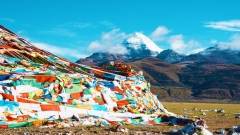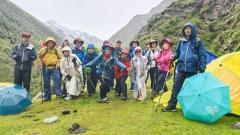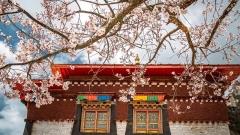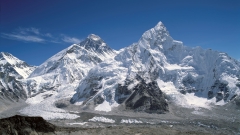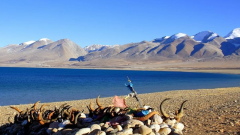

Nestled among the mountains of Qamdo, Tibet, lies Shengchen Langzha Holy Mountain, revered by believers as a sacred site and hailed by travelers as a hidden gem. Located in Gangtuo Township, Jomda County, Qamdo, it is about 100 kilometers from the county seat, with 90 kilometers accessible by car. Despite the inconvenient transportation, it has preserved its primitive snowland scenery and pure religious atmosphere. As one of the 25 major Buddhist holy mountains in the Kang Region, it has attracted numerous religious masters and eminent monks for practice and pilgrimage. Its magnificent mountain views, countless sacred sites, and touching legends draw visitors from home and abroad.
Chamdo, Tibet – The Sacred Mountain of Shengqin Langza in Eastern Tibet
Shengchen Langzha Holy Mountain is extremely grand in scale. Legend has it that riding a horse around the mountain takes an entire day, testifying to its vastness. The mountain spans a wide altitude range, ascending from grasslands at lower elevations to towering snow-capped peaks. Along the way, the vegetation changes accordingly – from lush shrublands to vast alpine meadows, and finally to perpetual glaciers and snow. Each step reveals a new view, with distinct charms in every season.
In terms of cultural heritage, Shengchen Langzha Holy Mountain holds an irreplaceable position in the hearts of Tibetan people. According to Tibetan historical records, it was once a place where Padmasambhava practiced and propagated Buddhism. The mountain retains numerous sacred sites such as his stone statues, meditation caves, and demon-subduing caves, each carrying profound religious significance. Additionally, eminent monks from the Nyingma and Kagyu sects, including Deqing Chojilingpa, Karma Pakshi, and Gongzhu Yonden Gyatso, have all practiced and pilgrimaged here. Thus, devout believers highly venerate Shengchen Langzha Holy Mountain, regarding a pilgrimage to it as a lifelong blessing.
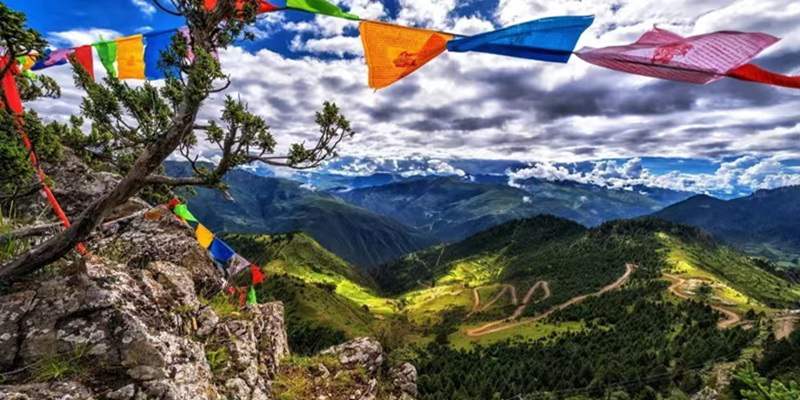
For travelers, the charm of Shengchen Langzha Holy Mountain lies in its seamless integration of natural landscapes and cultural faith. There is no excessive commercialization or crowds – only pure blue skies, white snow-capped peaks, fluttering prayer flags, solemn temples, and the devout figures of believers along the way. Standing at the foot of the mountain, you can not only feel the majestic momentum of the plateau mountains but also be infected by the pure religious atmosphere, as if both body and mind are purified. Every year on the 15th day of the 6th Tibetan month, the traditional pilgrimage festival of Shengchen Langzha Holy Mountain is held. On this occasion, Tibetan people from near and far dress in festive costumes, bring food and wine, and travel with their families to pilgrimage to the mountain. The scene is grand, making it an excellent opportunity for travelers to experience Tibetan customs.
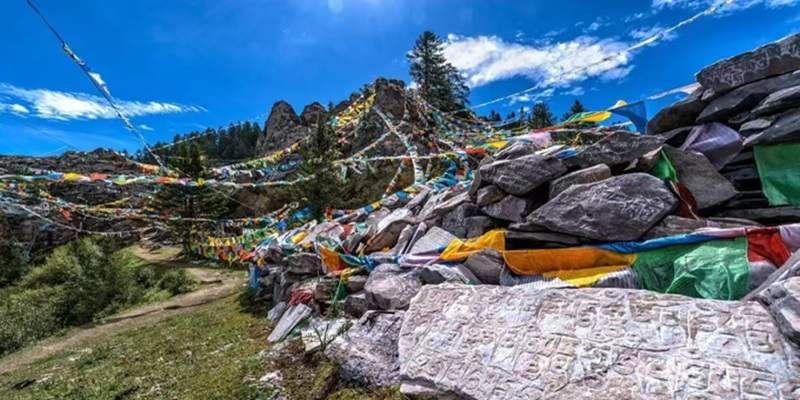
Shengchen Langzha Holy Mountain
Must-Visit Attractions and Sacred Sites of Shengqin Langza Sacred Mountain
There are dozens of attractions on Shengchen Langzha Holy Mountain, including distinctive natural landscapes and cultural sacred sites. You don’t need to search deliberately – scenery abounds along the way. Below are the core attractions that every traveler must visit, each with a unique story and charm worth savoring.
Padmasambhava’s Meditation Cave: The Most Famous Sacred Site on the Mountain
Among the numerous meditation caves on Shengchen Langzha Holy Mountain, Padmasambhava’s Meditation Cave is the most renowned and a must-visit first stop for travelers. Concealed halfway up the mountain, the cave entrance is surrounded by prayer flags, exuding a solemn and mysterious aura from a distance. The interior of the cave is narrow and deep, with a cool breeze. The cave walls are covered with bizarre stone pillars and stalagmites, which have been eroded by nature for thousands of years to form shapes resembling Buddha statues and ritual instruments – like works of art carved by nature, leaving visitors marveling at its craftsmanship.
Legend has it that Padmasambhava practiced here for six months, subduing demons and propagating Buddhism, leaving numerous sacred traces. Deep in the cave, there is a rock resembling Padmasambhava’s sitting statue. Believers offer butter lamps and hada here, praying devoutly for peace and smoothness. For travelers, entering Padmasambhava’s Meditation Cave not only allows you to see amazing natural landscapes but also feel the power of faith on the holy mountain up close. Calming your mind, you can almost hear the echoes of the master’s teachings from thousands of years ago. When visiting, it is advisable to slow down, avoid loud noises, respect local religious customs, and pay attention to safety – the cave floor is relatively slippery, so it’s best to wear non-slip shoes.
Shengchen Langzha Monastery: A Faith Landmark on the Holy Mountain
Perched halfway up the mountain, Shengchen Langzha Monastery is built against the mountain, perfectly integrating with the surrounding natural scenery. From a distance, the red and white temple complex stands out solemnly and grandly against the blue sky, white clouds, snow-capped peaks, and green grass. With a long history, this monastery is an important religious venue locally. Inside, it enshrines numerous Buddha statues, including Padmasambhava and Sakyamuni. The statues are exquisitely crafted, with solemn expressions, inlaid with jewels, embodying holiness and luxury.
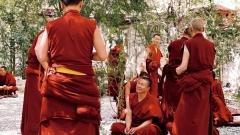
Entering the monastery, you can see monks practicing devoutly, and the air is filled with the unique scent of butter and Tibetan incense. The tranquility and purity can make you instantly forget the hustle and bustle of the world. The monastery also preserves many precious religious cultural relics, such as ancient scriptures, thangkas, and ritual instruments. Each piece carries profound religious and cultural heritage, making it a must-visit for travelers interested in human history and religious culture. When visiting, you must abide by the monastery’s relevant regulations: do not touch Buddha statues or cultural relics casually, do not take photos or videos without permission (you can take appropriate photos if allowed), keep quiet, and respect the monks’ practice.
Natural Wonders: Experiencing the Grandeur and Vitality of the Holy Mountain
In addition to cultural sacred sites, the natural landscapes of Shengchen Langzha Holy Mountain are equally stunning. Each scene showcases the primitiveness and grandeur of the plateau mountains, and every casual photo is a beautiful picture without the need for filters.
Monkey Taking Off Its Hat
“Monkey Taking Off Its Hat” is one of the most representative natural landscapes on the holy mountain. Located halfway up the mountain, it is a naturally formed rock shaped like a monkey, with a “hat” on its head. Its posture is vivid and lifelike – from a distance, it looks like a monkey squatting on the mountain, overlooking the grasslands and believers below, hence the name given by local people. Travelers can stop at the mid-mountain viewing platform to admire and take photos. On clear days, when the sun shines on the rock, the monkey’s outline becomes clearer, appearing particularly magical.
Natural Buddha Statue at the Summit
At the summit of the holy mountain stands a rock resembling a Buddha statue in a cross-legged meditation posture. Legend has it that this is a naturally formed Buddha statue, regarded by believers as the incarnation of the holy mountain. Countless believers come to pilgrimage here every year. Standing at the summit viewing platform, you can not only admire this natural Buddha statue up close but also overlook the magnificent scenery of the entire holy mountain. Distant snow-capped peaks stretch endlessly, the grasslands under your feet are vast, prayer flags flutter in the mountain breeze, and the blue sky and white clouds seem within reach. The feeling of vastness and peace can only be experienced personally.
Other Wonders
In addition, the holy mountain is home to many other natural and cultural landscapes, such as “Giant Dragon Soaring to the Sky”, Rinchen Crystal Cave, and Karma Pakshi’s Meditation Cave, each with unique charm. Rinchen Crystal Cave is filled with translucent crystal stones. When sunlight shines through the cave entrance, the crystals reflect colorful lights, like a fairyland. Karma Pakshi’s Meditation Cave is where the eminent monk Karma Pakshi practiced, retaining his footprints, handprints, and other sacred traces, which are also worth visiting.
Shengqin Langza Sacred Mountain Practical Guide
Shengchen Langzha Holy Mountain is located in a plateau area with a relatively remote geographical location. Adequate pre-trip preparations are essential for a smooth and comfortable journey. Below is a detailed practical guide covering key information such as transportation, accommodation, food, and the best travel time to help you avoid all pitfalls.
Transportation Guide
Since Shengchen Langzha Holy Mountain is about 100 kilometers from Jomda County, with 90 kilometers accessible by car and the remaining 10 kilometers being mountain roads, transportation is mainly by car. Travelers can choose the most suitable way according to their own situation.
For foreign travelers heading to Shengchen Langzha Holy Mountain, they first need to reach Qamdo City, then transfer to a vehicle bound for Jomda County. Qamdo has Bamda Airport, which operates flights to and from Chengdu, Lhasa, and other cities. Travelers can take a flight to Qamdo, then take a long-distance bus from Qamdo Bus Station to Jomda County. The entire journey is about 300 kilometers, taking 6-7 hours, with a fare of around 100 RMB. There is 1-2 departures per day, mostly in the morning.
After arriving in Jomda County, there are two ways to reach Shengchen Langzha Holy Mountain: one is to charter a car in Jomda County. The charter fee is about 300-500 RMB per day (carpooling is available, with a per capita cost of 100-200 RMB). The advantage of chartering a car is flexibility and convenience – you can stop to take photos at any time, and the driver is familiar with the road conditions, avoiding getting lost. The other option is to take a rural bus to Gangtuo Township, then hike or take a local villager’s motorcycle to the foot of the holy mountain. The rural bus fare is about 20 RMB per person, taking 2 hours, and the motorcycle fee is about 50 RMB per person. This method is cost-effective but time-consuming and less flexible, suitable for travelers with ample time and a limited budget.
It should be noted that the last 10 kilometers of mountain road at the foot of the holy mountain is narrow and rugged, with gravel on some sections. It is prone to mud and landslides on rainy days. It is recommended to travel by off-road vehicle and avoid rainy days as much as possible. In addition, road conditions in the plateau area are complex – drivers must drive cautiously, and travelers should fasten their seat belts and not move around in the car casually.
Accommodation Guide
Accommodation around Shengchen Langzha Holy Mountain is mainly divided into two types: accommodation in Jomda County and homestays at the foot of the holy mountain. Travelers can choose according to their travel plans and needs.
Accommodation in Jomda County
Jomda County offers a relatively wide range of accommodation options, from budget hotels to mid-range hotels, with prices ranging from 150-500 RMB per night. Budget hotels have simple facilities but are clean and tidy, meeting basic accommodation needs, suitable for travelers with limited budgets. Mid-range hotels have complete facilities, including hot water, air conditioning, and oxygen supply equipment, providing a more comfortable accommodation experience, suitable for travelers with higher requirements for accommodation. The advantage of staying in Jomda County is the convenience of dining and shopping – you can taste local specialty food and buy plateau products. The disadvantage is that it is far from the holy mountain, requiring daily travel between the mountain and the county seat, which is time-consuming.
Homestays at the Foot of the Holy Mountain
Homestays at the foot of the holy mountain are mostly run by local Tibetan people. There are not many options, with prices around 100-200 RMB per night. The facilities of the homestays are relatively simple, mostly Tibetan-style, with Tibetan carpets and furniture in the rooms, allowing travelers to experience the characteristics of Tibetan residences up close. The advantage of staying at the foot of the holy mountain is the proximity to the attractions – you can go to the mountain to watch the sunrise in the early morning and the sunset in the evening, saving travel time. Additionally, you can immerse yourself in the night atmosphere of the holy mountain. The disadvantage is the limited dining choices and relatively simple facilities – some homestays may not have hot water or oxygen supply equipment. It is suitable for travelers who enjoy authentic experiences and can adapt to simple environments.
Accommodation Tips
Regardless of the type of accommodation chosen, it is recommended to book in advance, especially during the peak tourist season (May-October) when there are many travelers and accommodation is in short supply. Advance booking can avoid the situation of no rooms available. In addition, the night temperature in the plateau area is low – when staying, you can prepare a thick coat in advance to avoid catching cold. Some travelers may experience altitude sickness, so it is advisable to choose accommodation with oxygen supply equipment or prepare anti-altitude sickness medicine in advance.
Food Guide
The food around Shengchen Langzha Holy Mountain is mainly traditional Tibetan cuisine, with unique tastes and rich flavors. Each dish carries the life wisdom of the Tibetan people. While traveling, travelers can fully enjoy the special flavors of eastern Tibet and experience a different food culture.
Butter Tea
Butter tea is an indispensable drink in the daily life of Tibetan people and a must-try specialty for travelers to the holy mountain. Made by boiling butter, tea leaves, and salt, it has a mellow and savory taste. It can not only replenish energy but also resist the cold of the plateau and relieve altitude sickness. You may find the taste strange at first, but you will get used to it after a few sips. It is recommended that travelers give it a try to experience the most authentic Tibetan flavor.
Tsampa
Tsampa is the staple food of Tibetan people, made by roasting highland barley and grinding it into powder. When eating, it can be paired with butter tea or milk tea, and kneaded into small balls by hand. Tsampa has a rough texture but is rich in nutrition and very filling, suitable for the lifestyle in the plateau area. Travelers can taste authentic tsampa in local Tibetan restaurants or homestays, experiencing the daily diet of Tibetan people.
Air-Dried Meat
Air-dried meat is one of the specialty foods in the Qamdo area. Made by pickling and air-drying fresh beef and mutton, it has a firm texture, delicious taste, and great chewiness. It can be eaten as a staple food or a snack. Air-dried meat is relatively salty – travelers can choose according to their own taste and pay attention to moderate consumption to avoid being too greasy.
Other Foods
In addition, there are many Sichuan-style restaurants in Jomda County. Since Qamdo is close to Sichuan, its food culture is greatly influenced by Sichuan. If travelers are not used to Tibetan food, they can also choose to taste Sichuan-style dishes, which have a variety of flavors to meet the needs of different travelers. It should be noted that materials in the plateau area are relatively scarce, so catering prices are relatively high, and the variety of dishes may not be as rich as in inland areas. Travelers can prepare mentally in advance. At the same time, the gastrointestinal function is relatively weak in the plateau area – it is recommended that travelers do not overeat and avoid eating raw or cold food to prevent gastrointestinal discomfort.
Best Travel Time and Precautions
Best Travel Time
The best time to visit Shengchen Langzha Holy Mountain is from May to June and September to October every year. From May to June, the grasslands at the foot of the mountain gradually recover, with blooming flowers, lush vegetation, mild climate, and less precipitation – suitable for hiking and sightseeing. Moreover, the traditional pilgrimage festival of the holy mountain falls on the 15th day of the 6th Tibetan month during this period, allowing you to experience rich Tibetan customs. From September to October, autumn arrives on the plateau. The vegetation around the holy mountain presents various colors such as golden yellow and bright red, contrasting with the white snow-capped peaks and blue sky, creating a spectacular scenery. At this time, the climate is dry and visibility is high, making it the best time to take photos of the holy mountain. It is necessary to avoid the rainy season from July to August and the winter from November to March of the following year. The rainy season is prone to geological disasters such as landslides and mudslides, affecting travel safety. The winter temperature is extremely low, reaching minus ten degrees Celsius, and some roads may be blocked by heavy snow, making transportation inconvenient. At the same time, the oxygen content is lower in the plateau winter, increasing the risk of altitude sickness.
Shengchen Langzha Holy Mountain
Precautions
Altitude Sickness Prevention
Shengchen Langzha Holy Mountain is located at a high altitude, and travelers may experience altitude sickness when visiting. It is recommended to take anti-altitude sickness medicine such as Rhodiola rosea 1-2 weeks in advance. After arriving at the plateau, do not exercise vigorously, slow down your pace, drink plenty of water, eat more fruits and vegetables, avoid drinking alcohol and smoking, to help your body adapt to the plateau environment quickly. If severe altitude sickness occurs, such as difficulty breathing, severe headache, or uncontrollable vomiting, you should stop traveling immediately, go to a lower altitude area, and seek medical attention in time.
Respect for Religious Customs
Shengchen Langzha Holy Mountain is a sacred site for Tibetan people. When visiting, travelers must respect local religious customs and traditions. When entering venues such as monasteries and meditation caves, take off your hat, keep quiet, do not touch Buddha statues, cultural relics, prayer flags, etc., casually, and do not take photos or videos without permission (you can take appropriate photos if allowed). When encountering believers pilgrimaging or turning prayer wheels, do not disturb them – you can walk around silently. Do not step on prayer flags, mani stones, or other religious items to avoid offending local people.
Clothing and Equipment Preparation
The climate in the plateau area is changeable, with large temperature differences between day and night. Even in summer, the night temperature may drop to around ten degrees Celsius. When traveling, travelers need to carry warm clothes such as thick coats, jackets, and down jackets. At the same time, the ultraviolet rays in the plateau area are strong – it is necessary to carry sunscreen, sunglasses, sun hats, scarves, and other sun protection products to avoid skin sunburn. In addition, it is recommended to carry comfortable and non-slip sports shoes for hiking and sightseeing. You can also prepare some commonly used medicines, such as cold medicine, fever reducer, gastrointestinal medicine, and band-aids, for emergencies.
Environmental Protection and Safety
The natural environment of Shengchen Langzha Holy Mountain is very fragile. When visiting, travelers should pay attention to environmental protection – do not litter, carry garbage with you, and throw it into designated trash cans. Do not pick flowers or destroy vegetation, and protect the original appearance of the holy mountain. At the same time, pay attention to safety when traveling – do not enter undeveloped areas without permission to avoid getting lost or having accidents. When hiking and sightseeing, keep up with the team, pay attention to the road conditions under your feet, and avoid dangerous areas such as gravel and cliffs. When traveling on rainy days, beware of geological disasters such as landslides and mudslides, and follow the arrangements of local staff.
Preparing the Journey Before Reaching the Sacred Mountain
Shengqin Langza Sacred Mountain is valued not only for its dramatic landscapes, but also for its living spiritual significance. Meditation caves, mountain monasteries, and naturally formed sacred symbols remain deeply woven into local religious life. For travelers, visiting Shengqin Langza is more than sightseeing — it is an experience that invites patience, respect, and an awareness of how nature and belief coexist on the Tibetan Plateau.
If you want to explore this eastern Tibetan holy mountain more easily and conveniently, you may choose China Dragon Travel. Its professional team will plan a reasonable itinerary for you, solve various problems such as transportation and accommodation, allowing you to travel without worrying about preparations, and fully experience the unique charm of this eastern Tibetan hidden gem.