
Among the world’s great overland journeys — Route 66 in America, the Garden Route in South Africa, the Atlantic Road in Norway — China’s 318 National Highway stands as one of the most dramatic and least understood.
Stretching from Shanghai to Tibet, its most legendary section runs from Chengdu to Lhasa, crossing mountain ranges, river gorges, cultural frontiers, and spiritual landscapes.
This is not simply a drive.
It is a gradual ascent — geographically, culturally, and inwardly.
Below is a city-by-city guide to the iconic Chengdu–Lhasa segment of the 318 National Highway.
1. Chengdu – The Civilized Beginning
Every great expedition begins in comfort.
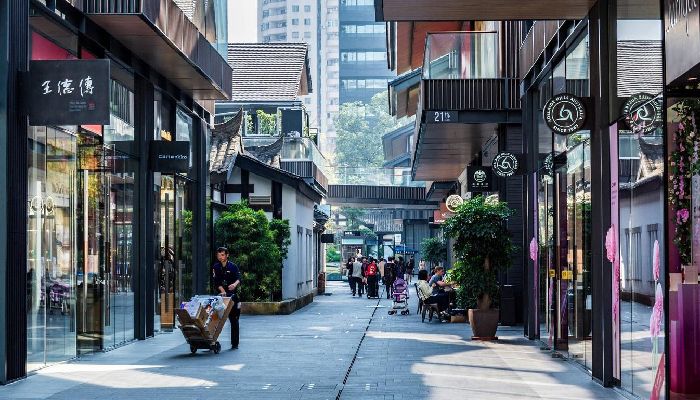
Chengdu, capital of Sichuan Province, is the last major metropolitan anchor before the mountains rise. Here you find efficiency, cuisine, modern infrastructure — and a moment of calm before the climb.
For many travelers, this is where anticipation builds. Gear is checked. Permits are prepared. Expectations are still theoretical.
Beyond Chengdu, the road begins to transform.
2. Ya’an & Erlang Mountain – Crossing the Threshold
Leaving the Sichuan Basin, the road enters deep valleys and mist-covered hills.
Ya’an is known for rain and lush vegetation — a striking contrast to the arid highlands ahead. Soon after comes Erlang Mountain, historically one of the first psychological barriers for drivers heading west.
This stretch marks the geographical transition from lowland China to the Hengduan mountain system. Curves tighten. Elevation rises. The road narrows into terrain that feels less domesticated.
The journey is now real.
3. Kangding – Where Cultures Meet
Kangding is often described as the gateway between Han China and the Tibetan plateau.
Prayer flags begin to appear. Tibetan script becomes common. Monasteries crown nearby hillsides. The air feels thinner — not yet extreme, but noticeably different.
For travelers, Kangding is where Tibet ceases to be an abstract idea and becomes a living presence.
4. Xinduqiao – The Photographer’s Plateau
Just west of Kangding, the landscape opens dramatically.
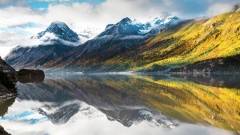
Xinduqiao is famed among photographers for its soft alpine meadows, snow-capped backdrops, grazing yaks, and wide skies. Light here behaves differently — clearer, sharper, almost sculptural.
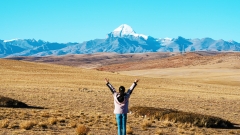
This is often the first moment when travelers experience the vast spatial sensation that defines the Tibetan Plateau.
The road stretches further than the eye can comfortably process.
5. Litang – The High Frontier
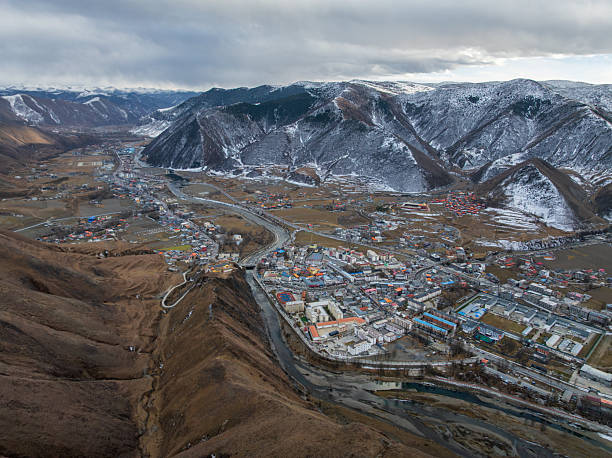
At over 4,000 meters (13,000 feet), Litang is known as one of the highest towns in the world.
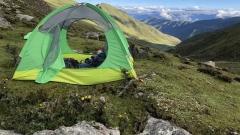
The environment shifts again: colder winds, thinner air, fewer trees. The landscape becomes elemental — earth, sky, distance.
Here, the psychological dimension of altitude begins. Movements slow. Conversations quiet. The scale of the plateau becomes humbling.
Litang represents the first true immersion into high-altitude Tibet culture.
6. Batang – The Valley Respite
Descending from Litang, the road drops into the Batang valley.
Warmer temperatures and riverside scenery provide relief after the stark expanses of the high plains. Batang serves as a natural pause — a place to recalibrate before crossing into Tibet Autonomous Region.
It is both a geographical and symbolic transition point.
7. Markam (Mangkang) – Entering Tibet
After crossing the Jinsha River, travelers officially enter Tibet.
The terrain grows more dramatic: deeper gorges, sharper switchbacks, broader valleys. Tibetan villages become more frequent. Monasteries dot the hillsides.
Markam is where the expedition transforms from a Sichuan journey into a Tibetan one.
8. Nyingchi – Tibet’s Unexpected Softness
Many imagine Tibet as barren and windswept.
Nyingchi challenges that assumption.
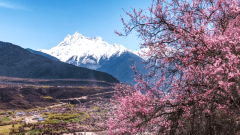
Forests, rivers, and comparatively lower elevations create a greener and more temperate landscape. In spring, peach blossoms paint entire valleys in pale pink. Snow peaks still tower in the distance, but the atmosphere feels unexpectedly gentle.
For many travelers, Nyingchi is the most surprising chapter of the road trip.
9. Lhasa – The Spiritual Arrival
After days of climbing, descending, turning, and traversing vast terrain, the road straightens toward Lhasa.
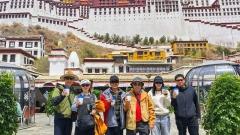
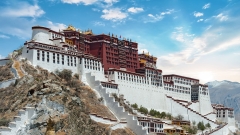
The Potala Palace appears gradually on the horizon — not merely as architecture, but as culmination.
Arriving in Lhasa after driving 318 feels fundamentally different from flying in. The body has earned the altitude. The mind has adjusted through stages.
Lhasa is not simply the destination.
It is the resolution of a narrative.
The Classic Segments of the 318 Road
The Chengdu–Lhasa section can be understood in five evolving chapters:
-
Chengdu to Kangding – Cultural Transition
-
Kangding to Litang – High Plateau Expansion
-
Litang to Markam – Mountain Crossings
-
Markam to Nyingchi – Landscape Reversal
-
Nyingchi to Lhasa – Spiritual Convergence
Together, they form one of Asia’s most compelling overland journeys.
Why the 318 National Highway Is an Epic Road Trip
What distinguishes the 318 is not a single scenic highlight, but continuity.
Few roads in the world offer:
-
Multiple climate zones
-
Cross-cultural immersion
-
Rapid elevation gain
-
Dramatic geological diversity
-
A spiritual capital as final destination
It is a journey of gradual transformation — not only across terrain, but within the traveler.
Final Reflection
The 318 National Highway is not the fastest way to reach Tibet.
It is the most meaningful way.
To drive this road is to understand Tibet in layers — mountain by mountain, town by town, conversation by conversation.
And by the time you reach Lhasa, you do not simply arrive.
You arrive changed.