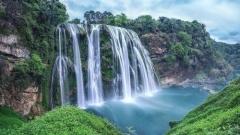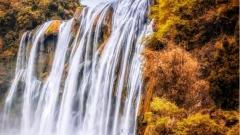

As China’s largest waterfall and a world-famous karst marvel, Huangguoshu Waterfall stands majestically at 77.8 meters high and 101 meters wide, making it a must-visit for travelers to Guizhou. However, most visitors wonder: when is the best time to go? In fact, there’s no fixed answer—it depends on your preferences for scenery style, travel comfort, and crowd levels. Whether you seek the thrill of thundering cascades or a peaceful viewing experience, choosing the right season guarantees a perfect journey. Below is a detailed breakdown of seasonal features, water volume changes, and travel details to help you lock in your ideal time.
Huangguoshu Waterfall Flood Season (June-August): Peak Momentum & Rainbow Spectacles – The Ultimate Visual Feast
If you ask “when is the best time to visit Huangguoshu Waterfall” for extreme visual impact, the answer is undoubtedly the flood season from June to August. Influenced by the Southwest Monsoon, this period sees abundant rainfall, pushing the Baishui River to its annual water volume peak—with a maximum flow of 1,500 cubic meters per second. The main waterfall stretches to its full 101-meter width, and the roar of water crashing into Rhinoceros Pool can be heard miles away. Water mist sprays tens of meters into the air, offering the unique “silver rain sprinkling the golden street” experience at the core viewing platform. As Xu Xiake described it: “The water flows over the rocks like mist soaring into the sky, its momentum mighty and fierce—neither the metaphor of ‘a pearl curtain unhooked’ nor ‘a silk ribbon hanging from distant peaks’ can fully capture its grandeur.” It resembles a roaring white dragon, unleashing primal, overwhelming vitality.
Another highlight of the flood season is the frequent appearance of rainbows. When sunlight passes through the lingering mist, it refracts into a brilliant seven-colored band that shifts with your viewing angle—truly a visual feast. For the best chance to see a rainbow (up to 80% probability), visit around 10 AM or 3 PM, when the sun’s angle is optimal. However, note that June-August is also the peak tourist season, with a daily visitor count exceeding 30,000. Popular spots like Water Curtain Cave and the core viewing platform often have queues lasting over 2 hours. Be sure to book tickets in advance via the official platform, and arrive at 7:30 AM when the scenic area opens on weekdays. Head straight to the Grand Waterfall Scenic Area to capture unobstructed shots before the tour group rush.
For clothing and gear, prioritize waterproofing and sun protection: quick-dry clothes are ideal, and the 5-yuan raincoats sold at the scenic area entrance offer great value—don’t forget to grab one. Waterproof shoe covers or non-slip hiking shoes are a must to avoid accidents on wet plank roads. Protect electronic devices like phones and cameras with waterproof bags to shield them from mist. Additionally, mosquitoes are active in the mountain forests during summer, so bringing mosquito repellent will greatly enhance your comfort. Also, prepare sunscreen, sunglasses, and a wide-brimmed hat to combat strong UV rays.
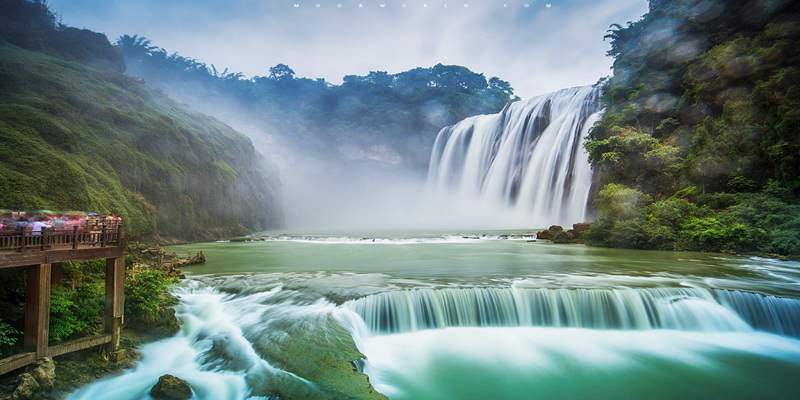
Guizhou Huangguoshu Waterfall
Huangguoshu Waterfall Early Autumn (September-October): The Perfect Off-Peak Choice – Comfort Meets Experience
For travelers who value comfort, September-October is the ideal answer to “when is the best time to visit Huangguoshu Waterfall.” Right after the rainy season, water volume remains abundant—about 70% of August’s peak, falling into the medium water level category. Compared to midsummer, the water flow is clearer, and the waterfall curtain hangs like a pure white silk ribbon—less turbulent, more graceful with autumn’s elegance. Meanwhile, the climate cools down, with daily temperatures stabilizing between 20-25°C—neither too hot nor too cold, perfect for long outdoor excursions without feeling stuffy during hikes.
The biggest advantage of this period is the sharp drop in crowds, with daily visitors around 10,000. Whether you linger at the Grand Waterfall viewing platform or stroll through Tianxingqiao Scenic Area, you’ll have plenty of space to appreciate the natural beauty. You might even get to enjoy highlights like Silver Chain Waterfall in solitude. Autumn paints the Huangguoshu Scenic Area in poetic hues: surrounding vegetation gradually turns golden, contrasting beautifully with turquoise streams and gray-white karst rocks. On the Birthday Stone Path in Tianxingqiao, you can search for the stone inscribed with your birthday while admiring the autumn foliage’s layered colors—an exclusive seasonal treat.
For travel planning, route design is crucial: prioritize the lower section of Tianxingqiao. Turn left at the Gaolaozhuang fork, pass through Water Forest and Silver Chain Waterfall to Tianxing Cave. This avoids the upper section favored by tour groups, allowing you to deeply experience the karst landform’s wonders. For clothing, opt for light or bright-colored outfits paired with a thin jacket—this handles the slight morning and evening chill while making your photos pop against the waterfall backdrop. For transportation, Anshun West Railway Station offers direct shuttle buses to the scenic area for 22 yuan per person—safer and more affordable than unlicensed taxis. If driving, check the parking lot status in advance to avoid shortages during peak times.
Huangguoshu Waterfall Spring (March-May): Double Delights – Blooming Flowers & Off-Peak Serenity
Many overlook spring as a top season for Huangguoshu Waterfall, but for family travelers or those who prefer tranquility, March-May is an excellent choice. This is the transition period from dry to flood season: the main waterfall spans about 80 meters, with gentle water flow and drifting mist. Without midsummer’s turbulence, it exudes delicate beauty—perfect for traveling with seniors and children. You won’t have to worry about being soaked by strong mist, and can take photos at a leisurely pace.
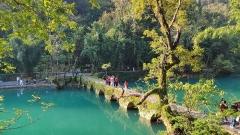
Spring turns the scenic area into a paradise of flowers: rhododendrons and rosa roxburghii bloom one after another on surrounding mountains, dotting the green forests with pink, red, and white hues. Tianxingqiao Scenic Area transforms into a “fairyland of greenery,” where stalagmites, streams, and blooming wildflowers complement each other, filling the air with the fragrance of plants. According to measurements, the negative ion content in the air reaches over 28,000 per cubic centimeter—making it a natural “lung-cleansing” destination. Additionally, March-May is the off-season, with tickets 10 yuan cheaper than peak season. Facilities like sightseeing buses and escalators have almost no queues, maximizing your travel experience.
Key travel tips: Morning mist often shrouds the mountains in spring, so it’s best to visit the core scenic area after 10 AM when the mist lifts for clearer views. Although temperatures rise gradually, the area around the waterfall remains cool due to high humidity—bring thin jackets for seniors and children. Mosquitoes become active in the mountains, especially near Water Curtain Cave, so mosquito repellent is essential. For dining, try local specialties near the scenic area like sour soup noodles and Guizhou rice rolls—affordable and authentic. If you enjoy outdoor picnics, prepare simple ingredients and relax in the leisure area outside Tianxingqiao Scenic Area, combining nature with delicious food.
Huangguoshu Waterfall Winter (November-February): Tranquil Beauty & A Photographer’s Paradise
If you prefer tranquility and love capturing unique scenery with your camera, November to February offers another answer to “when is the best time to visit Huangguoshu Waterfall.” This is the dry season, with significantly reduced water volume, but the waterfall reveals a distinct serene beauty. The thin, silk-like water flows meandering down the cliff face—starkly contrasting with the flood season’s grandeur, yet equally charming. Especially in mid-winter, when temperatures drop low enough, ice crystals form along the waterfall’s edges, creating a magical ice waterfall landscape—crystal clear, like a scene from a fairy tale.
The biggest advantage of winter is the extremely low number of visitors, with daily counts below 5,000. You can linger quietly at the core viewing platform, listening to the soft murmur of water and rocks, or explore Water Curtain Cave at a leisurely pace without crowds. For photographers, winter’s light conditions are excellent: early morning sunlight casts a warm glow on the waterfall, pairing with withered branches and gray-white karst rocks to create textured, stunning photos effortlessly. Note that the high humidity around the waterfall can cause plank roads to freeze in winter—walk carefully and wear shoes with good anti-slip performance.
Clothing should focus on warmth and waterproofing: thick down jackets, sweaters, and thermal underwear are essential, paired with waterproof gloves and scarves to avoid frostbite during long stays in low temperatures. For dining, opt for local hot dishes like sour soup fish and lamb hot pot to ward off the cold. There are few hot drink stalls in the scenic area, so bring a thermos to stay hydrated with hot water. For transportation, some mountain roads may freeze in winter—if driving, install snow chains and drive cautiously. Public transport schedules may change, so confirm details in advance before traveling.
View the Largest Waterfall in Asia – Huangguoshu Waterfall
After reading this guide, you must have a clear answer to the question of when is the best time to visit Huangguoshu Waterfall: Opt for June to August for an awe-inspiring experience, September to October for comfort, March to May for blooming flowers, and November to February for tranquility. No matter which season you pick, Huangguoshu Waterfall’s unique beauty will not disappoint. For a hassle-free itinerary, consult China Dragon Travel—their professional team will customize a personalized trip based on your travel dates, group composition, and needs, covering ticket booking, transportation arrangements, and scenic spot explanations. Sit back, relax, and immerse yourself in the wonders of this karst masterpiece.