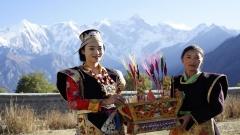

Deep in the mountain valleys in southeastern Tibet, there lives an ethnic group that coexists with nature and is accompanied by faith—the Monba Ethnic Group of Tibet. They have inhabited Menyu, Motuo and other places for generations, surrounded by mountains and rivers, creating a unique lifestyle and cultural heritage. For those who love in-depth travel, the settlements of the Monba people are a secret realm away from the hustle and bustle. Here, there is not only the magnificent Yarlung Zangbo River, but also thousands of years of folk customs waiting to be explored. From traditional costumes to characteristic delicacies, from village life to religious beliefs, every detail hides the unique charm of the Monba Ethnic Group of Tibet, making it an unmissable cultural highlight in Tibet travel.
The Monba Ethnic Group of Tibet: A Millennium-Old Ethnic Group Residing in the Secret Realm
Distribution and Origin of the Ethnic Group
The development of the Monba Ethnic Group of Tibet is closely linked to the land they inhabit. From the origin of their name to their distribution pattern, there are unique historical marks.
- In terms of ethnic attributes, the total population of the Monba Ethnic Group of Tibet is about 10,000. “Monba” means people living in Menyu, which is not only the self-designation of the ethnic group, but also the general name used by other ethnic groups for them.
- In terms of distribution area, they are mainly concentrated in Lebu Area of Cona County and Motuo County in Tibet. Among them, Motuo, known as “Baimagang” in Tibetan (meaning the hidden lotus holy land), is one of the important settlements of the Monba people.
- Tracing back to the migration history, more than 200 years ago, some Monba people moved eastward from Menyu and Zhuoyu to Motuo, gradually forming the current east-west distribution pattern of the ethnic group.
Natural Environment of the Settlements
The unique geographical environment has created the ecological wonders of the Monba settlements and provided a rich natural foundation for the life of the people.
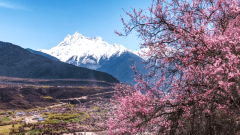
- In terms of terrain and climate, Mount Namjagbarwa stands tall in Motuo, and the Yarlung Zangbo River passes through the canyon. The altitude drops sharply from more than 5,000 meters to 500 meters, forming a vertical climate from alpine frigid zone to subtropical zone.
- In terms of ecological resources, the area is covered with dense forests, producing pine, cypress, moso bamboo and precious medicinal materials such as gastrodia elata and panax notoginseng. There are many rare animals, making it a veritable natural botanical garden and zoo.
- In terms of the relationship with nature, the Monba people live by mountains and rivers, coexisting with this land for a long time. The rich natural resources provide sufficient support for their lives.
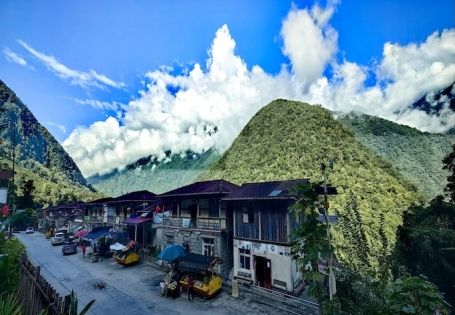
Settlement areas of the Monpa people
Costumes of the Monba Ethnic Group of Tibet: Ingenious Inheritance of Snow-Capped Clothing
Core Materials and Characteristics of Costumes
The costumes of the Monba Ethnic Group of Tibet are a concentrated embodiment of the ethnic group’s culture and aesthetics. From material selection to craft inheritance, they contain thousands of years of ingenuity.
- In terms of material selection, the traditional costumes of the Monba Ethnic Group of Tibet take pulu (a kind of woolen fabric) as the core material. The woolen fabric is dyed with plant dyes, showing brilliant colors such as cinnabar red and peacock green, with a thick texture and luster.
- In terms of cultural inheritance, Monba pulu weaving has been included in the intangible cultural heritage. Elder craftsmen adhere to the thousand-year-old loom craftsmanship, allowing this snow-capped clothing culture to continue.
Details of Women’s and Men’s Costumes
The men’s and women’s costumes of the Monba people have their own characteristics. They not only adapt to the plateau climate, but also hide regional differences and ethnic temperament, with interesting details.
- Women’s costumes have obvious regional differences. Women in Motuo wear white collarless round-neck front-opening blouses and tube skirts with vertical patterns and tassels, with colored belts around their waists and small waist knives. Women in Lebu wear a complete piece of calfskin on their backs (with fur inside and leather outside), with silver bazhu beads, coral necklaces and other accessories. Their collars are embroidered with swastika patterns, reflecting unique cultural symbols and aesthetics.
- Men’s costumes show a bold temperament. Most of them wear crimson pulu robes with blue edges, red pulu belts around their waists, and silver knives and rhombus-shaped gau (a kind of amulet box) hanging on their waists. Some men keep long hair and wear earrings, showing the heroic demeanor of plateau men.
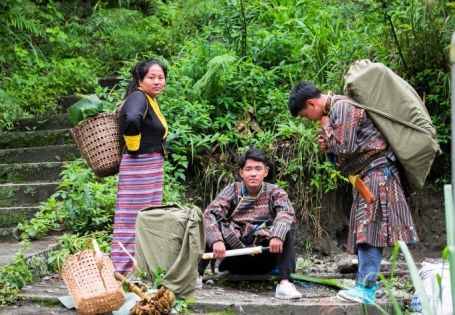
Monba people
Cuisine of the Monba Ethnic Group of Tibet: Original Flavors from the Mountains
Characteristic Tableware and Classic Dishes
Relying on the original ingredients in the mountains and forests, the Monba people have developed a unique food culture. Characteristic tableware and classic dishes are all unmissable experiences during travel.
- Speaking of characteristic tableware, most of the tableware of the Monba Ethnic Group of Tibet is made of bamboo and wood. Among them, the Monba wooden bowl is the most famous, with an orange-red main tone, smooth shape and exquisite patterns, combining practicality and artistic value.
- Among the classic dishes, stone pot chicken is a iconic dish in Motuo. It is slowly stewed with local characteristic stone pots, chicken and wild mushrooms, with delicious soup and rich nutrition, which is a must-try delicacy for tourists.
Characteristic Drinks and Dining Etiquette
In addition to classic dishes, the characteristic drinks and dining etiquette of the Monba people allow tourists to deeply feel the local human warmth and experience the strong ethnic friendship.
- In terms of characteristic drinks, chicken claw millet wine is a iconic brew of the Monba people. It is made from local chicken claw millet, with low alcohol content and mellow aroma. The ARe winemaking technique in Acang Village has a history of more than 300 years, and it is often used to entertain guests during festivals and celebrations.
- In daily diet and etiquette, the staple food is zanba (roasted barley flour) and butter tea, accompanied by dishes such as roasted pork, wild mushrooms and stir-fried pork skin with white chili. When being a guest, you should take butter tea with both hands and drink three bowls to show respect; highland barley wine should be finished in three sips. This is an important local hospitality etiquette.
Villages of the Monba Ethnic Group of Tibet: A Poem of Life Hidden in the Mountains
Distribution and Characteristics of Core Villages
The Monba villages hidden in the mountains are a true portrayal of the ethnic group’s life. Each village has a unique style and carries the life memories of the Monba people.
- In terms of overall distribution, Beibeng Township of Motuo is a concentrated area of Monba villages of the Monba Ethnic Group of Tibet, known as the lotus petal in the Motuo secret realm, and also the best place to experience Monba culture.
- Among them, Baden Village is quite representative. It was included in the list of Chinese Traditional Villages in 2019 and is a concentrated area of Monba stilted buildings (ganlan-style). Tourists can stay in local homestays to experience the local life immersively.
- Other villages have their own highlights: Acang Village is famous for its beautiful landscape, Jiangxin Village is rich in tropical fruits, and Xirang Village attracts tourists with its pure border style.
Village Architecture and Living Wisdom
The village architecture and planning of the Monba people fully reflect the wisdom of coexisting with nature, and every detail hides the people’s love for life.
- In terms of architectural characteristics, Monba stilted buildings are built against mountains, with solid and durable wooden structures. Details such as flower windows, wooden railings and sloping roofs fully show the ethnic group’s architectural wisdom. The stilted buildings in Baden Village best embody this characteristic.
- In terms of village planning, Monba villages are highly integrated with nature. The stilted grain barns in Acang Village, tropical orchards in Jiangxin Village and border rainforest landscape in Xirang Village respectively show different living scenes and symbiotic concepts.
Customs of the Monba Ethnic Group of Tibet: Coexistence of Faith and Joy
Religious Beliefs and Taboos
Faith is the core of Monba culture, deeply integrated into the daily life of the people. Understanding local religious beliefs and taboos is a prerequisite for respecting the ethnic culture.
- In terms of core beliefs, most of the Monba Ethnic Group of Tibet believe in the Nyingma Sect of Tibetan Buddhism. Temples or prayer flag arrays are generally set up in villages. The people respect sacred mountains and rivers in daily life and are extremely devout to their beliefs.
- In terms of related taboos, sacrificial ceremonies should not be disturbed by the outside world. When entering temples, you need to take off your hat and sunglasses, keep quiet, and walk around stupas and mani piles clockwise. This is the basic requirement for respecting local religious customs.
Festivals and Dance Culture
Festivals and dances are important ways for the Monba people to express their emotions. The warm atmosphere and unique forms show the joy and vitality of the ethnic group.
- Among the important festivals, the Tibetan New Year focuses on family reunion and prayer; the Wangguo Festival (Harvest Festival) is held before the autumn harvest to pray around the fields; the Zhuba Festival mainly involves sacrificing mountain gods, accompanied by dances, archery and other activities, with a warm and strong atmosphere.
- In the classic dance culture, Baqiang (also known as the God Dance) is mostly performed in religious ceremonies. Performers wear animal masks, wear fur and feathers, and simulate the postures of cattle, pigs, birds and other animals, conveying profound cultural connotations without words. Pozhang Ladui Ba is a celebration dance for the completion of new houses, where dancers sing while dancing to praise the new house and bless the owner.
- In terms of daily entertainment, during slack farming seasons and festivals, the people often dance circle dances and playful dances, accompanied by songs and laughter, vividly interpreting the happy life of the ethnic group.
Travel Tips for the Monba Ethnic Group of Tibet: Respect and Experience Go Hand in Hand
Itinerary and Communication Etiquette
Traveling to the settlements of the Monba people, understanding the itinerary planning and communication etiquette in advance can make the experience smoother and better respect the local culture.
- In terms of itinerary planning, traveling to Acang Village, Xirang Village and other places in Beibeng Township of Motuo requires passing through border checkpoints. Tourists need to join local travel agency groups and are advised to book and plan the itinerary in advance to avoid delays.
- In terms of communication etiquette, you can greet the Monba people with a hands-together gesture or a handshake. Use honorifics such as “Abala” (uncle) and “Amala” (aunt) for elders, and avoid calling them by their first names to show respect.
- In terms of visiting etiquette, when invited to a Monba family, you can bring small gifts such as tea, candies and hada (a piece of silk used as a greeting gift). Avoid giving clocks and sharp objects. After entering the door, you should first pay homage to the Buddha statue of the host’s family.
Ecological Protection and Travel Suggestions
The ecology and culture of the Monba settlements are extremely precious. Doing a good job in ecological protection and planning the itinerary reasonably during travel can realize a civilized experience.
- In terms of ecological protection, the local ecological environment is fragile. During travel, you should love nature, not enter undeveloped primeval forests at will, not litter, and protect wild animals and plants.
- In terms of travel time suggestions, the rainy season in Motuo is from June to September, when traffic is inconvenient. It is recommended to avoid traveling during the rainy season. Accommodation needs to be booked in local hotels or homestays in advance to ensure a smooth itinerary.
- In terms of cultural taboos, do not take photos of temples and sacrificial ceremonies at will, do not step on prayer flags and mani piles, and strictly abide by local religious customs to carry out a civilized travel experience.
The Monba Ethnic Group of Tibet is the most touching scenery in the secret realm of southeastern Tibet. With thousands of years of persistence, they have retained their original lifestyle and culture. From the ingenuity of costumes to the mellow taste of food, from the tranquility of villages to the warmth of folk customs, every place is worth savoring carefully. Coming here, you can not only enjoy the magnificent natural scenery, but also have in-depth communication with the culture of an ancient ethnic group, gaining an unforgettable snow-capped humanistic journey.