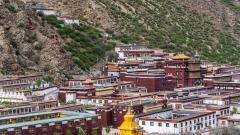

Purog Kangri Glacier is one of the most remarkable natural landscapes in northern Tibet, hidden within the remote Qiangtang region of the Tibetan Plateau. Surrounded by vast grasslands, high-altitude lakes, and rugged wilderness, this immense icefield offers a striking combination of glacier scenery and untouched natural beauty. Beyond its dramatic ice formations and unusual terrain, Purog Kangri is also an important site for scientific research into glacier structure and environmental change. However, its extreme elevation, remote location, and potential access restrictions mean that visiting requires careful preparation. This guide explores where Purog Kangri Glacier is located, what makes it unique, why it matters scientifically, and what travelers should know before planning a trip.
Key Takeaways
- Purog Kangri Glacier lies in Shuanghu County, Nagqu, northern Tibet, within the core area of the Qiangtang National Nature Reserve.
- At an average elevation of around 6,000 meters, it is one of the most remarkable high-altitude icefields in the region.
- Its landscape combines extensive ice, glacier tongues, ice towers, lakes, and desert terrain.
- Scientific research has revealed important information about the glacier’s thickness, ice structure, and the environmental history of the Tibetan Plateau.
- Access is restricted. Travelers should not assume that the glacier is open to tourism and must verify current local regulations before making plans.
Where Is Purog Kangri Glacier?
Purog Kangri Glacier is located in Shuanghu County, Nagqu City, in northern Tibet. It lies in the remote Qiangtang region, an immense high-altitude landscape known for its vast grasslands, lakes, wildlife, and relatively untouched natural environment.
The glacier sits at an average elevation of approximately 6,000 meters above sea level. Its reported area is around 422 square kilometers, making it an extensive icefield in the interior of the Tibetan Plateau. More than 50 glacier tongues extend from the main ice mass, and some sections descend to elevations of approximately 5,350 meters.
Unlike glaciers that can be viewed from established mountain roads or developed tourist sites, Purog Kangri is situated in a remote and environmentally sensitive area. Its isolation is part of its appeal, but it also makes access, transportation, and high-altitude safety especially challenging.
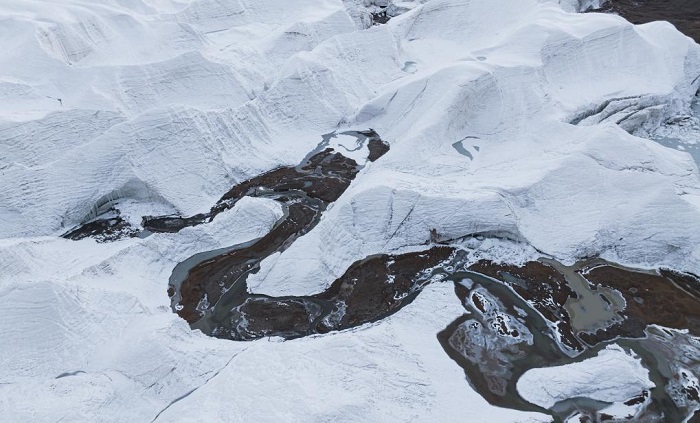
Purog Kangri Glacier
What Makes Purog Kangri Glacier Unique?
A Vast Icefield in the Heart of the Tibetan Plateau
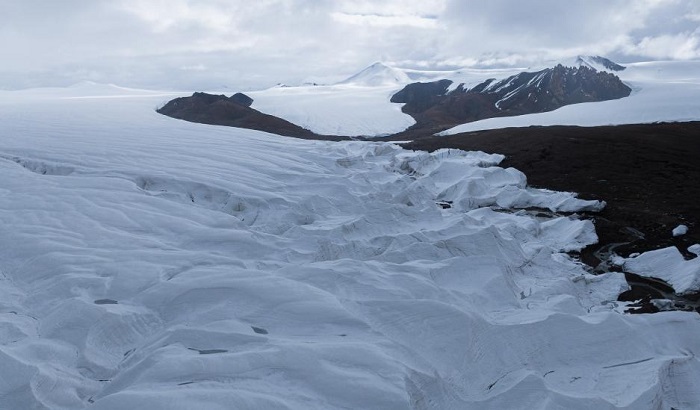
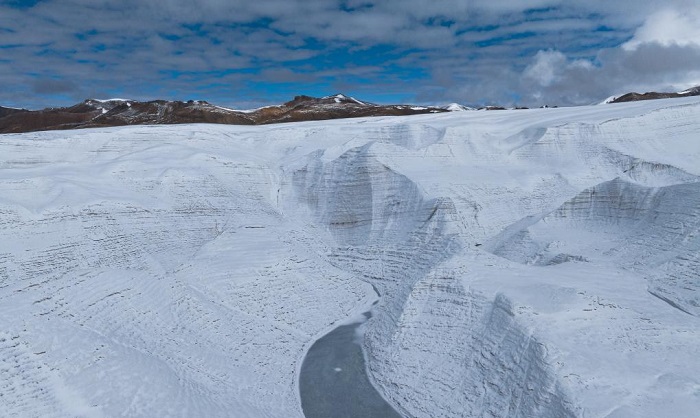
One of the most striking features of Purog Kangri Glacier is the scale of its icefield. Broad expanses of ice stretch across the high plateau, creating a landscape that appears almost otherworldly. The glacier’s size and elevation make it an important part of the region’s natural environment.
The surrounding terrain is shaped by extreme conditions. Low temperatures, strong winds, intense ultraviolet radiation, and limited oxygen make this a demanding environment for both people and wildlife.
For travelers interested in remote landscapes, Purog Kangri represents a very different side of Tibet from the monasteries of Lhasa, the valleys of Nyingchi, or the established routes to Mount Everest. It is a place of immense open space, ice, and high-altitude wilderness rather than conventional sightseeing facilities.
Ice Towers, Ice Caves, and Unusual Glacier Formations
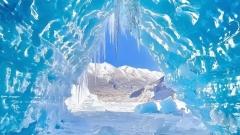
Purog Kangri Glacier is known for its striking ice formations. In suitable conditions, sections of the glacier may display ice towers, sculpted ice surfaces, crevasses, and cave-like openings formed through natural glacial processes.
Some descriptions of the area also refer to distinctive formations resembling a heart shape. Such features can vary with the season, snow cover, lighting, and changes in the glacier’s surface, so their appearance should not be treated as guaranteed.
These formations are part of a dynamic natural system. Ice is constantly influenced by temperature, solar radiation, wind, and meltwater. Even when a glacier appears motionless, its surface and internal structure continue to change.
Glacier caves and crevasses can be dangerous. Their roofs and walls may collapse without warning, and hidden openings can be concealed by snow. Visitors should never enter glacier caves or walk onto unstable ice without appropriate authorization and professional safety arrangements.
A Rare Combination of Glaciers, Lakes, and Desert Landscapes
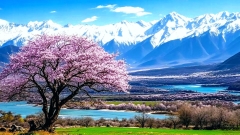
The broader Qiangtang region is notable for the coexistence of glaciers, high-altitude lakes, dry terrain, and extensive grasslands. Around Purog Kangri, these contrasting landscapes help create the distinctive scenery of the northern Tibetan Plateau.
The combination of ice and arid land is especially striking. Rather than a continuous green valley or a densely forested mountain region, the environment is characterized by open horizons, sparse vegetation, rugged terrain, and dramatic changes in color and texture.
For landscape photography, this contrast offers a different visual experience from Tibet’s better-known destinations. However, photography opportunities depend on access permissions, weather, visibility, and the conditions on the ground.
Why Is Purog Kangri Glacier Scientifically Important?
Purog Kangri Glacier is significant not only for its scenery but also for scientific research into glaciers and the climate of the Tibetan Plateau.
Studying Glacier Thickness and Structure
Research in the area has examined the glacier’s thickness and internal structure. Measurements at particular locations have indicated ice thickness approaching 400 meters. Researchers have also recovered a 324-meter ice core from an elevation of approximately 6,100 meters.
These figures refer to specific research locations and measurements rather than uniform conditions across the entire glacier. Ice thickness varies throughout a glacier, depending on its shape, movement, accumulation, and underlying terrain.
Such research helps scientists understand how high-altitude glaciers develop and change. It also provides evidence that can be used to investigate long-term environmental conditions in the region.
Understanding Climate and Environmental Change
Glaciers preserve information about past environmental conditions. Their ice can contain physical and chemical traces that help researchers investigate historical changes in temperature, precipitation, atmospheric composition, and other environmental factors.
Studying glaciers on the Tibetan Plateau is particularly valuable because the region plays an important role in Asia’s water systems and high-altitude climate. Changes in glacier mass and meltwater can influence surrounding ecosystems and contribute to wider changes in regional water availability.
Continued scientific observation of Purog Kangri Glacier can therefore contribute to a better understanding of the plateau’s environmental history and the changes taking place in high-mountain regions.
Purog Kangri Glacier
Can Tourists Visit Purog Kangri Glacier?
This is the most important question for anyone considering a trip.
Purog Kangri Glacier is located in an environmentally sensitive area of the Qiangtang region. Historical local information indicates that tourism projects in Shuanghu County were suspended beginning in 2018. The current access situation must be verified through the relevant local authorities before any visit is planned.
The glacier should not be treated as an ordinary tourist attraction with guaranteed public access. Information about its scenery, geographic location, or past expeditions does not mean that independent travelers or commercial tour groups are currently permitted to enter the area.
Before making arrangements, travelers should confirm:
- Whether access to the relevant part of Shuanghu County is currently permitted.
- Whether special permits or local approvals are required.
- Whether commercial tourism activities are allowed in the intended area.
- Whether road conditions, weather, and environmental protection rules affect access.
Do not travel to the glacier based solely on an old itinerary, an online travel post, or a map listing. If access is restricted, visitors must respect local regulations and choose an alternative destination.
What Should Travelers Know Before Exploring Northern Tibet?
Even if a future visit becomes possible, the region’s high altitude and remoteness require careful preparation.
Altitude and Physical Conditions
At elevations around 6,000 meters, the risk of altitude-related illness is serious. The air contains less available oxygen, and even travelers who are physically fit may experience symptoms such as headaches, nausea, dizziness, unusual fatigue, or shortness of breath.
Travelers should acclimatize gradually, avoid rushing to extreme elevations, and seek medical advice before undertaking high-altitude travel. Severe symptoms require prompt descent and urgent medical assistance.
A visit to a high-altitude glacier should never be approached as a casual day trip without professional assessment and suitable safety arrangements.
Weather and Road Conditions
Weather in northern Tibet can change rapidly. Strong winds, low temperatures, snow, and poor visibility can make travel difficult, while remote roads may be rough or affected by seasonal conditions.
Travelers should not assume that a route is safe simply because it appears on a map. Current road information, local guidance, suitable vehicles, emergency communication, and contingency plans are essential for remote-area travel.
Environmental Protection
The Qiangtang region contains sensitive alpine ecosystems and important wildlife habitats. Visitors should follow all conservation rules, avoid disturbing wildlife, and take all rubbish away with them.
If access is authorized, travelers should remain within permitted areas and follow instructions from local authorities or qualified guides. Protecting the environment is especially important in remote places where rescue services and waste-management facilities may be limited.
Purog Kangri Glacier
How to Plan a Tibet Trip With China Dragon Travel
For international visitors, planning a trip to remote parts of Tibet involves more than choosing scenic locations. Access regulations, transportation, altitude, accommodation, weather, and emergency arrangements all need to be considered.
China Dragon Travel provides Tibet travel planning services for international visitors, including customized itineraries and trips to established destinations across the region. Before considering a remote location such as Purog Kangri Glacier, travelers should verify whether visits are currently permitted and what approvals may be required.
If access to Purog Kangri is unavailable, an itinerary can instead focus on destinations that are open to visitors, depending on current regulations and the traveler’s interests. Options may include Lhasa’s cultural landmarks, the landscapes of Nyingchi, or an organized journey toward Mount Everest.
The most suitable route depends on the time available, altitude tolerance, travel style, and current local conditions. Any itinerary should be based on verified access information rather than an assumption that every remote landscape can be visited.
Discover the Remote Landscapes of Northern Tibet
Purog Kangri Glacier is one of the remarkable natural features of the Tibetan Plateau. Its immense icefield, unusual glacier formations, and surrounding lakes and dry landscapes make it an important subject for both scientific research and anyone interested in high-altitude environments. Its remote setting also highlights the extraordinary natural diversity of northern Tibet.
However, the glacier’s beauty should not overshadow the practical realities of visiting. Access restrictions, environmental protection requirements, extreme altitude, and difficult transportation conditions all need to be taken seriously. Travelers should confirm the latest local regulations before making any arrangements.
For help planning a Tibet journey, China Dragon Travel can assist with itinerary planning and information about established travel routes. A well-prepared trip should balance the desire to explore extraordinary landscapes with respect for local regulations, personal safety, and the protection of Tibet’s fragile environment.