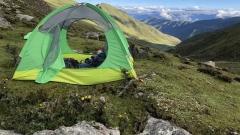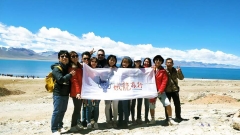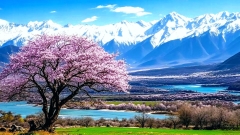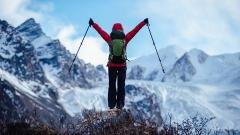

Tibet in December transforms into a realm of extreme frozen beauty, where sacred lakes turn into glistening ice mirrors and glacier blue ice shimmers in the cold sun. With very few tourists around, this plateau allows visitors to get up close and personal with its authentic charm. This 8-day travel guide strictly replicates the classic itinerary of China Dragon Travel, starting from the gathering in Chengdu and ending with the return trip from Xining. It connects the core winter attractions of Nyingchi, Lhasa and Shigatse, adapts to Tibet’s December climate and road conditions, and takes you to unlock the plateau’s unique frozen holy land.
Core Pre-Trip Preparation for Tibet Travel in December
Climate & Clothing: Coping with Severe Winter Cold
Tibet enters deep winter in December. The daily temperature ranges from -5℃ to 8℃ in Nyingchi, -10℃ to 5℃ in Lhasa, and drops to as low as -20℃ to 0℃ in Shigatse and Mount Everest areas, with a temperature difference of over 25℃ between day and night and piercing cold winds. Dressing should follow the polar three-layer warmth retention principle: choose a hip-length thick windproof and waterproof down jacket as the outer layer, a fleece liner or pure wool sweater as the middle layer, and thermal fleece underwear as the inner layer. Essential accessories include waterproof, non-slip fleece-lined hiking boots, a face-protecting ushanka, a thick neck gaiter, and waterproof ski gloves. For trips to Mount Everest and glacier areas, extra crampons, knee pads and wool insoles are a must to prevent slips on ice and frostbite. UV rays on the plateau remain strong in winter; SPF50+ sunscreen, snow goggles and highly moisturizing lip masks are essential. You can also apply petroleum jelly inside your nostrils to relieve discomfort caused by plateau dryness.
Altitude Sickness & Health: Double Protection for Safety
The oxygen content on the plateau is 15% lower in December than in summer, sharply increasing the risk of altitude sickness in areas above 4,500 meters. You can take Rhodiola rosea 7 days before departure for prevention only. After arriving in Lhasa, rest for at least one full day and strictly avoid bathing, drinking alcohol and walking quickly. Must-carry items include 2-liter portable oxygen tanks, Gaoyuan’an Capsules and glucose oral liquid. For overnight stays at Everest Base Camp, continuous low-flow oxygen supply is recommended. Meanwhile, it is crucial to prevent colds—pack compound paracetamol and amantadine capsules, throat lozenges, as well as waist, hand and foot-specific warm patches. Colds on the plateau in winter can easily lead to pulmonary edema; if you experience persistent coughing or chest tightness, immediately descend to a lower altitude and seek medical attention.
Documents & Transportation: Adapting to Special Winter Road Conditions
A border pass is required for trips to Shigatse and Mount Everest. It can be obtained for free at the public security bureau in your place of household registration. Agency application in Lhasa costs 150–250 CNY (original ID card required, processing time 1–2 working days). Some glacier sections may be temporarily closed in December; before departure, confirm the latest access policies through China Dragon Travel.
For transportation in Lhasa, taxis (starting fare 10 CNY) and ride-hailing services are the main options. Roads tend to be icy in the morning and evening, so travel with caution. Inter-regional trips must use four-wheel-drive tourist vehicles equipped with snow chains. The section of National Highway 318 from Nyingchi to Shigatse is prone to heavy snow closures in December; it is advisable to book an experienced driver through China Dragon Travel for real-time route adjustments. For the Mount Everest section, you need to transfer to a scenic eco-friendly bus (120 CNY per person). Never get off the vehicle without permission when driving on icy roads, and follow the driver’s instructions at all times.
Budget Planning: More Cost-Effective in Off-Season
The budget for the 8-day trip is approximately 9,000–13,000 CNY per person (excluding round-trip transportation to Chengdu). For accommodation, Tibetan-style inns in Nyingchi and Lhasa cost an average of 260–380 CNY per night, similar accommodations in Shigatse are 280–400 CNY per night, and tents at Everest Base Camp are 200 CNY per night. Meals cost 60–90 CNY per person per meal on average, while Tibetan light meals (sweet tea, Tibetan noodles) are 15–25 CNY per person. For tickets: Potala Palace 100 CNY, Basongcuo Lake 120 CNY, Tashilhunpo Monastery 100 CNY, Everest Base Camp 180 CNY (including eco-friendly bus fare). Most scenic spots offer 15%–25% off-season discounts for individual tourists in December.
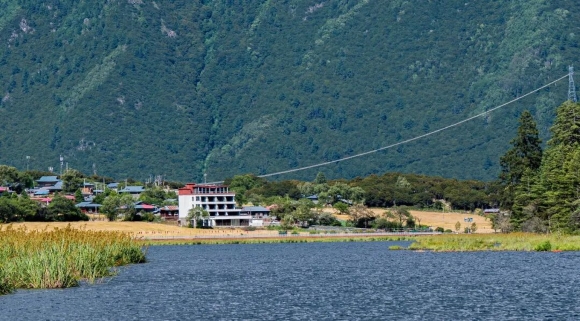
Galong Lake
8-Day Nyingchi Tour: Lhasa, Nyingchi, Yamdrok Lake & Namtso Lake
- Arrive in Lhasa
- Potala Palace, Jokhang Temple, and Barkhor Street
- Lhasa – Basum Lake – Lalin Expressway – Nyingchi
- Nyingchi – Mount Namjagbarwa – Lulang Forest – Nyingchi
- Nyingchi – Kading Valley Waterfall – Lhasa
- Lhasa – Yamdrok Lake – Gyantse – Shigatse – Lhasa
- Lhasa – Tibet Grassland Ranch – Namtso Lake – Lhasa
- Lhasa – Chengdu / Departure
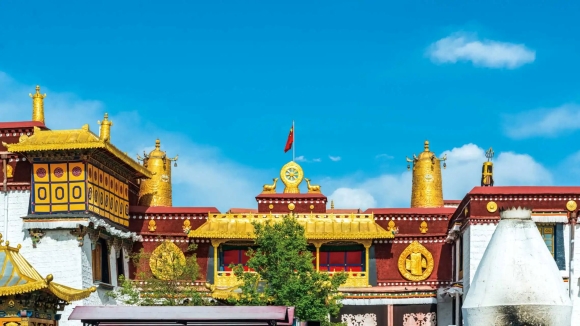
Jokhang Temple
Tibet December Attraction Highlights & Travel Tips
Nyingchi Section: A Snow-Covered Secret Land
Tongmai Sky Road is covered in snow in winter; you can park your car in safe areas to take photos of the mountain-flanked highway scenery. Guxiang Lake has a perfect mirror-like frozen surface—shoot before 9 am when the light is soft for the best snow mountain reflections. Though devoid of peach blossoms, Peach Blossom Valley’s snow-laden dead branches are a niche photography subject, and encountering rime is an added surprise.
When entering Laigu/Midu Glacier, you must wear crampons and follow guides to avoid ice cracks. For blue ice photography, a polarizing filter is recommended to eliminate glare. The best viewing spot for Ranwu Lake is the gravel beach along the shore, which perfectly frames the layers of snow-capped mountains, ice lake and dead branches.
After Galong Lake freezes, you can walk to the nearby Tibetan village to experience local winter life. At Lulang Forest Sea Observation Deck, use a wide-angle lens to capture the snow-covered forest panorama. You can also taste Lulang stone pot chicken in the town to warm up your body and stomach.
You can hike to Jieba Village from Basongcuo Lake to interact with local Tibetans about their winter life. Observe the temple rules when visiting the temple on the middle lake island, and never take photos without permission.
Lhasa Section: A Cultural Holy City with Fewer Crowds
Potala Palace tickets need to be booked on the official website one day in advance. Climb the steps at a slow pace, and it is recommended to hire a tour guide (100 CNY per session) to learn about the building’s history. Photography is strictly prohibited inside the palace. Yaowang Mountain Observation Deck is the best spot to capture the full view of Potala Palace, where you can replicate the iconic scene on the 50 CNY note.
Butter lamps burn continuously inside Jokhang Temple; you can follow pilgrims to walk the kora and experience the religious atmosphere. Bargaining space is larger at Tibetan jewelry stores on Barkhor Street in the off-season—Nyemo Tibetan incense and small Thangka paintings are great souvenirs. A pot of sweet tea (10 CNY) at street-side tea houses allows you to experience Lhasa’s slow-paced life.
Shigatse & Mount Everest Section: Extreme Frozen Scenery
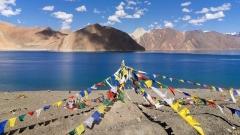
Gangbal La Pass is the core viewing spot for Yamdrok Lake’s full view. The wind is strong in winter, so take windproof measures. A tripod is recommended for shooting time-lapse photography of the ice surface. Never step on thin ice when approaching Yamdrok Lake to avoid falling into the water.
At Everest Base Camp, you can take photos of the full view of Mount Everest at the observation deck. For night sky photography, protect your camera from condensation. Preheat your sleeping bag with warm patches before sleeping in the tent. Don’t miss the highway scenery of snow and snow-capped mountains on the section of National Highway 318 from Shigatse to Mount Everest.
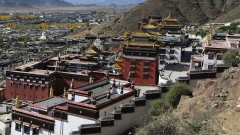
The main attractions at Tashilhunpo Monastery are the Maitreya Buddha Hall and Stupa Hall. The murals and Thangka paintings inside the monastery are of great artistic value. Never touch the Buddha statues or ritual implements, and always obtain permission from staff before taking photos.
Qinghai-Tibet Railway Section: A Moving Snow Plateau Observation Deck
Choose a left-side seat on the Qinghai-Tibet Railway for a clear view of Nyainqêntanglha Mountains and the frozen Nam Co Lake. Bring a thermos and high-calorie snacks on the train, and inhale a small amount of oxygen in high-altitude sections. The frozen grassland of Hoh Xil Nature Reserve in winter is a rare visual treat.
Tibet December Food & Shopping Recommendations
Must-Try Tibetan Cuisine
- Nyingchi Stone Pot Chicken: Made with local Tibetan chicken stewed slowly with matsutake and morel mushrooms. The stone pot locks in the freshness, resulting in a rich chicken soup. One pot costs 220 CNY, suitable for 2–3 people. It tastes even better when paired with highland barley cakes dipped in soup.
- Lulang Stone Pot Chicken: Added with local Gymnadenia conopsea, its soup is more flavorful than that of Nyingchi’s version. Priced at 180 CNY per pot, it is the perfect choice to warm up after exploring Lulang.
- Tibetan-Style Dinner: Includes hand-grasped yak meat, butter tea, zanba and other specialties, accompanied by Tibetan singing and dancing performances. Priced at 120 CNY per person, it offers an immersive experience of Tibetan food culture.
- Tibetan Yogurt: Thick, sweet and sour, it can be eaten with white sugar. Priced at 10 CNY per serving, it can quickly replenish energy in high-altitude areas.
Featured Souvenirs
- Nyemo Tibetan Incense: Handmade with natural spices, priced at 30–50 CNY per box. As an intangible cultural heritage of Tibet, it makes a great souvenir.
- Yak Jerky: Vacuum-packed yak jerky is available at large supermarkets in Lhasa, priced at 80–120 CNY per catty. Five-spice and spicy flavors are available, and gift boxes are on offer in December, making them ideal for gifting.
- Hand-Painted Small Thangka Paintings: Customizable at shops on Barkhor Street, priced at 200–500 CNY per piece. Printed versions cost 50–150 CNY per piece, carrying strong Tibetan cultural characteristics.
- Mount Everest Souvenirs: Badges and postcards (10–30 CNY) are available at the base camp. Postcards can be stamped and sent at local post offices to preserve travel memories.
Tibet December Travel Notes
- Respect local customs: Take off your hat when entering temples, do not touch Buddha statues or ritual implements, and always obtain permission before taking photos of Tibetans. Never step on the ice surface of sacred mountains and lakes such as Mount Everest and Yamdrok Lake, and do not litter randomly.
- Days are short in Tibet in December—darkness falls around 5 pm. Plan your itinerary carefully to avoid driving on remote ice field roads at night. Follow the driver’s instructions in case of heavy snowstorms, and never forcefully pass closed road sections.
- Most restaurants in remote areas are closed in winter. Prepare chocolates, compressed biscuits and energy bars, and carry a thermos to drink hot water. Drinking plenty of water in high-altitude areas can relieve dryness and altitude sickness.
- Purchase Tibetan silver and beeswax jewelry from regular stores and ask for invoices. Merchants offer more discounts in the off-season; consume rationally and avoid impulsive purchases.
- Mobile phone signals are weak in glacier and Mount Everest areas. Download offline maps before departure, inform relatives and friends of your itinerary, and carry a large-capacity power bank. For emergencies, satellite phones are available for rent at Everest Base Camp (50 CNY per day).
This guide strictly replicates China Dragon Travel’s classic 8-day itinerary, fully adapting to Tibet’s December travel needs from pre-trip preparation to itinerary details. Tibet in December boasts blue ice glaciers as crystal clear as gemstones and tranquil snow-capped mountains and sacred lakes like scroll paintings. Stripped of the hustle and bustle of peak season crowds, it offers a chance to fully immerse yourself in the plateau’s winter soul. If you need a customized itinerary, four-wheel-drive support vehicle arrangement or booking an experienced Tibet local guide, China Dragon Travel provides one-stop full-service solutions to ensure your winter Tibet trip is worry-free and fulfilling.