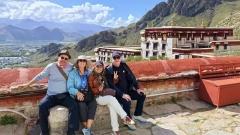

Tibet Museum is Lhasa’s most important cultural and historical exhibition center, housing a large number of precious cultural relics and works of art. For tourists traveling to Tibet, visiting Tibet Museum is an effective way to gain in-depth knowledge of the local history, religion and folk culture. This guide aims to offer a complete visiting manual, including reservation procedures, key attractions and itinerary planning suggestions, to ensure a smooth cultural experience for you.
Why Visit the Tibet Museum?
In addition to visiting Tibet’s numerous temples and natural landscapes, taking time to visit Tibet Museum will add important intellectual context to your trip. Its core values are mainly reflected in the following aspects:
- Build a systematic historical understanding: The museum’s exhibitions are designed in a clear timeline and thematic structure, presenting Tibet’s complex historical evolution, religious development and cultural changes in an accessible manner. This helps tourists establish an overall cognitive framework in a short period of time.
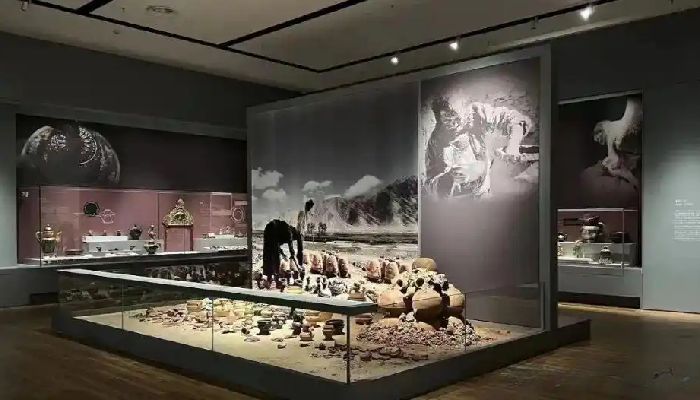
- Concentrated viewing of top-tier cultural relics: Many national treasure-level cultural relics that are inconvenient to view up close or difficult to see in temples, such as precious palm-leaf manuscripts, exquisite gilt bronze Buddha statues and imperial ritual instruments, are collected here. It is the best place to systematically appreciate Tibet’s top-tier art and craftsmanship.
- Enhance the depth of subsequent visits: Before visiting actual attractions such as the Potala Palace and Jokhang Temple, understanding the relevant historical background, symbolic significance and artistic styles in the museum will make your on-site visiting experience more profound and enriching, allowing you to comprehend the cultural connotations behind more details.
Tibet Museum
Core Exhibition Halls And Key Exhibits Of Tibet Museum
Tibet Museum’s permanent exhibitions are rich in content and clearly arranged. To obtain an efficient visiting experience, it is recommended that you focus on the following core exhibition halls:
- Tibetan History And Culture Exhibition
This exhibition hall serves as the main line for understanding Tibet’s general history, sequentially showcasing key historical periods from prehistory to modern times:
- Prehistoric civilization: Through cultural relics such as stone tools and pottery unearthed from the Karuo Site in Qamdo, it displays the living conditions of early humans on the Tibetan Plateau.
- Development through dynasties: It focuses on displaying cultural relics from the Tubo Dynasty period, as well as important physical evidence of exchanges between the central government and the local Tibetan government during the Yuan, Ming and Qing dynasties, such as seals, imperial edicts and classics, clearly reflecting the close connection between politics and culture.
- Evolution of artistic styles: It exhibits Buddhist statues, thangkas and ritual instruments from different historical periods, allowing you to intuitively see how artistic influences from India and Nepal integrated with local Tibetan characteristics and gradually formed a unique style.
- Tibetan Folk Customs Exhibition
This exhibition hall vividly displays the traditional lifestyle and social customs of the Tibetan people:
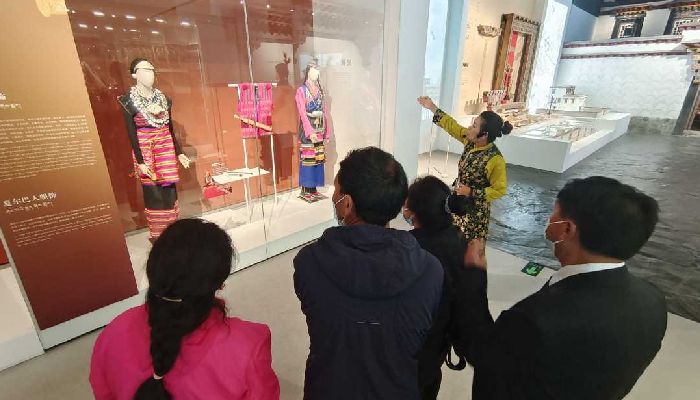
- Clothing and daily necessities: It exhibits characteristic Tibetan costumes, jewelry from different regions of Tibet, as well as utensils for making traditional foods such as butter tea and zanba.
- Residence and festivals: Through exquisite models of Tibetan-style dwellings and scene restorations, it introduces architectural features; at the same time, it displays celebration supplies, ritual processes and entertainment activities of important festivals such as Tibetan New Year and Shoton Festival, allowing you to have a more perceptual understanding of the daily life of Tibetan society.
- Collection Of Fine Cultural Relics Exhibition
This exhibition hall gathers the museum’s treasure pieces and artistic masterpieces, requiring you to slow down and appreciate them carefully:
- Treasures of ancient documents: The focus is on well-preserved palm-leaf manuscripts, which are Buddhist scriptures written on palmyra leaves, with a long history and high academic value.
- Gilt bronze statue art: Pay special attention to early Buddhist statues influenced by Kashmiri and Nepalese styles, which are exquisite in craftsmanship and beautiful in form, and are treasures in the history of Buddhist art.
- Religious ritual instruments and thangkas: It exhibits various ritual instruments including elaborately decorated gau boxes and vajras, as well as colorful and exquisitely painted thangkas from the Ming and Qing dynasties, demonstrating extremely high religious artistic achievements.
Tibet Museum
Practical Information For Visiting Tibet Museum
A successful visit starts with adequate preparation. The following are specific information and steps you must know before planning to visit Tibet Museum:
Opening Hours And Reservation Methods
- Opening hours: Open to the public from Tuesday to Sunday every week, closed on Mondays for regular maintenance (may be adjusted on national statutory holidays, please refer to official notifications). The daily opening hours are usually from 9:30 AM to 5:00 PM, and admission stops at 4:30 PM. It is recommended to check the latest schedule again before departure.
- Reservation method: All individual visitors must make real-name reservations online. The most commonly used platform is the WeChat official account “Tibet Museum” or its designated official ticketing channels. Please complete the reservation at least one day in advance and properly keep the electronic voucher (QR code) for successful reservation. Upon entry, you need to present both the reservation code and a valid ID document (such as passport, Taiwan Compatriot Permit, etc.) that matches the reservation information.
On-Site Services And Visiting Notes
- Guided tour services: The museum provides paid audio guides for rent, covering introductions to major exhibits. You can also consult the Visitor Service Center to see if there are scheduled free guided tours on the day.
- Visiting suggestions: A comprehensive visit to all core exhibition halls takes about 3 to 4 hours. There are rest areas and drinking water facilities in the museum, so you can arrange rest breaks reasonably. It is recommended to wear comfortable shoes suitable for long walks.
- Visiting etiquette: Please keep quiet in the exhibition halls and avoid making noise. Flash photography and tripods are prohibited in most exhibition areas, so please follow the on-site signs. Do not touch the glass surfaces of any display cabinets.
How To Arrange Your Museum Visit Itinerary
Integrating a visit to Tibet Museum into your overall Tibet travel plan, you can refer to the following two common and operable schemes:
Scheme 1: As An Adaptive Activity On The First Day After Arriving In Lhasa
When first arriving in Lhasa (at an altitude of about 3,650 meters), to allow your body to better adapt to the plateau environment, it is recommended to avoid strenuous exercise or long-distance travel immediately. Arranging a visit to Tibet Museum on the afternoon of the first day or the morning of the second day is an ideal activity. The indoor environment is comfortable and the activity rhythm is gentle, which not only provides a valuable cultural experience but also helps you smoothly get through the plateau adaptation period.
Scheme 2: Combine With Norbulingka For A One-Day Cultural Theme Tour
Tibet Museum is very close to the famous Norbulingka (Summer Palace) and is within walking distance. You can arrange to visit the museum in the morning to systematically understand the history and culture; and tour Norbulingka in the afternoon to appreciate the Tibetan-style garden architecture and beautiful environment. This combination allows you to efficiently experience the cultural essence of Tibet in both indoor cultural relic collections and outdoor imperial gardens in one day, with a smooth itinerary connection.
Pre-Trip Preparation Suggestions
- If time permits, browse some introductory books or documentaries about Tibetan history and culture before departure, which can help you quickly grasp the key points and resonate during the visit.
- You can visit Tibet Museum’s official website or relevant introduction pages in advance to learn about its latest exhibition layout and special exhibition information, and mark the exhibition areas you are most interested in in advance, so as to reasonably allocate your limited visiting time after entering the museum.
Post-Visit Extension: Let Knowledge Enhance Your Travel Experience
Concluding your visit to Tibet Museum is not the end of your cultural learning journey, but the beginning of a more in-depth travel stage. The knowledge and impressions you gain in the museum will serve as a useful key to help you unlock the connotations of more landscapes in your subsequent journey.
How To Apply What You Saw In The Museum During Subsequent Travel
- When visiting the Potala Palace, Jokhang Temple or Tashilhunpo Monastery, try to identify similar artifacts, similar statue styles or thangka themes you saw in the museum, and think about their roles and meanings in real religious sites.
- When the guide explains a historical event or religious figure, you can combine the relevant cultural relics, maps or charts you saw in the museum to make abstract stories more specific and vivid.
- When interacting with local communities or observing daily life, you may notice people’s clothing details, eating habits or certain customs, which can be mutually confirmed with the introductions in the Folk Customs Exhibition Hall, thereby enhancing understanding and respect.
Why the Tibet Museum Is Essential for Understanding Tibetan Culture
For many travelers, Tibet is first experienced through iconic landmarks such as the Potala Palace, Jokhang Temple, or the dramatic landscapes of the Tibetan Plateau. However, without a clear historical and cultural framework, these places can remain visually impressive yet difficult to fully understand. This is where the Tibet Museum plays a crucial role.
By presenting Tibetan history, religion, art, and daily life in a structured and accessible way, the museum provides essential context that enhances every subsequent visit. The artifacts, exhibitions, and timelines you encounter here help explain the symbolism behind temple architecture, religious rituals, artistic styles, and even everyday customs you will observe during your journey.
For this reason, the Tibet Museum should not be seen as an optional stop, but as a foundational experience for anyone wishing to explore Tibet beyond the surface. Whether you are visiting Lhasa for the first time or seeking a deeper cultural understanding, starting your journey at the Tibet Museum will significantly enrich the meaning and depth of your entire trip.